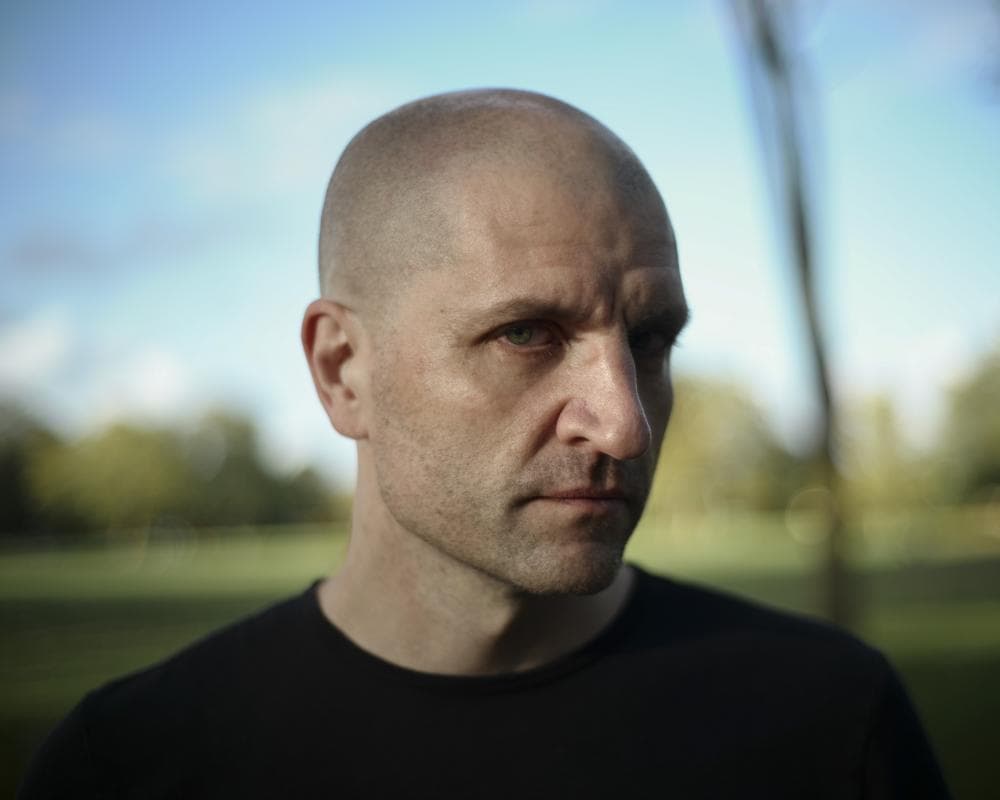
China Miéville’s epic new novel is presented as being “20 years in the making”. It is quite a testament to how extravagant – even Stakhanovite – his imagination is that during that period he also produced six novels (including The City & the City and The Book of Elsewhere, co-written with Keanu Reeves), two novellas, two series of graphic novels, a children’s book, a volume of short stories and two works of nonfiction, on the October Revolution and the Communist Manifesto.
It does not mean that these works were, as Graham Greene called The Third Man and Our Man in Havana, “entertainments” – Embassytown, to my mind, is the best translation of deconstructionist philosophy into science fiction – but certainly The Rouse is a quantum jump in terms of ambition, moral seriousness and stylistic bravado. It means that rather than classifying Miéville with “the new weird” or “speculative fantasy”, he ought to be compared to Roberto Bolaño or Mircea Cărtărescu. This new novel is equally maximalist, dense, disorienting and discomfiting, reflecting how surreal our reality seems to have become.
Readers acquainted with Miéville’s other work might be disconcerted by the first hundred pages: broadly speaking, they are social realism. We are in 1970s London and Maur, short for Maureen, gets pregnant and decides to keep the baby. Ewan grows up reading Rupert Bear and Starlord comics, watching Steptoe and Son and Rentaghost, and having Chinese takeaways with obligatory background racism. It is canny rather than uncanny, with the exception of a cameo from the truly odd 80s comedian Roy Jay doing his “slither-spook” routine, possibly on The Bob Monkhouse Show. (Now an internet meme, it is unforgettable and queasily sinister – and on YouTube.) Eventually Ewan, at a loss in many ways, decides to join the army. Then Miéville drops the bombshell just before the 100th page: Ewan dies, supposedly by suicide, at an army base. “Now everything is codas,” thinks Maur, and in capital letters we get THE END. The novel – all epilogue – now begins, for more than a thousand pages.
The descriptions of Maur’s grief are phenomenal. “After a long time she came to believe what she knew, which was that this would never unhappen. So she did the bargaining. Just for a moment. I understand he won’t come back but I need everything to stop for just a second … What I need is I just need a moment when this isn’t all there is. That’s all I’m asking. To have anything else, or nothing, in my head. All I’m asking is just let me have one single minute ever again when he isn’t dead.”
Maur, it transpires, is not the only grieving parent with a connection to Shackingham Barracks, and she finds a support network for those who are similarly bereaved. There seems to have been a spate of suicides, rather like the Deepcut controversy; something is being covered up. She falls in with an investigative journalist, Jock; a fellow bereaved parent, Cybill; and eventually a renegade ex-army operative named Stallo. At the very beginning of the book, the young Maur is warned by her father to “stay out of the dead’s business”. She doesn’t understand the import of his words, thinking, comically, he just means not becoming an undertaker.
The Rouse is affecting, intelligent and, in more than one place, very, very frightening
The Rouse is the name of the army’s bugle call, played to call soldiers to their duties and also after the Last Post. Here it is a code for more than that: the stirrings are supernatural. The scales will fall from Maur’s eyes about the extent of the deep state’s paranormal interests.
Her narrative, however, is held in counterpoint to the story of Allardyce, a soldier with a background in the more eldritch side of the armed forces. His experiences are vastly wide-ranging, from Malaya to Kenya, Akhalkalaki and the Falklands; and with both untrustworthy American allies and cabals of USSR and Chinese counterparts. This global reach is not mere exoticism: not only is Miéville concerned with the geopolitical in the broadest sense, here he holds it in parallel with the “radical democracy of death”, the “revolutionariness of death”. Why is the military concerned with haunting and the afterlife? I don’t want to give away too much, but somehow death and the dead are an exploitable resource and a radical alternative at the same time. This being Miéville, even those “freed” from life and suffering are prey to capitalist forms of commodification and exploitation: the final twist is genius. The links between Allardyce’s schemes and the quest of Maur and increasingly Stallo are seeded cunningly and have a “rightness” in the reveal – notable in a book obsessed with “not rightness”.
Linguistically, the novel is a riot. The name of Cybill harks to Sibyl, the Greek prophetess; Maur sounds like the French mort. Miéville’s prose has always been baroque and esoteric, and here it is combined with slang and period detail perfectly. It has its own idiolect – one character, the spiky backrooms scientist Dr Croome, coins “inodus” as an opposite to “exodus”, commenting that “the efficacy of words is wildly overstated, most especially by those who work with them”. She opines that she “always found gast, gæst, and particularly gōst to be so close to the dread unsayable as to be ridiculous” – but by not giving an obvious infodump of, for example, phenomena the soldiers nickname “lesprys” (derived from l’esprit de corps but conjuring something almost fey), the book keeps its corner-of-the-eye shimmer. The prefix “un” is used as a leitmotif: unsee, unwritten, undone, unopened. It is negation on the level of the sentence.
In a sly aside, there is praise for John le Carré, whose version of the world of spooks is less paranormal than Miéville’s. Their books share the shabbiness of cold war espionage, and an ambience of regret for the days of simple us v them situations, but also the capacity to keep the reader guessing about the true affiliation and trustworthiness of the characters. That is just the tip of references, with Miéville’s capacious knowledge of the weird canon on display: there can’t be many novels that nod to Lord Kilmarnock’s 1903 Ferelith. Along with the “found texts” and concrete poems at the end of chapters there is enough here to sate the hungriest of readers. The Rouse is affecting, intelligent and, in more than one place, very, very frightening. “Life,” as Miéville writes, “is just a prologue to a ghost story.” This is a novel destined for a rich afterlife.
• The Rouse by China Miéville is published by Picador (£35). To support the Guardian, order your copy at guardianbookshop.com. Delivery charges may apply.