Closing post
Time to wrap up…
The price of diesel on UK forecourts has hit an all-time high average of 199.18p a litre, as the conflict in the Middle East continues to drive the cost of fuel to record levels.
The price, which previously peaked at 199.09p in June 2022 after Russia’s invasion of Ukraine, could soon top the £2 mark after Donald Trump rejected Iran’s proposal for a seven-day peace deal to reopen the critical oil and gas shipping route through the strait of Hormuz.
Related: Price of diesel on UK forecourts reaches all-time high
John Healey has pledged to use next month’s budget to inject hope into Britain’s economy while sticking to the government’s fiscal rules, arguing there is “nothing progressive” about losing control of public finances.
In his first speech as chancellor to Labour conference, Healey warned that next month’s highly anticipated tax-and-spending event would need to take into account a challenging global backdrop.
Setting out measures to support jobs and growth, the chancellor announced a new local apprenticeship service, led by mayors, targeted at young people to deliver “thousands more apprenticeships” across the country.
Related: Healey vows to stick to fiscal rules in budget built on hope
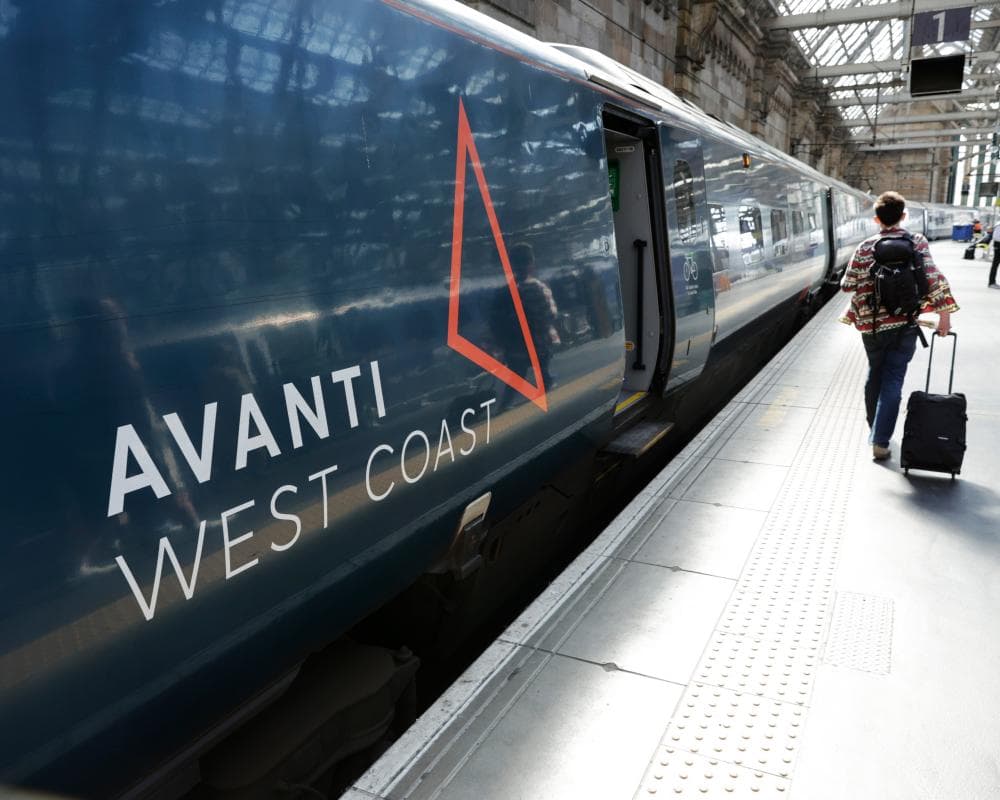
Avanti West Coast will be renationalised in spring, as Andy Burnham declares “enough is enough” for passengers who have put up with a rail service “that has failed them time and time again”.
The rail operator, which is one of the worst in the country for train delays and cancellations, will come under public ownership from 7 March when its contract ends.
The Labour government has been nationalising passenger rail services across the country as their contracts have expired, as the public body Great British Railways prepares to take full oversight in 2027.
Related: Avanti West Coast to be renationalised in March
First part of Oxford Street to be pedestrianised on 26 October
The first stretch of London’s Oxford Street to be pedestrianised will turn traffic-free from 26 October.
Mayor Sadiq Khan revealed the exact date for the first time at Labour conference, saying the “transformation would begin in earnest” in a project he has long pushed.
Almost a kilometre of Britain’s best known shopping street will turn into a pedestrian plaza, with buses, taxis, bikes and other vehicles diverted onto nearby roads.
Work will take place over the next four weeks and will continue on improvements including seating, trees and signage after opening. The first phase of changes will be designed as temporary to see how people use the new space.
Khan said:
I’m delighted that on 26 October the transformation of the nation’s high street into a pedestrian plaza will begin in earnest – a world-class space where flagship retail will sit alongside next-generation workplaces, designed to host exciting retail and leisure experiences from sport to fashion and cultural events in the future.”
US stock market opens lower
The US stock market has started the week lower, with the blue chip S&P 500 index down by 0.5%. It is being led by a 1% drop in the basic materials sector, likely triggered by fears around a higher oil price.
The tech-heavy Nasdaq inde is also down today by 0.5%.
Turning back to energy – the UK’s grid operator has said that an anticipated system margin shortfall has reduced from 1400MW to 104MW,.
A spokesperson for the National Energy System Operator (Neso) said:
An Electricity Margin Notice remains in place for today’s evening peak period, industry have responded to this notice, increasing the amount of additional electricity that is available to Neso to manage contingency requirements this evening.
There is no risk to customer electricity supplies, this is not a warning of power cuts, customers do not need to take action and Great Britain’s electricity system remains secure.”
Nvidia launches biggest ever buyback by US company at $150bn
Chip designer Nvidia has announced a $150bn (£113bn) buyback – the biggest ever by a US company.
The world’s most valuable company said that it had approved a $150bn increase to its buyback programme, beating Apple’s previous record of $110bn in 2024.
The company’s shares have surged by almost 1,000% in the past five years alone thanks to huge demand for its chips, which help power large language models.
Matt Britzman, an equity analyst at the investment broker Hargreaves Lansdown, noted that Nvidia is now authorised to spend $235bn on share buybacks over the next six quarters. He said:
That’s well ahead of the roughly $165bn the market had pencilled in over the same period. We’ve said for a while that cash flow is becoming the real flex here. With free cash flow heading toward $200bn this financial year, Nvidia can keep investing heavily in its lead across chips, networking, software and full data centre systems while still handing a huge amount back to shareholders.
Jensen Huang, chief executive of Nvidia, said in a statement:
Nvidia’s growth is being driven by a once-in-a-generation platform shift to AI and accelerated computing.
Our cash generation gives us the capacity to invest in the technologies that advance this transformation and return capital to shareholders. This authorization reflects our confidence in the long-term opportunity ahead.”
Shares in Nvidia are up by about 2% in pre-market trading.
Businesses are now sharing their reaction to chancellor John Healey’s speech at the Labour party conference:
Rain Newton-Smith, chief executive of the Confederation of British Industry, said the speech set out a “strong vision for how a politics of hope can translate into stronger business confidence and, ultimately, higher living standards.”
He said:
His commitment to fiscal discipline and recognition that it is a precondition for sustainable growth should provide reassurance to markets that the government is prepared to take difficult decisions to secure stable public finances.
Just as important was the recognition that business needs breathing space. Firms cannot invest, hire and grow if rising costs continue to absorb the headroom they need to do so. By linking the cost pressures facing business to the wider challenge of raising living standards, the chancellor showed an appreciation that a stronger economy depends on giving firms the confidence and capacity to create jobs, raise wages and invest.
…The speech sent many of the right signals. The budget now needs to turn them into action if we are to fundamentally change firms’ willingness to invest, take a chance on a young person, and scale a business here in the UK.”
Tina McKenzie, national chair of the Federation of Small Businesses, said he was “tight to put the cost of doing business at the centre of his address today”. She said:
The broad theme of hope needs to be followed up with concrete pro-business, pro-growth changes that help small businesses. As well as tax changes on costs, including fuel, late payment reforms must be fast-tracked and proposals for expanded regulation from Companies House should be turned around.
She also called for an increase in small business rates relief from £12,000 to £25,000, a reduction in employment taxes on small firms, a statutory sick pay rebate for small employers, an increase in the VAT registration threshold to £100,000 and a reversal in the rise in business asset disposal relief.
Shevaun Haviland, director general of the British Chambers of Commerce, also called for more help on the everyday cost of doing business.
Firms are being asked to invest while facing a tsunami of rising costs from employment, energy and business rates.
For a typical SME their policy related operating costs have increased by more than 70 per cent in 10 years. The budget must give them breathing space, avoid any further tax rises and cut some of these costs.
…He must go further on youth unemployment, a cut in employer National Insurance contributions for under-25s, will help firms create more opportunities for them.
He should also consider reducing energy bills for firms, by cutting the Renewables Obligation by 75 per cent, and lowering business rates multipliers.
JCB chair Anthony Bamford names youngest son as co-chair
The chairman of JCB, Lord Bamford, has appointed his youngest son to serve alongside him as co-chair of the yellow digger manufacturer.
George Bamford, who founded his own watch making firm in 2009, will take the role from the start of October, JCB announced on Monday as it revealed turnover fell to £5.7bn last year from £5.8bn the year before.
The Staffordshire-based company, which has 23 factories and 20,000 employees across the world, said the drop was because of 5.2% fall in machine sales last year, to 113,498 units.
Profit fell 6.6% to £642m, but the group said it increased its global market share despite “challenging year with mixed market conditions”.
Joseph Cyril Bamford founded the group in 1945 before his son, Anthony, became chairman in 1975. More recently, Lord Bamford, who retired as a Conservative peer in 2024, has become a prominent donor to the Reform party, giving £200,000 last year and funding an £8,000 trip for Nigel Farage to visit his Rocester factory in 2024.
The company said it would invest £100m in its Staffordshire factory last year and is planning to open a new factory in Texas next month.
Lord Bamford said:
From the day my grandfather founded JCB in 1945, innovation and investment in Great Britain have been at the heart of everything we do.
While JCB has expanded globally over the years, our home has always been here, and the record investment we are making in our facilities and in new products is good news for Britain and good news for JCB.”
Healey has not revealed much in his conference speech about his upcoming budget in October, but has reiterated that he is committed to fiscal discipline. He said:
[Fiscal discipline] underwrites every promise this government makes on growth, on jobs, on national security and on public services. We can’t succeed without it.”
Gilt yields have not barely moved in response – the 10-year gilt yield, which had been at around 5.408% before the speech, is now at 5.407%.
Meanwhile the 2-year gilt yield, which is more sensitive to interest rate expectations and had been at around 4.91%, is now at 4.905%.
All eyes are on the bond market now as investors watch UK chancellor John Healey’s speech at the Labour party conference.
Bond yields are rising broadly across the world today, led by US Treasuries, with the cost of government borrowing rising in response to higher oil prices.
You can follow Healey’s speech in full on our politics live blog with Andrew Sparrow here:
Related: John Healey addresses Labour conference in first speech as chancellor – UK politics live
Europe minister Hamish Falconer has said he does “not want to see any drift in the economic relationship between the UK and the EU” as he continues to urge member states to include the UK in new legislation to ensure EU manufacturers are protected.
The UK is fighting an uphill battle to persuade key member states led by France who think that expanding its Made in Europe legislation to include the UK would hold up the Industrial Accelerator Act which they want to clear by the end of the year.
France in particular has made it clear that it believes it needs to lock down the new laws as fast as possible to curb competition from China.
But the UK has warned that billions of euros of EU trade are at stake if UK suppliers who continued to sell into supply chains for the aero, auto and other industries are cut of the new package.
Falconer told the Labour conference:
For all the reasons you can imagine, we would wish to have, we do not want to see, I do not want to see, any drift in the economic relationship between the UK and the EU.
That is bad for the EU and it is bad for the UK,”
Bonds under pressure as oil price climbs
US and UK government borrowing costs are rising this morning, as Brent crude oil touches $108 a barrel amid uncertainty around the US-Iran war.
The yield on the US 10-year treasury is up 5 basis points to 5.23%, while the UK 10-year gilt has followed it up 5 basis points to 5.4%.
Jim Reid, of Deutsche Bank, says:
Even though US-Iran talks could resume this week, there was little sign of a breakthrough over the weekend and bond yields and oil have climbed again this morning.
Iran reiterated on Sunday that it would not soften its conditions for reopening the strait of Hormuz, with Foreign Minister Abbas Araghchi insisting that Tehran would not back down from demands including sanctions relief, access to frozen assets and an end to US blockade measures. Meanwhile President Trump said he still expected negotiations to continue but rejected Iran’s latest proposal as inadequate. So a stalemate but if you’re looking for some positives it’s that there does still seem to be a line of communication open.
The record-high UK diesel price comes as US president Donald Trump considers implementing a ban on US diesel exports.
A temporary ban could provide respite from high pump prices for American drivers before the midterm elections, after diesel prices in the US reached a record average of $6.52 (£4.93) a gallon.
Trump told reporters last week:
I’ve said let’s not send out the diesel. We make a lot of diesel … I’ve called for it. I’ve called for it within my people.
While US treasury secretary, Scott Bessent, said:
We’re examining whether it’s feasible in terms of the overall refining capacity and whether a full or partial ban would work.”
The EU has since warned Trump that such a move would negatively affect both Europe and the US. Europe relied on US diesel exports for a third its imports this year, as supplies from war-damaged refineries in the Middle East and Russia have dropped. The US supplied about half of Europe’s diesel imports by August.
Related: EU says Trump’s plan to ban US diesel exports would ‘negatively impact both sides’
Dr Jonathan Owens, operations and supply chain expert at the University of Salford, says that businesses should be bracing for higher diesel prices.
Diesel prices are creeping upwards across UK forecourts, with prices in some locations considerably higher than the national average. Consider the impact on just one HGV (heavy goods vehicle).
Take a HGV travelling 80,000 miles annually, at eight miles per gallon, it would consume approximately 45,460 litres of diesel. At £2 per litre, that gives an annual fuel bill of approximately £90,900. If we jump to £3 per litre, that rises to approximately £136,400. In real terms, an increase of around £45,500 per HGV. If this is scaled across a fleet of 100 HGVs, we see an additional fuel bill approaching £4.55 million. And those costs do not simply remain with the haulier.
…The consequences could reach almost every part of UK economic life: supermarkets, manufacturing, construction, agriculture, e-commerce and countless other sectors that depend upon road freight.
UK diesel price hits all-time high at 199.18p per litre
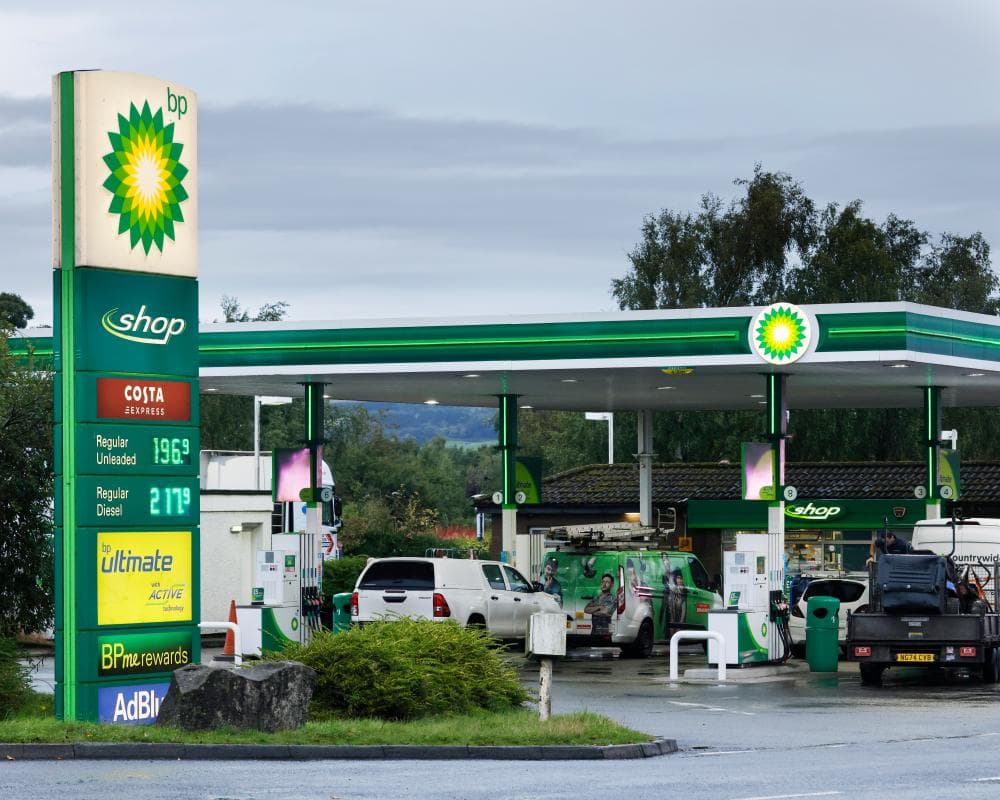
Diesel is now selling at its highest price ever: forecourts are charing 199.18p per litre on average in the UK, according to the RAC, surpassing the previous record set in June 2022 after Russia’s invasion of Uktraine.
Simon Williams, head of policy at the RAC, said the cost of filling up an average family car is now almost £110, which marks a £31 increase compared with at the start of the US-Iran conflict.
The diesel price has entered new uncharted territory. This spells pain not only at the pumps for drivers, but for everyone who buys goods or services that rely on diesel lorries and vans; undoubtedly these increased costs will be passed on to consumers.
Petrol prices are also rising, with a litre of unleaded now at 174.13p on average, 41p more than at the start of the war. Te cost of a full tank is now nearly £96. Williams said:
These extraordinarily high prices are another reminder of just how exposed the UK is to events occurring far away from its shores. Only a sustained lower oil price – over several weeks, not days – will lead to cheaper prices at the pumps.
Suggestions of a renewed deal to end the blockade of the Strait of Hormuz and get oil supplies moving freely again had offered a slight glimmer of hope for drivers.
The UK might have limited leverage when it comes to ending the US/Iran war and ultimately bringing oil prices down, but the government could take steps to ease the burden on drivers by lowering fuel duty further or reducing VAT.
As things stand, another 5p a litre will be loaded onto pump prices by the spring if the current fuel duty cut is fully reversed as planned. VAT receipts from fuel are also extremely high, so drivers will be watching this coming week’s Labour party conference, and October’s budget, very carefully indeed.”
Related: ‘Half my day’s pay goes to filling up my car now’: diesel crisis ripples across Britain
Updated
European gas prices are also rising this morning . The benchmark Dutch contract is up 2.9% to €74.185 per megawatt hour (MWh), while the the British front-month contract is up 2.7% to 184.64 pence per therm.
And in the world of energy – the UK’s grid operator has warned that electricity supply could be tight this evening.
The National Energy System Operator (Neso) said there could be a shortfall of 1.4 gigawatts starting at 4pm on Monday, before a spike in wind power then brings relief into the system, according to a notice to the market.
Neso wrote on social media that the notice was a “a routine and precautionary operational tool”.
There is no risk to customer electricity supplies and Great Britain’s electricity system remains secure.
Oil price rises again as Iran tensions continue
Elsewhere this morning, oil is rising again as optimism fades on possible progress in talks between the US and Iran. Brent crude, the international benchmark for oil prices, rose by as much as 3.29% this morning to $107.75 a barrel.
Iran announced a peace proposal last week at the UN General Assembly in New York, saying it had been transmitted to the US via Qatari mediators. Donald Trump said on Saturday he rejected the plan, but told Axios in a phone interview on Sunday that he expected US negotiators to engage in more talks this week
Worries around continued conflict in the Middle East – and the impact it can have on global inflation – are growing in the bond market too. US treasury yields are up, with the 10-year up 3 basis points to 5.21%. So too are UK bond yields – the 10-year gilt is up 4 basis points to 5.403% this morning.
This does not set an ideal backdrop for UK chancellor John Healey, who will be giving his speech at the Labour party conference in Liverpool at noon today.
Updated
'Christmas come early' for UK housebuilders
It is “Christmas come early” for UK housebuilders, says Anthony Codling, managing director at the broker RBC Capital Markets.
We believe that those with most exposure to the south and south east (Crest Nicholson) and the more liquid stocks (Barratt Redrow, Persimmon and Taylor Wimpey) will outperform, and those with the least exposure to open market homes (Vistry) and homes likely to be priced above the Your First Home price cap (Berkeley) to underperform on a relative basis.
That said, we believe this is the big catalyst the sector as a whole needed for a re-rating, and whilst most of us have 88 sleeps to Christmas, Christmas has come early for the UK housebuilders.
Shares in building material suppliers are also joining housebuilders in their market rally this morning – brick-maker Ibstock has jumped 21%, while Marshalls, which makes hard landscaping and building products, is up 12% this morning.
Construction material suppliers Forterra and Breedon are up 14% and 9% respectively. Topps Tiles is up 6%.
Adrian Kearsey, an analyst at the broker Panmure Liberum, notes there are still few details on how exactly the scheme will work. He wrote this morning:
Conversations with housebuilders over the weekend indicated that while they welcomed the news, they recognise the need to discuss the practicalities of implementation in the coming weeks.
He adds that the key winners are likely to be housebuilders with a lower price product, such as MJ Gleeson (which has shot up 19% this morning) and Persimmon (up 16%).
At this stage it is unclear what the income and property value caps are going to be. Even if they are relatively generous, it is likely that higher price point developers (such as Berkeley Group, not rated) benefit as much.
At this stage it is unclear what level of financial contribution the housebuilders will be required to make to participate in the scheme. If this hurdle is too high, then developer take up may be limited. Moreover, even a moderate contribution may preclude those housebuilders with stretched balance sheets (e.g. Crest Nicholson).
Introduction: UK housebuilder stocks soar on new homes scheme
Good morning, and welcome to our rolling coverage of business, the financial markets and the world economy.
UK housebuilder stocks are flying this morning as investors rejoice at a new homes scheme for first-time buyers in England.
Shares in Barratt Redrow have surged 14%, making it the best performer across the FTSE 100. Housebuilders are dominating the FTSE 250 index too, with Vistry, Persimmon, Taylor Wimpey and Bellway all up between 14% and 16% this morning.
It comes after Andy Burnham unveiled plans over the weekend for a new help-to-buy scheme.
The programme, called “Your first home”, is intended to help buyers in England who have a regular income but have been unable to save for a large deposit or don’t have financial support from their family.
Under the scheme, first-time buyers will get a 20% equity loan to help them buy a new-build home, with an initial interest free period and a requirement of a minimum deposit of just 2.5%.
There will be household income caps and a deposit cap to exclude those on the biggest salaries and with big savings pots. There will also be price caps on the value of the properties.
Related: Andy Burnham announces new homes scheme for first-time buyers
Richard Hunter, head of markets at the broker Interactive Investor, said the new policy would be a welcome boost for the industry.
The housebuilding sector has been beleaguered by a raft of headwinds ranging from higher mortgage rates and strained affordability to a slow planning process for new homes and the announcements have provided a rare and overdue relief rally from investors.”
The agenda
7am BST: Aldi full-year results
11am BST: MPC member Dave Damsden speaks in London on quantitative tightening