His ambition is big enough to see from space as he promises the “biggest change to Britain in 40 years”. Andy Burnham pledges what no prime minister until now has dared to, breaking the long spell of Thatcherism. Her sham monopoly markets in public services have crashed. The chancellor, John Healey, promises a “new age of industrialisation”, breaking with her era of industrial desertification. The social care system she blew into disconnected privatised fragments will become a national care service. Something new is waiting to be born.
Things happen fast. Only a year ago, the Labour party was on its knees in despair, thunderstruck to find Nigel Farage ruling the roost so soon after its landslide win, with Reform UK 12 percentage points ahead of Labour’s dismal 22%. Farage was the most popular leader, with a 30% favourability rating, compared with Keir Starmer’s -71%. When Burnham came to Liverpool last year he had no seat, no prospect of a challenge and a numbskull national executive committee bent on barring him, his charisma wasted.
Now here he is in the middle of a mini-bounce, the only leader with a positive score, while Farage has slid down the scale to -30%. Polls show that Labour could win the next election, with the left bloc outscoring the right, though without an overall majority. Relish every second of this period. Burnham has three precious years, rightly not risked in a needless election, and time enough to start his 40-year revolution.
With the wind in his sails, he has the wit, agility, experience and ruthlessness of leadership, alongside his skill of being able to talk of dilemmas ahead without plunging everyone into gloom. “Have faith in the country” seems to be his useful attitude, casting doubters as anti-patriotic wreckers. Odysseus-like, he needs wax in his ears to block the sound of his enemies bellowing on Elon Musk’s X that he will never prove himself a real man, a true leader, until he inflicts severe pain – preferably on the weakest. He says he won’t make “crude cuts”. The way to bring down welfare bills is by helping the young out of benefits.
Those who thought Healey would be the undertaker chancellor, countering Pollyanna Burnham with graveyard gloom, heard optimism in his speech on Monday instead. “It’s tough,” he had previously told the BBC economics editor, Faisal Islam, but “we’ve got good reasons to be confident about the future of Britain”. Amid the cacophony of doom from the right, Islam, a fairer adjudicator, says there has been “a modest but notable uptick in economic spirits”. Burnham’s “hopeful optimism ‘vibes’ strategy” appears to have had “some impact”, Islam adds. That is the psychology of economics that eluded Starmer and Rachel Reeves: a good mood lifts markets too. Consumer confidence in the UK hit a two-year high in August.
Look what happened when the financial markets opened after Burnham announced “Your first home”, a better version of the help-to-buy scheme. FTSE-listed housebuilders’ shares soared, with investors keen to get spades in the ground again with this incentive. Unlike George Osborne’s scheme, this is only for those with no “bank of mum and dad”, enabling them to buy newbuilds with only a 2.5% deposit. Kitchen and tile manufacturers’ shares surged, too, after the news.
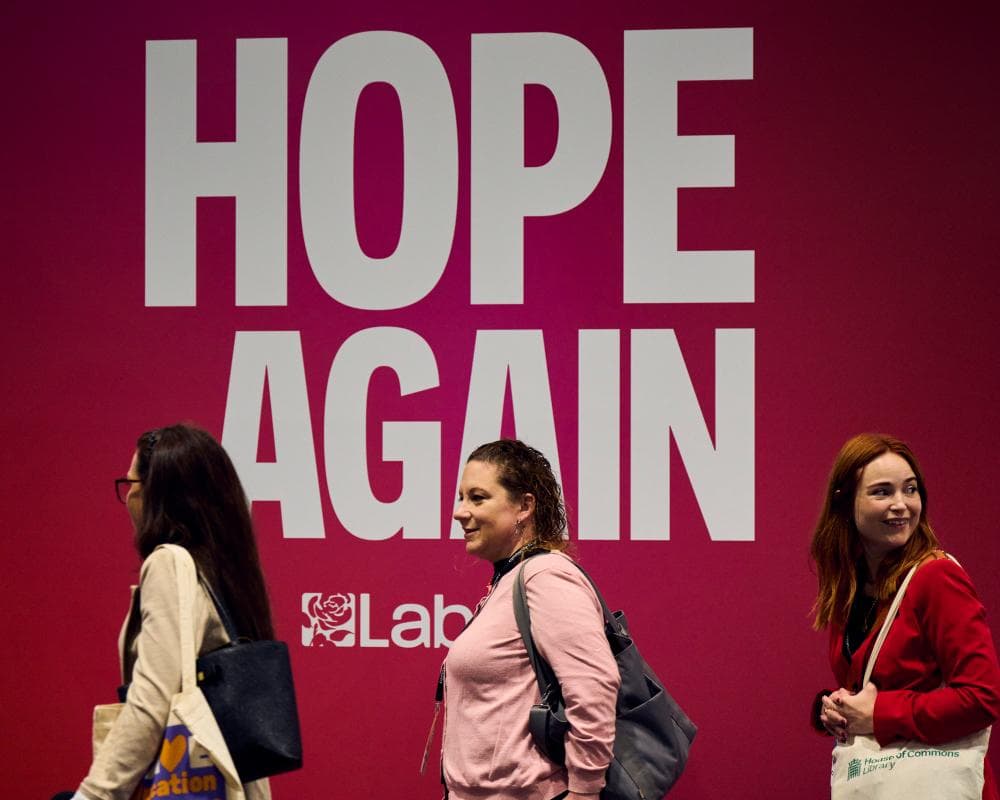
The flow of “Hope again” announcements has been so prolific that it’s easy to lose track, so here are some: most bus fares in England will be capped; VAT on electricity bills in Great Britain will be cut; pub business rates in England have been reduced; there is a policy to end rough sleeping in England and policies to support Neets; there are plans for the devolution of powers from Westminster, for “buying British”, for building council homes, for renewing high streets, for bringing arts and vocational skills back to the English school curriculum, for taking over empty homes, for more public control of public services and for repairing EU trade. And here’s a surprise from the home secretary, Shabana Mahmood: a safe and legal route out for Afghan women and girls and Palestinians. Hot air? Small beer? So far, cynicism bounces off Burnham.
But yes, money must be raised to hit a defence spending target of 3% of GDP, and to pay upfront to get Neets into work. The cost of living tops public concern, here and right across Europe, but that’s in the hands of Donald Trump’s calamitous war on Iran.
The art of politics is to lead the national conversation, and to distract from current troubles to focus on the future. There’s a risk, with such a plethora of plans, that direction and purpose become diluted. Wisely, Burnham has singled out one above all others – a flagship policy that authentically marks who he is, what he stands for and what he cares about.
Social care will be the beacon shining for every family sooner or later in this ageing population. As Burnham spoke movingly of his father’s death, there was a national nodding of the head in recognition. His father had the best care, he said, but hundreds of thousands encounter the worst, if they get any at all. The key to unlocking national wallets and purses for this expensive task is reminding everyone of their pride in the NHS and contempt for the US alternative. Social care in England is “as unfair as American healthcare,” said Burnham, where the “most vulnerable in society can lose everything, they can be wiped out, not just by the condition that they have, but wiped out financially”. That chimes.
The pitch is rolled now to change the unaffordable triple lock on pensions in order to pay for the new social care service. It will need the wealth of older people to contribute, without taking money from the struggling younger generation whose incomes are lower than their parents’ were at the same age.
That will be the heart of the next manifesto – when Burnham knows, from bitter experience of the 2010 election, how that policy gets turned into a “death tax”. The knives were out again on hearing the plan. But this time, he thinks they mistake the public mood. That’s brave but essential.
All this Labour celebration, sheer relief and surprised delight at every new announcement comes with a stern warning. In this volatile era, what changed so fast in a year can swing back again. Harder tests are to come, warns the University of Manchester professor of political science Rob Ford, with the budget, the spending review and unknown global perils on the horizon. Labour’s lead is still thin. Farage may be down after his scandal-ridden summer, but he has roared back before. Analysis by Survation for Hope not Hate reminds us that in many Labour seats Reform UK is close behind, often by a tiny margin. With Marine Le Pen’s support surging in France this week, complacency is the danger.
Everything at this conference suggests that Burnham has the full measure of what heavy lifting it will take to persuade more voters of his way. He feels the national pulse, as he hopes to make social care stand for everything else Labour means to do. Labour can rejoice in this moment, but never stop looking over its shoulder.
Polly Toynbee is a Guardian columnist