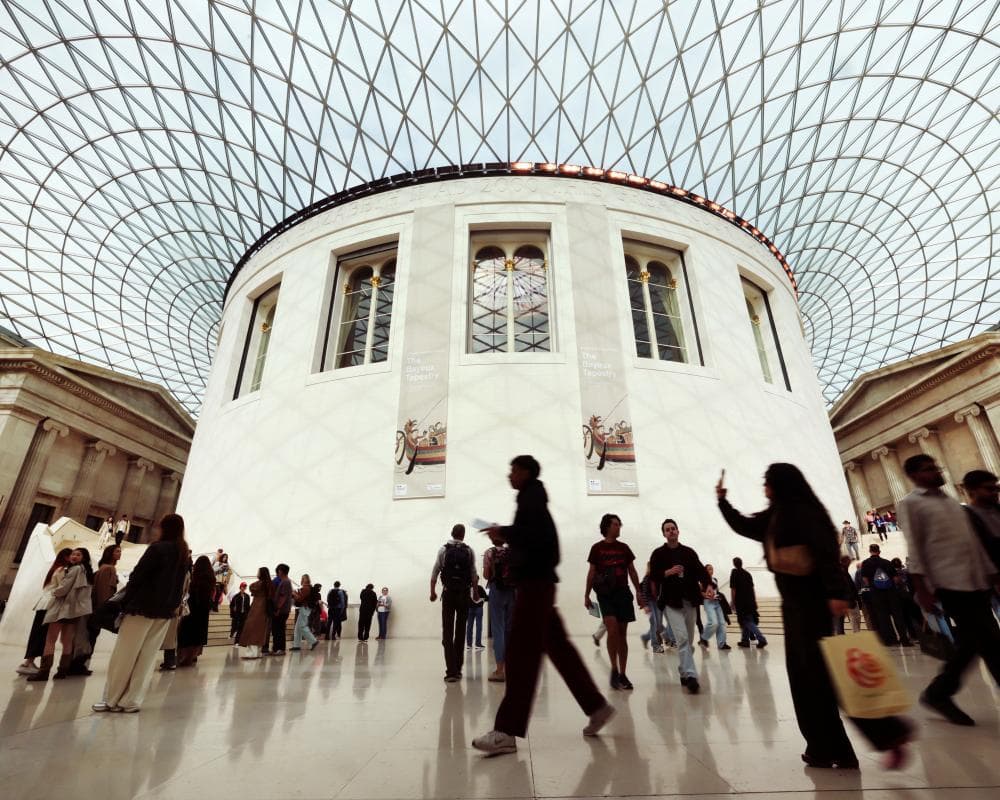
As the chair of the British Museum, George Osborne is a holder of public office with a duty to be transparent. His comment that “it wasn’t like we expected anyone to know” about the billionaire Peter Thiel’s private view of the Bayeux tapestry suggests his loyalties lie more with the founder of Palantir and friend of Jeffrey Epstein over the openness that a national museum should demonstrate (George Osborne ‘thought Peter Thiel’s Bayeux tapestry visit would be secret’, 19 September).
Osborne then made the claim that the museum would shut down without unethical corporate sponsors such as BP. In fact, just a few weeks ago London’s Science Museum ended its decades-long partnership with BP, joining Tate, the National Portrait Gallery and others. Last year, 91% of members of the Museums Association also ratified a new code of ethics, which says that museums should “Transition away from sponsorship from organisations involved with environmental harm (including fossil fuels), [and] human rights abuses”.
What is categorically true is that Osborne’s austerity policies led to job losses and the closure of many cultural organisations, while he subsidised oil and gas producers including BP, whose emissions fuelled the wild fires and droughts we now face. By giving the perception of personally aligning the museum with Palantir, Igor Tulchinsky and BP, Osborne is unnecessarily bringing it into disrepute.
Dr Chris Garrard
Co-director, Culture Unstained