Afternoon summary
For a full list of all the stories covered on the blog today, do scroll through the list of key event headlines near the top of the blog.
Reform UK MP Danny Kruger suggests Muslims may find it hard to be loyal to Britain due to their faith
The Reform UK MP Danny Kruger is an evangelical Christian. In his speech at the rally in Plymouth earlier, he made an explicit link between Britishness and Christianity, and he implied that British Muslims might find it hard to be loyal to the country because of their faith.
Here is the passage from his speech in full.
We need an idea that binds us together, and that idea is deep in our roots. It’s the idea that King Alfred took from the Bible and made into the basis of the laws of England; that we are not just solitary individuals sharing a piece of land; we are bound together, not by race, but by our common commitment to the traditions of our country, the traditions we have inherited from generation upon generation.
And the founding tradition is that the official religion of the United Kingdom, from the coronation oath to every parish in the land, is Christianity.
And so and so when we see millions of people who are taught to believe something different, who are taught by their clerics that their loyalty isn’t to the United Kingdom, but to the global Islamic community, that your religion is in fact a political allegiance and it’s not to Britain, that is a problem.
And the problem isn’t with individual Muslims, far from it. In fact, I think we could win support from British Muslims if we offer them a better way – strong values, family, community, country, the things Reform stands for. I think Muslims, like everyone, would resonate with that.
But there can be no negotiation with this. If you’re a British citizen, your loyalty is to the British state. Your allegiance is to Britain. And that’s what Reformers feel in their bones.
Of course, not all Reformers feel loyalty to the British state in the bones. The party’s former leader in Wales, Nathan Gill, is serving a long prison sentence for taking money to speak up for Russia in the European parliament.
Updated
Scottish government says closure of BBC Scotland's TV channel 'wholly unacceptable'
The BBC Scotland TV channel is to close as part of cuts announced today. Michael Savage has the story.
Related: BBC Three and BBC Scotland TV channels to be shut down next year
In response, the Scottish government said this was “wholly unacceptable”. Màiri McAllan, the Scottish government’s culture secretary, said:
The proposal to close the BBC Scotland channel is wholly unacceptable and the Scottish government opposes it in the strongest possible terms.
This represents a significant blow to our media landscape and is the latest example of a longstanding pattern of BBC underinvestment in Scotland, raising serious questions about the broadcaster’s commitment to Scottish audiences and the creative sector, and its public service obligations to serve all parts of the UK fairly and equitably.
I have set this out directly with the BBC Scotland director and will engage with Ofcom to make clear the significant concerns this proposal raises.
Isle of Man could see first assisted death in 2028 after law gains royal assent
Assisted dying has formally become law in the Isle of Man in what has been hailed “an important step forward” which could see the first assisted death take place in late 2028, the Press Association reports. PA says:
Tynwald became the first parliament across the UK and Crown Dependencies to agree a framework for assisted dying in March 2025 but it was only on Tuesday that royal assent was granted.
It is thought the implementation period for an assisted dying service to be in place could be up to two years, with further work around training, codes of practice for healthcare professionals and capacity for applicants to take place in the meantime.
GP Alex Allinson, a former member of Tynwald who brought the bill through the island’s parliament, said he believed the 2028 timescale is “achievable”.
He said: “The announcement of royal assent marks an important step forward for our island. There is considerable further work to be done to draw up codes of practice and guidelines with healthcare professionals and provide holistic education and support for all those involved.
“Key to improving choice and dignity for those facing a terminal illness is investment in palliative care and expanding the choices available for the people of our island and their families.”
Government says Covid inquiry report shows why culture of care workers being undervalued has to end
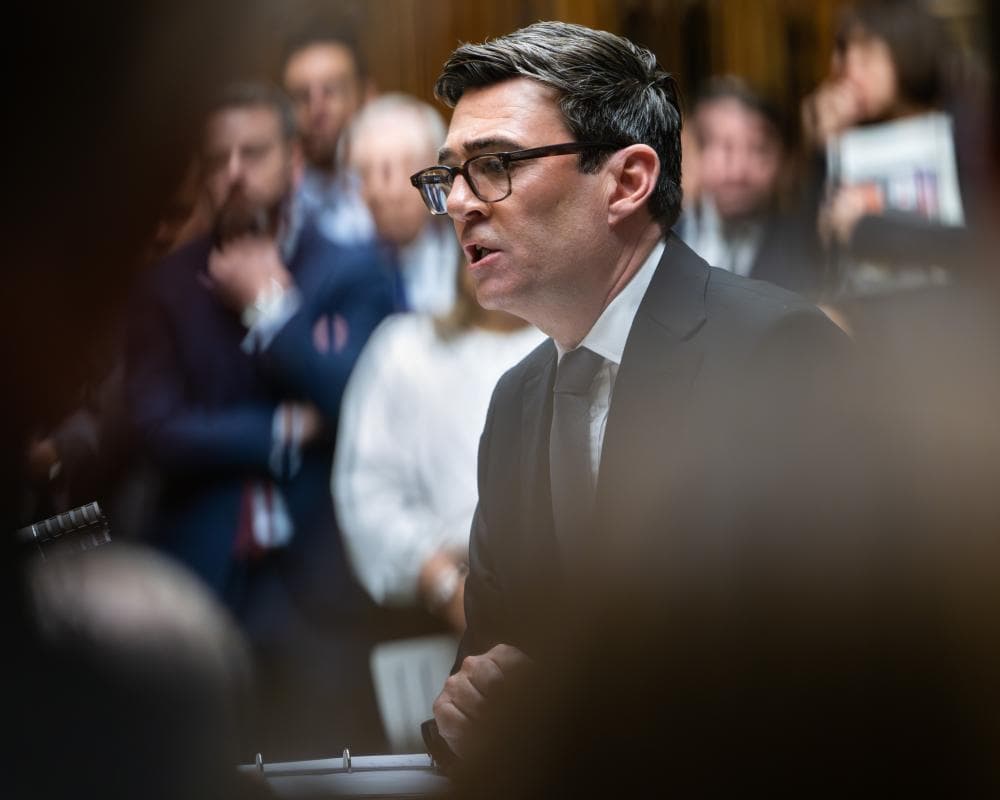
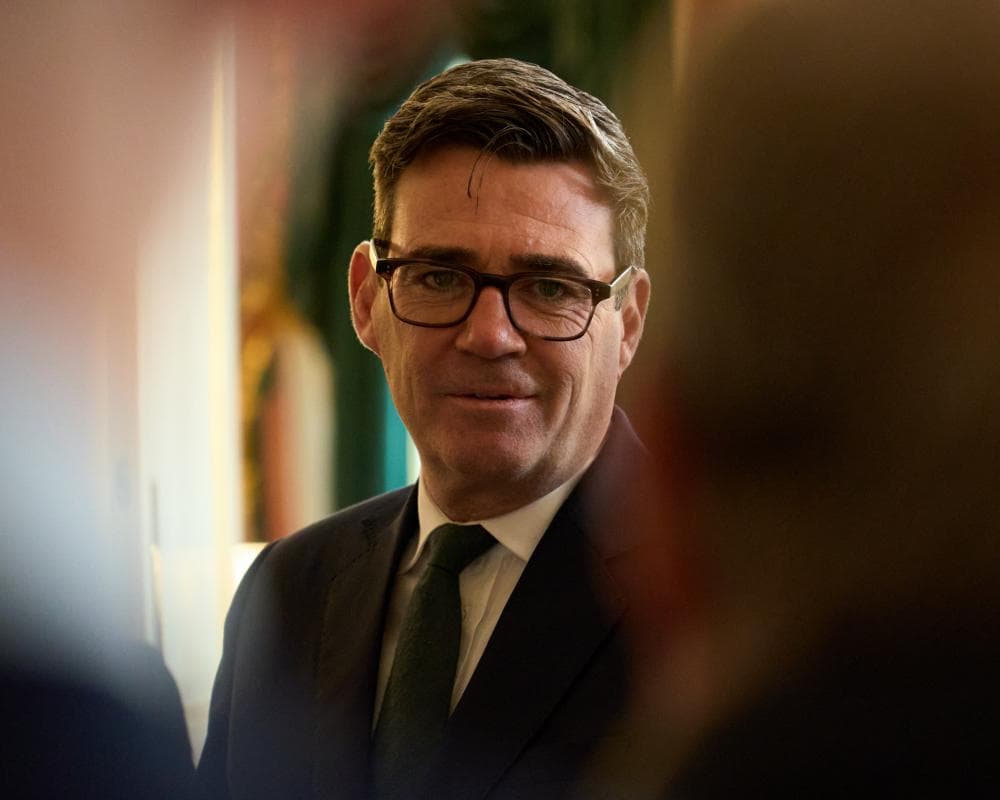
Andy Burnham has released a Commons written statement giving his response to the Covid inquiry’s report out today. He particularly endorses its finding that “for too long the adult social care sector has been undervalued and under-recognised”. He says:
The government is committed to learning the lessons from the inquiry and ensuring the social care sector are prepared for a future pandemic. We will consider carefully the findings and recommendations of the report and respond in due course. We will use these findings to continue development of our adult social care pandemic action plan, and we will also respond to Baroness Casey’s review when it is published.
I have set out my vision for a National Care Service. This will be person-centred, highly integrated with health services and preventative in its character, helping people lead as independent and fulfilling lives as possible and providing dignity and peace of mind. We are delivering reform through significant additional investment in adult social care, including introducing a fair pay agreement for care workers and developing a new workforce action plan. We are also appointing a champion for unpaid carers, developing neighbourhood health services, and taking immediate action on adult safeguarding, dementia, and motor neurone disease.
Commenting on the report during health questions in the Commons, Yvette Cooper, the health secretary, said:
We will provide a full response to the report’s recommendations in due course, but I agree with the chair when she says, adult social care has, for too long, been undervalued and under-recognised.
That has to end, and I hope we can work cross party to support the prime minister’s vision for a National Care Service in the future.
Farage claims 'snobbery' part of the reason why racist views of Reform UK members getting so much criticism
Nigel Farage has given an interview to Sky News in which he has set in detail his response to the ITV News exposé highlighting the extreme racism of some of his party’s members. In it, he went beyond the line he used in his rally speech about his members not being “uniquely awful”. (See 3.24pm.) Here are three lines from the interview.
Farage claimed there was an element of “snobbery” in the criticism of those singled out for making racist comments. He said some of the remarks were “appalling”. But he went on:
There’s a real snobbery about this. You speak to working-class people about what they think about, for example, the rape gangs from Rochdale or Rotherham, you’d be very surprised by what they said.
He suggested that defectors from the Tories were the worst offenders. He said:
It just shows you some of the Tories we took – maybe we shouldn’t have done. The most egregious comment was made by somebody who came to us as a Tory councillor.
This was a reference to Alan Feeney, a councillor in Solihull, who told an undercover reporter that his area had been “infested” with Asian families, and called them “absolute parasites”.
(Farage may have been joking when he made this point. Every party he has led has been accused of attracting a disproportionate number of racists as supporters.)
He claimed that Reform UK was “pretty much the same” as other parties in terms of its likelihood of having members with extremist or offensive views. He said:
I accept [that] out of thousands of councillors, there are some people who say stupid things, wanted to say horrible things. But if you apply that equally across the political spectrum, you will find we’re pretty much the same as everybody else.
Updated
Farage claims it 'just isn't true' to say people in Reform UK are 'uniquely awful'
In his Plymouth speech, which has just finished, Nigel Farage has just referred to the ITV News exposé about racism in his party. “In any political party, any group of human beings, any club, there’ll be some [people] that say unpleasant things,” he said.
But he claimed it was wrong to claim there was anything “uniquely awful” about Reform UK.
The sheer level of disproportionality is something I want to share with you very briefly this afternoon.
So, Reform councillors, having been provoked, have said some things we’d rather they hadn’t.
But what about Mr Bonehill-Paine, who was going to be a candidate in Somerset next year for the Conservatives? [He] served a prison sentence for neo-Nazi offences. When it was found out, he then got promoted by Kemi Badenoch to be an adviser to the party.
What about David Graham, the Labour councillor from Fife? He didn’t just say bad things. No, no, no, he sexually abused a 15-year-old girl who he groomed and abused over the course of six months. Have you heard that on the BBC news?
At this point the crowd shouted “no”, and Farage replied: “No, and you won’t.”
(Here is the BBC’s online news report about Graham.)
Farage went on:
And, frankly, the list goes on, a list as long as your arm of assault, of criminality, of paedophilia, of sexual abuse.
Wherever you get thousands of people that congregate together, you will get some bad eggs.
Do not buy in to the media narrative that somehow there’s something uniquely awful about people in Reform. It just isn’t true.
Farage and Badenoch both claim UK at risk of French-style rioting
Nigel Farage, the Reform UK leader, is speaking at the rally in Plymouth
(Not in Portsmouth, as he wrongly said at one point.)
Most of it is familiar Reform UK stuff, but Farage has just included a topical reference – claiming Britain is likely to suffer French-style rioting at some point.
Referring to the “appalling violent mob rule riots that we’ve seen in France over the course of the weekend”, he went on:
Don’t be complacent because it’s the other side of the channel. Don’t think it can’t happen here, because it can.
And I suspect many of those protesting outside this hall today in an effort to stop this meeting from even going ahead would be part of those disturbances if they were to occur. Sadly, I think at some point it will occur.
Farage was speaking after Kemi Badenoch, the Conservative leader, also claimed that the UK was at risk of French-style rioting. But she suggested, if that were to happen in this country, woke policies describing Britain as racist would be to blame.
In an interview with GB News she said:
I do worry that things like [the French riots] could happen here. We’ve already seen protests flaring up across the country. That is why it is very important that we get our economy growing again …
If you tell young people that their country is terrible, that it’s okay to hate their country, that Britain is a racist place, and end up going on about imperialism, white privilege and all of that rubbish, then you see them burning down churches and spraying graffiti on war memorials.
And that’s why I always intervene. You know, some people will say, ‘Why are you getting involved in culture wars?’
I will fight for British culture. It’s very important.
Former Bank of England chief economist Andy Haldane says Tory growth policies 'far more likely to succeed' than Labour's
At one point in the summer Andy Haldane, the former chief economist at the Bank of England, was informally advising Andy Burnham. Haldane spent most of his career as an official at the Bank. He is not a party political figure. But at the Bank he was viewed as an independent thinker, he was brought up in the north of England and he is committed to regional growth (which is one reason why Michael Gove hired him as a levelling up adviser).
But any suggestions that Haldane is a Burnham supporter have now been quashed by an article Haldane has published in the Financial Times. In it, he says the Conservaties’ economic policies are “far more likely to succeed” than Labour’s.
He says:
In the decade since Brexit, both parties have swung simultaneously right on social policy and left on economic policy. The interventionist economic agendas of Conservative prime ministers Theresa May, Boris Johnson and Rishi Sunak would not have been out of place under New Labour. At the 2024 general election, only a vape wrapper separated the parties’ economic manifestos.
Today, those differences are stark. Andy Burnham’s conference speech was a homage to 1950s-style state socialism. Kemi Badenoch’s speech was also a throwback, but to the smaller state and lower taxes of the 1980s. Which offers the more likely path to growth?
In today’s straitened circumstances, the rightward fork is far more likely to succeed.
Haldane argues the Tories have not always been right. He says George Osborne’s austerity policies were a mistake.
At the time of austerity, UK government debt was not only far smaller than it is today, but the cost of servicing it was lower than at any time in human history. Remarkably, the country’s long-term borrowing costs were negative in inflation-adjusted terms for protracted periods. There will probably never have been a better time for public investment.
Yet funding was cut and a £2tn investment gap opened up relative to international competitors, stunting growth. Veering right was wrong.
But, in the current circumstances, Conservative policies would be best for growth, he says.
Today’s fiscal environment is fundamentally different. Long-term borrowing costs have risen 4-5 percentage points and now sit above estimates of the UK economy’s long-term nominal growth rate. That signals the need for primary fiscal surpluses, on a sustained basis, if the UK’s debt dynamics are to stabilise.
The Labour party’s plan for an expansive (and expensive) state sits uncomfortably with this precarious fiscal backdrop. It also sits oddly with the fact that public-sector productivity has failed to rise this century. Both state financial capacity and personnel capability are at present sources of economic weakness, not strength.
In this debt-laden environment, the pursuit of a larger state is more likely to crowd out than crowd in growth. It also runs the risk of a loss of confidence in bond markets that causes borrowing costs to ratchet — think “Liz Truss-plus” …
The Conservatives’ economic plans are better suited to that task: for example, through cuts to business and employment taxes and regulation to unleash animal spirits; and by slimming government spending to lower borrowing costs, as the IMF and Bank of England have recently highlighted.
Updated
Danny Kruger tells Reform UK rally media 'trying to stop us winning'
In Plymouth, the Reform UK rally is just getting under way. Danny Kruger is the first person to speak. He starts by saying that the party has been going through some “turbulence” recently, referring to the ITV undercover exposé (summarised here and here). ITV News found some “rotten apples”, he says, and they have to go.
But he says the journalists behind the investigation are not trying to help. They are “trying to stop us winning”, he says. He goes on:
I’m not here to whine about the media because we’re not the real victims. We’re not the real targets. It’s not us they’re trying to stop. It’s the British people …
It’s not who we are that they hate. It’s what we want to do. We want to take our country back for the people of our country. And they know it. And that’s why they hate us.
Tell us what you think about Covid inquiry's adult social care report
We would like to hear from readers about what they think of today’s Covid inquiry report into what happened in care homes during the pandemic. You can submit a contribution here.
Related: Share your reaction to the Covid public inquiry findings on adult social care during the pandemic
Inquiry report shows Hancock's claim about protecting care homes 'a cruel lie', Covid victims' campaign group says
The Covid-19 Bereaved Families for Justice group has issued a statement about today’s inquiry report saying it shows that Matt Hancock’s claim about a protective ring being thrown around care homes (see 12.22pm) was a “cruel lie”.
The organisation said:
Today’s report is a devastating account of one of the darkest episodes in our country’s history. It shows that the government knew the care sector was extremely vulnerable to a pandemic and yet did nothing. Failing to act until it was too late. And It shows that Matt Hancock’s claim to have thrown a protective ring around care homes was a cruel lie. Months before telling us that lie, Matt Hancock sat in a room with Boris Johnson and Simon Stevens and made the decision to discharge hospital patients into care homes, without testing. Three men, with no medical expertise between them, made a decision that became a death sentence for our family members.
The most at-risk people in our society, the sick, elderly – many of whom had a full and long life ahead of them – were failed by a government who abandoned them and left them to die. That is the consequence of social care system treated as a second-class service – too difficult for politicians to reform, too easy to ignore. Our family members paid the price. That is why social care reform cannot wait.
Updated
UK to deploy fighter jets to protect Saudi Arabia from Houthi attacks
RAF Typhoon fighters are to be used in efforts to protect Saudi Arabia from attack by Yemen’s Houthis, flying defensive missions over the country’s cities and critical infrastructure as western allies increase their intervention in the escalating conflict. Dan Sabbagh has the story.
Related: UK to deploy fighter jets to protect Saudi Arabia from Houthi attacks
Healey accused of missing 'open goal' after he rules out raising capital gains tax in budget
John Healey, the chancellor, has been accused of missing an open goal. The claim came from Tax Justice UK, which issued this statement, from its deputy director Caitlin Boswell, in response to the news that Healey has ruled out raising capital gains tax in the budget. (See 8.47am.)
Ruling out a pro-worker, pro-fairness and pro-growth tax rise is a missed open goal. It suggests this government is out of step with the large numbers of MPs across Westminster calling for this change, alongside leading economists. Let alone millions of people who are sick and tired of their needs feeling secondary to those of the super-rich.
Asking those with unimaginable wealth to pay just a little bit more would benefit us all – it’s people being able to afford the basics, see a doctor when they need one, or afford a safe place to live. These are some fundamental things that shouldn’t be hard to deliver in one of the richest countries in the world.
Tax Justice UK backs a plan to raise capital gains tax set out by the CenTax thinktank in a report two years ago. This would raise £14bn, according to CenTax (the Centre for the Analysis of Taxation).
And this is how Hallett concluded her statement.
During the pandemic, the action taken by the UK government and devolved administrations to try and protect workers and users of adult social care came too late.
The failures were the direct result of an absence of proper pandemic planning for the adult social care sector.
This underlines why my recommendations in this report must be acted upon now, before the next pandemic strikes.
Hallett says England should follow Scotland, Wales and NI in having 'invaluable' register for social care workers
Hallett said one of her recommendations was for a voluntary register of care workers in England.
I am also recommending the introduction of a voluntary register for the social care workforce in England.
The existing registers in Scotland, Wales and Northern Ireland proved invaluable during the pandemic. They allowed governments to identify recently retired professionals who could return to work and to communicate vital guidance directly. England must follow suit.
Hallett says in any future pandemic extra financial support for care workers should be available 'at the start'
Hallett said care workers felt “overlooked and undervalued” during the pandemic.
At least 1.5 million care workers were providing care during the pandemic. Many suffered burnout as a consequence of extreme stress and exhaustion. Visits by health care workers dramatically reduced, and this placed an even greater burden on care workers who stepped in to provide this care. They put their own lives at risk to show compassion to the dying, leaving a long lasting impact on their own physical and mental health.
Hallett said, in any future pandemic, “financial support to protect care workers from economic hardship must be in place at the start”.
Hallett said DNACPRs were used too often.
I now return to the deeply troubling issue of Do Not Attempt Cardiopulmonary Resuscitation notices, known as DNACPRs. These notices record a medical decision not to attempt CPR in order to try and save a life.
During the pandemic, there were concerns that these notices were improperly imposed on groups of people, such as people with learning disabilities or older people.
I make no apology for repeating what I said in module three, where these concerns were also raised. This should not have happened.
The inquiry has found no evidence of national policies condoning their blanket application. However, the sheer speed of the pandemic meant that discussions about advanced care plans, which record an individual’s preferences for future medical care and can include discussions about DNACPRs, were too often rushed or nonexistent.
Hallett says ban on all family visits to relatives in care homes at start of pandemic had 'devastating consequences'
Hallett said the decision to stop all family visits to relatives living in care homes at the start of the pandemic was also a mistake.
Allowing visits ran the risk of introducing the virus to an already vulnerable population. But stopping these visits had far-reaching and devastating consequences.
Visits provide essential human contact, routine and stability. Family members often provide essential care, helping their loved ones to eat, drink and wash. The profound isolation and sense of abandonment felt by residents as a result of the visiting restrictions resulted in immense emotional harm. There was a significant decline in the health and wellbeing of residents, especially those with cognitive conditions like dementia.
The concept of designated visitors and essential care partners was not introduced until the summer of 2020, a delay of several vital months.
Most distressingly, some people were not permitted to be with their dying loved ones. Through our listening exercise, Every Story Matters, we heard how deeply upsetting it was for families to be denied the opportunity to be with their loved ones in those last moments. Many remain wracked by a guilt that they do not deserve to carry.
Better guidance about the use of visiting restrictions must now be introduced to help ensure other families do not have to experience such heartbreak.
Updated
Hallett said lack of PPE was a particular problem in care homes.
Some care workers were left having to wear waterproof ponchos from festivals, painters’ overalls or homemade PPE made from fabric, bin bags, bed linen and other household items. This was wholly unacceptable.
I recognise that there were shortages of PPE globally and not just in the UK, as I set out in my module five report on procurement. However, better planning could have ensured a much better supply of PPE from the outset.
Hallett says patients discharged from hospitals into care homes without testing should have been isolated
Hallett said, while discharging patients from hospitals into care homes at the start of the pandemic may have been necessary, they should have been kept in isolation when testing was not available.
From March 2020, a lack of testing capacity meant medically fit patients were discharged from hospitals into care settings without knowing their Covid 19 status. Where tests were available, they were prioritised for those with symptoms. This ran the risk that patients who were infected but showed no symptoms would take the virus straight into care homes. It was not until mid to late April 2020 that all hospital patients discharged to care homes were tested for Covid 19.
The decision to discharge patients from hospital was necessary in order to free up much needed hospital beds.
However, given the known vulnerability of care home residents, guidance should hae advised that discharged patients be isolated. Isolation was perhaps the only truly effective precaution available to care homes at that time.
And yet, in March 2020, this did not happen in England, Wales and Northern Ireland. This was a significant omission.
Hallett says Matt Hancock's 2020 claim about 'protective ring' being thrown around care homes opposite of the truth
Hallett goes on to explain why people in care homes were so vulnerable.
Between March 2020 and July 2022, there were more than 43,000 recorded deaths involving Covid 19 in care homes. Bereaved families have been left grief stricken.
Previous inquiry reports set out in stark terms how the lack of pre-pandemic planning across the UK led to a lack of testing capacity and chronic shortages of personal protective equipment, or PPE.
Today’s report sets out how these shortages, combined with major policy decisions, created an environment in care settings in which the virus could spread like wildfire.
Hallett says the vulnerability of the sector was known about. But proper preparation did not happen, she says.
Back in October 2016, a major cross government simulation exercise known as Exercise Sickness tested the UK’s response to a pandemic. It found that the UK’s social care sector was of particular concern, and explicitly recommended that ways to assess social care and surge capacity should be developed, yet by the time Covid 19 struck four years later, this work had still not been completed.
And she goes on to criticise the government’s response in 2020.
Ministers were left making decisions without the information they needed about the sector at the critical early stages of the pandemic.
Not enough was done to protect those living and working in care homes.
The claim that a so-called protective ring had been thrown around care homes right from the start was unfounded. Quite the opposite was true. During the crucial weeks of March and early April 2020, the overriding focus of the UK government and devolved administrations was on protecting hospitals.
The mantra of protecting the NHS sometimes came at the expense of the users and providers of care. The adult social care sector as a whole appeared to be something of an afterthought.
The claim that a “protective ring” was thrown around care homes was made by Matt Hancock, the then health secretary, at a press conference in May 2020.
Covid chair Heather Hallett says pandemic had 'devastating impact' on people in care homes
Heather Hallett, chair of the Covid inquiry, is making a public statement about her report now.
She says many people depend on adult social care, including older people, people with dementia and people living with physical and learning disabilities.
For them, and the people who dedicate themselves to providing their care, the pandemic totally disrupted their daily lives and had a devastating impact. That impact was particularly acute for the half a million or so people living in our care homes.
UK government failures led to Covid spreading ‘like wildfire’ in care homes, inquiry finds
Here is Jessica Murray’s story on the Covid inquiry report into care homes.
Related: UK government failures led to Covid spreading ‘like wildfire’ in care homes, inquiry finds
Covid inquiry says pandemic revealed 'underlying fragility of adult social care workforce' in care homes report
Heather Hallett, chair of the Covid inquiry, has just published the report from the inquiry’s module six, looking at what happened in care homes.
The report is here.
And here is an extract from Hallett’s introduction to the report.
In the early months of the pandemic, many hospital patients were discharged to care homes without a Covid-19 test and some homes found it extremely difficult to isolate returning or new residents. The sector as a whole experienced difficulties in acquiring personal protective equipment.
Visiting restrictions meant that most in-person regulatory oversight of care homes was paused and there was, at times, limited access to medical care. The restrictions also meant that family and friends were prevented from visiting their loved ones in care homes, causing immense distress and harm. While visits to people at the end of life should have been permitted, this did not always happen. This resulted in many people dying alone without the comfort of their loved ones by their side. For many bereaved, this has led to prolonged grief, feelings of guilt and anger.
The Covid-19 pandemic exposed and exacerbated the underlying fragility of the adult social care workforce. It entered the pandemic with a high number of staff vacancies and staff turnover, and care workers already working long hours for low pay and in poor working conditions.
Notwithstanding the extraordinary lengths to which care workers went to provide care during the pandemic, it was clear to me that for too long the adult social care sector has been undervalued and under-recognised. This includes workers providing domiciliary care and the many millions of unpaid carers on whom the pandemic placed increased and huge demands. The Inquiry’s Terms of Reference do not permit me to consider wider adult social care reform but I hope the Independent Commission on Adult Social Care, chaired by Baroness Casey of Blackstock, will address some of these more systemic issues in England.
Updated
Maroš Šefčovič tells MEPs about EU's priorities for next month's summit with UK
Jakub Krupa writes the Guardian’s Europe live blog.
Maroš Šefčovič, the EU’s trade commissioner, has said the bloc’s relationship with the UK is of “vital importance in the current geopolitical, security and economic context”. He was speaking as he set out the bloc’s expectations ahead of next month’s EU-UK summit on 20 November.
Speaking at the European parliament in Strasbourg minutes after holding a phone call with UK’s Europe minister Hamish Falconer, Šefčovič said the EU had three priorities for any talks with London.
Crucially, he wanted the two sides to fully implement the existing agreements, which include the protection of six million EU citizens resident in the UK and about a million UK nationals in the EU.
We must ensure they can fully enjoy their rights now and in the future. That is why we continue to push for solutions on all matters affecting them.
He also said that “the work continues” on implementing the Windsor framework agreement, with its significance for Northern Ireland.
Šefčovič said the summit will also be a chance to look at sectoral issues, pointing to last year’s progress on fisheries, energy and Erasmus+.
We aim to complete negotiations on a common sanitary and phytosanitary area, a linkage between our emissions trading systems and the creation of a youth experience scheme as a package for the summit.
He said there are also ongoing talks about the UK’s participation in the EU’s internal electricity market, and “an appropriate financial contribution from the UK towards the reducing economic, social and territorial disparities between regions in the union.”
The summit will also look at foreign policy issues, given the EU and the UK’s continued support for Ukraine.
He added that “given the geopolitical context, which is much changed since the withdrawal of the UK from the EU,” there is also scope for more work on supporting integrated value chains between the EU and the UK.
Q: [From Alexandra Topping from the Guardian] Has the Conservative party given up support for conserving the environment?
Badenoch said the Tories did support conserving the environment – but not net zero policies.
We very much stand for conserving our environment. We do believe that climate change is changing our natural environment. We also believe that we need to do something about it, but we need to do the right thing in the right way.
We have been doing the wrong things in the wrong way, which means that climate change is getting worse.
Badenoch says she has not acted on government advice to stockpile food in case of emergencies
Q: [From Lucy Fisher for the Times] You have said that you would rip up the proposed deal with the EU on agrifood that is due to be announced at the summit next week. How do you square that with wanting to promote growth?
Badenoch claimed that what the government was proposing for agrifoods would not work. “I think that Andy Burnham has not actually thought this through,” she said.
Q: The government is encouraging people to stockpile things like water and food in case of emergencies, and a new resilience publicity campaign is planned. Are you stockpiling any of these items?
Badenoch said she was “not stockpiling anything”. She said she was not sure what the point of the question was.
Q: [From Emilio Casalicchio from Politico] What is your reaction to the news Liz Truss has a new book out about her mini-budget?
Badenoch said she only found out what was in the mini-budget at the same time as the rest of the country, when it was announced. She said she was leading “a new Conservative party”.
Badenoch claims Labour MPs want 'more immigration' because it will gain them votes
Q: What is your response to ministers like Angela Rayner and Miatta Fahnbulley criticising Shabana Mahmood’s plans ot extend the amount of time migrant workers have to wait for indefinite leave for remain (ILR)?
Badenoch said the Tories would support Mahmood if she toughened up the system. But she said she thought Mahmood was too weak to do that. She said:
[Labour MPs] want more immigration and they will do everything they can to get more. They think that their votes in it for them. This is very self-interested on the part of the Labour party on ILR.
We do need to do something about indefinite leave to remain. It is an old system that doesn’t work for today’s world. Too many people came in under Conservative governments who are now qualifying for it … What I’m interested in is how we fix this problem.
Q': [From Daniel Martin from the Telegraph] What is your reaction to reports the Treasury is planning a report on the potential benefits of a closer relationship with the EU?
Badenoch replied:
They can commission all the reports that they like, but it’s not going to change the situation, which is that Britain is out of the EU and rejoining the EU would be a massive distraction.
The country doesn’t want us to have those debates again. The government needs to focus on today’s problems and not try to go back 10 years. It is not 2016 any more.
Badenoch says Reform UK councillors not welcome back in Tory party, because she wants it to 'regenerate' with new people
Q: [From Sophie Church from the Mail] Would you take back Reform UK MPs or councillors if they wanted to come back to the Conservative party?
Badenoch said she wanted Reform UK voters to return to the Tories.
She went on:
Right now I am saying that we’re not taking back, certainly not the MPs who who left.
I don’t have any plans for the councillors either. They went to Reform for a reason.
And it’s easier for us to regenerate and have a new Conservative party if we get brand new people coming in who can stand for office.
Badenoch claims she wants to prioritise tax cuts for businesses, not individuals, because those would boost growth
Q: [From Ryan Sabey from the Sun] Would you prioritise unfreezing income tax thresholds?
Badenoch replied:
I do want taxpayers to get more of their money back, but we have to start off with those people paying the taxes that are actually halting economic growth. That’s why the tax cuts which we prioritise are for business, because we know that they’re the ones who will create jobs.
(In her Tory conference speech Badenoch prioritised cutting inheritance tax on homes, which would be a tax cut for individuals, not businesses.)
Q: [From Serena Barker-Singh from Sky News] Your party’s poll ratings are still lower than they were at the time of the last election. Your higher personal approval ratings have not helped the party. Are you worried the party is seen as toxic?
Badenoch said that, when Barker-Singh started interviewing her, she was saying the Tory party might not exist in a few months’ time. “So forgive me if I take the analysis that you’ve just given today with a pinch of salt,” she added.
Q: [From Chris Mason from the BBC] How quickly could you implement the welfare cuts you propose? Within your first year in office?
Badenoch replied:
There will be many things that we can do on day one. We won’t be able to do everything on day one.
Things like restoring the two child benefit cap, for instance – those are some things that we can start doing sooner rather than later.
But what we are working on right now is an implementation plan. We’re not just talking about announcements. We’re looking at what we can do when and how, because we have to think of the impact on people’s lives.
Q: [From Christopher Hope from GB News] Why should people trust you when taxes went up under the last Conservative government?
Badenoch said she did not approve of many of the tax rises implemented by the last government. She said Andrew Griffith, the shadow chancellor, opposed those rises too; she said she recalled discussing them with him at the time. The party is now “under new management”, she said.
Badenoch is now taking questions.
Q: [From ITV’s Carl Dinnen] You want to cut welfare spending, but you also want tax cuts for the rich. Do you think that is fair?
Badenoch claimed her plans would help everyone. Young people would benefit from the cut in national insurance for young workers, she said.
Badenoch tells Burnham getting people to stop playing loud music on trains 'job for ticket inspectors, not PM'
Badenoch ended her speech with a jibe about Andy Burnham’s announcement yesterday about measures to stop people playing loud music on public transport. She said:
It’s very easy to announce that you don’t like people making noise on trains. That is a job for ticket inspectors, not the prime minister.
If Labour’s plan is to kick tough decisions into the long grass, come out with tiny bits of micro policy, put up a few taxes, spend a bit more on welfare and hope nobody notices before the next election, they are kidding themselves.
Badenoch claims tax burden too high
Badenoch says Britain needs tax cuts.
We need to get out of the way of job creators who make our country richer. We need to encourage risk taking, wealth creation, enterprise.
Britain’s tax burden has never been higher. You are taxed on the heating in your home. You’re taxed at the petrol pump filling up your car. You’re taxed when you insure that car. You’re taxed if you take the family away on holiday. You’re taxed if you stay in the UK thanks to Andy Burnham’s tourist tax. You’re taxed to buy a home, taxed to live in a home, taxed to pass on your home. This is clearly not working. Britain does not feel better off.
Referring to Andy Burnham’s article published yesterday, Badenoch said:
Andy Burnham wrote in The Times yesterday about the moral outrage of the current benefit system. But as far as I could work out, his answer is to spend even more on benefits.
Badenoch says it would be 'unconscionable' to delay plan to raise defence spending to 3% of GDP until spending review next autumn
Badenoch restates her call for benefit cuts to fund higher defence spending.
I have said it before and I will say it again and again until I’m blue in the face: Britain’s national security is under threat.
We need to cut welfare to fund defence. Cutting welfare to fund defence is our next challenge …
John Healey resigned as defence secretary because he could not in good conscience preside over a funding settlement of less than 3% of GDP. I remember him writing that not meeting that commitment would put our troops at risk. If at this budget, he does not find the money to get to 3%, John Healey has an awful lot of explaining to do.
But we are hearing that the decision has been kicked into the spending review, and the spending review itself has been kicked into next autumn. If this is true, it is unconscionable.
Britain is at risk, John Healey said so himself, and no amount of political difficulty should prevent us from responding to that risk.
Let me spell out what that means. What we are asking for to get to 3% of GDP costs less than a third of the increase in welfare since Labour came to office.
Kemi Badenoch is giving her pre-budget speech now.
So far, she has mostly stuck to the arguments briefed overnight. (See 8.47am and 9.29am.)
Rayner rejects claims of split with Shabana Mahmood over migrant residency rules, claiming media 'love saying those girls all falling out'
Angela Rayner has also rejected claims that cabinet ministers are split over Shabana Mahmood’s plans to make migrant workers wait much longer until they can apply for permanent residency in the UK (indefinite leave to remain).
Rayner herself has criticised the plans Mahmood announced last year, and yesterday it was revealed that Miatta Fahnbulleh, the energy secretary, recently published a statement on her constituency website saying the plans would make it harder for migrants to integrate.
Related: Minister says Mahmood’s migration policy will ‘prolong integration’
Asked about this on LBC, Rayner said the media “love saying those girls are all falling out, don’t they?”
When it was put to her that in the past Rayner had publicly criticised the decision, Rayner said she was replying to a consultation. When it was put to her that she had called the plans “un-British”, Rayner replied:
If you refer back to what Shabana said a couple of weeks ago, which I absolutely agree with her, people in this country want to see a fair process.
Rayner was referring to Mahmood’s speech to the Labour conference, where she signalled that the proposals announced last year will be watered down when the final version gets published later this year.
Related: Shabana Mahmood hints she could water down plans on leave to remain
Rayner says she's 'cheering them on', when asked if she backs Milburn/McFadden likely benefit cuts as part of welfare reform
Angela Rayner, the housing secretary, was the government voice in the broadcasting studios this morning.
Asked on the Today programme if she favoured the plans the Alan Milburn youth unemployment review is expected to recommend, cutting some benefits for young people in return for more focus on employment support, Rayner replied:
What we’re not doing is arbitrary cuts.
Referring to Milburn and Pat McFadden, the work and pensions secretary, she went on:
I am cheering them on because I don’t believe that having over a million children without any prospects of being in training or in employment is something that this country should accept.
Asked what she would say if Milburn said certain levels of certain benefits should be cut, Rayner replied:
Well, again, what I’m saying is that what Alan Milburn is saying himself, is that we have to create opportunities for young people to get into employment, and it’s too difficult for some of these young people.
Ministers change law to stop serious offenders detained in hospital getting benefits
Criminals including killers and sex offenders detained in hospital will no longer receive benefits under proposals called for by victims’ families, the Press Association reports. PA says:
The government confirmed the move to end so-called “double provision” which enables offenders to claim hundreds of pounds a month for living costs while receiving NHS psychiatric treatment.
Regulations laid in parliament today seek to close the loophole and prevent serious criminals receiving up to £800 a month in universal credit over several years, saving an estimated tens of millions of pounds annually.
The government said the confirmation follows engagement with victims’ families and experts as part of its plan to “put fairness back of the heart of the welfare system”.
The new regulations are expected to come into force early next year following parliamentary approval.
Parents of Barnaby Webber and Grace O’Malley Kumar, who were killed by Valdo Calocane in Nottingham in 2023, welcomed the announcement.
Calocane was convicted of manslaughter on the basis of diminished responsibility.
Emma Webber, Barnaby’s mother, said: “This is long overdue, and simply the right thing to do. It was a disgrace that Calocane and offenders like him have ever received taxpayers’ money.”
The proposed regulations apply to individuals subject to a section 37 order under the Mental Health Act 1983 and a section 57A order under the Criminal Procedure (Scotland) Act 1995.
The offences covered include manslaughter, attempted murder, wounding with intent to cause grievous bodily harm, rape, assault by penetration and rape of a child under 13.
Murder is not included as a hospital order is not applicable because the offence attracts a mandatory life sentence.
The change in regulation is expected to affect about 2,500 offenders already in hospital and approximately 200 a year in future, the government said.
The full financial impacts of the approach will be published as part of the 2026 budget on October 28.
Commenting on the move, Pat McFadden, the work and pensions secretary, said:
We said we’d act to tackle this gross unfairness and we’re delivering on that promise.
For too long these violent criminals have had their living costs paid by the taxpayer twice over, while their victims and families paid the price.
That ends today because victims and taxpayers deserve a system that is fair and supports only those who genuinely need it.
Badenoch claims Labour's spending plans based on future 'fictional cuts' that won't happen
According to extracts from her speech briefed overnight, Kemi Badenoch will argue later that John Healey needs to slash spending in the budget because UK government borrowing costs are too high. She will say:
Britain’s 30-year gilt yields are now above 6% - their highest level since 1998.
That means every pound we borrow is already costing us £2 in less than 12 years.
It is true the wars in Ukraine and Iran are pushing these rates up around the world.
But they are no more Labour’s fault than they were ours when the war in Ukraine started.
However, the UK is paying more to borrow than anyone else in the G7.
We are paying over a percent more than Greece and Spain.
We are paying nearly 2% more than Germany.
The whole argument on defence spending would go away if our interest rates reduced.
This is why we need to live within our means.
She will also argue that the spending reductions included in Labour’s plans for the final years of the decade are not credible.
Last week the IMF praised the government for the work they were doing on reducing Britain’s deficit.
They clearly don’t know the Labour party like we do.
Labour’s deficit reduction plans to meet their fiscal rules are predicated on making huge cuts to the public sector in the final year of the spending period.
I think there will be an election before then and they’ll never have to prove it.
We are not fooled by made-up spending cuts, and neither it would seem are the IFS - who say relying on these projections would be a “work of fiction”.
It would leave a £35bn black hole in departmental budgets.
Labour have increased spending by more than £100bn in just two-and-a-bit years.
They are not suddenly going to find some courage to cut spending in the final year of a parliament right before an election.
Fictional cuts are not going to cut it.
Investors simply aren’t buying it.
Healey to reject calls to raise capital gains tax in budget
Here is Jessica Elgot’s story on John Healey ruling out raising capital gains tax in the budget.
Related: Healey to reject calls to raise capital gains tax in budget
Badenoch says Healey’s budget will be worse than Reeves’s if he doesn’t slash spending
Good morning. John Healey, the chancellor, is delivering his first budget a week tomorrow, and this morning there are two news developments that will help to frame the way it is received.
The most important is on the front page of the Times, where Steven Swinford has a story firming up that has already been hinted that: that Healey has decided not to raise capital gains tax in the budget. This is significant because a capital gains tax hike was for a while seen as the government’s preferred money-raising ploy, not least because several senior figures in the cabinet were lobbying for one earlier this year. But now it is off the table, according to Swinford. He says:
Senior allies of Andy Burnham, including several cabinet ministers, have been pressing for a rise in capital gains tax on the sale of second homes, shares and other assets to help repair the public finances.
However, the chancellor has ruled this out after warnings that it could ultimately cost the government money if wealthy individuals left the UK or deferred selling assets …
It means that the biggest “revenue raiser” in the budget will be a tax raid on banks, which will be used to help fund a targeted and temporary package of support on the cost of living. Healey will also reduce the government’s fiscal headroom — a buffer against future events — from £23bn to around £15bn.
There is a Whitehall myth about how the Treasury never gives out detail about what’s coming in the budget before it is actually announced. In fact, on certain issues, the Treasury regularly ensures that the media gets an accurate picture of what is coming in a budget to minimise the risk of the markets getting an unwelcome surprise. This is done not through on-the-record statements, but via murky background nods, winks and hints. That has been happening overnight, with journalists being assured that the Times’ story is accurate.
The second intervention is coming from Kemi Badenoch, the Conservative leader. In a speech this morning, she will claim that Healey’s budget will be even worse than the two delivered by Rachel Reeves, which raised taxes by £40bn and £26bn respectively. That is because Healey is not cutting spending, Badenoch will say. She will argue:
John Healey is not Rachel Reeves.
Many people see that as an improvement.
How could it be worse than £70bn in new tax rises across just two budgets?
However, I’m worried that next week John Healey will deliver a budget that does more damage to our country than either of Rachel Reeves’ budgets did.
We are being told that next week’s budget is going to be “nothing to see here”.
That is code in Whitehall for a budget that tries to do as little as possible … in the hope that no one notices.
Picture the chancellor burying his head in the sand and hoping to deliver a budget so inconsequential that it “does no harm” - as some Labour MPs have been asking.
But the problem is that Britain cannot afford to do as little as possible.
Problems have caught up with us that we can no longer afford to run away from.
First and foremost, that means living within our means.
The Tories have announced plans to cut government spending by £70bn a year. Badenoch thinks Healey should follow suit.
Here is the agenda for the day.
Morning: Andy Burnham chairs cabinet.
10am: Kemi Badenoch gives a speech and holds a press conference.
11.30am: Yvette Cooper, the health secretary, takes questions in the Commons.
Noon: Heather Hallett publishes the latest report from the Covid inquiry, covering care homes.
Noon: Downing Street holds a lobby briefing.
After 12.30pm: MPs resume their debate on the Northern Ireland Troubles bill.
2pm: Nigel Farage, the Reform UK leader, speaks at a rally in Plymouth.
2.30pm: Jonathan Reynolds, the business secretary, gives evidence to the Commons business committee.
I’m afraid we are no longer able to have comments open below the line every day on this blog. If you want to contact me, please email politics.live@theguardian.com. You can use this email to flag up corrections, comments for publication, questions or complaints.
Updated