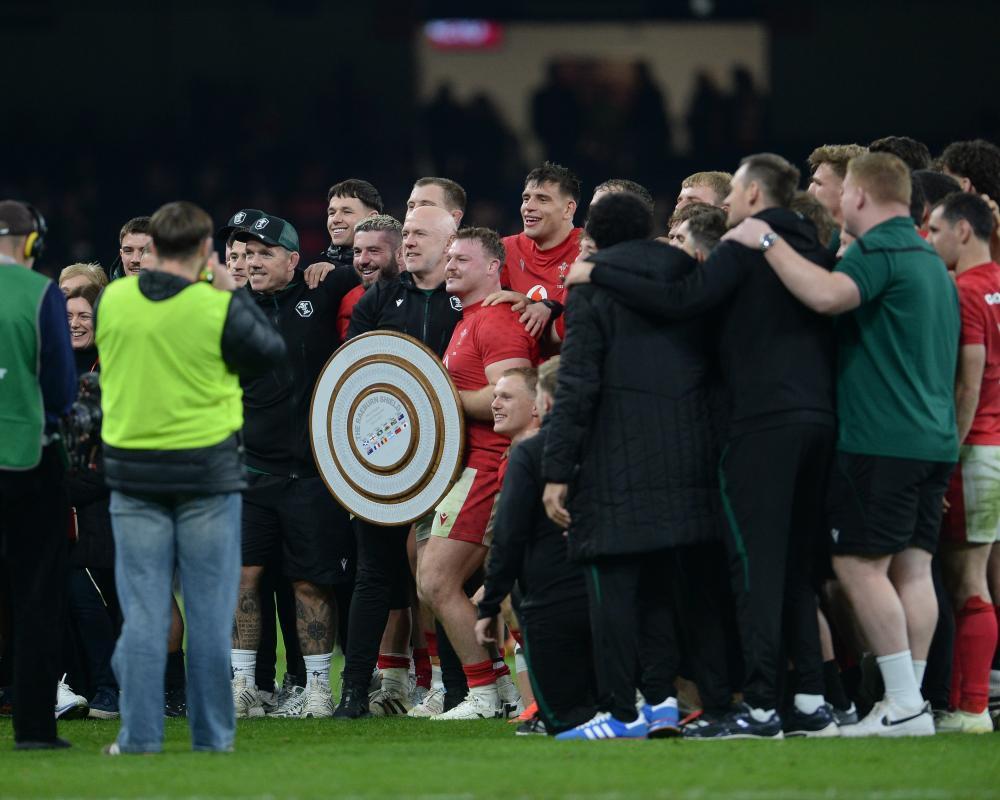
Dewi Lake, the first Wales captain to lead his team to victory over New Zealand in 73 years, paid tribute to his teammates, who chiselled this win out of a recent history of adversity, sometimes even humiliation. At last, they gave this rugby nation reason to be proud again, as he called the win an “amazing feeling”.
Related: Wales bury 73-year All Blacks hoodoo with seismic victory over New Zealand
“It’s nice to sit in this room and not be disappointed,” he said. “I think we got asked a lot of questions last week in terms of performance, in terms of things that went wrong. We had tough conversations in the week [after a narrow win over Japan]. We’re a group that trusts each other a lot, and to put on the field what we did today, to make history, it’s tough to put it into words really. But it is nothing this group doesn’t deserve for the work they put in for the last year, year and a half.”
The win will surely instil some belief in this young Wales team. Lake insisted it was already there. “I think sometimes we sit in front of the media and say we can beat them, and it’s probably a passing comment for some people at home. It’s not for us. We work hard. We have tough conversations. Not only players, coaches, staff. Like you wouldn’t believe the work that goes on for this group to grow and succeed. So, yeah, we do believe that we can do it, and and that’s why.”
Ireland warmed up for a showdown with world champions South Africa by labouring to a 43-15 Nations Championship victory over Fiji in Dublin. The hosts had won all six previous Test matches between the sides but struggled for fluency and briefly trailed during an uncomfortable opening period at a subdued Aviva Stadium. Robert Baloucoune scored twice in the first half for Andy Farrell’s men after quick-fire tries from Fiji pair Josua Tuisova and Peceli Yato overturned Tommy O’Brien’s early opener.
Ronan Kelleher, Andrew Porter, O’Brien and Nick Timoney went over in the second half as Ireland eventually pulled clear to keep alive their hopes of reaching the Nations Championship final. The result leaves Ireland level on 20 points with second-placed England in the northern hemisphere standings – a point below leaders France – ahead of next week’s mouthwatering clash with the Springboks.
Argentina bounced back from last week’s heavy Nations Championship defeat in Ireland as they held on to beat Italy 19-14 in Genoa. The visitors were forced to fight back from behind then breathed a sigh of relief when Alessandro Garbisi’s last-minute penalty kick strayed beyond the try line.
Monty Ioane scored the opening try for Italy who dominated the early stages and were unlucky to reach half-time on level terms after Bautista Bernasconi’s converted effort. Argentina took control in the second half with tries from Rodrigo Isgro and Matteo Carreras helping to nudge them 19-7 clear, before a penalty try gave Italy hope, and the South Americans hung on despite losing both Joel Sclavi and Efraín Elías to yellow cards. Press Association
The Principality Stadium had 20,000 empty seats, such was the level of expectation, but the noise they made by the end was as deafening as it ever was in the good times. “I think I stopped watching with a minute 20 left,” said Lake. “It’s almost as if you’re blocked out. You hear the noise, but it’s like it’s background noise. I just waited for the whistle. It’s an amazing feeling.”
Beauden Barrett, captain of the All Blacks for the first time in his 149th Test, was gracious in defeat. “It felt like a brick wall at times,” he said of Wales’ defence, “so you have to give them credit. They brought the crowd into the game. You’re well aware of them when you come here. That’s why it’s one of the best places to play rugby, when there’s that support behind you. It was like playing 16 or 17.”
Dave Rennie, New Zealand’s coach, said: “I give credit to Wales. They were really clinical when they got their chances, and then they defended for massive periods. It hurts, but you’ve got to take it on the chin. Wales were passionate, and every time they kept us out, I reckon they grew and became harder to break down.”