A political organizations behind a wave of Democratic doctors and scientists winning elections up and down the ballot is calling the stunning rebuke of Trumpism the “Stem swing” and “revenge of the nerds”.
The wins come after years of cuts and upheaval to US health and science infrastructure, as Democrats spent big on health-related ads and as voters rejected the Make America Healthy Again (Maha) movement.
“It’s clear from the results: 2026 was a healthcare election,” said Erik Polyak, executive director of 3.14 Action, a group that worked to elect Democratic health professionals and scientists across the country. “We’ve heard a lot about affordability. Healthcare affordability is the No 1 piece of that. Our doctors and scientists are certainly well-equipped to lead on those issues.”
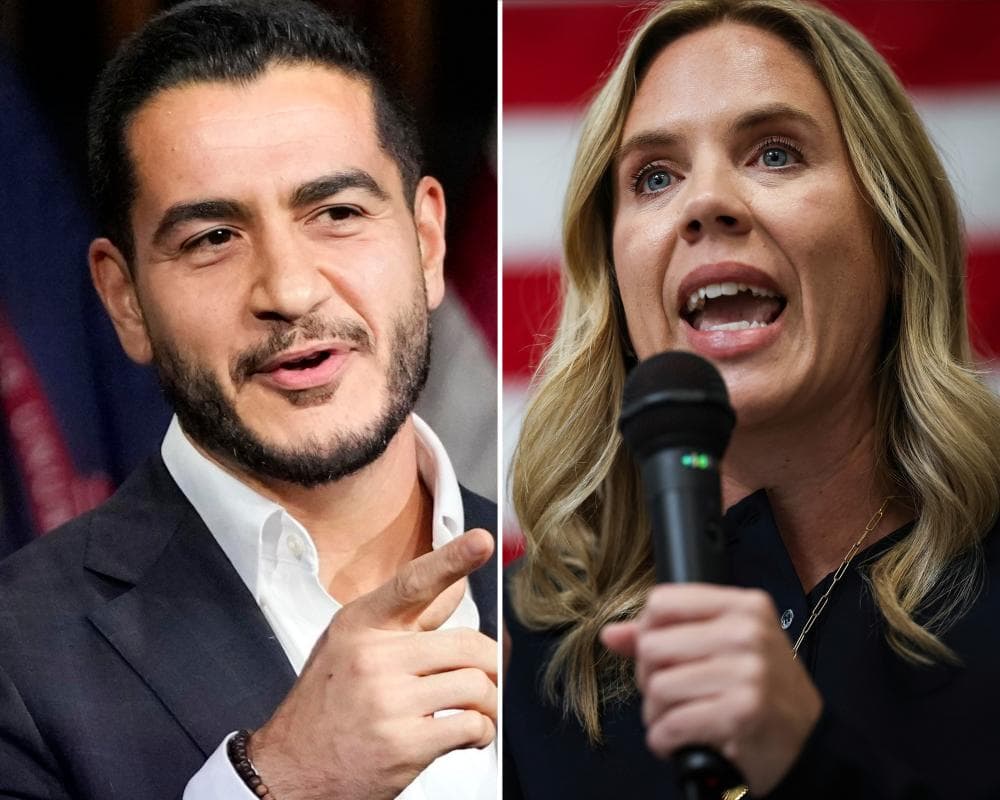
Among the history-making lawmakers are Democrats Dr Abdul El-Sayed of Michigan and Dr Annie Andrews of South Carolina. The last time a Democratic doctor held a seat in the US Senate was in 1969 – the era when Medicare and Medicaid were passed into law. They are far from alone: 3.14 Action is still tallying wins and waiting for results among “hundreds” of obscure state races, some of which are not even reporting results yet.
“The voters’ message is simple and clear: enough,” Dr Richard Besser, president and CEO of the Robert Wood Johnson Foundation, a philanthropic organization dedicated to improving Americans’ health, said in a statement.
“People across America are frustrated by the high cost of living, exhausted trying to make ends meet, and fed up with a ridiculously expensive and complicated healthcare system,” said Besser. “They want leaders who understand how hard it is and will do something to make their lives better.”
Doctors and scientists have long held leadership roles in Congress, but until this election, the overwhelming majority were Republican. Perhaps unsurprisingly, scientists studied this: from 2011 to 2020, 86% of the physician-members of Congress were Republican and three-quarters were from southern states.
The 2026 election turned that on its head. Republicans like Dr Mariannette Miller-Meeks of Iowa and Senate candidate Dr Roger Marshall – both allies of the US health secretary, Robert F Kennedy Jr – lost. Races for three more Republican doctors were too close to call. Meanwhile, all incumbent Democratic doctors won their races.
Galvanizing Americans behind science did not come without a cost. Trump and Kennedy brought upheaval to nearly every American scientific institution and corner of American healthcare, from the Environmental Protection Agency (EPA) to Medicaid, the public health program that insures 72 million Americans.
The Centers for Disease Control and Prevention (CDC) has lost up to one-third of its staff in the midst of a record-breaking measles outbreak. The National Institutes of Health (NIH), the world’s largest public funder of biomedical research, lost leadership and saw path-breaking research stymied amid disruptions, cancellations and censorship. The Food and Drug Administration (FDA) struggled to keep up with a historic outbreak of diarrhea-inducing cyclosporiasis. On election day, New York health authorities announced that a child in the state had died of measles for the first time in 30 years.
Kennedy disrupted and defunded federal work on vaccines to placate a base of zealots, as four in 10 “Maha voters” worried about healthcare prices. He also became a key figure for doctors and scientists to rally against. Before the election, 3.14 Action said that Kennedy was “our No 1 recruitment and fundraising tool – hands down”.
Democrats capitalized on this upheaval. Healthcare was the second-biggest issue in campaign ads, according to the Cook Political Report, with Democrats running more than 158,000 healthcare-related ads versus 61,000 for Republicans. 3.14 Action alone spent $23m on independent ads, most targeting health issues including – as corruption became a defining issue of the race – standing up to pharmaceutical companies and insurers.
High-profile Democratic candidates often spoke about local healthcare challenges. In South Carolina, as a measles outbreak took hold in February, pediatrician Andrews was able to give specific health advice even as federal authorities downplayed the dangers.
“I never in a million years, when I was in medical school, thought that I would be running for the US Senate and also talking about measles nearly every single day,” Andrews told the 19th at the time.
El-Sayed pitched a vision of Medicare for All that would save rural hospitals threatened by the Republican-led One Big Beautiful Bill Act. His call and response with the crowd was direct: “Money in your … ” “Pocket!” “Money out of … ” “Politics!” “Medicare for … ” “All!”
In Ohio, where Dr Amy Acton prevailed, her experience as a health director during Covid-19 turned out to be an asset, rather than a liability. In Iowa, Democrat Christina Bohannan, who is not a doctor but a law professor, pledged to spend more on research as rising cancer rates became a bipartisan political issue in the state.
“Americans who believe in science are fired up,” said Polyak. “We’ve flipped at least 10 Republican seats and the final number is the low 30s,. Flipping control of the House in 2026 ran through Democratic doctors and scientists – and we led the charge.”
New Democratic lawmakers face far-reaching challenges when they are sworn in. The most draconian cuts of the One Big Beautiful Bill Act go into effect on New Year’s Day 2027. Among the most emblematic are work requirements for Medicaid. All told, cuts are expected to result in 17 million people losing insurance in the next decade.
They will also be faced with enormous insurers and drug companies, which will seek to push back and influence lawmakers as Democrats hammer out consensus on wide-ranging health proposals pitched during the campaign, from a public option to government-backed single-payer healthcare. And public health political organizations are already calling for Kennedy to be removed from office.
“In a lot of ways, this election represented the beginning of the end of RFK Jr’s disastrous leadership,” said Polyak. “It’s clear Americans want something different – they didn’t elect all these Democratic scientists just to oppose Trump. People want to see an alternative agenda, they want to see what Democratic scientists can deliver for them.”