Steve Rose’s account of Sweden’s datacentre sector (‘Datacentres are deeply unpopular. Has Sweden made one we can all love?’, 12 November) is a welcome reminder that digital infrastructure can be developed in more environmentally responsible ways. However, his suggestion that datacentres have become politically contentious elsewhere, “but here in Sweden, not so much”, is a misrepresentation.
Consider the proposed Google datacentre development at Torsboda, near Sundsvall, which requires an enormous allocation of electricity and industrial land. The StoppaGoogle campaign, initiated by the regional political party Norrlandspartiet, has been vocal in challenging what this development will mean for electricity prices, employment and regional development.
Controversy over datacentres in Sweden’s north reflect wider debate about resource extraction for the green and technological transitions, and the worry that Sweden is becoming an “electricity colony” of big tech, providing cheap, green energy while the economic benefits are realised elsewhere.
At the same time, Sweden-based researchers, such as Julia Velkova, and Jutta Haider and Malte Rödl, have argued that the sustainability of digital infrastructure cannot be reduced to carbon emissions and technological efficiency. Datacentres place high demands on electricity grids, necessitating government investment and compromising access for other industries, communities and public services. While these direct impacts of datacentres are important, so too are the downstream consequences that they overshadow, including how digital services promote climate disinformation and unsustainable mass consumption.
Sweden’s renewable energy infrastructure does not make datacentre development environmentally or politically unproblematic, but contributes to distinct tensions over who controls, benefits from and gains access to natural and public resources.
Rather than presenting Sweden as an exception to the growing politicisation of datacentres, we should recognise how these conflicts emerge differently in different places, shaped by their histories, infrastructures and political economies.
James White and Nora Söderberg
Department of Technology and Society, Lund University
Sweden’s datacentre politics are more complicated than they appear
Letters: There are distinct tensions over who controls, benefits from and gains access to natural and public resources, write James White and Nora Söderberg
· 1 min read · Source: The Guardian

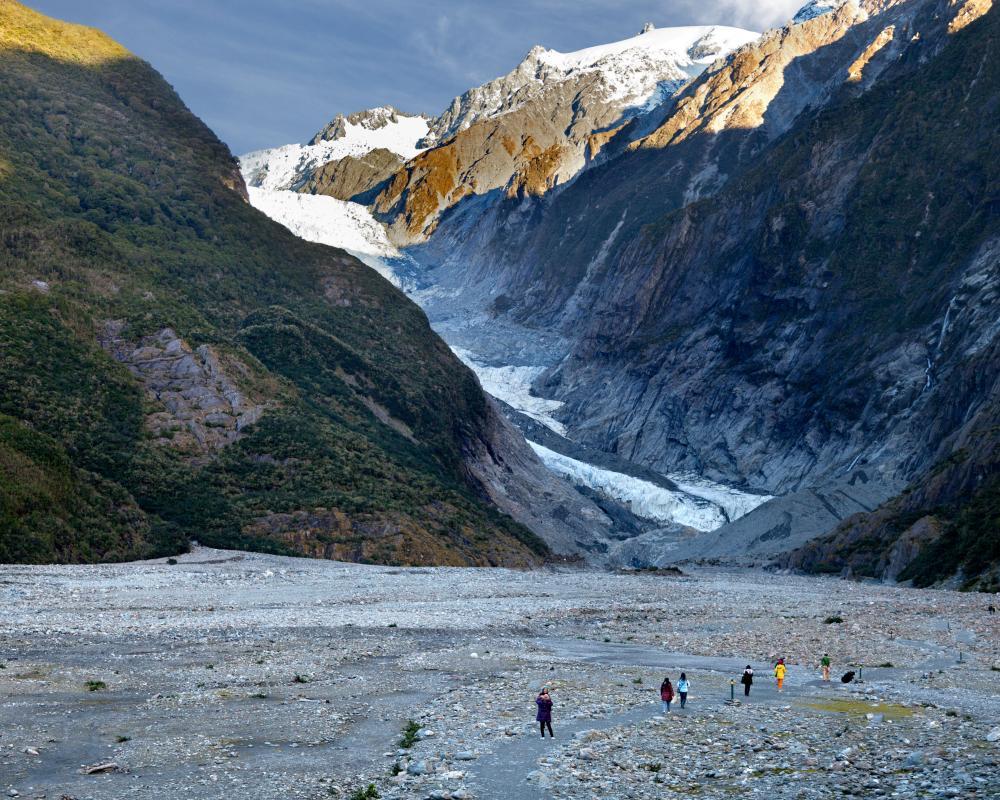
Natural beauty made this New Zealand tourist village. Now it threatens its existence
Famed for its nearby glacier, Franz Josef village faces ‘catastrophic’ flooding and deaths if action not taken to manage the Waiho River
Eva Corlett in Wellington

Butt of the joke: Trump impersonator mocks president at Canada press dinner
Carney watches on as comedian lampoons US leader and his interest in men’s backsides at correspondents’ event Ottawa
Leyland Cecco in Toronto

Israel seeks to jail Palestinian student activist without trial after dorm arrest
Mahdi Tounsi appeared with visible bruising after being interrogated by police on his association with Israeli-Palestinian organisations
Emma Graham-Harrison in Jerusalem

If Trump, Xi and Putin are carving up the pudding, who gets the sixpence?
Letters: Readers respond to an article by Rafael Behr on the Shenzhen summit, where the three world leaders met without a place at the table for Europe