Violence has erupted again in Yemen, killing and wounding around 1,000 people and displacing tens of thousands. It is the most significant fighting between the Iran-aligned Houthis and the Saudi-backed Yemeni government forces in years.
Saudi Arabia and the Houthis have targeted each other with air, missile and drone strikes, threatening to open another front in the US-Iran war. At stake is the balance of power in Yemen, as well as another waterway critical to global shipping.
Though the immediate catalyst for the fighting has been the US-Iran war, it stems from years of conflict in Yemen itself.
Who are the warring parties in Yemen’s civil war and who are their backers?
The two main parties fighting in Yemen’s civil war are the Yemeni government forces alongside their allies, and the Houthi rebel movement. Yemen’s government controls the north-east of the country, and its southern port. The government is the internationally-recognised authority in the country, but is chiefly backed by Saudi Arabia and a coalition of Arab countries which intervened on behalf of the government during Yemen’s civil war.
The Saudi-led coalition, in addition to supporting the Yemeni government forces, directly intervenes militarily in the country, mainly through airstrikes.
The government’s control of the country is contested by the Houthi rebels, who hold the western part of the country, including its capital, Sana’a. The Shia group is broadly aligned with Iran and comprises part of the “axis of resistance”, a coalition of Iran-aligned armed groups in the Middle East, such as Hezbollah. But while the group is aligned ideologically with Iran, which supplies some arms shipments, the Houthis are considered an independent group with their own policies.
A variety of smaller armed groups are also active in the country.
How did the war in Yemen begin?
The civil war began in 2014, when the Houthis seized Sana’a after popular protests against the then president, Ali Abdullah Saleh, who had been in power for 33 years. A year later, the Houthis captured Sana’a and Saleh’s successor, Abd Rabbu Mansour Hadi, fled to Saudi Arabia.
A coalition of mostly Arab countries led by Saudi Arabia then intervened on behalf of the Yemeni government, with a mostly aerial campaign that was widely criticised for its devastating effect on the civilians of Yemen.
The Yemeni government declared the southern port city of Aden to be its temporary capital, while the Houthis continued to maintain their control over Sana’a and much of the rest of north-west Yemen.
The government-aligned side was made up of several groups that fractured over the course of the war, primarily along the lines of their two chief backers: Saudi Arabia, which backed the Yemeni government itself, and the United Arab Emirates, which mainly supported the Southern Transitional Council (STC) and the Joint Forces.
The country also fractured, with al-Qaida seizing territory in east Yemen, and separatist groups, such as the STC, pushing for division of the country. The Saudi-led coalition also brought foreign mercenaries into the conflict.
Frontlines hardened and the war entered a deadlock. The Saudi-led coalition’s intervention was becoming increasingly unpopular internationally and had not led to the defeat of the Houthis. Weary of fighting, warring parties agreed to a temporary UN-mediated truce in 2022. The truce was extended twice, and calm largely held across the country until this September.
Why has the UN-brokered peace plan broken down?
The peace plan has been strained since the war in Gaza started on 7 October 2023. Israel launched the war in response to a Hamas-led attack in Israel that killed around 1,200 people. Israel’s war in Gaza, which has killed more than 70,000 Palestinians and earned widespread condemnation for what a UN committee said was genocide, drew the axis of resistance into the fray.
The Houthis, in what it said was a move of solidarity with the people of Gaza, began targeting ships in the Red Sea that it said were heading for Israel. The western coast of Yemen occupies a strategic position for global shipping because it overlooks Bab al-Mandab, a strait that links the Red Sea and the Indian Ocean.
The Houthi campaign brought about a US military intervention and strained the truce in Yemen. At the same time, its intervention brought the Houthis support regionally and within the territory they hold.
With the Houthis’ position strengthened, the group stopped seriously engaging in negotiations, frustrating Saudi Arabia.
In July, an Iranian plane landed in Sana’a airport, despite the protests of the Yemeni government, leading Saudi Arabia to strike the airport. The Houthis then declared a naval blockade of Saudi Arabia in the Red Sea, a key route for Saudi oil since Iran closed the strait of Hormuz in March.
Why did fighting start again last week?
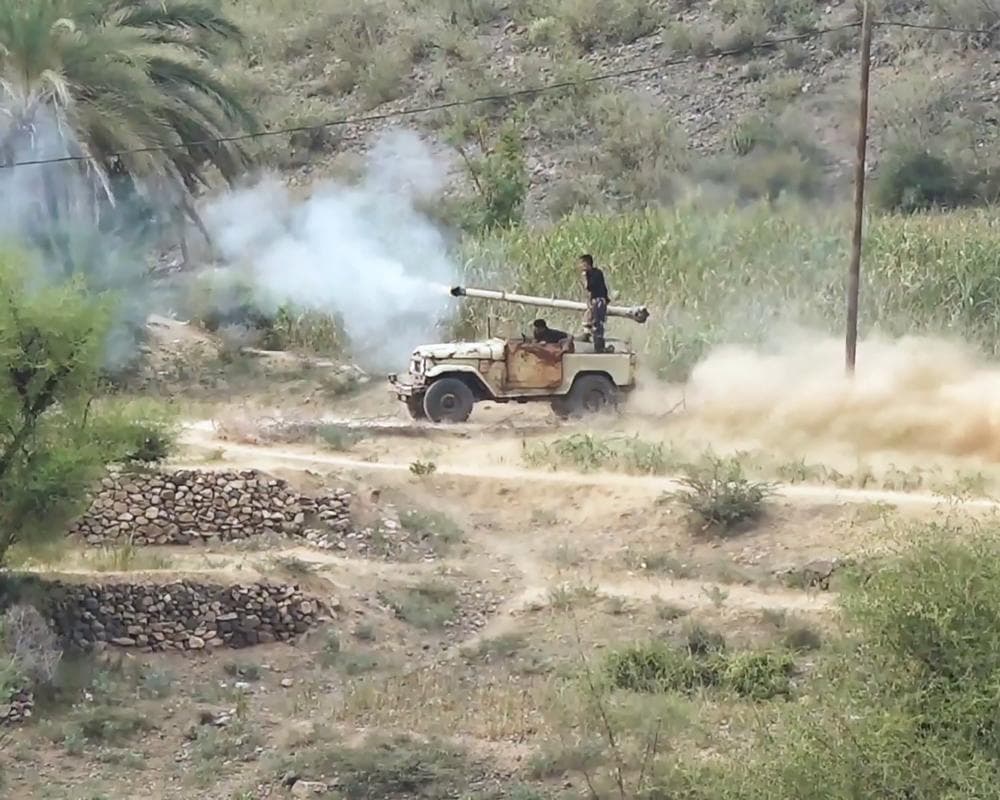
Last week the Houthis launched a wide-ranging offensive to take parts of the western coast of Yemen and gain a more strategic position over Bab al-Mandab. Fighting then broke out across multiple fronts in Yemen as the Saudi-backed government forces tried to reconsolidate their position, with clashes starting in al-Jawf, al-Baydaa, Taiz and Hodeida.
The Yemeni government forces then released a statement saying they were launching their own campaign to try to retake Sana’a from the Houthis.
The Houthis launched missile strikes on Saudi Arabia on Tuesday, injuring 73 people and causing huge fires at Saudi oil installations. Saudi Arabia then launched more than 50 airstrikes on Yemen in a 12-hour period on Wednesday.
It was the most significant fighting in the country since the UN-brokered peace plan in 2022.
What has been the humanitarian impact of the war?
The war in Yemen, and the Saudi-led coalition aerial campaign in particular, has devastated the country’s population. At least 150,000 people have been killed since 2014 by fighting alone, while hundreds of thousands more have died from related causes, such as hunger and disease. About 4.5 million people have been displaced by fighting and more than 18.2 million are in dire need of humanitarian assistance, according to the UN.
The renewed fighting has further exacerbated humanitarian conditions. The World Health Organization said the latest clashes have killed or wounded more than 1,000 people and displaced tens of thousands.
Why is Bab al-Mandab emerging as a new flashpoint in the region?
Bab al-Mandab is a critical waterway for shipping, with about 10% of global maritime trade passing through the strait. It has become more important since the US started its war against Iran and the latter closed the strait of Hormuz.
The Red Sea, via Bab al-Mandab, has become a vital lifeline for Saudi Arabia to export its oil. If the Houthis gained control over the strait, the group would be able to virtually close shipping through the waterway, or charge tolls. It would give Iran and its allies control over two key shipping lanes in the region.