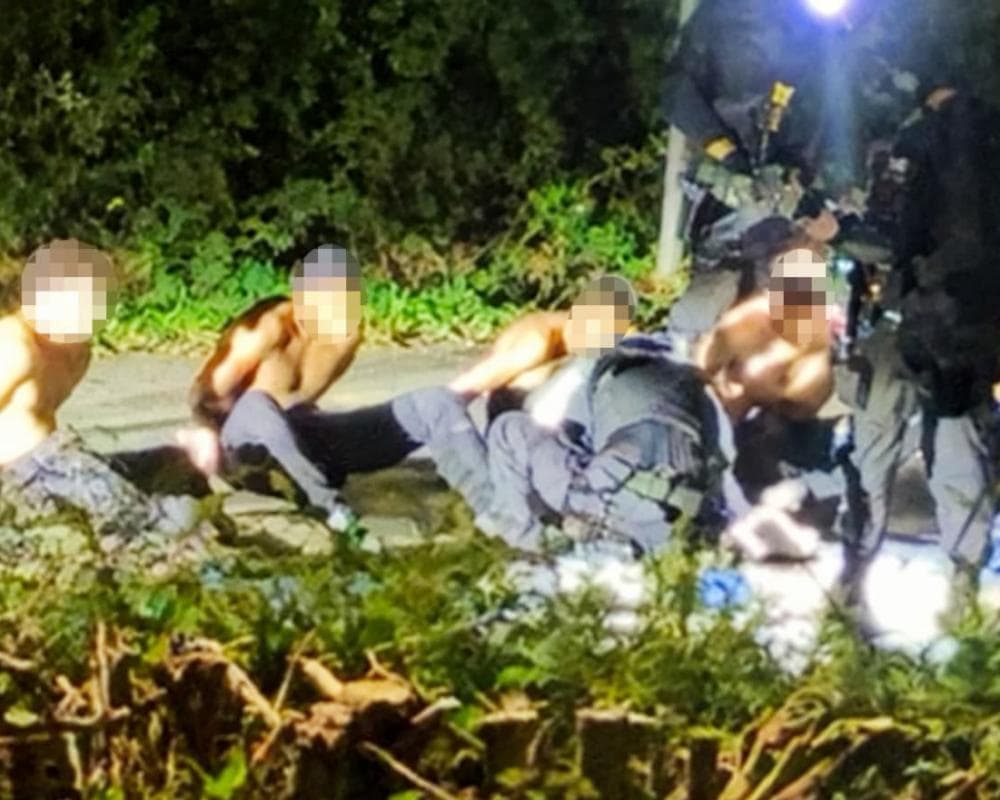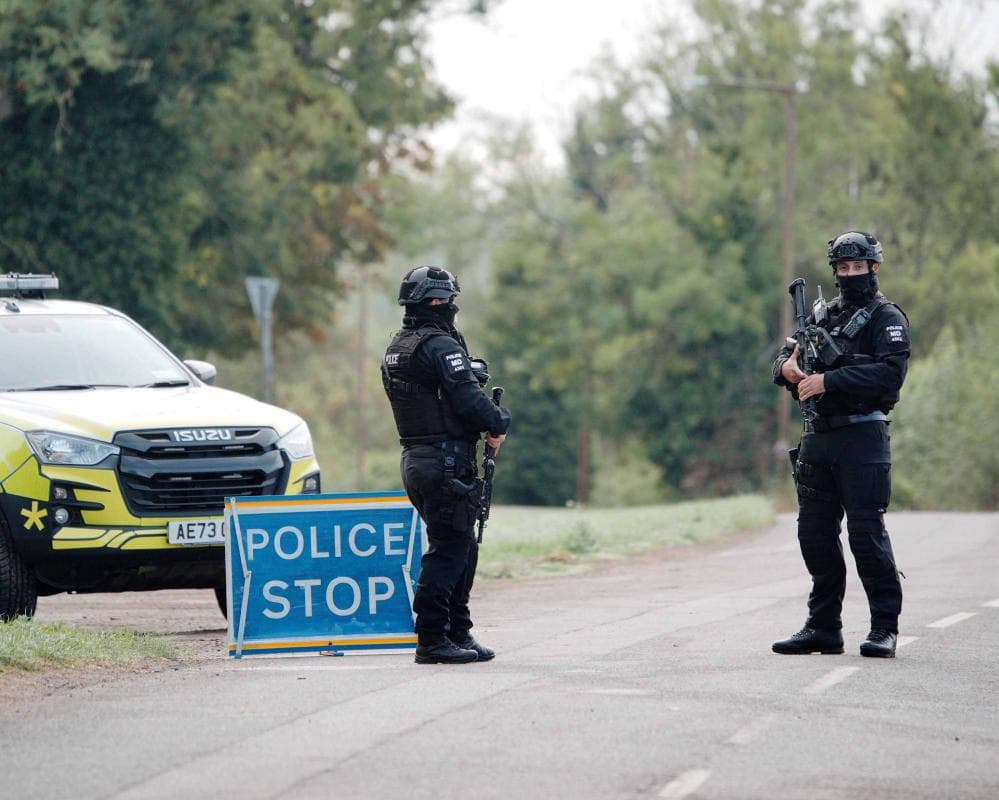
Investigators may be some way from determining exactly what led five men with three vans to a village just outside RAF Fairford in the small hours of Sunday – but the fact they have all been released on bail without immediate charge suggests they are not deemed to pose a serious and violent threat.
In a moment where wider geopolitical tensions mean external threats are perceived to be close, the question of whether Iran had a hand in the alleged plot remains open. Nonetheless, the bailing of the men is a mercifully lower-key development in an investigation that appeared of the utmost gravity.
Related: Farmer who alerted police to RAF Fairford suspected bomb plot says there was ‘no follow-up’
Nigel Farage, the leader of Reform, had earlier insisted that the Fairford incident “proves my point on Iran” and argued that anybody arriving on small boats should not be allowed to move around in the UK. The latter point was an irrelevant argument, already weakened when police said at lunchtime that all five were UK nationals from London.
Though the five were arrested on suspicion of carrying explosives and involvement in a terror plot, after more than 24 hours of searches, nothing had been discovered that would prompt further police action – perhaps explaining why MI5 had no idea that the men and their vans would turn up a mile from the base with unclear intent.
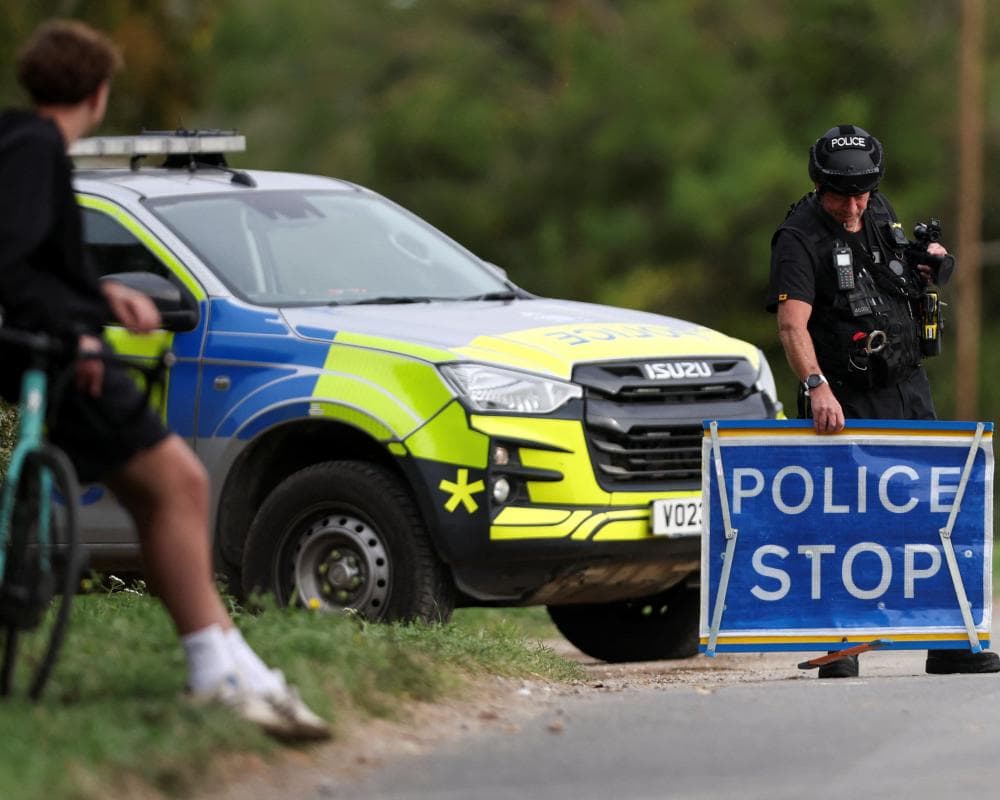
British officials admitted on Sunday the arrests were not led by intelligence, but rather last-minute warnings on the ground. Counter-terror police said they were first aware of three vehicles travelling to the base at 12.45am on Sunday, while a local farmer phoned 999 at 1.36am after the vans blocked the entrance to her drive.
The next day Trump made a characteristically inflated claim that the US and UK had been monitoring the men for “a long time” and that they had been trying to do “big damage”. Threat levels at Fairford have been at the highest level for several days, apparently backing this up – but UK sources say this was related to wider concerns about threats to US bases, not specific to the site.
RAF Fairford is the European home for US air force bombers, essentially an American base on British soil. It has been used by the US in its bombing campaign against Iran, after the former prime minister Keir Starmer agreed to allow American strikes on Iranian missile launch sites in the war Donald Trump started in the spring.
The base has also been a source of explicit interest to Tehran. Iran’s Islamic Revolutionary Guard Corps (IRGC) issued a statement on 23 July, as the US carried out a 13th day of consecutive bombing attacks. It said that any bases used by the US to attack Iran, including Fairford, were “legitimate targets”.
That would give Fairford an obvious value, though it is not clear why anyone from London would feel bold enough to attack a military base, given it would be expected to be protected by armed personnel. Rational plotters probably would not expect to survive, and would at least expect the most serious penalties available under law.
Critically, there has been no firm information from UK counter-terror police about what explosives or chemicals were found or whether there was deemed to be a viable device or devices in the vans – the kind of information that would immediately point to the degree of sophistication and intent in any terror plot.
Tehran has been trying to step up attacks on targets in the west over the past three years, as fighting in the Middle East has sprawled and expanded after October 2023, and particularly after Trump joined Israel to start a full-scale war on Iran in February. But its track record has been mixed.
A year ago, Ken McCallum, the head of MI5, said the Security Service had “tracked more than 20 potentially lethal Iran-backed plots in just the one year”. Two Romanian men were found guilty in July of stabbing the Iranian journalist Pouria Zeraati in the leg in Wimbledon two years earlier in a state-directed attack; he worked for the independent Persian channel Iran International.
Yvette Cooper, then home secretary, sanctioned an IRGC-backed terror group, Harakat Ashab al-Yamin al-Islamia, in July after it claimed responsibility for a series of attacks in the UK, including the burning of four Jewish community ambulances in March. But while four men have pleaded guilty, evidence in the case has yet to be heard in court, with prosecutors only saying so far there was a “terrorist connection”.
While Iran’s propagandists might make heavy threats online about military bases in Britain, the reality is considerably more variable. In April police closed and searched part of Kensington Gardens near the Israeli embassy in London after an online video appeared to suggest the building had been targeted by drones containing hazardous substances. On that occasion, nothing was found.