Summary
-
At least four people have died from Hurricane Isaias. In Florida, one person was killed after a tree fell on their home. Another individual was found dead in their garage with the generator on. In Alabama, two people are dead, according to the state’s governor, Kay Ivey.
-
After beginning as a category 2 hurricane, Isaias weakened to a post-tropical cyclone early on Saturday after it made landfall in Florida and lashed the US Gulf coast with heavy rain and fierce winds.
-
Customers are slowly getting power back as the total number of power outages across the US has trended down after hitting a peak of more than 850,000 earlier in the day. As of Saturday evening, it is hovering at about 630,000, according to poweroutage.com.
-
Donald Trump has allowed the Federal Emergency Management Agency (Fema) to provide resources to Georgia to help grapple with the ongoing storm, including possible tornadoes, the agency said on Saturday. Trump previously approved emergency declarations for Florida and Alabama ahead of the storm’s landfall.
-
The US Department of Energy said it authorized an emergency exchange of up to 4m barrels of crude oil from the strategic petroleum reserve to address supply disruptions due to Hurricane Isaias.
-
Tornadoes remain a possibility across the impacted southern states. As the system shifts northeast, an additional 1-3in of rain is expected, with localized rainfall totals exceeding 5in in areas hit by training storms.
-
Wind gusts up to 60mph threaten to cause further widespread power outages, down trees and disrupt travel through the remainder of the weekend.
Updated
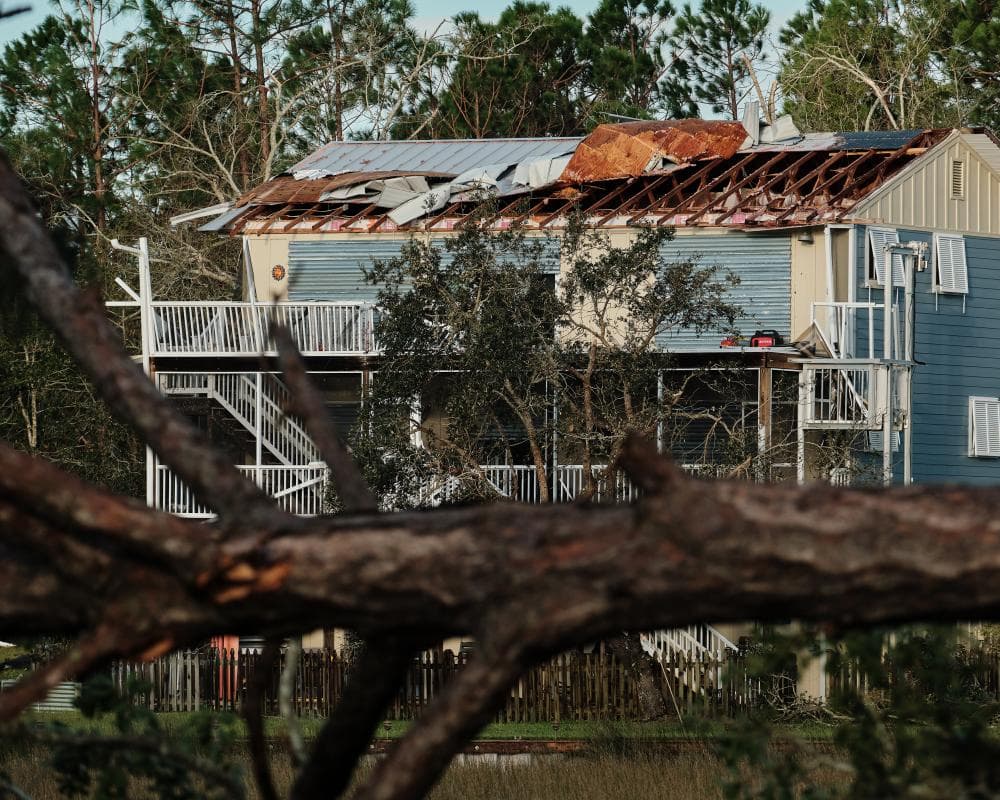
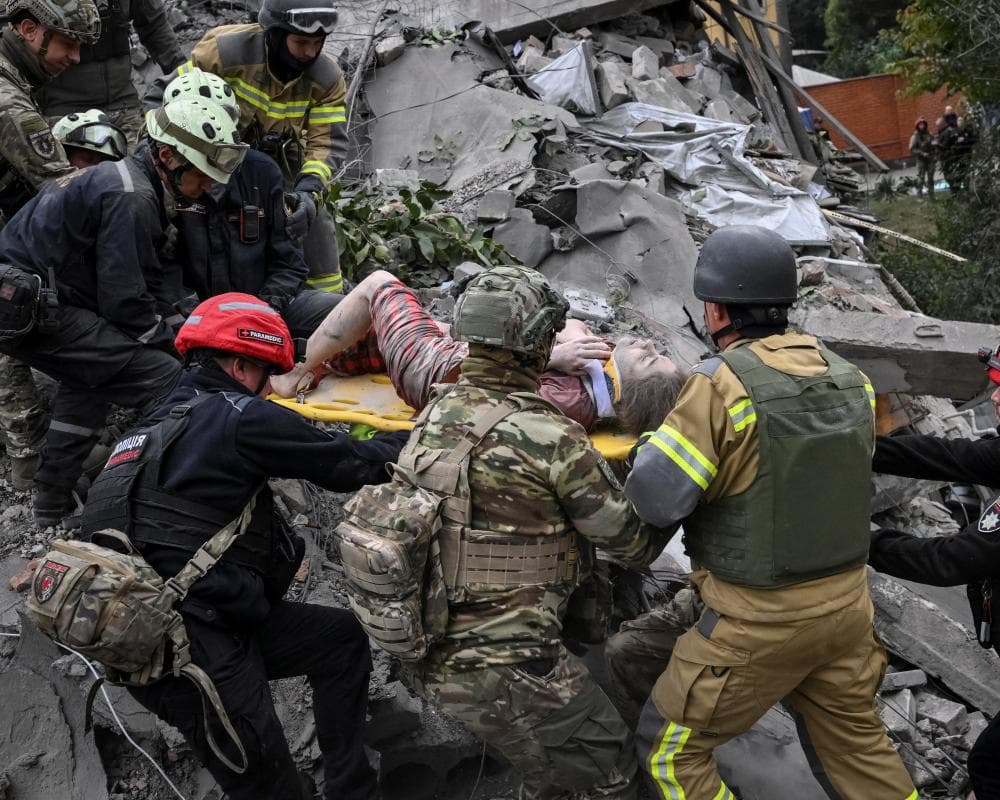
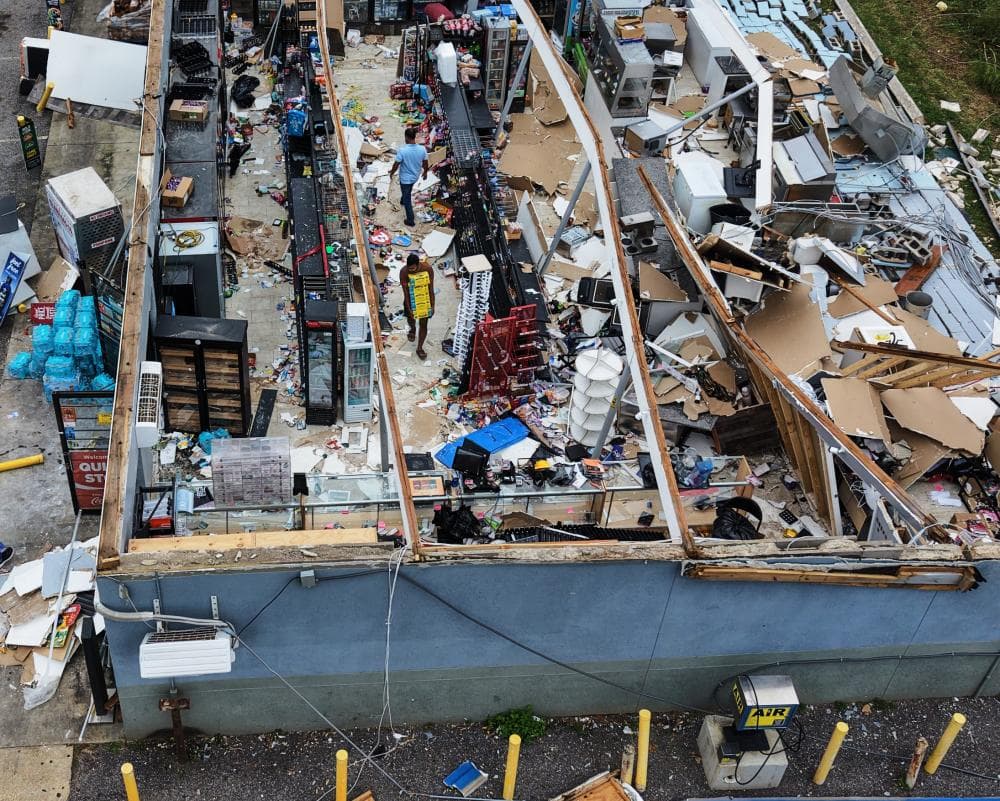
Here’s a look at just some of the property damage that Isaias has wreaked across its path so far today.
Updated
Donald Trump has allowed the Federal Emergency Management Agency (Fema) to provide resources to Georgia to help grapple with the ongoing storm, including possible tornadoes, the agency said on Saturday.
Several roads have already been blocked by fallen trees around Atlanta, local outlets have reported.
Trump previously approved emergency declarations for Florida and Alabama ahead of the landfall of Hurricane Isaias.
The National Hurricane Center said parts of Georgia and the Carolinas could see up to 10in of rain, though totals are likely to be 3 to 6in. The center added that there is a possibility of tornadoes across eastern Georgia and the Carolinas.
Updated
Isaias weakens to post-tropical cyclone over central Alabama
Isaias, which has been downgraded from a hurricane to a post-tropical cyclone, is rapidly weakening over central Alabama, but its remnants are continuing to unleash severe weather across the eastern US with torrential rain and damaging winds.
Approximately 10 million residents from Florida northward to southern Virginia remain under flood watches and warnings, with several advisories extended through Sunday afternoon.
As the system shifts toward the mid-Atlantic and north-east, an additional 1-3in of rain is expected, with localized rainfall totals exceeding 5in in areas hit by training storms.
A massive swath of the eastern seaboard, encompassing roughly 22 million people from Louisiana up into Pennsylvania, remains under wind alerts. Wind gusts up to 60mph threaten to cause widespread power outages, down trees and disrupt travel through the remainder of the weekend.
Updated
The Blue Cross NC 300 at Charlotte Motor Speedway has been postponed to Sunday at 8pm due to heavy rain and weather conditions from the remnants of Hurricane Isaias.
The race will follow the Nascar Cup Series Bank of America 400 at the track in Concord, North Carolina.
Between 3 and 6in of rain is predicted in parts of Georgia and North and South Carolina due to Isaias, with up to 10in possible in some areas.
Updated
Shell, the oil and gas mega-company, said they are actively monitoring the “improving offshore conditions” in the wake of Hurricane Isaias. As conditions continue to improve today, the company says they are “beginning the process of redeploying personnel to our Mars, Olympus, Ursa, Vito and Appomattox assets”.
Updated
Energy department approves 4m barrels of emergency oil
The US Department of Energy said on Saturday it authorized an emergency exchange of up to 4m barrels of crude oil from the strategic petroleum reserve to address supply disruptions due to Hurricane Isaias.
“With this emergency exchange, the energy department is acting swiftly to help maintain refinery operations, limit disruptions to fuel supplies, and ensure American families and businesses continue to have access to affordable, reliable, and secure energy,” the US secretary of energy, Chris Wright, said in a statement to Reuters.
Updated
At least four dead from Hurricane Isaias
The death toll from Isaias is rising.
In Florida, one person was killed after a tree fell on their home, the state’s governor, Ron DeSantis, said at an afternoon news conference on Saturday. Another individual was found dead in their garage with the generator on.
In Alabama, two people are dead, according to that state’s governor, Kay Ivey.
Earlier reports indicated one casualty due to a downed tree hitting a home, but details around the second death remain unknown.
“This storm cannot clear fast enough,” Ivey wrote in a Saturday statement to social media.
“It brought heavy winds throughout Alabama, taking down trees, knocking out power and doing some damage. Unfortunately, we have also learned that two Alabamians have lost their lives. I am praying for their loved ones this morning.”
Updated
The center of Isaias has moved out of Florida, but storm hazards persist.
State officials advised residents to exercise caution if they go outside.
“There could be downed power lines,” governor Ron DeSantis said early Saturday at a news conference. “There could be floodwaters. Stay out of those.”
Jared Perdue, secretary of Florida’s transportation department, urged the public to avoid unnecessary travel, as utility crews, debris removal teams and first responders are at work.
“Remember vehicles can be swept away in an instance in water that is not very deep,” Perdue said.
Updated
In an update on social media, the Florida national guard shared photos of troops pulling people to safety after a truck became submerged in a flooded ditch.
“En route from Tallahassee, the Soldiers stopped, swam to the vehicle and pulled its occupants to safety,” the post said.
Updated
The Florida state guard said in a statement that teams have been “actively working since 1.30am in Holmes and Escambia Counties executing operations to clear fallen trees and clear vital roadways”.
Alabama Power, which provides electricity to much of the state, said that more than 6,400 outside resources from 25 states are working alongside crews as they work to clear debris and restore power.
Photos show fallen trees and downed power lines across the affected regions:
Updated
Customers slowly getting power returned
The total number of power outages across the US is slowly crawling down from its peak, now sitting at just more than 800,000 based on poweroutage.com reports. Earlier, it had reached more than 850,000.
Updated
Travel remains heavily disrupted across Florida, Alabama, Georgia and Mississippi on Saturday as Isaias continues to stall regional transportation networks.
Airports throughout the Gulf coast are bearing the brunt of the storm’s impact.
Pensacola international airport in Florida remains closed to all commercial traffic as officials conduct safety inspections and assess physical damage after Friday’s shutdown.
Destin-Fort Walton Beach airport in Florida has reopened, but flight operations are severely delayed, with the majority of departing flights canceled on Saturday, according to FlightAware data.
In response to the rolling closures and cancellations, major carriers – including American Airlines, Delta and United Airlines – have issued travel waivers for affected passengers.
Updated
Here are some of the photos coming through of the flooding that Hurricane Isaias has brought throughout parts of Florida.
Updated
One dead in Alabama from hurricane damage
A person died in Birmingham, Alabama, after a tree fell on their home overnight, according to local reports citing the Birmingham fire department.
A tree reportedly fell on a home during the night, trapping two people inside. One of the people trapped in the home died, officials said.
This marks the second fatality over this weekend due to fallen trees resulting from the storm. The other reported death took place in Escambia county, Florida, local officials said.
Updated
The “significant damage” to homes, businesses and public buildings in Monroe county, Alabama, will take days to repair, the county’s emergency management agency said in a Saturday morning statement.
Monroe county officials also said in a social media post there was “crippling damage to communications and power infrastructure”. They added there were downed trees and power lines throughout the county with several impassable roads.
“Please be patient. There was significant damage to the power grid,” the agency said. “Repairs will take days.”
Updated
Around 843,000 people are still without power in the US south-east, according to PowerOutage.com, as Isaias continues to move inland.
Here’s the updated breakdown of the worst affected states, according to the website:
Florida: 438,137
Alabama: 294,662
Georgia: 111,105
According to the latest data, within the past few hours, the number of people without power has sharply increased in Georgia, and slightly increased in Florida. Meanwhile, in recent hours, the number of people without power in Alabama has slightly decreased.
Updated
The majority of roads in Santa Rosa county, Florida, are impassable due to “trees and/or power lines”, the county’s emergency management reported on Saturday morning in a social media post.
A release by the county’s emergency management agency advised people not to travel “unless absolutely necessary” and that crews are working to clear roadways.
The emergency management agency also mentioned in the social media post that their website and phone lines were down, likely due to increased traffic.
Updated
One person has died in Escambia county, Florida, due to the tropical storm, according to the county’s sheriff, Chip W Simmons.
“A tree fell on a house and it unfortunately took the life of a lady,” Simmons said in a video published on social media. “And our thoughts and prayers are obviously with that family.”
This seems to be the first death in Florida resulting from the storm. Earlier this morning, Florida governor Ron DeSantis said during an interview with Fox News he had not yet received any reports of fatalities.
Updated
Florida’s governor, Ron DeSantis, said during an interview with Fox News on Saturday morning that they had not received any reports of fatalities yet in the state.
DeSantis attributed this to likely heightened preparation and previous experience with other tropical storms and hurricanes.
“We’re a peninsula in the middle of a tropical part of the world – we’ve gotta deal with these things,” DeSantis said.
Updated
No search and rescue requests after Isaias a ‘good sign’, DeSantis says
Florida’s governor, Ron DeSantis, said no requests for search and rescue assistance had been received following Isaias, which he described as “cautiously, a good sign”.
Speaking to Fox News, he said:
I think that may be a sign that people heeded the warnings, took proper precautions. We sure would love to say we have not gotten a report of a fatality yet, and we’ll see what happens.
There’s also a lot of hazards post-storm that people should be careful of, but so far we’ve had a lot of assets in place that have not been called on, which is a good sign. I’d rather be over-prepared, and not have to use them, than not have what you need.”
He added that emergency crews have been working overnight to clear roads and bridges, restore power and assess damage.
Updated
The day so far
If you’re just joining us, here are the main developments:
-
Hurricane Isaias has weakened to a post-tropical cyclone early Saturday, the National Hurricane Center (NHC) said, after it made landfall in Florida and lashed the US Gulf coast with heavy rain and fierce winds.
-
The category 2 hurricane hit the coast near Destin, Florida, late on Friday, with maximum sustained winds of 105mph.
-
The storm is expected to move across Alabama and into the Tennessee Valley, the NHC added, with maximum sustained winds decreased to near 35mph.
-
More than 900,000 people have been left without power across the south-east, according to poweroutage.us, with Florida and Alabama among the worst-hit.
-
The NHC warned heavy rainfall across the south-east increases the risk of flash flooding, with southern Alabama, the Florida Panhandle and south-western Georgia expected to be among the hardest-hit areas, while landslides are also possible in the Southern Appalachians.
-
Alabama’s governor, Kay Ivey, said authorities were worried about “possible spinoff tornadoes” in certain parts of the state.
Updated
One significant effect of the stronger El Niño is fewer hurricanes in the Atlantic. In the 30 years to 2020, on average the first hurricane arrived by 11 August, the second by 26 August and the third by 7 September.
Isaias’s October arrival marks a stark contrast from this trend.
At the start of the season, the National Oceanic and Atmospheric Administration (NOAA) predicted a quiet year, anticipating between three and six hurricanes, well below the average of seven. The August forecast cut the expected number to between two and six. Until this year, the latest date for the first Atlantic hurricane was 11 September, in 2002 and 2013.
El Niño is marked by comparatively warm sea surface temperatures in the Pacific and a weakening of the seasonal trade winds. One side-effect is that it increases wind shear – the change in wind speed with height – over the Atlantic. This makes it less likely for tropical storms to evolve into hurricanes, as these require relatively stable air to form over a wide area.
But while things have been mostly quiet on the Atlantic side of the Americas, the eastern Pacific has seen plenty of activity, with 10 hurricanes so far.
Alabama governor warns of 'possible spinoff tornadoes'
We have a statement from the Alabama governor, Kay Ivey:
Right now, we are worried about strong winds, heavy rain and possible spinoff tornadoes in certain parts of the state. As we approach the weekend and any travel plans, make sure you have reliable information as conditions develop. We often hear in emergency management: Hope for the best. Prepare for the worst. That is the approach we need with this particular storm system. After all, we only want to see one Tide roll this weekend. Y’all be safe, heed local warnings and stay weather aware.”
Here are some images on the newswires of the hurricane passing through Pensacola, Florida:
Updated
How storm surges are formed
As a hurricane approaches a coast, the churning winds force ocean water up on to land; atmospheric pressure from the storm also helps squeeze the water ashore. The shallower the continental shelf, the higher the threat of a dangerous surge. The water may take a couple of days to fully subside.
Water is heavy – about 1,700lb, or 770kg, to a cubic yard (0.76 cubic meters) – and it can move fast in a surge, sweeping people to their deaths, throwing about boats and vehicles, and pulverizing structures. Six inches of fast-moving water is enough to knock over an adult, the National Hurricane Center (NHC) says. Surges become even more dangerous as they coincide with high tide.
Hurricane Katrina in 2005 caused storm surges of over 25ft on the Mississippi coastline. The NHC says many of the 1,500 people killed lost their lives, directly or indirectly, due to the storm surges.
Updated
Our data visuals team has been keeping tabs on the path of hurricane Isaias. Here’s where we expect it to hit:
Isaias weakens as it moves across Alabama and Tennessee Valley - NHC
The storm is expected to move across Alabama and into the Tennessee Valley later today and Sunday, the National Hurricane Center (NHC) said in its latest advisory.
“Maximum sustained winds have decreased to near 35 mph (55 km/h) with higher gusts. Slow weakening is forecast today, and Isaias is forecast to dissipate on Sunday,” the center said.
The NHC warned heavy rainfall across the south-east increases the risk of flash flooding, with southern Alabama, the Florida Panhandle and south-western Georgia expected to be among the hardest-hit areas, while landslides are also possible in the Southern Appalachians.
More than 860,000 without power
Isaias has left more than 860,000 people without electricity as it moves inland across the south-east.
Here’s the latest breakdown of the worst affected states, according to poweroutage.us:
Florida: 436,745
Alabama: 316,366
Georgia: 87,334
Washington: 6,550
California: 4,467
Texas: 4,404
Ohio: 3,827
Idaho: 1,549
Isaias, first Atlantic hurricane of 2026 season, batters US Gulf coast
More than half a million people were without power after hurricane Isaias wreaked havoc on the US Gulf Coast, with Alabama and the Florida Panhandle being hit the hardest by the storm.
The category 2 hurricane made landfall near Destin, Florida, late Friday, with maximum sustained winds of 105 miles per hour. It weakened to a post-tropical cyclone by early morning, with winds of 65 mph, the National Weather Service said.
More than 750,000 people in Florida and Alabama have been left without power, according to poweroutage.us, with outages also reported in Georgia for tens of thousands of customers.
“Things are flying really fast, and I’ve never seen wind this fast before, so it’s intense, it’s scary,” Jonathan Ramos, a 40-year-old government employee, said from his hotel in Pensacola, Florida, where the power went out.
“I don’t recommend people coming down here for fun to do this.”
You can read our overnight report here:
Related: Hurricane Isaias makes landfall in Florida and hammers Gulf coast
Isaias intensified into a hurricane on Wednesday night, then becoming the first Atlantic hurricane of the 2026 season.
In the days prior to landfall, storm surge warnings were in effect from the mouth of the Mississippi River to the Suwannee River in Florida. Residents in the affected areas were urged to follow advice from local officials and evacuate if instructed to do so.
Stick with us as we bring you the latest news and updates from hurricane Isaias.