Hello and welcome to the weekend.
This selection of reads from across the Guardian has chronicles of evolution, investigations and interviews which ask us to think about how we remember our loved ones when they are gone, and – of course – stories that leave you with a little something sweet.
Enjoy.
1. Unmarked graves
Peter Giesel was buried in an unmarked communal grave. The state government laid Giesel to rest in a cemetery on the outskirts of Sydney in a single plot with three others. This week, a Guardian Australia investigation found there are more than 100 cases like his across New South Wales. The Guardian revealed Vietnam veterans, rough sleepers and other impoverished Australians are being buried in graves often holding four or more people, a practice relatives such as Giesel’s sister, Nicole, have described as “unspeakable” and “a disgrace”.
Persons without means: This is the designation the state gives to those who are unable to afford their own funerals. Over the course of the investigation, the Guardian discovered at least 18 individuals known to homelessness services in Sydney who have been placed in unmarked graves in the last 10 years.
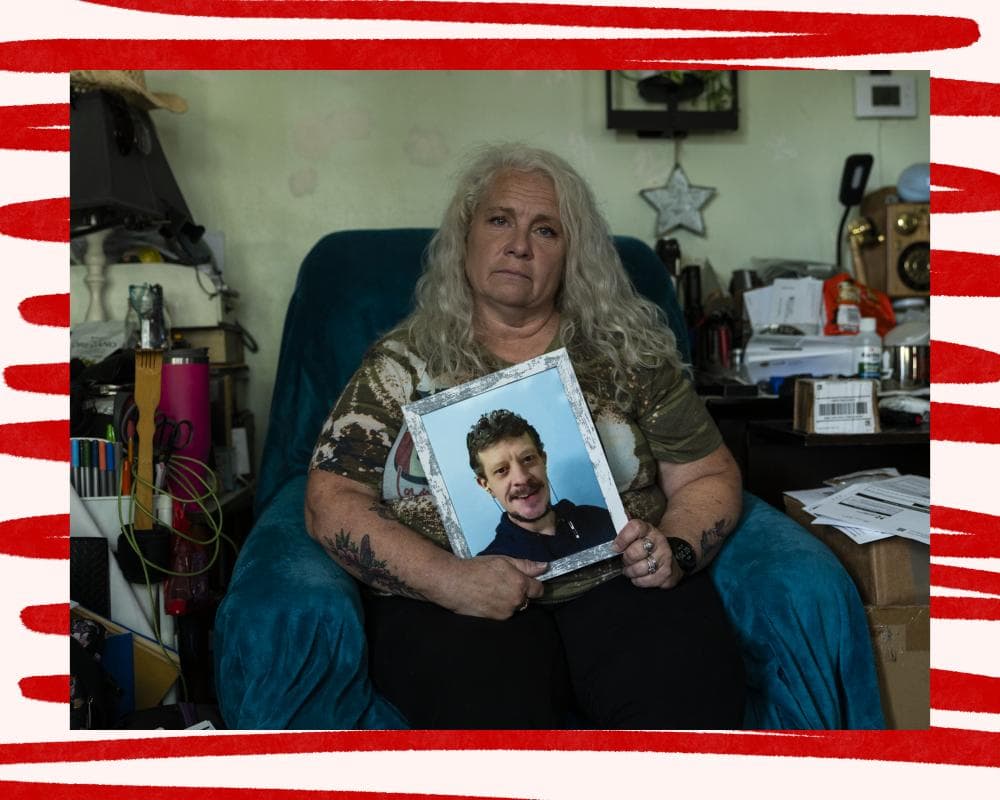
Notable quote: “How could such a heartless thing happen to someone who gave so much of his heart to others,” asks Giesel’s friend Elaine Grady (pictured).
An immediate response: When asked about the revelations, NSW Health delivered an apology to the dead and their loved ones, acknowledging they had not always been treated with the dignity and respect they deserved.
How long will it take to read: Less than seven minutes.
Further reading: Shared graves and stories such as Jayne and Barbara’s, have brought this issue to national attention.
2. A new ‘Lonely Generation’
Young people around the world are lonelier than ever, and examples of this are not hard to find. In online forums, users ask: “How do you deal with touch starvation?” Another asks: “The loneliness is unbearable, is anyone else experiencing this?” The answer to the latter question is yes. From Germany to Australia to the UK, studies show teenagers and young adults are finding social connections harder to form.
Why? The list is long. In her new book, the loneliness researcher and clinical psychologist Dr Michelle Lim examines why young people have turned toward solitude. She cites a long list of overlapping factors, including hyper-competitive education culture, social media, shifting family dynamics, the cost-of-living crisis, the grief many are still feeling from the Covid pandemic, and the rise of automation, “which means a trip to the supermarket can be conducted entirely without speaking to another human”. Young adults are simply not being offered the opportunities to form meaningful connections, Lim says.
“People are getting used to being alone”: Lim’s biggest fear is what she calls “social atrophy”. Young people, she writes, can fall into what she calls the “loneliness loop”. When you experience loneliness, it can cause you to run away from further social interaction out of fear, making connections harder to come by.
How long will it take to read: Five minutes of solitude.
Further reading: Community-maxxing, and making new friends and connections as adults.
3. Drugs, drink and dancing with Bez from the Happy Mondays
Taking drugs, drinking heavily and dancing to the tunes of the Happy Mondays on stage made Bez famous. The story goes, as the Manchester music scene was exploding, band member Shaun Ryder urged Bez (whose real name is Mark Berry) to jump on stage with the band when they were supporting New Order. His “wild-eyed dancing” is now synonymous with the music itself, and as the band celebrate the 35th anniversary of their landmark album Pills ‘n’ Thrills and Bellyaches, Bez is back at it as the Happy Mondays go on a global tour.
A change for the good: After decades of partying, one might expect Bez to show signs of wear from his life on the road with a rock band. But when interviewer Emine Saner showed up at “his lovely cottage, down a rural track in Herefordshire”, Bez appeared unscathed by the years of drugs and drinking. Having given up cocaine and sugar, the former 24 hour party person now “juices every day, eats only organic food, drinks filtered water and works out with weights in his garden”.
Notable quote: “There’s sheep everywhere now,” Bez told Saner. At first, Saner took it as “a reference to our zombified society”, but he meant “actual sheep in the field” they just entered.
How long will it take to read: Just over five minutes, giving you enough time to Step On.
Further reading: Which is the best Happy Mondays song?
4. My sister Nicole married OJ Simpson
Denise Brown’s sister Nicole was murdered by OJ Simpson. On the last night the two sisters spent together, Nicole looked out the window to see Simpson driving by. “He’s constantly following me,” she told Brown. After her sister’s murder and the evidence of long-term abuse that emerged during the trial, Brown became a campaigner against domestic violence. She sat down with the Guardian to discuss what she wishes she had known before her sister’s death, and how she hopes her new book can save lives.
It’s rarely simple to leave: Brown says she told her sister all the wrong things. “You’ve got to leave him. You’ve got to get out of this situation. What are you doing?” she told Nicole. Brown now realises she was being unsupportive at the time, and has learned it is often not easy for a victim to leave. “Batterers usually threaten to take children away, threaten family members. When you are in a cycle like Nicole – like a lot of victims of domestic violence – was in, you are the only one who realises how dangerous that situation can be.”
The car chase: The day after Nicole’s funeral, Simpson was scheduled to turn himself in to the police, but elected to go on the run. While millions watched on TV, Brown says she joined in the chase. “We were out of our minds. We got on the road, but he was so far ahead of us. I mean, come on, really?” She laughs at herself, but says: “It was a time of our lives that was insane.”
How long will it take to read: Five minutes.
Further reading: More stories of survival.
• In Australia, domestic and family violence counselling is available from Full Stop Australia on 1800 385 578. In the UK, call the national domestic abuse helpline on 0808 2000 247, or visit Women’s Aid. In the US, the domestic violence hotline is 1-800-799-SAFE (7233). Other international helplines may be found via www.befrienders.org
5. The generation raised on sugar rations
In the dark days after the second world war in Britain, many foods, including sugar, remained rationed. Adults had just 3 tbsp (40g) a day to stretch between cups of tea and desserts. Children were offered even less, with the very young expected to have no sugar at all. But then the brakes came off, and sugar consumption in the UK almost doubled. Now scientists are looking back on this era to study the impact of sugar on our health.
Notable quote: “History created an experiment that we could never deliberately run over a human lifetime,” says Dr Jiazhen Zheng at Hong Kong University of Science and Technology.
What have they learned? Using data from the UK Biobank to compare the health of people born shortly before and after sugar rationing ended in the UK, scientists from the University of Southern California found that the longer people had spent under rationing, the lower their risk of developing type 2 diabetes and high blood pressure in mid- to later life. Another study, this one led by Zheng in Hong Kong, found reduced sugar exposure was associated with a lower risk of a growing list of health conditions. “In our work,” Zheng says, “we have seen associations with cardiovascular disease, liver disease, respiratory health, dementia and, more recently, broader measures of ageing.”
How long will it take to read: A sweet three-and-a-half minutes.
Further reading: Everything you need to know about sugar.
Sign up
If you would like to receive these Five Great Reads to your email inbox every weekend, sign up here. And check out out the full list of our local and international newsletters.