Closing summary
Global stocks have drifted lower, with the Dow Jones in New York and the FTSE 100 index in London both sliding 1%.
The benchmark US index, S&P 500, slipped 0.1%. The German and Italian markets both lost 0.8% while the French bourse fell 0.6%.
Nvidia shares are down 1.5%, giving the company a market value of $3.69 trillion, a day after its quarterly revenue beat expectations, coming in at $115.84bn, doubling from the same time period a year ago.
But investors are nervous about the world’s most valuable chipmaker’s future, after it ousted its chief executive Jensen Huang last Thursday over allegations of several extramarital affairs, including one with a suspected Chinese spy and two with his own employees.
Our main stories:
Related: UK inflation rises to 3.6% after petrol and diesel prices hit record high
Related: Energy bills in Great Britain forecast to rise by 26% to £2,166 from January
Related: Burnham considering cuts to national insurance to create more youth jobs
Related: Labour faces double blow over UK fossil fuel projects
Related: ‘Zero’ evidence that recent cascade of tech outages are linked, says Rubio
Related: Republicans could expedite bill to make big oil immune to lawsuits, warn experts
Related: Ministers to drop foie gras imports ban to help seal EU food trade deal
Thank you for reading. We’ll be back tomorrow. Good-bye! – JK
ECB to discuss raising reserve requirement next week – report
Next week, European Central Bank policymakers plan to discuss raising minimum reserve requirements for eurozone banks, a move that would reduce the ECB’s interest bill and withdraw some liquidity from the financial system, Reuters reported, citing four sources.
The change, to be debated at a governing council meeting next Wednesday, would raise the share of cash that commercial lenders must keep in an unremunerated account to 2% from 1% of deposits and other short-term liabilities. A decision may be pushed back to the next policy meeting on 17 December.
The main effect of the move would be to cut losses at central banks in the bloc, such as Germany’s Bundesbank, which accumulated large bond holdings at low or negative yields under ECB stimulus programmes in past years but now face rising interest costs on bank deposits.
While central banks are not run to generate profits, losses are politically sensitive because they raise questions about credibility and fuel debate about potential taxpayer-funded recapitalisations.
An ECB spokesperson declined to comment.
US single-family home starts rise but building permits slump
US single-family homebuilding rebounded in October, but this is likely to be temporary – as permits for future construction plunged.
Higher mortgage rates and inflation have weighed on home sales.
The number of construction starts on single-family homes, which account for the bulk of homebuilding, increased 4% to 864,000 units last month, the Commerce Department’s Census Bureau said. However, building permits for this housing segment slumped 8.7% to 772,000.
The US-Israel war with Iran has pushed up energy prices and inflation, and led to higher mortgage rates, pricing out many young Americans from the housing market.
The rate on the 30-year fixed mortgage has surged by 120 basis points since the conflict started in late February, Reuters reported, citing data from mortgage finance agency Freddie Mac, and averaged 7.18% last week.
A National Association of Home Builders survey this week showed sentiment among single-family homebuilders slumped in October to the lowest level since April 2012.
The NAHB said “stepped-up immigration enforcement” is keeping legal workers off construction sites, “deepening labor shortages and driving up costs”. Developers are also facing cost pressures from high energy and material prices.
An overhang of unsold new homes on the market is also holding back single-family homebuilding. Economists expect the housing market downturn to carry on into 2027. The Federal Reserve is forecast to continue raising interest rates after next month’s widely expected hike, to bring inflation under control.
Residential investment, which includes homebuilding, has shrunk in six of the last seven quarters.
Updated
Recruiters Hays and Michael Page shares soar on better outlook
The UK recruitment companies Hays and Michael Page are the top two risers on the FTSE 250 index, jumping 37% and 19.5% respectively, after Hays forecast a better outlook.
Hays forecast first-half operating profit above market expectations, as it expects its largest market, Germany, to return to growth.
The company now expects operating profit excluding one-off items of at least £35m for the six months to 31 December, above analysts’ forecasts of £24.8m.
It expects its Germany division to return to modest year-on-year growth in like-for-like net fee income between October and December, driven by strength in its contract business, a return to growth in tech hiring, and new contract wins. Trading in other divisions remains stable.
This shows “ just how quickly earnings could turn around in the event of a sustained upturn in the jobs market,” said AJ Bell investment director Russ Mould.
Even Wednesday’s early leap only gets the shares back to where they were during the summer this year. They also stand no higher than they were all the way back in 1994, to show how concerned investors are about business confidence, the recruitment market and how artificial intelligence may affect both.
Investors still cannot decide whether recruitment specialists will be helped by artificial intelligence, as the technology makes it easier to sift and select candidates, or a victim of it, should overall employment numbers drop as a result of mass adoption.
Jet2 cuts winter holiday programme after fuel costs soar
Travel group Jet2 has cut its winter holiday programme, under pressure from spiralling fuel costs caused by the US-Israeli war on Iran war.
The package holiday firm, which also runs the UK’s third-largest airline, said today that it has reduced capacity by 240,000 seats since early September for the winter season – a 3.6% drop year-on-year (excluding its recent Gatwick expansion).
It said customers are continuing to book closer to departure, as they did over the summer.
It did not give full-year profit guidance and said it would continue to “take responsible action” on its capacity in the face of higher jet fuel prices.
The Leeds-based group bought much of its fuel in advance to help fix costs, but has seen sharp increases in costs for fuel that is not hedged.
Jet2’s pre-tax profits dropped by nearly a fifth to £652m in the six months to 30 September, even though revenues climbed 5% to a record £5.63bn and passenger numbers rose 9% to 15.4 million, both record highs.
While it said package holiday pricing has remained “resilient”, rising 1% to £945 for a typical holiday, the group has been forced to cut air fares to help fill its planes.
Yields on flight tickets fell 14% per passenger to £104.82 in the first half, which weighed on profits, alongside costs.
Jet2 said:
We have acted decisively to manage winter 2026-27 sale seat capacity in response to elevated unhedged jet fuel forward prices, reducing capacity by 240,000 seats since early September.
While it remains premature to provide guidance for full-year profitability given the proportion of the winter season still to book and continued volatility in jet fuel prices for our remaining unhedged requirement, we will continue to take responsible action on seat capacity and operating costs in response to the external environment.
The Jet2 share price fell more than 6% on the news.
The travel group said it will continue to review its summer holiday programme, which is currently 21m seats and 5% above this summer, including 40% growth at London Gatwick.
Richard Hunter, head of markets at the trading platform Interactive Investor, said:
Jet2 has leant heavily on reducing pricing, which has had the desired effect on increased passenger numbers, but has also sharply reduced profit for the period.”
Another headwind comes in the form of a trend which has continued, namely that customers are driving a ‘fast-moving late-booking’ environment, which increases the airline’s difficulty in planning, let alone gauging costs which are partly fixed.
In addition, losses traditionally expected in the second half as the group prepares for next summer, driven by increased capacity and marketing spend along with recruitment costs, are likely to be responsible for those headwinds.
Jet2 also said its North African programme will expand to offer flights and package holidays to Tunisia and Egypt, with a summer programme of 500,000 seats planned for the region.
UK energy firm EnQuest pulls out of North Sea
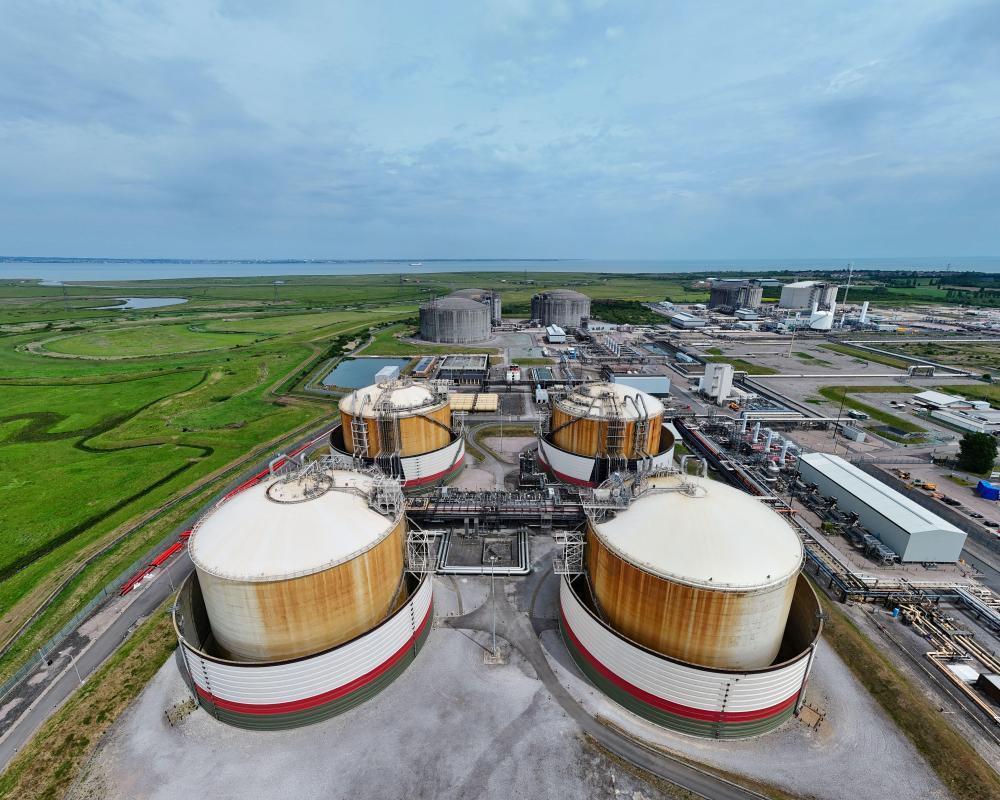
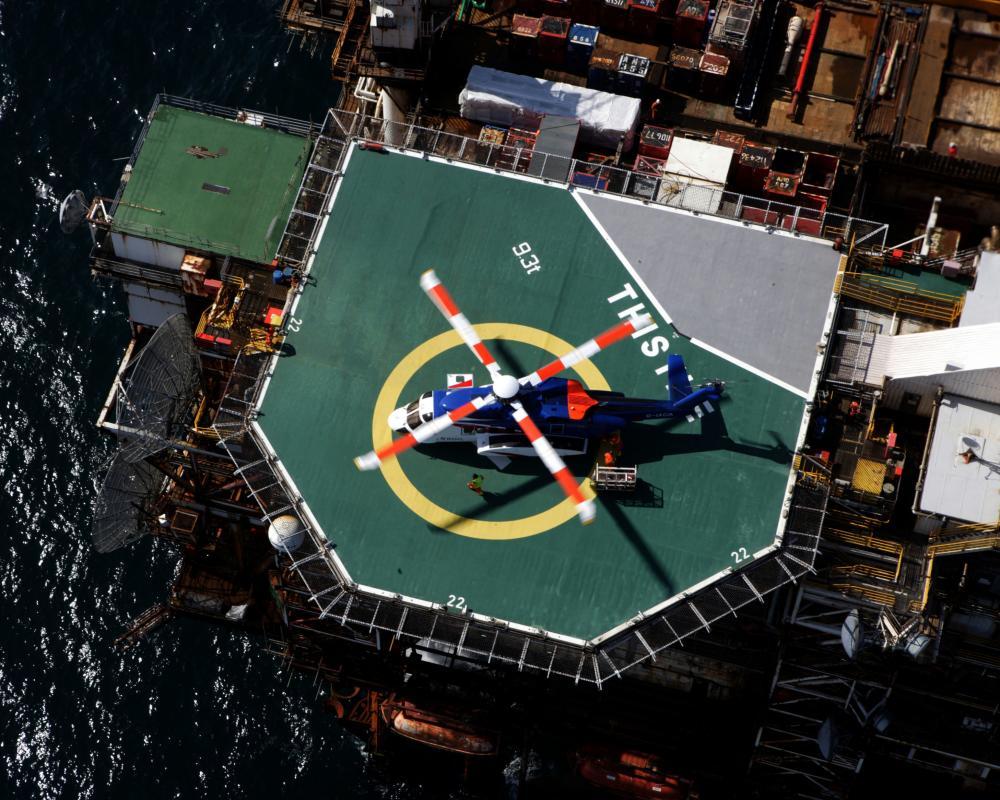
One of Britain’s biggest oil and gas producers is pulling out of the North Sea to shift its focus to south-east Asia, in the latest move away from the basin.
EnQuest, founded as a UK North Sea oil and gas specialist in 2010, said it had agreed to sell its UK upstream business to Neo Next+ for up to $960m (£729m).
Neo Next+ was created in March through a merger of the UK North Sea assets of France’s TotalEnergies, Spain’s Repsol and HitecVision, a Norwegian infrastructure investment firm focused on energy.
It comes after BP put its North Sea assets up for sale in the summer after 60 years of production, and a raft of other firms have either sold, merged or cut back their operations in the area.
EnQuest said its decision follows an increasing pivot away from Britain “in response to an uncertain investment environment within the UK”, where energy companies have seen taxes rise in recent years.
The firm added its strategy would see it switch from a “high-tax, low-return basin into a high-growth region that is structurally short on energy”.
The UK government is weighing up whether to approve the development of Rosebank – the largest untapped oil field in the North Sea, 80 miles north west of Shetland – amid environmental and political pressure.
Andrew Bowie, the shadow energy secretary, said:
The devastating news that EnQuest are withdrawing from the UK is the latest sign that this government’s policies on oil and gas are hanging a ‘closed for business’ sign over the North Sea.
In the midst of an energy crisis, this Labour Government are choosing to ban licences and maintain an extended and increased windfall tax.
We need change and we need it now. Jobs are being lost. Revenue surrendered. Our energy security undermined. We need to open the North Sea. Abolish the windfall tax. Scrap the ban on licences and get Britain drilling.
Amjad Bseisu, chief executive of EnQuest, said:
Together with our recent transformational acquisitions in Malaysia and the strong growth we continue to deliver across the region, the proposed disposal positions our high-quality south-east Asian portfolio at the core of EnQuest, where we see compelling opportunities to invest, build scale and create long-term shareholder value.
The resulting business will have a materially lower cost base and significantly enhanced balance sheet strength to pursue both organic investment and further value-accretive acquisitions across south-east Asia, while supporting sustainable shareholder returns.
UK businesses: what are the barriers stopping you hiring young people?
Labour’s long-awaited review into youth joblessness published this week recommended that ministers cut business taxes and ease regulations to encourage employers to hire more young people.
Alan Milburn’s report into how to address the nearly 1 million 16- to 24-year-olds not in employment, education or training in the UK also proposes setting up a youth opportunity service to provide support and advice to give every young person a guaranteed route into education, training or work.
Do you own or run a business in the UK? Are you trying to hire young people? What difficulties and obstacles do you face in recruiting and keeping on young staff? What do you think could make the situation easier?
We would love to hear from you!
Related: UK businesses: what are the barriers stopping you hiring young people?
Related: The Guardian view on the Milburn report: a manifesto for youth participation | Editorial
UK will miss climate targets if it weakens EV sales rules, advisers warn
Weakening the UK’s electric car sales rules would probably cause the government to miss legally binding climate targets, according to advisers tracking Britain’s progress to net zero.
The analysis by the Climate Change Committee (CCC) suggests the policy would blow a hole in the plan for achieving net zero carbon emissions by 2050 – prompting concerns that Andy Burnham’s government will have to slash the UK’s carbon emissions reduction targets, known as the carbon budgets.
In a letter published on Wednesday, the CCC said the UK is “likely to miss” its climate targets if it confirms plans to allow more sales of petrol and diesel cars and vans in the next four years.
Those changes could result in an extra 8.4m tonnes of CO2 pollution a year from the UK by next decade.
The electric vehicle rules are the single biggest contributor to those climate goals, meaning the government will have to find other major carbon emission reductions, unless it amends the budgets to allow more pollution.
Carmakers must sell a bigger proportion of electric cars each year under the rules, known as the zero emission vehicle (ZEV) mandate, or face fines of £12,000 per vehicle.
However, the industry has lobbied intensively for months to cut the headline targets from 80% electric by 2030 to as low as 50% or 60%, arguing that the mandate was putting them under too much financial pressure.
Related: UK will miss climate targets if it weakens EV sales rules, advisers warn
Bank of England December rate decision finely balanced; sterling falls
The Bank of England faces a tricky interest rate decision at its December meeting, after inflation rose to 3.6% in October from 3.5% in September – the highest in a year, but less than the 3.7% forecast by the central bank earlier this month.
The pound fell to a five-week low against the dollar after the data, to $1.3150, and is now trading at $1.3165.
The next inflation figures, for November, will be released on 16 December, a day before the Bank’s rate decision is announced.
A spokesperson for the central bank said after the inflation data:
The conflict in the Middle East has caused energy prices and inflation to rise in recent months, and inflation is expected to rise further by the middle of next year due to cost pressures already in the pipeline. The MPC raised Bank Rate two weeks ago to limit how much higher energy costs affect other prices, and will continue to set interest rates to make sure inflation returns to the 2% target and stays there.
Energy bills in Great Britain forecast to rise by 26% to £2,166 from January
Energy bills across Great Britain are predicted to reach £2,166 a year for the typical household from January as the impact of the Middle East conflict piles pressure on the government to offer more support to hard-hit households.
The government’s cap on gas and electricity prices is likely to rise by 26% early next year, equivalent to adding £443 to the average annual dual-fuel bill, in one of the biggest quarterly price rises on record, according to the leading forecaster Cornwall Insight.
The dire prediction for millions of hard-pressed households marks the final forecast before the industry regulator for Great Britain, Ofgem, sets electricity and gas rates for the coldest months of the year from January through to March via a new energy price cap next Wednesday.
The forecast was well above Cornwall’s prediction in late September that the cap would rise by 16% to £1,999 a year after an increase in gas market prices through October because of escalating violence in the Middle East and deepening fears over Europe’s gas storage levels.
Related: Energy bills in Great Britain forecast to rise by 26% to £2,166 from January
Ithaca expects Rosebank approval by end year, allowing production start in 2027
Ithaca Energy, the minority owner of the British oilfield Rosebank, expects government approval by the end of the year, allowing production to start in early 2027 – despite fierce opposition from climate campaigners.
Rosebank would produce around 70,000 barrels of oil equivalent a day.
Adura, a joint venture between Shell and Equinor, operates Rosebank and owns 80% of the field, with Ithaca holding the rest.
Rosebank has been in limbo after climate activists successfully challenged its permits in the courts and forced the developers to resubmit applications that take into account the planet-warming emissions from burning - rather than just extracting - the hydrocarbons in them.
Adura’s Jackdaw gas field, which faced the same hurdles, was approved by the government last month, to the dismay of climate experts and some Labour MPs.
Related: UK approves Jackdaw gasfield in North Sea
As it reported third-quarter results, Ithaca said, referring to Rosebank:
Receipt of regulatory approvals is anticipated by the end of 2026 by the joint venture partnership, enabling well-testing activities and optimising the drilling programme to support the planned first oil schedule for H1 2027.
UK inflation rises to 3.6% after petrol prices go up and diesel prices hit record high
Inflation in the UK rose to 3.6% in October after petrol prices rose and diesel hit a record high amid the fallout from the war in the Middle East.
Figures from the Office for National Statistics show the headline rate of inflation as measured by the consumer prices index rose from 3.5% in September and was in line with City economists’ forecasts.
As households brace for the colder winter months with household gas and electricity costs soaring, the latest figures push the headline inflation rate to the highest level in a year.
Related: UK inflation rises to 3.6% after petrol and diesel prices hit record high
Grant Fitzner, the ONS chief economist, said:
Inflation rose slightly in October, with fuel prices once again a major contributor to the increase in the annual rate.
Annual costs of both raw materials and goods leaving factories continue to climb, driven by higher crude oil and petrol prices respectively.
Fuel prices for motorists rose at an annual rate of 33.2%, the largest increase since July 2022 after Russia’s full-scale invasion of Ukraine sparked a global increase in energy prices.
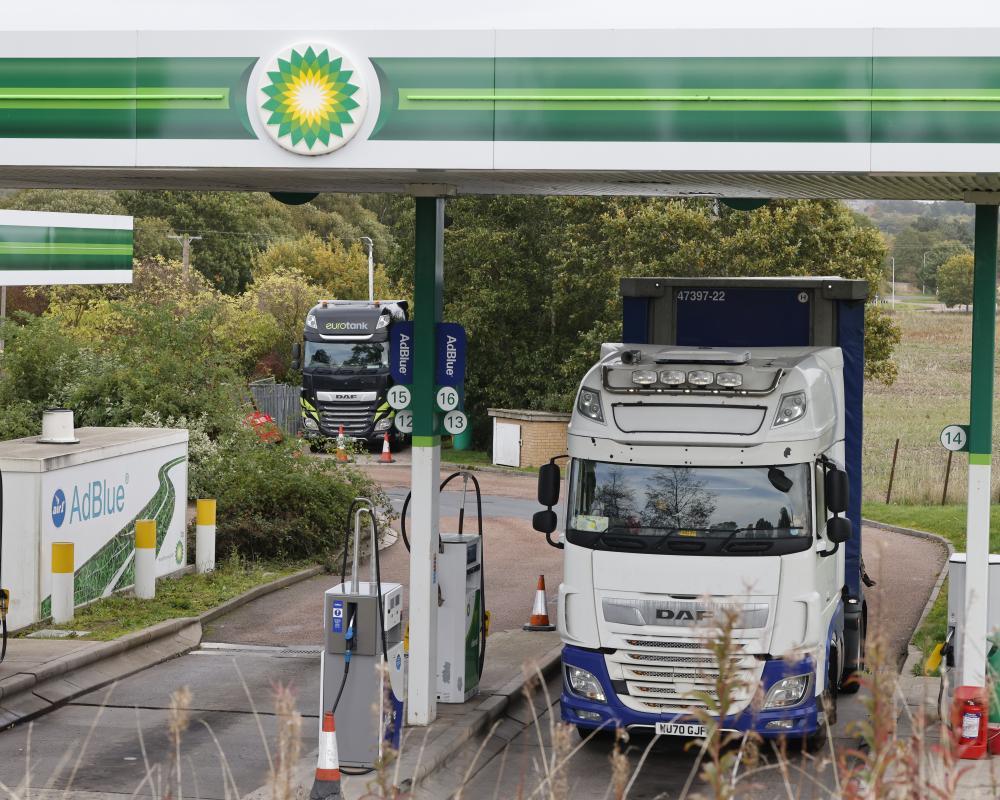
The average price of petrol rose by 5.2.p a litre between September and October to reach 174.7p a litre, the highest level in four years. Diesel prices rose by 7p a litre to 199.5p a litre, the highest price on records dating back to 1996.
Updated
Stock markets flat to lower
In financial markets, stocks are lacklustre.
The FTSE 100 index in London has drifted 26 points, or 0.25%, lower to 10,662. The pan-European Stoxx 600 is flat, while the German Dax eked out a 0.2% gain.
The French and Italian markets are flat and the Spanish exchange has slid 0.4%.
Earlier in Asia, Japan’s Nikkei gained 0.3% while Hong Kong’s Hang Seng dropped 0.9% but South Korea’s Kospi rose 2.2%.
Spot gold has lost 2.1% to $3,770 an ounce and in oil markets, Brent crude is trading nearly 2% lower at $91.35 a barrel.
Daniela Hathorn, senior market analyst at the trading platform capital.com, said:
Markets are struggling to build on Nvidia’s results this morning. The chipmaker reported $115.8bn in quarterly revenue and guided for $130bn next quarter, both ahead of expectations. Its shares rose in initial after-hours trading, but that gain faded as the night went on, while Asian stocks gave back early advances and Europe struggles to find the momentum at the open.
This reaction could be read as a sign of market exhaustion: Nvidia delivered another exceptional quarter, yet investors appear reluctant to chase the AI trade higher, however it is too early to call a lasting change in sentiment, given the scale of the recent sell-off. There are also specific questions for Nvidia, especially whether growth can remain strong through its leadership transition.
Anthropic offers the next test of appetite with its IPO is expected to be priced today, ahead of an anticipated Nasdaq debut tomorrow. Strong demand and a firm first day of trading would suggest investors remain willing to back AI growth, even if they are becoming more selective. A weak reception would add weight to concerns that expectations across the sector have run ahead of what investors are prepared to pay.
The cautious mood is extending beyond equities. Gold has slipped below $3,800 an ounce as the dollar holds near a 19-month high and expectations of higher US rates weigh on the metal. The Fed’s meeting minutes later today could reinforce that pressure or give gold some room to recover.
Butter, chocolate, cheese prices fall
Dr Liliana Danila, chief Economist at he Food and Drink Federation, said:
It’s good news for consumers that food inflation is low in the run up to Christmas, especially as we approach the most important and competitive time of the year for the grocery market. Manufacturers are single minded in their focus on keeping prices as low as possible.
However, these figures mask the cost pressures that have surged through the supply chain this year. So while the sector may constrain price rises today, it comes at the cost of delaying crucial investment into new machinery, innovation and jobs or training opportunities for young people. That has longer term implications for UK food resilience and these rising costs will eventually be reflected in a higher rate of food inflation.
Prices rose the fastest for fish (13.2%), water (9.8%), and pasta (7.5%), according to the FDF – although the ONS said fish had a downward impact on inflation.
Prices fell for 19 out of the 49 reported categories, with the largest drops for butter (-9.4%), chocolate (-3.9%), and cheese (-3.8%).
Harvir Dhillon, lead economist at the British Retail Consortium, said:
Headline inflation edged up in October, driven mainly by transport costs, while food inflation fell to its lowest rate in nearly five years, with notable falls in butter and chocolate prices. Clothing and footwear fell into deflation, while the onset of colder weather brought down garden furniture prices.
Food prices have risen just 0.5% this year, but higher energy and transport costs could push food inflation back towards 2% and overall inflation towards 4% early next year.
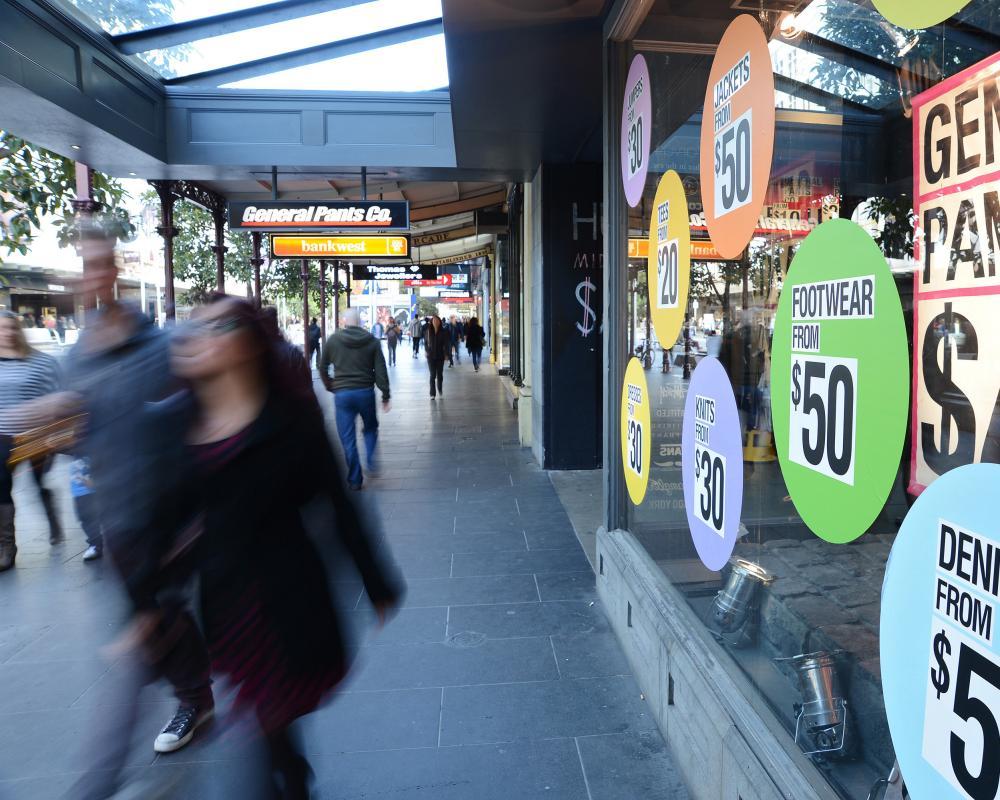
Clothing and shoe prices declined by 0.5% year on year in October, against a 0.1% rise the month before, according to the Office for National Statistics.
Turning to the final report from Alan Milburn on how to fix the youth unemployment crisis, Dhillon said:
Yesterday’s Milburn review proposed doubling the threshold at which retail and hospitality employers pay National Insurance for under 25s. Implementing this as soon as possible would help ease employment costs just as inflationary pressures build. For labour-intensive sectors, such as retail, this would help businesses absorb rising costs while giving retailers greater confidence to keep younger seasonal staff on beyond Christmas and January.
Related: Milburn’s absurdly ambitious report offers blueprint for fixing everything and everyone
Core and services inflation little changed
The rise in inflation to 3.6% was widely expected, while two other closely watched measures were little changed, explaining the lack of reaction in markets so far.
Core inflation, stripping out volatile energy and food costs, rose by 2.8% in October, the same annual rate as in September.
Services inflation was also unchanged, at 3.7%. Both are closely watched by the Bank of England and are taken into account when it sets interest rates.
Felix Feather, economist, at the fund manager Aberdeen, said:
In fact, the detail of the report was a touch less concerning than it might have been. The biggest contributor to the increase was transportation fuel costs. But the recent decline in oil prices makes it likely that this will be reversed to some extent over November. And core and services inflation, which the Bank of England pays particular attention to, did not increase.
So we don’t think there is enough in this report to push the Bank of England into back-to-back rate hikes at its meeting in December, though the meeting remains live. We see February, when the Bank will have a fresh set of forecasts to work with, as a more natural moment to deliver a second hike.
Updated
Introduction: UK inflation rises to 3.6% on the back of higher petrol prices
Good morning, and welcome to our rolling coverage of business, the financial markets and the world economy.
It’s UK inflation day!
Inflation rose slightly last month to an annual rate of 3.6%, driven by higher petrol prices.
Figures from the Office for National Statistics show the headline rate of inflation as measured by the consumer prices index rose to 3.6% in October, in line with economists’ forecasts, from 3.5% in September.
The ONS said transport, particularly motor fuels, was the main driver behind higher inflation while restaurants and hotels made the largest, partially offsetting, downward contribution.
Transport prices rose 7.5% year on year, up from 6.6% in September. The average price of petrol rose by 5.2 pence per litre between September and October to an average price of 174.7p a litre. Diesel went up by 7p a litre to 199.5p, the highest since records began in 1996. Both rose more than in the same period last year.
In better news for households, food prices rose at the slowest rate since September 2021, at 0.9%, down from 1.3% in September.
Chocolate prices declined, while fish prices also drove inflation lower.
Chocolate prices fell by 2.9%, compared with a rise of 0.4% a year ago. Prices had been going up since 2021. In 2024, there was a cocoa crisis as droughts, floods and climate-related diseases hit cocoa farmers, sending prices soaring. But cocoa prices are now much lower than they were in 2024, the ONS explained.
Discounting of chocolate almost doubled between September and October.
Meanwhile, factory gate prices rose by an annual rate of 5.1% in October, up from a revised rise of 4.7% in September, according to separate figures from the ONS.
On the other side of the pond, Nvidia “does not intend to reinstate Jensen as CEO”, the chairman of the company’s board said Tuesday. Harvey Jones made the remark during Nvidia’s first quarterly earnings report since Jensen Huang’s ouster.
Nvidia announced the same day that its quarterly revenue beat expectations, coming in at $115.84bn, doubling from the same time period a year ago. The third-quarter earnings report comes just days after the world’s most valuable chip company saw the ouster of Huang over allegations of several extramarital affairs, including one with a suspected Chinese spy and two with his own employees.
Following the tumult, Nvidia’s stock tumbled more than 10%, shedding hundreds of billions in value and dropping its valuation to $3.7tn. In October, the company had hit an all-time-high valuation of nearly $6tn, but its share price has steadily fallen since then amid a broader AI slowdown.
Related: Nvidia doubles revenue as board says it does not intend to reinstate Jensen Huang
The Agenda
9am GMT: European Central Bank financial stability report
1.30pm GMT: US Housing starts for October
2.25pm GMT: ECB president Christine Lagarde speech
7pm GMT: US Federal Reserve minutes of last meeting
Updated