Closing post
Time to wrap up:
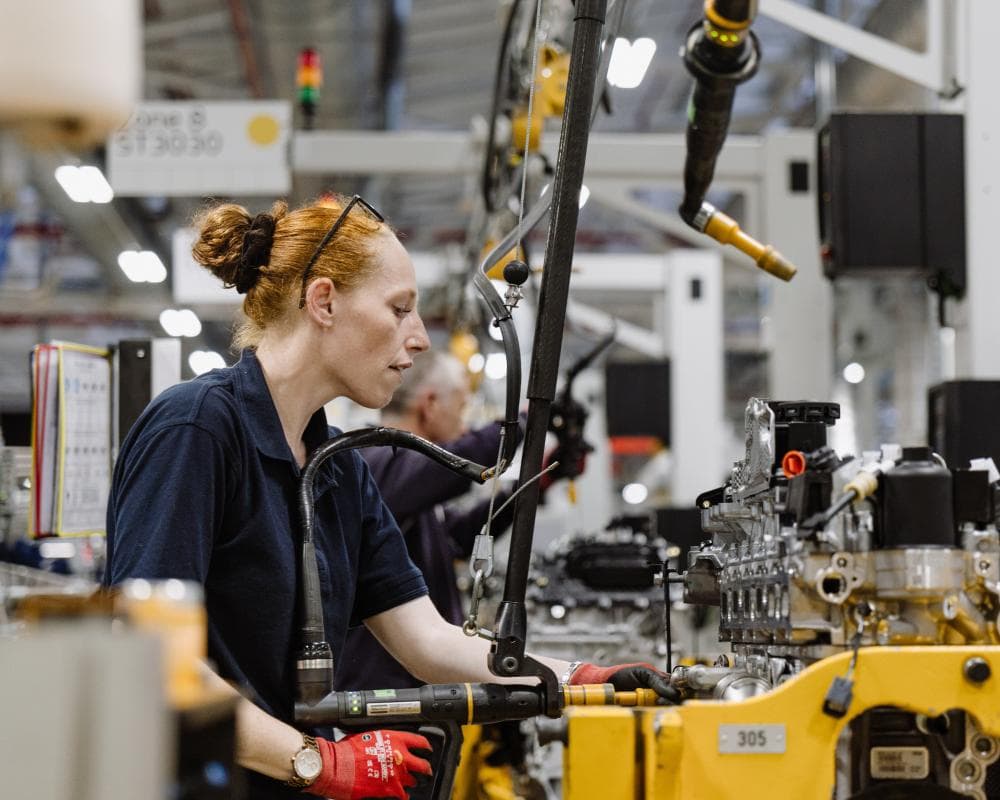
Jaguar Land Rover has announced thousands of job cuts in a “body blow for workers” as it grapples with tough trading conditions, Donald Trump’s tariff wars and the fallout from a cyber-attack.
Britain’s largest carmaker, which is owned by the Indian conglomerate Tata, confirmed the anticipated cuts on Monday, saying it wants to reduce its global workforce by about 4,000 over two years, as part of an effort to save £1.7bn.
JLR’s employs 44,000 people globally and 34,000 in the UK. The cuts will mainly affect the 26,000 UK employees who are salaried and management workers. The company has plants in Solihull, Warwickshire and Merseyside, and is headquartered in Coventry.
Its proposal threatens to provide an early reality check for the new prime minister, Andy Burnham, and his promise to “reindustrialise” Britain.
JLR’s profits have tumbled as it wrestles with strong competition in the global car market, Trump’s US tariffs and last year’s hack, which led to the shutdown of its factories.
The JLR chief executive, PB Balaji, said:
“The automotive industry faces significant challenges, with technological change amidst intense competition and ongoing geopolitical uncertainty. Through our Growth Reimagined strategy, JLR is moving decisively to strengthen our competitiveness and position the business for long-term success.”
A £500,000 package to suppork workers has been announced…
Related: Jaguar Land Rover confirms plan to cut 4,000 jobs over two years
In another blow to UK households, British wholesale gas prices have hit their highest level since early 2023.
With oil also rising, Eurozone government bond yields have risen today.
UK house prices have fallen for the first time in almost three years, as prospective buyers were squeezed by higher mortgage rates, geopolitical uncertainty and stretched affordability.
Prices have dropped by 0.4% compared with a year ago, the first year-on-year decrease since November 2023, according to the lender Lloyds. That came in below expectations of a 0.2% annual rise, according to a poll of economists by Reuters.
The average property cost £298,468 in August, falling 0.2% or £685 compared with July, the bank’s monthly index found.
Related: UK house prices fall for first time since 2023, led by London and south-east
UK mortgage rates have jumped this morning.
There’s no Wall Street trading today, as it’s the Labor Day holiday in the US.
Updated
The West Midlands Combined Authority (WMCA) says the £500,000 package will targeted support to the JLR workers to fill any gaps in their skill set and match them to potential employers, giving them the best chance of securing a new job.
WMCA staff have already started working with colleagues at the DWP, local authorities, employers and wider partners to coordinate support for affected workers, ensuring access to a range of services tailored to their individual needs such as careers support, skills advice and job matching, they add.
Eurometal holds 'death protest' against EU deindustralisation
European manufacturing industries staged a “death” protest outside the European Commission’s Brussels headquarters today warning of mounting deindustrialisation in the EU in the face of competition from China, my colleagues Lisa O’Carroll and Jennifer Rankin report.
Eurometal, which represents the backbone of manufacturing, brought ten fake coffins to the plaza in front of the Berlaymont building to appeal for urgent action to save jobs and EU businesses.
They predict some 300,000 jobs will be lost in the last four months of this year as European industry deepen their dependency on components and chemicals, used in 90% of manufacturing, from China.
Eurometal, represents European steel distribution, derivatives, and manufacturing sectors and says while Brussels has protected the car and steel industry it has not protected the industry using finished components coming from China and India.
Related: EU faces 300,000 factory job cuts as China ‘colonises’ supply chains, industry warns
Alexander Julius, the president of Eurometal, told the Guardian:
“China has made no secret of what it is doing. It is in their five-year plan.
“China doesn’t want to be a raw material supplier, it wants to be a finished product supply. They want to be in key product supply chains because they know that once they control the supply chain, they own the complete value chain.”
The Unite union reckons that JLR’s planned job cuts are not expected to impact the UK manufacturing footprint.
Unite represents many “white collar” workers in JLR, and is demanding that JLR and the government ensure all possible options are fully explored and utilised to mitigate job losses.
Unite general secretary Sharon Graham says:
“While the cuts planned are not expected to impact the UK manufacturing footprint, we need to ensure that the company is doing all it can to avoid unnecessary job losses amongst its highly skilled “white collar” workers.
“JLR’s vague statement today was not helpful and has only created increased uncertainty. ‘I have been on speed-dial over the weekend with business secretary Jonny Reynolds to look at how to mitigate these job losses at JLR. We are both meeting the CEO of JLR tomorrow. Mayor Richard Parker has also been linking in. “Unite was pivotal in securing the £1.5 billion government facility for JLR after the cyber-attack. The company now needs to make sure it also does all it can to protect these jobs. “Once again Unite will leave no stone unturned to support JLR workers. It cannot be acceptable that workers again are made to pay the price.”
Downing Street: uncertain and concerning time for JLR workers
The UK government insists it is supporting Britain’s car sector.
Following JLR’s announcement of 4,000 job cuts, a Number 10 spokesperson said today:
“We understand that this will be an uncertain and concerning time for affected workers, their families and the wider communities and we know that current market conditions are challenging for the automotive sector globally. That’s why we’ve taken significant action to back the UK’s automotive industry by lowering electricity bills for manufacturers, providing £4bn of capital and R&D funding to manufacture zero-emission vehicles and launching a £2bn electric car grant to encourage people to buy EVs.
“The business secretary is in close contact with JLR and he will be meeting them early this week.
The Mayor of the West Midlands Richard Parker has also announced a £500,000 support package for JLR workers who choose to take voluntary redundancy.”
Jaguar Land Rover’s new voluntary redundancy scheme will cut nearly 10% of its workforce.
JLR employs about 43,000 people globally, including 34,000 in Britain, but did not say where the jobs would be cut, Reuters points out.
Back in the financial markets, the yen has hit a seven-month high against the US dollar.
Japan’s currency traded as high as ¥154.05 to the dollar, its highest since February.
That adds to its gains last week, when the yen recovered from lows around ¥160/$, lifted by expectations that the Bank of Japan will hike interest rates later this month.
Related: Yen soars as Bank of Japan tipped to raise interest rates
JLR job cuts show UK car sector faces 'near-perfect storm'
JLR’s decision to slash 4,000 jobs is a sign that Britain’s automotive industry is being hit by a “near-perfect storm”, warns David Bailey, professor of business economics at the Birmingham Business School .
Bailey explains that JLR’s latest job cuts are much more than just another round of corporate restructuring:
“Demand is weak and uncertain. Chinese manufacturers are becoming increasingly formidable competitors. Trade tensions and tariffs are reshaping global supply chains. UK industrial electricity prices remain exceptionally high.
Manufacturers face enormous investment requirements to move towards electric vehicles. And the wider global trading environment is becoming more difficult and unpredictable.
“So, it is too easy, and ultimately too superficial, to portray the difficulties facing JLR simply as the consequence of the cyber-attack or poor management decisions.
Bailey adds that governments also make choices, and urged ministers to treat the current situation as a “strategic industrial emergency”.
The UK cannot simultaneously demand rapid electrification, impose increasingly challenging zero-emission vehicle targets, have some of the highest industrial electricity costs among major economies, and also expect manufacturers to continue investing billions of pounds in British factories and supply chains as though these pressures do not matter. Something has to give.
If the UK loses automotive manufacturing expertise, then it could also lose the industrial capacity needed to deliver decarbonisation.
We could reduce emissions from cars made in Britain while importing an increasing proportion of the cars, batteries and technologies from overseas.
“That is not a successful industrial transition; it is deindustrialisation. JLR’s job cuts should therefore be seen as a warning shot. The question is whether Westminster hears it and acts.”
£500,000 rapid-response package to support JLR workers
The Mayor of the West Midlands has announced a £500,000 “rapid-response package” to support JLR workers who are facing the threat of redundancy from today’s announcement of 4,000 job cuts.
Mayor Richard Parker hopes this emergency package can find new jobs for workers and keep their advanced manufacturing and automotive skills within the West Midlands regional economy, and believes it could be bolstered by support from the Department of Work and Pensions.
Mayor Parker says he has liased with the government last weekend to discuss how to support workers, explaining:
“The news from JLR will be deeply worrying for thousands of workers and their families, many of them here in the West Midlands. My thoughts are with them first and foremost.
“JLR is hugely important to our region and employs some of the most skilled people in Britain. The company has faced an incredibly difficult period - from the cyber attack last year to the impact of the war in the Middle East and continuing instability around global tariffs and trade.”
Updated
European government bonds are coming under pressure again today, pushing up the the cost of borrowing.
UK 10 and 30-year bond yields have risen by around two basis points (0.02 of a percentage point) today, back towards the multi-year highs seen last week.
Germany’s 10-year debt is up 2.5 basis points, while France’s equivalent is up 3.3bps.
Bond yields are probably being pushed up by the oil price; Brent crude is up 1.3% tday at $97.55 a barrel, having hit a six-week high of almost $98/barrel earlier today.
JLR’s job cuts are expected to fall on managerial staff rather than factory workers, explains Dr Jonathan Owens, senior lecturer in supply chains management at the University of Salford:
“As Jaguar Land Rover (JLR) has opened a voluntary redundancy programme in the UK, it provides a timely example of the continuing pressures facing the automotive sector and raises important questions about the potential impact on the wider supply chain.
“The programme forms part of JLR’s strategy to achieve approximately £1.7 billion in savings over the next two years, improve efficiency and reduce its break-even point to 300,000 vehicles. Importantly, the redundancy programme currently focuses on salaried and management employees rather than manufacturing roles.
Liam Byrne MP, chair of parliament’s Business and Trade Committee, is urging the government to provide “maximum support” for JLR workers to find new employment.
Byrne says:
“News of up to 4,000 redundancies at JLR is a body blow for workers, families and communities across the West Midlands. Whether or not these redundancies are voluntary, we now need urgent assurances that maximum support will be deployed to help everyone affected find new work.
“But the troubles at JLR underline the challenge facing the Government’s reindustrialisation drive. Britain is preparing to spend billions more on defence, infrastructure and new technology. But British business needs cheaper energy and government orders, not at some distant point in the future, but now, now, now.
NEXT wins equal pay appeal on basic pay
Newsflash: UK retailer Next has announced it has overturned a court ruling that it had broken equal pay rules by paying its warehouse staff more than workers in its shops.
Next told the City of London that it has “won a landmark victory”, by succeeded in its appeal to the Employment Appeal Tribunal on “the key issue of Basic Pay”.
This case was brought by 3,540 claimants, who accused Next of paying its retail sales staff – who are overwhelmingly female – lower hourly wages than its warehouse workers, the majority of which are male.
They won a six-year legal fight for equal pay in 2024, which Next appealed.
Related: Next shop workers win six-year battle for equal pay in landmark case
Today, Next says:
The appeal judgment endorsed NEXT’s position that it should not have to pay shop assistants and warehouse operatives the same amount of Basic Pay, in circumstances where the market and working conditions are very different.
The importance of this decision is that the Appeal Tribunal has confirmed that it was justifiable for NEXT to rely on market forces to distinguish between different groups of employees, where there was a good rationale to pay one group more than the other.
There are several reasons why JLR is seeking to make £1.7bn of cost savings, and cutting thousands of jobs.
The first is the tariffs imposed by Donald Trump on car imports into the US. They hit US demand for JLR’s luxury cars to the US.
An even bigger blow to its UK operations was a cyber-attack a year ago which drove the company deep into a quarterly loss, and froze its operations for weeks. The hack cost the UK economy an estimated £1.9bn, potentially making it the most costly cyber-attack in British history.
Like all European carmakers, JLR is also facing tough competition from low-cost Chinese automotive rivals. This is hampering their transition to electric vehicles.
Last year, JLR’s annual profits slumped by more than 99% to just £14m.
Related: Jaguar Land Rover annual profit falls 99% after US tariffs and cyber-attack take toll
Jaguar Land Rover’s decision to slash 4,000 roles comes a day after business minister, Jonathan Reynolds, ruled out stumping up taxpayer’s cash to prevent job cuts.
Reynolds was asked yesterday if there could be financial support to protect the jobs, he said:
“Not if it’s to bail people out.
“If this is about making sure over time that workforce is right to make the business as competitive as possible, that’s the conversation we need to have.”
Reynolds is expected to hold crunch talks with Sharon Graham, the general secretary of the Unite union, and JLR’s chief executive, PB Balaji, on Tuesday.
Related: No bailouts for Jaguar Land Rover amid reports of thousands of job cuts, says minister
JLR to cut 4,000 jobs
Newsflash: Jaguar Land Rover has announced it is cutting 4,000 jobs across the world over the next two years.
The cuts come as JLR grapples with tough conditions in the car market, Donald Trump’s tariff wars and the fallout from a cyber-attack last year.
Announcing the cuts, PB Balaji, JLR CEO, said:
“The automotive industry faces significant challenges, with technological change amidst intense competition and ongoing geo-political uncertainty. Through our Growth Reimagined strategy, JLR is moving decisively to strengthen our competitiveness and position the business for long-term success.
Over the next 12 months, we will launch five new products, continue to leverage the strength of our brands and renew our focus on North America, amongst other markets, to help us deliver double digit revenue growth. At the same time, we are reducing organisational complexity and targeting £1.7 billion of savings to lower our break-even point towards 300,000 vehicles and become fitter to compete in a rapidly evolving market.
These actions will support continued investment of £15-18 billion over the next five years in electrification, digital technologies, advanced manufacturing and enhanced customer experiences.
As part of this transformation, we will reduce our global workforce by around 4,000 roles over the next two years. We recognise this will be difficult news for colleagues affected, and are committed to supporting everyone with care, fairness and respect.
Together, these actions will help build a stronger, more competitive JLR for all our stakeholders.”
Updated
This morning’s cost of living squeeze comes just as chancellor John Healey prepares to give a speech outlining his economic plans, in the face of last week’s ructions in the bond market.
We’re expecting Healey to insist that “fiscal credibility is indivisible from good growth,” and pledge that the government’s plans to boost growth across the whole country will enable the British economy to “turn a corner”.
My colleague Andrew Sparrow will be live-blogging the speech here:
Related: Healey says he wants gowth story ‘written in more places’ – UK politics live
The rise in mortgage rates could cool demand in the UK housing market, where (as reported earlier) prices fell last month.
Tom Bill, head of UK residential research at Knight Frank, says:
“We have seen a spring slump rather than a seasonal bounce this year as prices and transactions came under pressure from higher mortgage costs and an ever-present concern around which taxes the government may raise next.
Falling house prices are a natural consequence of that and whether we see a seasonal autumn bounce will depend on the level of any pre-Budget speculation and how the unpredictable conflict in the Middle East unfolds and impacts on UK inflation expectations.”
UK mortgage rates rise after bond market volatility
Just in: The average rates on UK fixed-term mortgages have risen this morning, as last week’s bond market turbulence ripples across the financial world.
Data provider Moneyfacts has just released its latest mortgage pricing, showing that both two and five-year mortgages are more expensive than at the end of last week.
They say:
The average 2-year fixed residential mortgage rate today is 5.63%. This is up from 5.60% the previous working day.
The average 5-year fixed residential mortgage rate today is 5.68%. This is up from 5.64% the previous working day.
There are also fewer mortgage products to choose from, suggesting that some products have been pulled from the market by lenders keen to reprice them.
Moneyfacts reports that there are currently 7,485 residential mortgage products available down from 7,618 on Friday.
Fixed-term mortgages are priced off swap rates, which measure the cost of borrowing for lender.
Last week the five-year swap rate rose above 4.52% this week, the highest level since October 2023.
Rachel Springall, finance expert at Moneyfactscompare.co.uk, explains:
“The pricing margins among major lenders are under pressure due to renewed volatility in the swap rate market, so it is somewhat inevitable for them to adjust rates. Major lenders, which include HSBC and NatWest, have increased rates since the start of September. The recent uplift in swap rates has started to filter into the pricing of fixed rate mortgages, with more moves expected in the coming days. Swap rates are much higher than they were a month ago and are a key influence on how lenders price their fixed-rate mortgages. Lenders look at margins very carefully, so it would be unwise to price their deals too low, if the expectations are for interest rates to rise, even if over the short-term.
“Mortgage rates are rising due to the escalating military conflict between the US and Iran, reigniting inflationary fears. The UK 10-year gilt yield has also risen further above 5% to an 18-year high recently due to a global bond sell-off, adding further pressure to the wholesale funding costs that underpin fixed mortgage pricing. However, the hit to the mortgage market over recent days pales in comparison to when the conflict in the Middle East began around six months ago, when many lenders pulled fixed rate deals. While this alone might still not reassure some borrowers, it is worth noting that the pressure on swap rates over the past six months has not been caused by UK fiscal policy, which is why withdrawals and rate hikes are nowhere near the scale experienced in the aftermath of the ‘mini-Budget’ in 2022.
UK gas prices hit highest since January 2023
UK natural gas prices have hit their highest level in three and a half years, as the ongoing US-Iran war dampens hopes of a pick-up in supplies from the region.
The month-ahead UK wholesale gas price has jumped by over 4% this morning to 186.83p per therm, its highest intraday level since January 2023.
There were renewed clashes between the US and Iran last weekend – the US military said on Saturday it struck three Iranian oil tankers after US navy warships came under missile attack.
Related: US military says it struck three Iranian tankers after American warships came under missile attack
The lack of progress towards a peace deal means there is little hope of a pick-up of supplies of Qatari liquefied natural gas (LNG) exports through the Strait of Hormuz, at a time when European countries are trying to fill their storage levels ahead of the winter.
Related: ‘Winter panic’: EU gas stores at their lowest level in 13 years
'The Rottweiler' pounces on UK’s biggest private hospital operator
A hedge fund manager known as “the Rottweiler” is getting his teeth into UK’s biggest private hospital operator, following a takeover battle.
Spire Healthcare, which operates 38 private hospitals and more than 60 clinics across England, has agreed to be taken over by activist investor Toscafund Asset Management in a £1.02bn deal.
The agreement was announced this morning, following a lengthy period of negotiations.
Having agreed the deal, Spire says:
While the Spire Directors remain confident in the long-term prospects of the business, the Spire Directors also note the ongoing challenges of delivering the Company’s standalone plan against a backdrop of macroeconomic volatility, cost pressures - in particular inflation, and the dynamic nature of the payor environment.
Toscafund was founded by investor Martin Hughes, who has earned the nickname ‘The Rottweiler’ for his aggressive approach to the firms in which he hold stakes.
Related: Hedge fund proposes £1bn buyout of UK’s biggest private hospital operator
Change is already underway at Spire – CEO Justin Ash is to retire, while chair Sir Ian Cheshire is also stepping down.
Shares in Spire are up 3.1% this morning to 245.5p, close to Tosca’s 250p-a-share offer.
Updated
In the financial markets, shares have risen across Asia-Pacific markets today after China announced a new government stimulus push.
It emerged yesterday that China will inject $54bn (£40bn) into its financial sector, in a push to shore up banks and insurers in the face of faltering economic growth.
A host of financial institutions said they were due to receive billions of yuan in capital from state institutions including the ministry of finance and even the company that runs the country’s tobacco monopoly.
Related: China prepares £40bn stimulus for financial sector amid fears over sluggish growth
Gains on the Shenzhen stock market helped to push China’s CSI 300 index up by 0.6% today.
Japan’s Nikkei is up 2.1%, while South Korea’s KOSPI index has gained 5.1% – with technology stocks leading the way.
UK house prices fall: What the experts say
Here’s some early reaction to this morning’s news that UK house fell, on an annual basis, in August for the first time since November 2023:
Jeremy Leaf, north London estate agent:
“We are seeing a bit of a stand-off between buyers who are nervous about making offers while worried about the effects of inflation on mortgage costs and sellers who believe they have reduced as much as they can.
“Therefore, prices overall in the fewer properties which are changing hands are not only softening but sales are taking longer.
“There is more movement when sellers set realistic asking prices from the outset and appreciate after a period of marketing that even a cheeky offer is worth considering. Thankfully, activity is picking up now that the main holiday season is over, which is helping to improve confidence a little.”
Jason Tebb, president of OnTheMarket:
“Buyers and sellers are taking a pragmatic approach and adjusting expectations. The resilience of the market, and determination of needs-based buyers and sellers who are proceeding with their transactions, remains evident.
Ongoing Middle East tensions have created further volatility among Swap rates in the past week, but so far this year, the Bank of England has held interest rates steady, creating a calming effect. Affordability concerns remain however, particularly if lenders increase their mortgage pricing in the short term and the Bank raises interest rates at next week’s meeting, but borrowers seem to be adapting to shifting market conditions remarkably well.
As we head into autumn, and another Budget beckons, political uncertainty and challenging economic conditions continue to form a backdrop to activity.”
Mark Harris, chief executive of mortgage broker SPF Private Clients:
“With tensions in the Middle East simmering once more and the price of oil moving higher, Swap rates - which underpin mortgage pricing - jumped, before coming back down a little.
“Until we have a confirmed end to the conflict we expect this pattern of volatility to continue – borrowers need to be aware and take steps to secure rates well ahead of their current deals expiring.
“First-time buyers will be encouraged by the dip in house prices. Lenders are working hard to offer solutions to those trying to get on the ladder for the first time, which is leading to a small improvement in their numbers.”
North-South house price divide continues
Lloyds also reports that prices fell more sharply in the South of England in August, but rose in the North, and in Wales, Scotland and Northern Ireland.
Prices fell in the South because of the “greater affordability challenge caused by higher average prices”, the bank reports.
According to Lloyds:
The South East saw the largest decline, with prices down -1.6% year-on-year to £381,729.
In Greater London, where prices fell -1.5% to £534,177.
The South West and Eastern England both recorded annual declines of -1.2%.
But, there was growth elsewhere….
Northern Ireland continues to record the strongest annual growth, with prices up +6.9% year-on-year.
Prices in Scotland rose by +3.5% over the past year.
In Wales, annual growth stands at +0.6%.
In the North East of England, prices rose by 2.7% on an annual basis.
In the North West, prices were 2% higher than a year ago.
This chart of average UK house prices underlines how the flat the market has been over the last year:
But prices still up in the long term, Lloyds says
Lloyds’s Andrew Asaam adds that it’s important to keep the recent drop in house prices in perspective, explaining:
Average house prices remain around 25% higher than they were at the end of 2019, despite the substantial increase to interest rates seen over recent years. The market’s adjustment to higher borrowing costs has been gradual, with wage growth helping to offset some of the pressure on affordability. The recent modest declines in prices are best viewed in that wider context.
“We expect the market to remain fairly subdued in the months ahead, but this will likely only have a limited impact on house prices. While affordability remains a challenge, wages continue to grow and employment has held up better than many anticipated. This will help to support demand from those who need or want to move.”
Updated
Introduction: UK house prices fall in August
Good morning, and welcome to our rolling coverage of business, the financial markets and the world economy.
UK house prices have fallen on an annual basis for the first time in almost three years, as the housing market is hit by rising borrowing costs and geopolitical uncertainty.
Lender Lloyds has reported this morning that house prices fell by 0.4% in August, compared with a year ago, which is the first year-on-year decrease since November 2023.
On a monthly basis, prices fell by 0.2% in August, following a 0.1% drop in July, meaning the average property now costs £298,468, on Lloyds’s index.
This is weaker than expected – economists had forecast a 0.1% monthly rise, and a 0.2% increase compared with a year ago.
Andrew Asaam, mortgages director at Lloyds, explains that the market remains subdued in August:
“The housing market has faced a more difficult backdrop in recent months, with the impact of global events on inflation and borrowing costs creating greater economic uncertainty.
What we’re not seeing is a rush of homeowners cutting prices. But more are choosing to sit tight, with sellers reluctant to accept offers they feel are too low, while some buyers are waiting to see how conditions develop.
As a result, fewer homes are changing hands, with latest industry figures showing mortgage approvals now at their lowest level since the start of 2024.
And there may be worse to come – as the recent bond market turmoil has pushed up lenders’ borrowing costs.
That increase in ‘swap rates’ could make mortgages more expensive, leaving buyers with less firepower in the market.
Related: UK mortgage borrowers brace for rate jump amid global bond sell-off
The agenda
7am BST: Lloyds house price index
7am BST: German industrial output data for July
Today: UK chancellor John Healey outlines his economic agenda
Updated