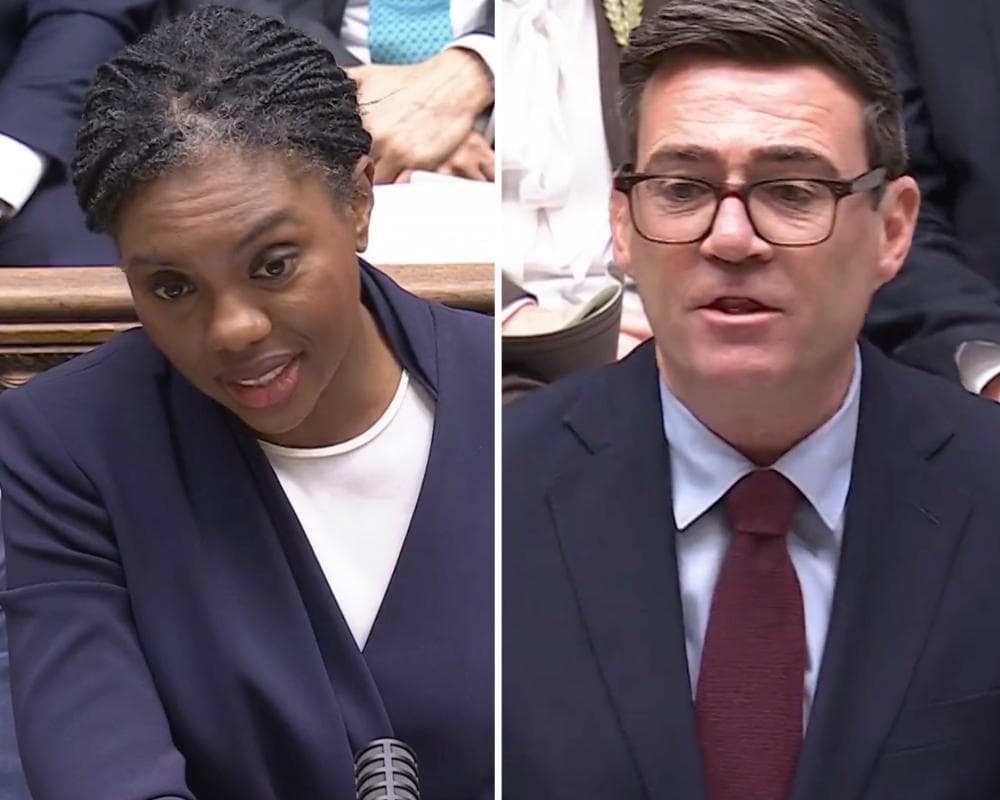
Bernard Jenkin (Con) asks about the risk of the Israel sanctions decision putting cooperation with the Israeli security services at risk.
Burnham says the government took advice from the security services before taking this decision.
He says the risk of the two-state solution collapsing was too high.
He says he agrees with Edward Leigh’s assessment yesterday.
Cat Eccles (Lab) pays tribute to the fire service for their work with the fires at Stourbridge.
Burnham says he will be charing a summit on wildfires. He says the fire service is not set up to deal with these problems.
Daisy Cooper (Lib Dem) asks about mental health provision in Hertfordshire. Will the PM back her campaign for a new facility there?
Burnham says that is a good question. Cooper is right to point to wasted spending in the health system, when people have to be sent a long way for care. A mental health strategy will be put to the Commons before Christmas, he says.
Chris Law (SNP) asks if Burnham accepts the Scots have the same right to decide there own future as the people of Northern Ireland.
Burnham says the Good Friday agreement says there should be a border poll in Northern Ireland if there is a clear consensus in favour. He says in Scotland there is not majority support for another referendum. Until that changes, there won’t be one, he says.
Liz Saville Roberts, the Plaid Cymru leader at Westminster, asks about a community-owned pub in her constituency.
Burnham says the government does need to “go further to support hospitality”. He says Saville Roberts should wait for the budget.
Kim Johnson (Lab) asks if the government will get BT Openreach to pull out of a decision to use Liverpool as a hub.
Burnham says Steve Rotheram, the Liverpool city region mayor, is discussing this, with No 10 North.
Alberto Costa (Con) asks Burnham if he will back Leicestershire villages that do not want to be part of Leicester under local government reorganisation.
Burnham says he will agree to a meeting on this.
I do believe when it comes to political reform, it will always benefit from the highest degree of consensus.
Updated
Lauren Sullivan (Lab) asks if Burnham will work to bring back the Tilbury ferry for her Gravesham constituency.
Burnham says he will try to help with this.
Siobhain McDonagh (Lab) asks the government to ban the import of sub-standard e-bikes and conversion kits because of the fire risk they pose.
Burnham says, as a former mayor responsible for fire services, he knows the risk. There will be a “robust response” on this issue, he says.
Burnham says government planning 'further measures' to help people with cost of living
Dave Doogan, the SNP leader at Westminster, says energy bills are going up, some morgages are going up, and petrol prices are rising too. But Burnham remains “fairly well liked”, he says. And he says he personally likes Burnham.
But what will Burnham do to help?
Burnham says he is taking VAT off fuel bills. And he says Doogan should look out for “further measures”.
And he thanks Doogan for his “fake praise”, saying it will “get him everywhere”.
Ed Davey, the Lib Dem leader, commends Burnham for the Israel sanctions policy announced yesterday. And he asks about conditions at the Musgrove Park maternity unit.
Burnham thanks Davey for his support on Israel policy.
On health, he says he will soon reply to Davey about the North Devon maternity issue raised at PMQs last week.
He says the health secretary will next week chair a meeting of the maternity taskforce. It will look at issues including Musgrove Park.
Davey says Britain should be the safest place in the world to have a baby, and he says he will keep raising these issues until service improve.
He asks about a Financial Times story saying “Anthropic declined to submit its latest model to Britain’s AI Security Institute for testing” under pressure from the Trump administration. Is that right?
Burnham says AI could pose a threat to security. But it could have many benefits too, he says. He goes on:
We have lifted the level of the conversation about artificial intelligence within government, and the offer is open to colleagues on all sides of the House who want to be a part of that crucial discussion.
Burnham says Israel sanctions are example of Britain 'showing leadership'
Badenoch says Burnham talks about the last government. But the last government was Keir Starmer’s, and it fails.
She accuses Burnham of being “continuity Keir”.
Burnham replies:
She mentions leadership. Let me tell her and the whole house where Britain is showing leadership.
There have been Conservative politicians at this despatch box, Labour politicians too, for decades, who’ve talked about the importance of the two-state solution between Israel and Palestine.
Words from any politician about a two-state solution will be only words if it’s not backed with action. And leadership is about taking action.
Where there is injustice, where we need to correct unfairness, people being driven out of their homes, losing their homes, being intimidated in their daily lives, I credit the father of the house [Edward Leigh] who yesterday applauded the action that this government is taking in this difficult and dangerous world.
Britain has to stand for something. Britain has to show leadership. Britain has to stand for fairness against injustice.
Where people are being bullied out of their homes, intimidated, we will always stand with the underdog and take what action we can to support them. That is leadership on the world stage, Britain being true to what it’s always been about.
That is what the British people expect of us, and that is what this government will do.
Burnham urges Tories to work with goverment on fully-funded plan to raise defence spending
Badenoch claims the government will spend £35bn giving away British territory.
Defence funding fell in real terms last year, she says.
She asks why the government is sending money to Mauritius.
Burnham says Badenoch is not on strong ground on defence.
Under the last Tory government, spending on defence fell as a proportion of GDP.
He says it would be better to work across the house to get a “fully and securely funded path” to raise defence spending to 3.5% of GDP by 2035 backed by all sides.
Badenoch turns to the Chagos Islands, and accuses Labour of surrender.
Burnham says Badenoch must do better. He says the UK will not surrender the base at Diego Garcia.
Burnham says Tory plan to cut welfare will increase homelessness and rough sleeping
Badenoch says Burnham’s answer is “unbelievable”. She says he should cut welfare to fund defence.
And she asks if he will approve the Rosebank oil field project.
Burnham goes back to attacking the Tory plans to raise another £10bn for defence.
If you take £4bn out in the next few years, you will make families homeless, you will increase rough sleeping on our streets.
On oil and gas, he says he will be “pragmatic”.
Burnham says strong national security depends on having proper social security too
Badenoch says Burnham was in shadow cabinet with Jeremy Corbyn, who did not back the nuclear deterrent. And so she will not take lectures from him on defence.
He asks if Healey is unable or unwilling to raise defence spending to 3% of GDP.
Burnham says Healey will be willing to fund the defence investment plan.
He says he looked at her plan for defence spending. It involves welfare cuts, and that would lead to a big rise in homelessness, he says.
He says:
We will do everything to support our national security, but it can’t come at the expense of social security. Having strong national security also depends upon having resilience in our communities.
Burnham refuses to say he is committed to raising defence spending to 3% of GDP by 2030
Kemi Badenoch says after PMQs last week it was not clear if Burnham would or would not raise defence spending to 3% of GDP by 2030. Was John Healey right to resign as defence secretary over this?
Burnham says he appointed Healey because of his commitment to defence. He says the government will honour the commitment to get it to 3.5% of GDP by 2035, and he says he will set out a timetable to get there.
But he says there should be more problem solving, not point scoring, on this.
Lillian Jones (Lab) says she welcomes the PM’s desire to revive high streets. Hope has been rekindled in Kilmarnock, she says.
Burnham says '“it does my heart good” to hear about rising hope in Kilmarnock. No 10 North will serve all constituencies, he says.
Andy Burnham starts PMQs by saying Friday will be the 25th anniversary of 9/11. Almost 3,000 people died, including 67 Britons, he says.
And he says today is the funeral of PC Matthew Blades.
He also says it is Back British Farmers day. Food security is national security, he says.
Polanski accuses chief rabbi of conflating criticism of Israel with antisemitism
Zack Polanski, the Green party leader, has criticised Sir Ephraim Mirvis, the chief rabbi, for his comments about the impact of the government’s UK sanctions. He claimed Mirvis was equating criticism of Israel with antisemitism.
Polanski told reporters:
Actually, ironically, I think this leads to more antisemitism because it blurs the lines from people who should know better.
What I would say to anyone who represents any religion or any group of people is, we need to be really specific with our language, we need to be really clear and sensitive.
I think in a situation like this, where the Israeli government have to be challenged, to conflate a challenge to the Israeli government and a challenge to the settlers and the ethnic cleansing as an attack on British Jews, actually makes me as a Jewish person feel less safe.
I think everyone needs to be sensitive, including myself, about the language we use and how we talk about the situation.
Burnham faces Badenoch at PMQs
Andy Burnham is about to take his second PMQs.
Here is the list of MPs down to ask a question.
Polanski urges PM to publish full intelligence assessments about risk to UK from climate collapse
Zack Polanski, the Green party leader, has challenged Andy Burnham to publish the full, secret advice he has had from intelligence agencies about the threat posed to the UK from potential nature collapse.
In a speech at the Wild Summit this morning, Polanski said:
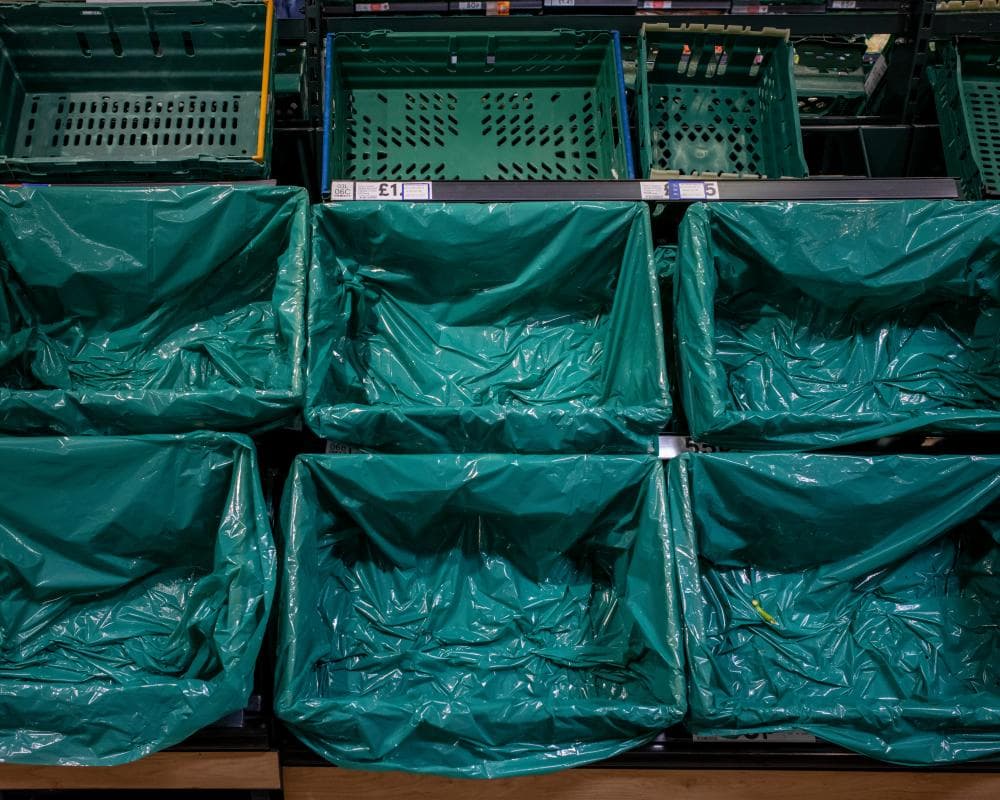
We’ve already seen how fragile our food systems are this year, with farmers warning that we could see empty shelves as a result of drought and flooding, and the government whispering that we should start stocking up on tinned food and bottled water.
Polanski said that a report from the joint intelligence committee said:
Without significant increases in the UK food system and supply chain resilience, it is unlikely the UK would be able to maintain food security if ecosystem collapse drives geopolitical competition for food.
He said another intelligence report, covered by the Times, said Britain’s food and water supply were “almost certain” to be on a “decline and collapse trajectory” – and our food security was at risk of “catastrophic failure.”
Polanski went on:
Today I have a question for our new prime minister. Will you tell the truth – and release the full unredacted report from the joint intelligence chiefs? Or will you keep hiding the truth from the public?
And will you act on the scale of the threat – and introduce a Nature, Biodiversity and National Security Act to put resilience at the heart of government?
This summer we saw our countryside burn and our city parks turn to dust. It was a bleak preview of what is to come if we continue to allow the greed of corporations to come above the survival of our natural world – and all that relies on it.
This must mark a turning point. Where we say no more loss. No more quieting of birdsong, no more steady trickling of sewage and poison into our waters.
There are three Commons statements after PMQs today.
After 12.30pm: Yvette Cooper, the health secretary, on summer health and resilience.
Around 1.30pm: Lucy Powell, the education secretary, on education skills and reform.
Around 2.30pm: Blair McDougall, the reindustrialisation minister, on the Jaguar Land Rover redundancies.
On Newsnight last night Nicholas Watt, the programme’s political editor, said he had been told by one cabinet minister there was a simple explanation for the Israel sanctions announcement: “We’re doing things which Keir [Starmer] wouldn’t let us do,” the minister said.
Today Watt says the Starmerites are disputing this. He says:
Allies of Sir Keir Starmer are strongly disputing what this cabinet minister told me last night. One Starmer ally tells me that earlier this year the former prime minister asked his aides to chase Foreign Office ministers for “proper advice” on blocking settler trade or imposing sanctions on West Bank settlements.
“He was no blocker,” the Starmer ally told me. They claim that the Foreign Office told them the issue was “complicated” which showed, according to that ally, that they simply “had no plan”.
The ally tells me: “There’s just a lot of rewriting of history going on.”
Deputy Tory leader Alex Burghart accuses Labour of 'hypocrisy', saying it is not taking similar action against China
Alex Burghart, the deputy Tory leader, was giving interviews this morning. On Israel, he opened up a new line of attack against the government, accusing it of hypocrisy. This is what he told GB News.
At the same time that Labour were saying all these things about Israel in the House of Commons, they put out a communique.
They put out an account of a conversation that Andy Burnham has had with the Chinese president, and it said how constructive they wanted to be with China, how they wanted to work with China, and what a great relationship we have.
Now, I’m not saying we should put sanctions on China, but I would point out that the Chinese over the past few decades have been guilty of some of the very worst human rights violations that we’ve seen anywhere, and yet Labour’s hypocrisy is capable of allowing it to have these two totally different approaches at the same time. I think that this is madness.
Updated
Reform UK insists National Rally agreed migrant policy after backlash in France
Reform UK has insisted its deal with France’s far-right National Rally to return migrants back across the Channel was fully approved by the party and signed off by its president, Jordan Bardella, amid a furious backlash in France. Rowena Mason and Angelique Chrisafis have the story.
Related: Reform insists National Rally agreed migrant policy after backlash in France
Israeli foreign minister Gideon Saar thanks Badenoch for her 'firm opposition' to UK sanctions
Gideon Saar, the Israeli foreign minister, has thanked Kemi Badenoch for her “firm opposition” to the government’s sanctions against his country. They spoke last night and afterward he posted this on social media.
Great conversation this evening with UK Opposition Leader @KemiBadenoch and Shadow Foreign Secretary @TomTugendhat.
I thanked them for their firm opposition to the hostile Labour Government’s announcement today and its series of anti-Israel policies since taking office.
I welcomed their support for the friendship with Israel and their commitment for the future relations between our countries. We know that we have many friends in the UK, but unfortunately we are faced with the ongoing hostility of the current Labour government.
I also thanked Kemi for her warm wishes ahead of the Jewish New Year.
Miliband says he is 'confident' that security cooperation with Israel will continue despite backlash over sanctions
In his interview on the Today programme, Ed Miliband also said that he was “confident our security cooperation with Israel will continue” despite the sanctions.
The Tories are claiming the government’s move puts that cooperation in jeopardy, and that British lives are at risk as a result.
Asked why he was confident that there would not be a problem, “given how angry [the Israelis] are”, Miliband replied:
I won’t go into the details of this, but we have important intelligence and security relationships with Israel and I’m confident they will continue.
And I was very clear yesterday that we do believe in working with our Israeli partners when it comes to the threats they face from Iran. For example, I announced new sanctions on Iran yesterday.
Miliband confirms UK sanctions could hit Israeli banks dealing with West Bank settlers
Emma Graham-Harrison wrote a good explainer for the Guardian yesterday about the potential impact of the sanctions imposed by Ed Miliband.
Related: Will UK sanctions have any impact on Israel’s ‘settler terrorists’ in West Bank?
She explained that, while the most obvious part of the announcement relates to the ban on the import of goods produced in settlements, the measures relating to financial services are potentially much more significant.
She said:
Miliband highlighted that the Israeli settler population in occupied Palestine had almost tripled over the past three decades, from 270,000 in 1993 to 770,000 today.
That expansion is underpinned by large government subsidies. A trade ban alone would be unlikely to have much impact on the viability of construction that is a government priority, or on the broader Israeli economy.
However, plans to place sanctions on any company that finances or facilitates settlement expansion could force Israel’s main banks and insurance companies to choose between their business interests in the UK and those in occupied Palestine.
Miliband has not provided details of the new measures, which he said would take between six and nine months to put in place. But they have the potential to slow or stop construction.
The activist Yehuda Shaul wrote in a social media post about new building projects: “Companies that bid for tenders on government-led projects, including settlement expansion, must have a financial guarantor. Without the backing of Israeli financial institutions, these projects cannot occur.”
Some Israeli commentators have expressed doubts as to whether, in practice, these sanctions really will cover mainstream Israeli banks. But, in his interview on the Today programme this morning, Miliband insisted they could.
He said:
I also make this wider point, because this is about a substantive intervention to make a difference to the facts on the ground.
With our sanctions regime, we are also seeking to cut off the supply of the supply lines of British finance, British construction, for settlement expansion. This is about a clear purpose, which is to draw a line in the sand and to stop this infinite, ever-expanding settlement expansion.
Asked if Israeli banks would be covered too, Miliband replied:
The way this works is that we sanction companies, and we don’t name the companies in advance. We sanction companies that might be engaging in the occupied territories. And then it is about the relationship with British citizens and British companies.
When Justin Webb, the presenter, put it to Miliband that this meant the sanctions would go much wider than just applying to people “selling dates”, and that they would apply to companies in Israel with relationships with settler companies, Miliband replied:
Yes, because this is about seeking to have an impact on the services that are provided to expand the occupation.
And we are very serious about making a substantive difference and using the power of our sanctions regime to make a difference to the facts on the ground.
A spokesperson for the Israeli embassy in London has accused the UK of deploying a diplomatic “nuclear option” against his country.
In an interview with the Today programme this morning, Alex Gandler said:
A response and a conversation between friends is something that is wanted.
Operating a nuclear option of sanction between democratic countries, especially towards a country that is at war for the past few years and is fighting a shared enemy in Iran, is something that is unheard of.
Hence, our assessment that this has nothing to do with realities on the ground and everything to do with the fact that there’s politics involved.
Gandler also claimed the timing of the announcement was particularly bad.
The timing couldn’t be worse than it is regarding Israel, as we are less than 50 days away from elections in the country, days away from our high holidays in Israel.
It definitely does not promote the relationship between Israel and the United Kingdom, that is for sure, and it does create an atmosphere for violence against Jews.
The BBC’s Tom Bateman has posted this on social media. It is the sign outside the UK consulate in Jerusalem that Israel is now closing. (See 9.21am.)
Bateman says:
The very long standing sign that used to be on the wall in the British consulate in East Jerusalem. Israel has said it will close the consulate in retaliation for the UK’s trade ban on settlements
In his interview with Sky News this morning, Miliband sidestepped a question about what Washington is telling the UK government about its decision to impose sanctions on Israel relating to the illegal West Bank settlements.
Miliband said:
I’ll let our American friends speak for themselves.
We obviously talked to them in advance of our announcement.
You know, I think the whole international community has been quite frustrated, to put it mildly, with some of the actions of the Israeli government.
I will let them say what they feel, but I think there is real concern about what is happening … Underlying so many of the conflicts in the Middle East is this failure to really grasp the situation between Israel and Palestine, and this is why it’s in our interest to act.
Updated
Miliband plays down significance of Israel's retaliatory measures, saying UK sanctions still 'right thing to do'
In his interview with Sky News this morning, Ed Miliband, the foreign secretary, said that he regretted the fact that Israel is ordering the UK to close its consulate in Jerusalem in response to the UK sanctions. But he said the government had weighed up “the costs and benefits” of its move in advance.
He said:
I regret what the Israeli government has announced, but I’m proud of what we did yesterday and it was the right thing to do.
It will be damaging, that’s true, but we weighed up the costs and the benefits in advance of this.
And we did something very important. We talked to the representatives of the Palestinian people, the Palestinian prime minister, the representative here, and they both said to us with a very clear voice, you need to act from our point of view.
He added:
I would prefer that Israel hadn’t announced what it did, but overall, I strongly believe that what we did, along with other international allies, was absolutely the right thing to do.
Miliband defends sanctions on Israeli settlements and pushes back against chief rabbi’s criticism
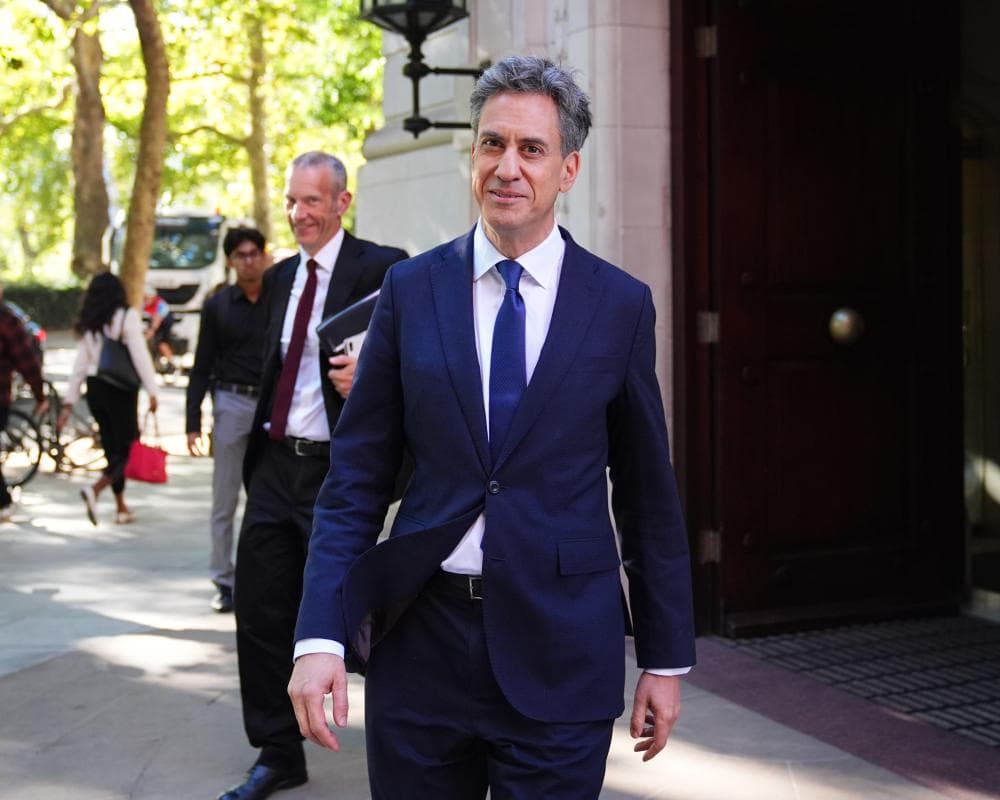
Good morning. Yesterday Ed Miliband, the foreign secretary, made what may turn out to be one of the most important Commons statements of the year. Here is our overnight report by Pippa Crerar, Jessica Elgot and Kiran Stacey.
Related: UK accuses Israeli ‘terrorists’ of ethnic cleansing in West Bank with government backing
Here is an analysis by Patrick Wintour, the Guardian’s diplomatic editor.
Related: Ed Miliband has overturned decades of Foreign Office inertia on illegal Israeli settlements
And here is the Guardian’s editorial.
It starts: “Rarely in recent years has the Commons felt like the cockpit of history. On Tuesday it did.”
Ministers were worried about a backlash from Donald Trump. So far, that has not happened, and in the US Axios is reporting that, when Andy Burnham spoke to Trump on Monday, “two sources with knowledge of the call said Trump didn’t push back or ask Burnham to change course”. In his report for Axios, Barak Ravid says: “US officials told their British counterparts they shared their concerns about the Netanyahu government’s West Bank policy, even if they disagreed with these specific sanctions, sources say.”
But in the UK some of the leading organisations representing the Jewish community have strongly condemned the decision to ban trade with Israeli settlements in the West Bank, and Sir Ephraim Mirvis, the chief rabbi, described yesterday as “truly a dark day for British Jews”. The rightwing papers are all leading their coverage on his remarks.
Miliband has been giving interviews this morning, and he has said he does not agree.
Asked about the chief rabbi’s statement, Miliband told Sky News:
Well, I’m a proud British Jew, and I don’t agree with the chief rabbi.
I have great respect for the chief rabbi, but I don’t agree with him, and I believe that it must be possible to do what we did yesterday, which is to stand up for British values of the rule of law, of dignity for people, of the prevention of injustice, and do so in a way, as I did yesterday, to say to anyone in our country who holds British Jews responsible for the actions of the Israeli government, that is antisemitism, pure and simple.
We will hear from Andy Burnham on this later at PMQs.
Here is the agenda for the day.
9am: Zack Polanski, the Green party leader, speaks at the Wild Summit in Bristol. Words and video planned
From 9am: David Anderson and Jonathan Hall, the former and current independent reviewer of terror legislation respectively, are among those giving evidence to phase two of the Southport inquiry, looking at Prevent’s role in managing violence-fixated individuals.
10am: Prof Alexis Jay, chair of the Independent Inquiry into Child Sexual Abuse (IICSA), is among the experts giving evidence to the London assembly’s police and crime committee on grooming gangs.
Noon: Andy Burnham faces Kemi Badenoch at PMQs.
After 12.30pm: Heidi Alexander, the transport secretary, may make a Commons statement on the air traffic control chaos. She is also opening the second reading debate on the civil aviation bill.
I’m afraid we are no longer able to have comments open below the line every day on this blog. If you want to contact me, please email politics.live@theguardian.com. You can use this email to flag up corrections, comments for publication, questions or complaints.
Updated