In the 1976 movie Network, news anchor Howard Beale tells TV viewers to stick their heads out their windows and yell: “I’m as mad as hell, and I’m not going to take this any more!” It’s a sentiment that resonates today in Australia and across the world.
In October, consumer sentiment at home fell to levels more often associated with recessions, despite the fact that the latest GDP numbers show the economy grew by a real 2% over the year to June (that is, 2% over and above the rate of inflation).
But there are plenty of reasons why Australians are unhappy, and even angry. The combination of war-induced energy shocks, rising tariffs, ageing populations, increased military spending, more frequent climate shocks, and even the datacentre frenzy are all pushing up inflation and public sector debt, which in turn have led to rising interest rates. These are not short-term trends. Add to that falling house prices, rising unemployment, rising inequality, and a general malaise around what AI might or might not do, and you might wonder why sentiment isn’t even lower.
Sadly, in Australia and across the world, pessimism is turning to rising frustration, anger, and even violence. In the wake of the appalling alleged attack on the independent MP Helen Haines this week, there have been calls to “lower the temperature”. Which begs the question: what might the federal government reasonably do to make people feel like their concerns are really being heard and that action is being taken to rectify the situation (while noting that many challenges are global in nature)?
There are many ready policy options that could leave us collectively better off. Shifting the tax burden from income to spending, or increasing the supply of housing and childcare places, could all deliver productivity and wellbeing gains, but they will take time. However, some more immediate measures, such as the $3.3bn in cuts to fuel excise levy and road user charges, if unfunded will just worsen the budget position and may end up forcing the RBA to increase rates again.
Measures must help households most in need, deliver a return to taxpayers over time, and consider the long-term budget deficit (so that future generations aren’t paying for the policy mistakes of today). Ideally, such policies would also deal with some of the overarching challenges we face, too, such as climate change.
Related: Cost-of-living crisis? You wouldn’t know it by looking at these companies’ profits | Greg Jericho
There are (at least) three things that the government could do right now that make economic sense to me, and that might restore some faith in the political system – assuming opposition parties (and the public at large) play ball and choose economically sensible options over costly ideologies. And while they might take some time to implement (and to recoup costs), they would represent a demonstration of intent that might restore some of that missing trust. The good news for the government is that others have already done the groundwork for them.
1. Raise the GST to fund health and education
I’m a big fan of the Grattan Institute idea this week of raising the GST to 15% (still below the OECD average of 19.4%) with appropriate income tax reductions targeted at low-income households, along with increases in jobseeker and youth allowance payments, rent assistance and pensions. Grattan suggests handing the remainder of the additional $76bn a year back to the states, which would help with woefully underfunded health and education systems; reduced reliance on gambling revenues could be an added bonus. There’s plenty in this to feel good about.
2. Introduce a super profits gas tax
Another excellent, if more complex, idea is to implement a carbon pricing system. Yes, really! The SuperPower Institute’s latest proposal to make polluters pay for the emissions that hurt us all and to tax the super profits of gas exporters would generate $35bn a year over 25 years. This can be redistributed back to those most affected and still leave room for wider supports and/or budget repair. This idea combines climate action and support for future industries with equitable support for households and businesses.
3. Help low-income households electrify
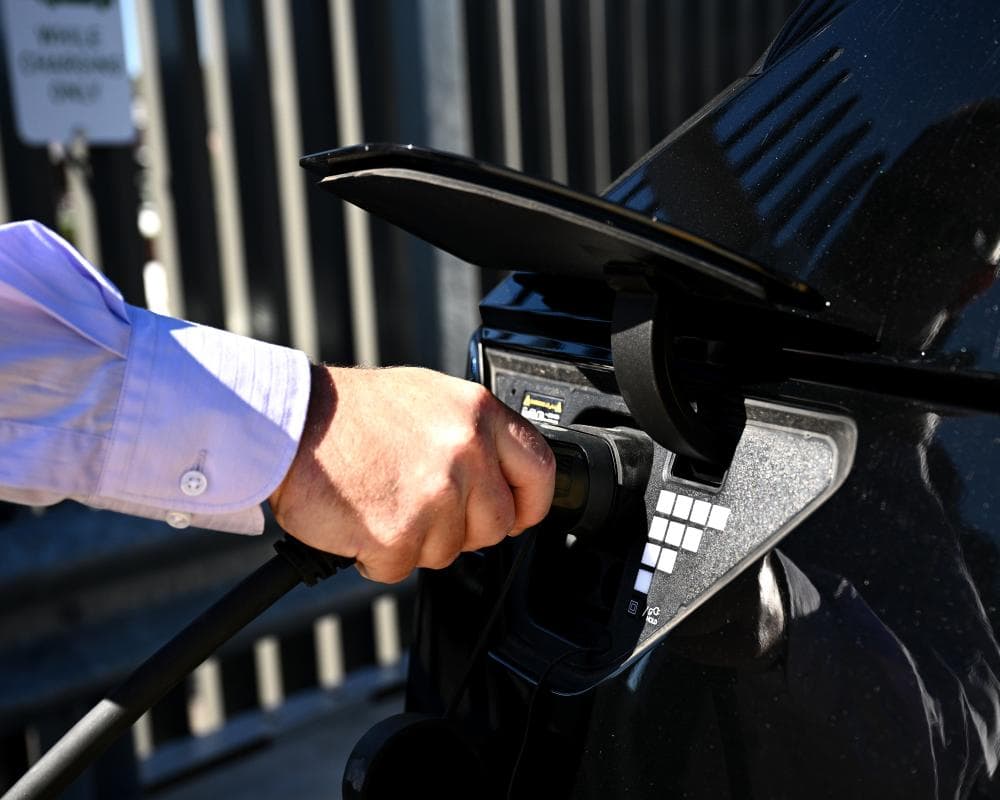
On a less grandiose scale, better targeting of existing supports might go some way to reducing household inequality. For example, encouraging electrification has never made more sense, given high energy prices. But government supports for EVs, solar and batteries generally benefit the wealthy, who have the money (and the rooftops) needed to take advantage. The NSW government’s Solar for Residential Apartments scheme gives us a template for helping households electrify more equitably, while adding to the country’s energy security. The scheme specifically targets $5m of the total $30m package to apartment-dwellers in postcodes which score in the lowest 40% of the Australian Bureau of Statistics socioeconomic index of disadvantage. There’s room for improvement, but policies that improve equity – like pulling back on super tax lurks for the uber-rich – should be a high priority.
This is just a taste of what is possible. There’s no shortage of sound policy ideas from thinktanks, universities and even government departments themselves. It is vested interests, partisanship and a lack of spine that block progress. Political leaders of all stripes need to find more courage, more sense, and a determination to bring people with them. Easier said than done, but we need to start doing things differently if we want different (and better) outcomes.
Nicki Hutley is a consulting economist