At a Catholic primary school in Melbourne’s outer-north, I began a recent visit by showing the students a photograph of the jar of Nova dill pickles my mum named me after. Soon we were talking about the sorts of characters I create in my books, leading them into creating their own. They were full of energy, ideas and excitement. After we finished, one of the teachers proudly showed me around the library, sunlight streaming through the window, lighting the walls of children’s artwork and book displays, and I understood then why these students were so alive to the wonder of story.
Like many Australian children’s authors and illustrators, I visit a broad range of schools each year to give talks and run workshops, and it is immediately apparent when I am in a school that values the library and promotes reading culture. At these schools, the teacher-librarians will often know my books better than I do (even dressing up as my characters for a Book Week parade), and the students will ask tough narrative questions that surprise me.
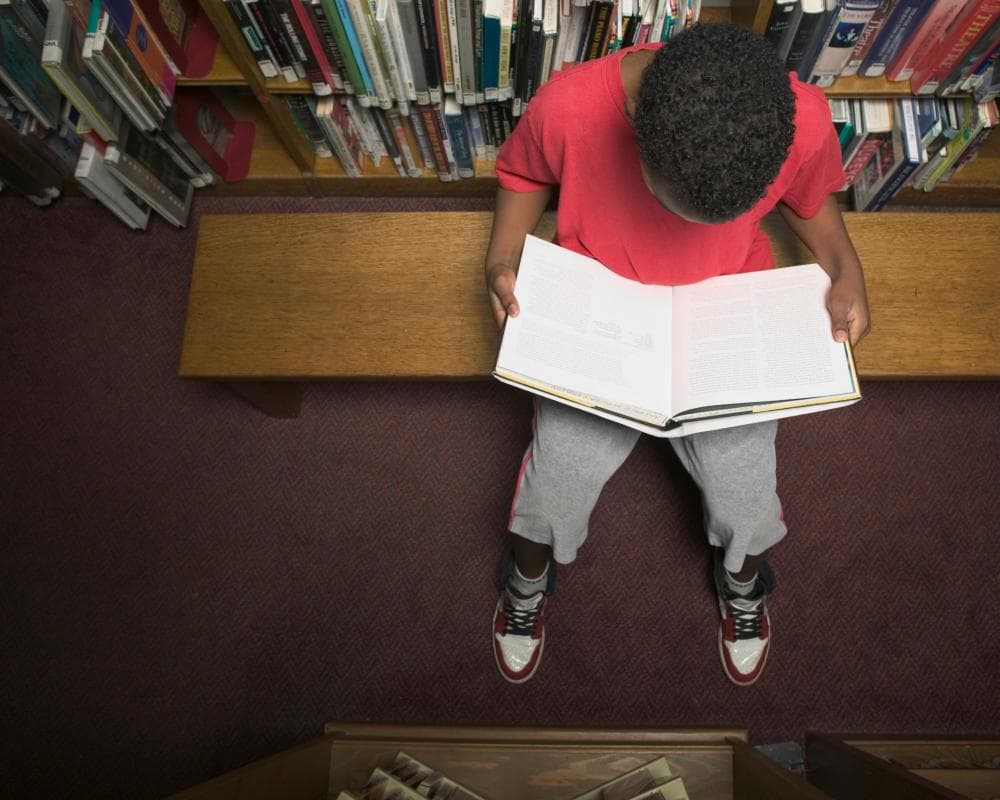
They will create their own stories that are complex and inventive, begging to share and building on each other’s ideas with openness and generosity. They will be encouraged by a trained teacher-librarian to find the books that work for them. Even the most reluctant student will be reading, because they will have mandated library sessions each week, taught by a professional, who can introduce them to a wide range of stories that will hopefully capture their heart.
Related: Australia’s classroom disruption among worst in world, prompting calls for ‘digital detox’
This is not just anecdotal. A 2019 review of school libraries in South Australia found that students at schools with qualified teacher-librarians could have up to two months’ learning gain compared with students at schools without.
The library was once the centre of every school, but it’s not a given any more. There is no legal requirement for a school to have a library, so their existence relies on the individual system (Catholic, public or independent) and then on the leadership to allocate funds. Qualified teacher-librarian positions have been slowly disappearing for years, and the library can no longer be a guaranteed part of a school. A school library is a special place. It does not announce itself as a sanctuary. It just is.
Growing up, my country primary school didn’t have a library. The closest public library was a drive away, so I had to rely on the visit from the weekly mobile van to borrow Sweet Dreams books (a highlight of my week). High school meant a resourced library with a trained librarian and a library card of my very own. This came with a frustrating borrowing limit, which I got around by dating a boy who would lend me his card, because I knew five books wouldn’t see me through the holidays. My high school library was where I escaped to when friendship dramas were playing out, or when I just wanted to read. It was my safe space. And I wonder sometimes if it contributed to me becoming an author. It most definitely helped make me a reader.
Visiting schools means I see first-hand the alarming disparity in our education system between those that can afford week-long literature festivals versus those than can only afford a one-hour session once a year. For many state schools, the cost of a full-time librarian is prohibitive.
Given that one-third of Australian students fail to meet literacy benchmarks, according to the most recent Naplan results (worse for students from Indigenous backgrounds, lower-socioeconomic backgrounds and those from the bush), you would imagine that governments would make it a priority to adequately fund our public schools and school libraries.
Related: Teaching about respectful relationships in schools? How dare women! | First Dog on the Moon
At independent and Catholic schools, the leadership has some power to decide where to allocate funds, and all too often libraries are not the recipients. Catholic Schools Maitland-Newcastle recently announced plans to cut teacher-librarian positions across 58 schools in the region. Teacher-librarians would be redeployed, and the libraries would be run by assistants or student support officers. And while these roles are also vital, they are needed in addition to qualified teacher-librarians, not instead of them. This announcement has been met with broad industry criticism. Australian author Kate Temple launched a petition that has received more than 12,000 signatures in a matter of days and has the backing of the Australian Coalition for School Libraries, Australia Reads and the Australian Library and Information Association. The Australian School Library Association is also urging the Catholic Schools Maitland-Newcastle to reconsider.
Imagine the community outrage if PE teachers were being quietly redeployed. Would we rope in unqualified people to run art classes, music lessons and language sessions to save some money on departments we no longer deem necessary? Why do we not value that which keeps us human, and mandate the employment of qualified teacher-librarians in every school, with a decent budget to buy diverse books that speak to all students?
It is often argued that it is difficult to measure the value of a school library, but our rising rates of illiteracy, the growing threat of AI to creativity, and the very role that story holds in teaching empathy, understanding and critical thinking, is all the proof we need.
• Nova Weetman is an award-winning author of books for children and young adults