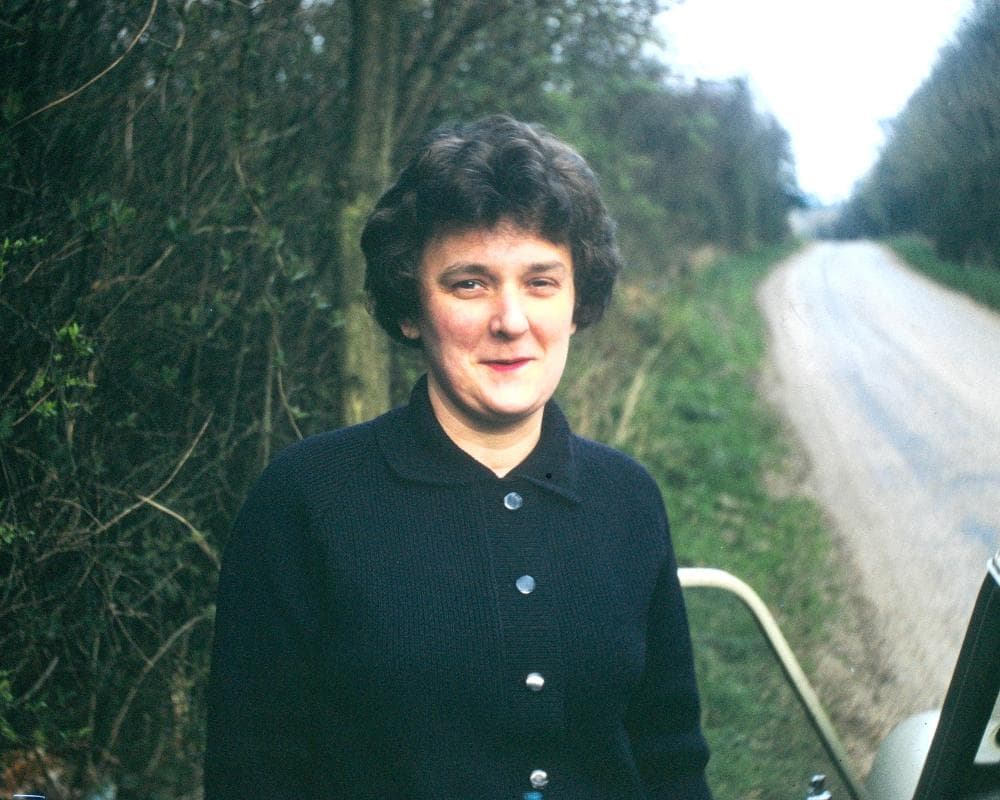
My friend Nini Rodgers, who has died aged 86, was a historian of Ireland’s involvement with slavery, the transatlantic slave trade and the abolition movement.
In 2007, at the end of a four-decade career as a history lecturer at Queen’s University Belfast, she published Ireland, Slavery and Anti-Slavery: 1612-1865. In it she meticulously unmasked the reality behind the island’s self-image as an unfailing “lover of the oppressed”. While eventually some in Ireland did campaign against slavery, for most of the 17th and 18th centuries, Nini demonstrated that “the Irish behaved according to the European norm”. “As far as the slaves were concerned,” she wrote “they were indistinguishably white.”
The book was the crowning achievement of a life devoted to the pursuit of precise knowledge and displayed her belief that such knowledge, even if unpalatable, was worth more than comforting fables. Her major publication came late partly because of her commitment to the thousands of students she taught at Queen’s history department. Under Nini, the university’s part-time “night degree” flourished, bringing new kinds of people to higher education.
Her annual walking tour of Belfast was a highlight for the after-hours students, connecting their city with major events and trends in world history. The tour typically culminated in drinks and debate at White’s Tavern, Belfast’s oldest pub.
Born in Newcastle, County Down, Nini was the daughter of Marie (nee Waddell), a medical doctor, and William Rodgers, better known as the poet WR Rodgers. She was educated at Banbridge academy and graduated with a history degree in 1962 from Queen’s before working there as a history lecturer for her entire career.
Coming of age in the glum Protestant oligarchy that Ulster then represented, Nini became a voice for change, working for the Northern Ireland Labour party in the years before the Troubles snuffed out the possibility of non-sectarian progressive politics.
In the 1960s she met Jack Gray, a fellow historian. They became long-term partners and had a daughter, Eleanor. I first came to know Nini through Eleanor, who was my classmate at secondary school. I am one of the many people who are historians today because of the flame Nini ignited in them.
In retirement from 2006 onwards, Nini lived in a beautiful farmhouse looking out on the Mourne Mountains. For many years she continued to research, prioritising work that brought professional historians and ordinary citizens together, including publications for the Follies Trust and regular contributions at Ulster-American Heritage Symposia. An unquenchable sightseer, she travelled widely. She was the most wonderful storyteller.
Jack died in 1992. Nini is survived by Eleanor, her grandchildren, Nora and James, and a half-sister, Lucy.