Electric car owners could have a new way to save money under a federal government scheme that promises three hours of free electricity.
Since the solar sharer plans became available in July, many Australians have been asking – is it possible to save money by switching, and how?
New research reveals who could save hundreds of dollars by taking advantage of the regulated energy offer – and its free power period – and who risks paying more due to higher peak and supply charges.
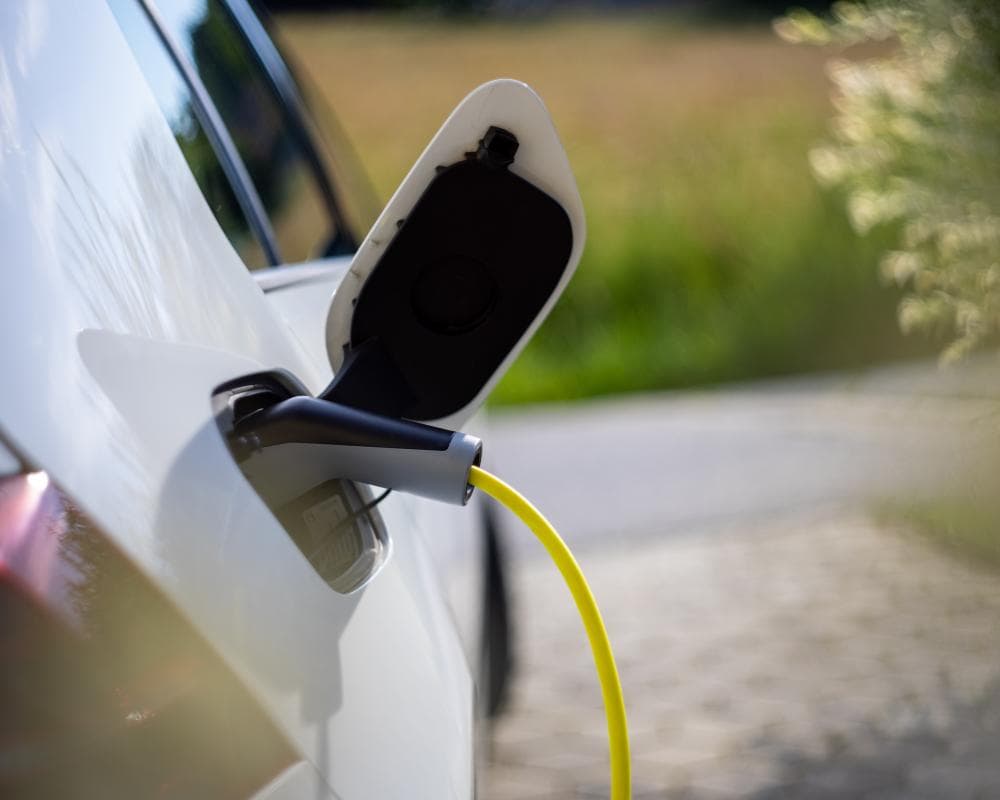
EV owners could save with midday charging
Households with one electric vehicle could save up to $800 a year on the government’s solar sharer plan, while some with two vehicles could save as much as $1900, according to new modelling by the Institute for Energy Economics and Financial Analysis (IEEFA).
Jay Gordon, an energy analyst at IEEFA, says EVs already cost less to run than petrol or diesel cars.
With solar sharer, “if you’re able to charge that EV in the middle of the day – you can take advantage of the free power period and lower the running costs even more,” Gordon says.
“And if, of course you’re a larger household that had two EVs – and we know the majority of Australian homes do have more than one vehicle – you could be seeing double those savings, so you’re easily exceeding $1,000 a year just on that regulated solar sharer offer.”
Sign up for the Breaking News Australia emailGordon calculated the potential savings using IEEFA’s household energy model, comparing the total energy bill for a home on solar sharer to the same home on a standard electricity plan, with an average amount of driving.
This modelling came after EV sales outpaced petrol cars for the first time in Australia in August.
The chief executive of the Electric Vehicle Council, Julie Delvecchio, says many Australians were already saving thousands of dollars each year by switching to an electric car.
“If you start to build in things like solar and make use of the best time of the day to charge, you can save a whole lot more.”
The EV Council’s research shows the vast majority of people charge their vehicles at home, with 80% using solar panels.
There are now more than 200 EV models available in Australia, with some under $25,000, Delvecchio says. “When you think about the opportunity to couple that with solar, and with charging at different times of the day. I think it’s one of the single biggest cost of living measures available to Australian households today.”
Hot water heating draining the budget?
About 40% of Australian households have an electric hot water system. Those homes could save between $400 and $800 by switching to the regulated energy plan, Gordon says, by programming their water heating to run during the free power period.
“If you don’t have an electric hot water system, you most likely have a gas hot water system. Now, we know there’s already savings to be had from switching the gas system to something efficient and electric. What the solar sharer tariff can do is deepen those savings a bit.”
What about homes that already have solar and a battery?
For homes with solar panels and a battery, the results were mixed, Gordon says.
“If you’ve already got more than enough rooftop solar to meet your home’s needs and to charge your battery, a solar sharer free period doesn’t necessarily add value.”
Some customers might see moderate savings, while others could end up paying more.
Who should think twice before switching?
Solar sharer was not necessarily the best or cheapest plan available.
“What we know about those default offers is they are almost never the best available option on the market,” Gordon says. “This is definitely the case for solar sharer tariffs. We found that when you looked at other offers on the markets, there is almost always a more competitive option.”
Potential energy bill savings for households on a market offer with a free power period – who were able to shift their car charging or water heating – were even higher.
Many other types of households, including renters, apartment dwellers and those with gas appliances, wouldn’t be able to shift enough of their energy use to benefit from the regulated solar sharer plan. “Households that can’t flex their demand are unlikely to benefit,” he said.
Both the federal and Victorian governments provide comparison sites to help people compare plans and find the cheapest deal.