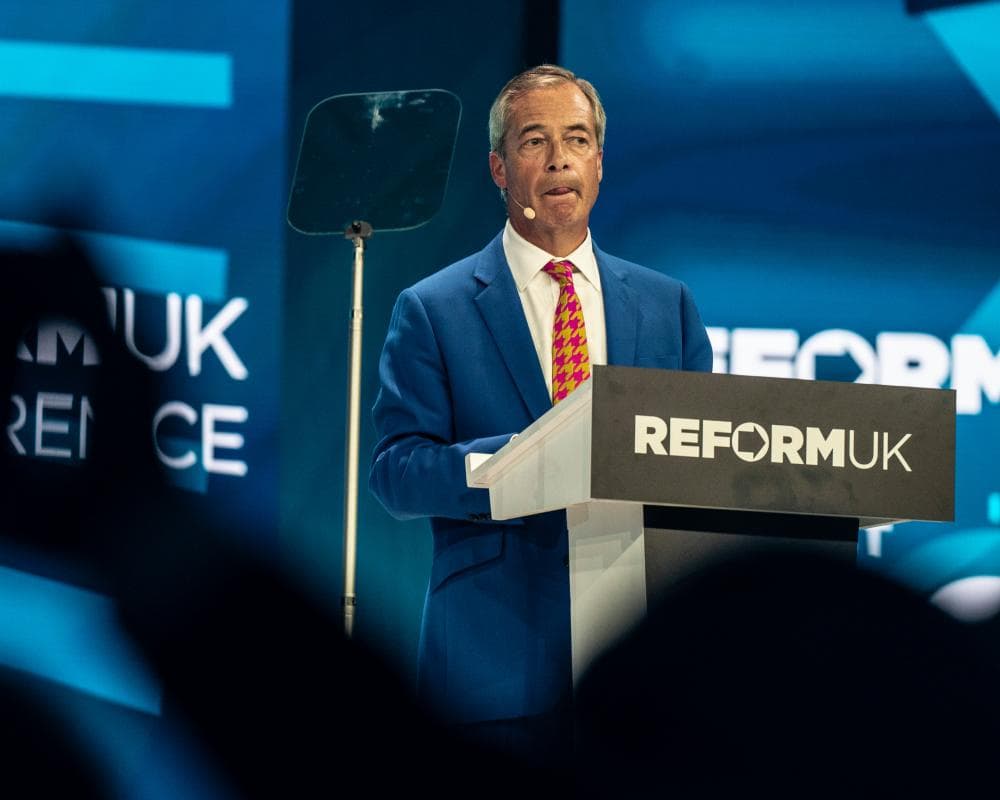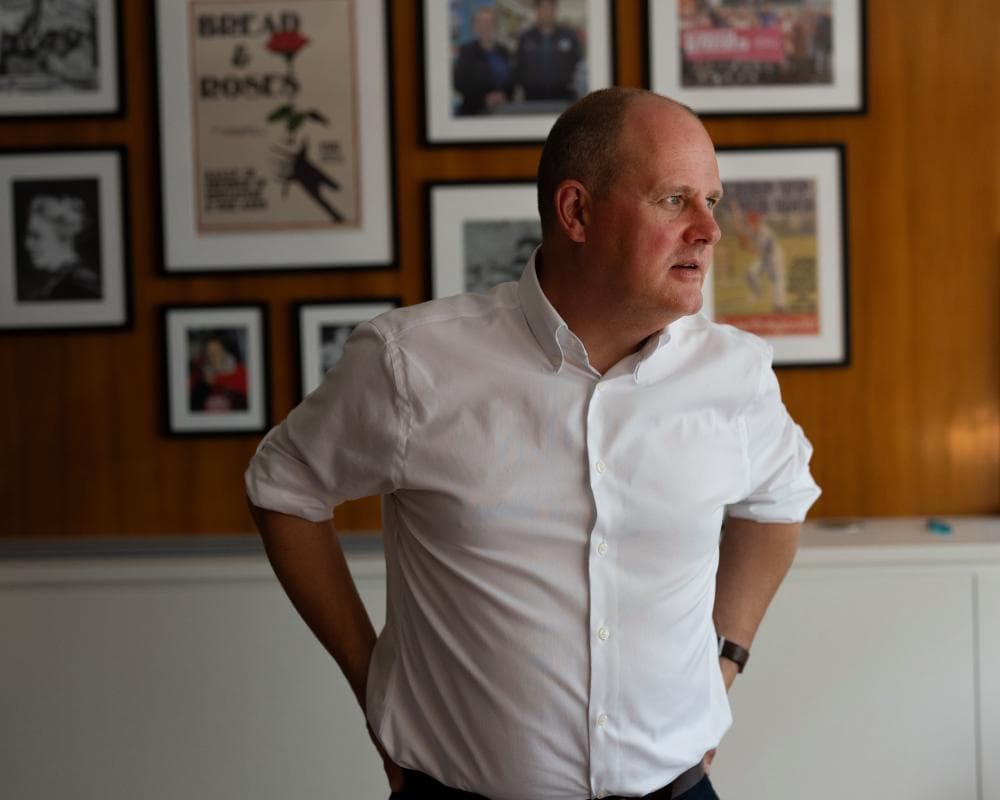
Andy Burnham must overhaul Shabana Mahmood’s migration reforms or risk overstretching social care and fuelling far-right sentiment, the TUC general secretary, Paul Nowak, has warned.
Speaking ahead of the TUC’s annual congress in Brighton next week, Nowak welcomed the “sense of optimism” around Burnham’s fledgling government, but he urged the PM to act in a series of areas, including migration and the cost of living.
Burnham reappointed Mahmood as home secretary when he became prime minister in July. Her department is consulting on proposals that would force more than 300,000 low-paid workers to wait 15 years for the legal right to remain in the UK.
These include many carers who came to the UK to fill vacancies after the Covid pandemic, and were told they could apply for indefinite leave to remain after five years.
“I think it is fundamentally unfair to change the rules when people came to this country with one set of expectations,” Nowak said. “I hope we can think again on that.”
He added: “There are 111,000 staff vacancies in social care at the moment. I want us to train up as many Brits as possible to do those jobs. But I suspect in a growing economy with an ageing population, we are still going to need people to come and live and work in the UK and work in sectors like social care.”
As well as criticising the backward-looking changes, Nowak also condemned the idea of applying a 10- or 15-year wait to many new arrivals, as the Home Office has proposed.
“Both my granddads came to this country after the second world war – one came from Hong Kong, one came from Poland. Both raised their families here. The idea that you could be here for the next 10, 15 years and you’d still have no legal right to remain in the country … how the hell do you plan? Can you buy a house? What does that mean for your employment? Do you have kids? Do you send them to school? I mean, it cuts across any effort to integrate at all.”
Labour politicians supportive of the changes see them partly as a way of assuaging public concerns about migration, and neutralising the appeal of populist parties, including Nigel Farage’s Reform UK.
But Nowak suggested that by significantly lengthening the time before people can consider themselves settled in the UK, the approach could ultimately fuel far-right sentiment.
“I tell you where you end up: you end up with Reform claiming that a woman who was born in Somalia and has lived here for most of her life and worked hard and contributed to our society, somehow isn’t fit to hold elected office in this country.”
Reform UK’s home affairs spokesperson, Zia Yusuf, was recently accused of “straightforward racism” by Labour after he suggested the party’s frontrunner to replace Keir Starmer in the Holborn and St Pancras byelection, former child refugee Sagal Abdi-Wali, was not British.
Nowak acknowledged that many TUC members will have backed Reform in recent local elections, but suggested the party’s appeal may be waning.
“Our members are a broad cross section of the British public. Of course, large numbers of them voted Reform, like other people did. But certainly the evidence that we’re getting fed back from unions is that just like the British public, the more they see of Nigel Farage, the less keen they are.”
Nowak claimed there was a “direct line” from the rhetoric of Farage and his allies, to what he called the “proto-fascism” of the balaclava-clad vigilantes who blocked infrastructure in Dover and tried to stop migrants arriving in Portsmouth last weekend.
He suggested Labour should focus on cost-of-living issues to combat Reform’s populist appeal – including offering voters more help with rising energy bills.
“The most important thing that Andy Burnham can do is to deliver the change that people voted for back in July 2024. If people feel that the government is taking the stuff that matters to them seriously and is delivering on it, I think it cuts the legs from underneath that rightwing populism.”
Ahead of the budget on 28 October, Nowak called for a “social tariff” to cut energy bills for lower paid users, funded by a windfall tax on the banks. “As well as delivering a boost to hundreds of thousands of households up and down the country, it will help bear down on the cost of inflation,” he said.
“The public bailed the banks out in 2008. For those families who are worried about turning on the heating this year, asking the banks to pay their fair share isn’t unreasonable.”
A Home Office spokesperson said: “last November, we set out reforms to double the standard qualifying period for settlement to 10 years for most migrants, with shorter routes for those who contribute most to the UK.
“A consultation on elements of those reforms has now closed, and we will set out our response in due course.”