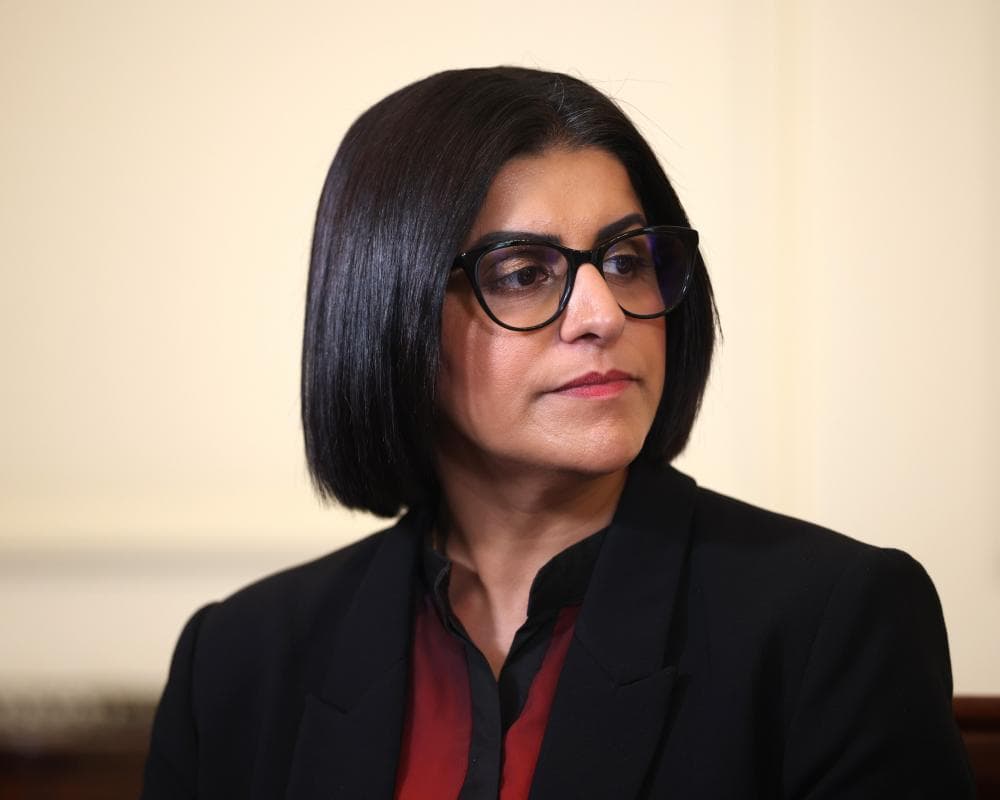
Shabana Mahmood has urged police to curb the activities of far-right, anti-migrant groups which have “obvious malign intent” after a weekend of chaos caused by balaclava-wearing vigilantes.
In a meeting on Thursday, the home secretary told senior officers to make “full use” of their powers, including bans on face coverings, after police were assaulted and ports were disrupted in Kent and Hampshire.
She signalled the need for “strong deterrence” and improved intelligence in light of new tactics being deployed by groups such as Patriot Platform, led by the convicted kidnapper Daniel Thomas, which helped to organise the protests.
Related: Far-right port protests: police told to improve intelligence gathering
Mahmood told the officers: “These scenes have caused disruption for people and, given that people are dressed in black wearing balaclavas, there is a fear factor and obvious malign intent being communicated to our residents. This makes it different from other protests, so we need to make sure we are learning lessons.”
The Home Office and police were criticised in the aftermath of the weekend for failing to take a hard line on the far right. Environmental campaigners and civil liberties groups have complained that there appears to be a “two-tier” approach, with peaceful climate protesters prosecuted more aggressively than far-right agitators.
Police in Dover on Saturday and then Portsmouth on Sunday were taken by surprise when hundreds of protesters wearing black clothes and face masks massed to oppose what they say is illegal immigration via small boats.
Both protests are believed by police to have been far-right inspired, with evidence emerging that those behind them were determined to avoid detection.
Thursday’s online meeting was held ahead of this weekend, when further disruption is predicted to take place.
Mahmood told senior officers to make better use of intelligence to ensure they have the correct resources and expertise in place, and made clear the government’s expectation that police should make full use of the powers at their disposal to ensure anyone who is committing a criminal offence is dealt with “robustly”.
The home secretary urged police to make full use of digital evidence, including body-worn video, facial recognition technology, CCTV, ANPR and other intelligence products to identify offenders.
The move raises the possibility that Hampshire police will insist that protesters due to meet in Portsmouth at 12.30pm on Saturday will be ordered to take off any face coverings.
Forces have planned an “enhanced and coordinated approach to intelligence gathering and operational planning” ahead of the weekend – laying the groundwork for a more proactive response.
Labour’s Crime and Policing Act, which took effect in April, gave police powers to create mask-free zones at protests, backed by fines of up to £1,000 or one month’s imprisonment, or both.
The power only applies to people who are trying to conceal their identity, rather than those covering their face for reasons of religion, health or work, and officers must take reasonable steps to notify the public of the restriction.
Saturday’s protests in Dover, which Thomas claimed to have organised, blocked the town’s roads for several hours, disrupting traffic heading to and from the port.
Kent police initially claimed that they had no warning of the Dover protest. That claim fell apart when the force admitted there were warning calls to police on Friday evening which were not acted upon.
After a dinghy carrying 120 asylum seekers was rescued on Sunday near the Solent, about 200 black-clad men gathered at Eastney Marina. Protesters blocked roads, leading to alleged assaults on several officers. No one was arrested at either demonstration.
Patriot Platform has attempted to bring together disparate local “patriot” groups rather than construct a single hierarchical organisation.
In a further development, RNLI volunteers and staff have been warned not to wear the charity’s branding because of the “unacceptable abuse” they have faced from anti-migrant protesters.
The charity has issued security advice since the protests in Dover and Portsmouth, which saw its workers targeted for bringing some small boat migrants ashore.
This week, footage posted on social media showed volunteers being labelled as “traitors” after helping to look after people who had arrived in a dinghy in Portsmouth. Protests have been held at RNLI sites, including on Wednesday, when a small anti-migrant gathering was held at the RNLI College in Poole, Dorset.
Commenting after the meeting, the deputy chief constable Andy Mariner, the NPCC lead for public order, said: “Policing is continually assessing and preparing for protests and any potential impact on public safety. This includes working closely with local forces, specialist teams, communities and partners, monitoring publicly available information, and ensuring the right resources are available where needed.
“We have stepped up this activity this week at a national level, supporting local forces to ensure we have the right information, support and operational capacity in place to respond should we need to.
“This includes ensuring commanders are ready to use every power at our disposal, from arrests and dispersal orders to more recent powers which can help police manage protests, where it is proportionate and necessary to do so.”