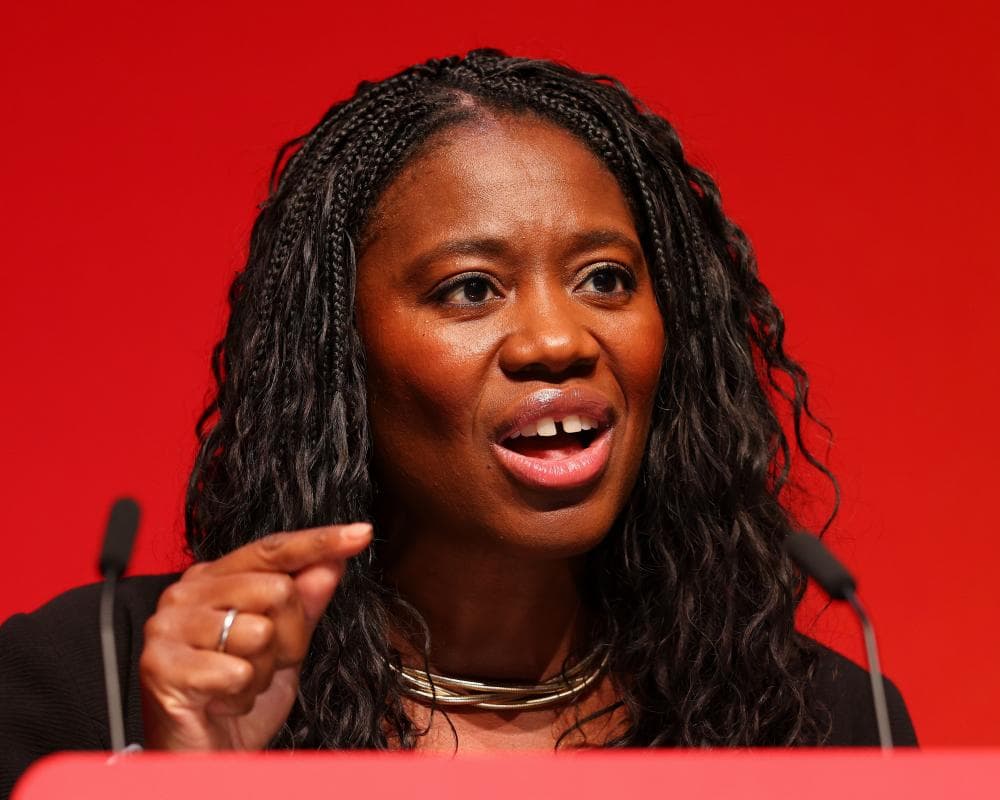
Billions of pounds worth of green levies could be taken off bills, the energy secretary has said, as the government investigates funding green infrastructure through taxes instead.
Miatta Fahnbulleh is looking at how green projects are funded, including varying levies between customers and funding them all through general taxation.
Such a move could save customers an average of £120 a year, but could involve putting up taxes by as much as £3bn.
With households facing a predicted rise in electricity bills next year of more than £400 largely because of the Iran war, ministers are looking for ways to bring down costs in the short term. Paying for schemes such as wind farms, solar panels and home insulation through taxation however would either mean cuts elsewhere or raising taxes.
Fahnbulleh told the Guardian’s Politics Weekly podcast: “There is a question that needs to be answered … we have to think about the costs and how we recover it in the most fair way.
“And so the question that I am generally asking is: given that there will be fixed costs, if we want a system that is resilient, if we want a system that can cope, if we want a system that ultimately can deliver the diversity of energy that we want, what is the fairest way in which we pay for it?
“That is both across the exchequer versus our bill payers, and then within our bill payers. So we have to ask that question. Every other country is asking that question, and ultimately we’ve got to come to a fair deal.”
Campaigners have long argued that Britain’s model of paying for its energy transition through bills is unfair compared with the system in other countries of spreading the cost among taxpayers, with repayment based on how much a person earns.
Analysis by the MCS Foundation, a green energy charity, recently found such a move would save bills of about £120 per year but would cost the Treasury a little more than £3bn per year.
Fahnbulleh said she would cut bills, but did not recommit to her predecessor Ed Miliband’s pledge to bring them down by £300 a year.
“My mark of failure or success is whether I can get bills down or not,” she said. “That’s the only thing I’m in this job to do.”
But she also promised to keep pushing action to tackle climate change, even in the face of increasing political attacks by both Reform and the Conservatives.
“My challenge to Reform and to the Tories is, when we come to the next election, and I can point to the jobs that have been created, I can point to the industries and the factories that we’ve created, I will say to them: ‘If you want to pull the rug on that, you go talk to those communities,’” she said.
“And in the end, I think they will bow because they are on the wrong side – not just of economics, but they’re on the wrong side of history on this.”