Afternoon summary
A UK cyber security official has said that there are “no indications” that the PHP computer coding flaw, that has led to 32 government websites being taken down, has been successfully exploited by hackers. (See 4.46pm.)
For a full list of all the stories covered on the blog today, do scroll through the list of key event headlines near the top of the blog.
MPs pay tribute to Diane Abbott as they debate black history month
MPs debated black history month earlier today. Politicians are often fairly unpleasant to their opponents, but there was a surprise moment near the start of the debate when Joy Morrissey, the Tory spokesperson for women and equalities (and not someone known for being particularly woke or leftwing), paid a moving tribute to the veteran Labour MP Diane Abbott. Morrissey said:
In 1987, the very same year black history month began here, a young woman from Paddington walked into the House of Commons as Britain’s first black female MP. Today, she is the mother of the House.
When she arrived, there were only 41 women in the entire Commons. She was told in a hundred ways that she didn’t belong. She stayed anyway.
For nearly four decades, she has represented the people of Hackney, championed black children in London schools, and chaired parliamentary groups on West Indian and sickle cell disease.
She has faced more abuse than almost any politician of her generation, and she has never stopped turning up.
You don’t have to share her political her politics to recognise what her presence meant. For millions of black Britons, especially black girls, she was proof that the doors of power could open and that someone who looked like them could walk through.
Florence Eshalomi, the communities minister, opened the debate, and she also paid tribute to Abbott. She said she remembered when Abbott was elected in 1987, along with Paul Boateng and Bernie Grant. They were the first black MPs. Eshalomi said:
I was just six years old when [Abbott] was elected, and I remember that quiet hope I felt in watching TV and seeing her in parliament to see that, yes, a black woman can have that voice and that we don’t have to stand by when decisions are made to us and not by us. That gave me the confidence to stand for public office as a local councillor in the borough where I grew up, and later for the London assembly.
Abbott was not in the chamber for the debate.
Voters significantly more likely to back progressive coalition led by Burnham than Tory/Reform UK one, poll suggests
YouGov has published some interesting polling on what voters think about various coalition options. Here are some of the key points.
Voters are significantly more likely to support a progressive coalition than a rightwing coalition. The most popular coalition option polled was a Labour/Lib Dem one, with Andy Burnham as PM. Some 42% of people would support that. Other progressive options, with Burnham as PM, would get the support of more than a third of voters. But only a quarter of voters would back a Conservative/Reform UK coalition, with a Kemi Badenoch-led version only marginally more popular than a Nigel Farage-led one.
Conservative supporters would rather see the party go into coalition with the Liberal Democrats than with Reform UK. In its write-up, YouGov says:
Most current Conservative supporters would support either arrangement, though more are in favour of the party forming a coalition with the Lib Dems (68%) than Reform (60%), and with at least 28% opposed to either coalition. Lib Dem supporters do not return the favour, with 58% of those currently intending to vote for the party opposed to a repeat of the Cameron-Clegg government, although 36% are in favour.
This is interesting because, on immigration, Brexit, and the European convention on human rights, Badenoch has shifted her party to a position where its policies are near identical to Reform UK’s. Recently there have been signs she has started to steer back the other way.
Most Conservative supporters would not be in favour of a coalition with Reform UK, with Nigel Farage as PM, if the two parties combined could form a majority government. In December last year Conservative supporters (defined as people who voted Tory in 2024) were narrowly in favour of this option. They would still favour a Conservative-Reform UK coalition if Badenoch were PM, but by a narrower margin than last year. YouGov says:
Britons have become less inclined towards a Farage-led Reform-Tory coalition, with net support for such a government falling from -27 to -41 since last December. This includes 2024 Conservative voters going from being effectively divided on the question (+5) to being clearly opposed (-13).
Conservative voters have also become less receptive to a Badenoch-led Tory-Reform coalition, with net support falling 15 points since the end of last year to +23, even if those who voted Reform at the last election have become more open to the idea, with net support doubling to +22.
Updated
Fahnbulleh says ministers won't 'faff around' in getting rid of gas standing charges, implying decision coming in budget
Miatta Fahnbulleh, the energy secretary, has heightened speculation that a government announcement about getting rid of the standing charges on gas bills will come in the budget on Wednesday next week.
Andy Burnham implied this strongly yesterday when he said he had asked John Healey, the chancellor, and Fahnbulleh to look at this idea and to report back to MPs “at the earliest opportunity”. The “earliest opportunity” is Wednesday next week, because that will be the first time either of those two MPs gets to address the Commons.
Today, speaking to a press gallery lunch, Fahnbulleh confirmed that an announcement is likely very soon. She said Burnham had made it clear the government “can’t faff around”.
She explained:
I love working with him because Andy is very clear … in his mind about the sorts of things that he wants us to do, and he’s really impatient with change.
And so, if you ask the department, ‘Oh, you know, standing charge reform’, they’re like, ‘Oh, we’d have to consult. This is a 10-year proposition’. And Andy’s like, ‘I want you and John to look at it and come back with an answer’. So we’re looking at the options.
Fahnbulleh said getting rid of standing charges would be popular.
The thing I do know is that the public absolutely hates standing charges, and it’s a control question. People just find that really egregious, and their ability to manage their energy bills by deciding how much they want to use on their terms is essentially taken away from them. So, even shifting it into the unit rate gives people that agency.
She said modelling suggested the move could reduce the bills of “a big stack of low-income through to middle-income households”.
She went on:
There are some people that will be impacted negatively because they are essentially low-income, high users, and so you need to think about mitigations. But we’re looking at all the options.
But the thing that he is very clear on is we can’t faff around. We need to get on with this. So watch this space.
According to research by Nesta, a research foundation, 64% of households would benefit if the government got rid of the standing charge and instead loaded those costs onto the unit charge. But households using large amounts of gas would pay more.
In a briefing Nesta says:
Our analysis shows that, on its own, abolishing the gas standing charge would save the typical dual fuel household £27 per year, and that 64% of dual fuel households will be better off under this policy.
Because the distribution of gas consumption is skewed by a small number of (predominantly wealthy) households, the average and median household are quite a way apart. The threshold at which this policy would start to increase bills is around 12,400 kWh, but a majority of homes (64%) use less gas than this. This is why the typical household (using only 9,500 kWh of gas) would expect to save around £27 per year under this policy.
TDCV stands for typical domestic consumption values – a figure for how much gas and electricity an average household is using at any point.
Updated
Burnham has flu jab, as NHS encourages those eligible for free injection to get one
Andy Burnham has had his flu jab. He has posted about it on Instagram, and at the same time the Department of Health and Social Care is launching a publicity campaign to encourage people eligible for a free jab to get one.
James Frith, a health minister, said:
Vaccines save lives. It has never been easier to find out if you are eligible and get vaccinated, helping protect yourself and reduce pressure on the NHS during the winter season.
Eligibility is focused on those most vulnerable - from young children to older adults and people with long-term health conditions - so if you are eligible, please come forward this winter.
In England, most children under 17 are eligible for a free flu jab, as well as people over 65, people with some long-term health conditions, pregnant women, carers and people living in a care home, people living with someone with a weakened immune system, homeless people and frontline health and care workers.
The latest edition of the Guardian’s Politics Weekly UK podcast is out. It features Jessica Elgot and Alexandra Topping talking about whether or not the government will allow the Rosebank oilfield development to go ahead, after the less controversial Jackdaw gasfield was approved yesterday.
Related: Rosebank row: will Labour block the oilfield? – podcast
Starmer granted core participant status in grooming gangs inquiry
Keir Starmer may be summoned to give evidence at the grooming gangs inquiry, the Press Association reports. PA says:
The former prime minister, who ordered the probe last year, has been listed as a core participant for the inquiry’s hearings which are due to begin in December.
This means he is among people, groups and organisations formally granted special status by the chairwoman under public inquiry rules, giving him rights to participate in the investigation.
While this does not automatically mean he will be required to give evidence, many core participants are asked or compelled to do so.
Victims and their families, charities, whistleblowers, police chiefs and government departments are among those also listed as core participants.
The scandal-hit probe is looking at how grooming gangs operated in England and Wales and the actions of police, councils, health and social care services, schools and other public bodies.
An inquiry spokesman said the decision on core participant status “considers whether a person played, or may have played, a direct and significant role in relation to the matters to which the inquiry relates, whether they have a significant interest in an important aspect of the matters to which the inquiry relates, or whether the person may be subject to explicit or significant criticism during the inquiry proceedings or in the report, or in any interim report”, adding: “Nobody is beyond examination or transparency, and that the inquiry is following the evidence, wherever it leads.”
Starmer was prime minister when the grooming gangs inquiry was announced last year. But he was also director of public prosecutions from 2008 to 2013, at a time when the CPS was being accused of being too reluctant to prosecute in many cases of alleged child sexual abuse. As DPP, Starmer set out to change this – ordering prosecutors to be more sympathetic to victims, and less inclined to disbelieve them or to drop cases because victims might not make compelling witnesses.
According to Christopher Hope from GB News, Kemi Badenoch is unhappy about Andy Burnham going on Gogglebox (see 2.35pm) – but only because she wants an invite too! Hope says:
A political row has broken out over Andy Burnham’s decision to go on Channel 4’s programme ‘Gogglebox’. A Tory source tells me that Kemi Badenoch should be invited on to the show. One says: “It’s Channel 4’s job to ensure political balance.”
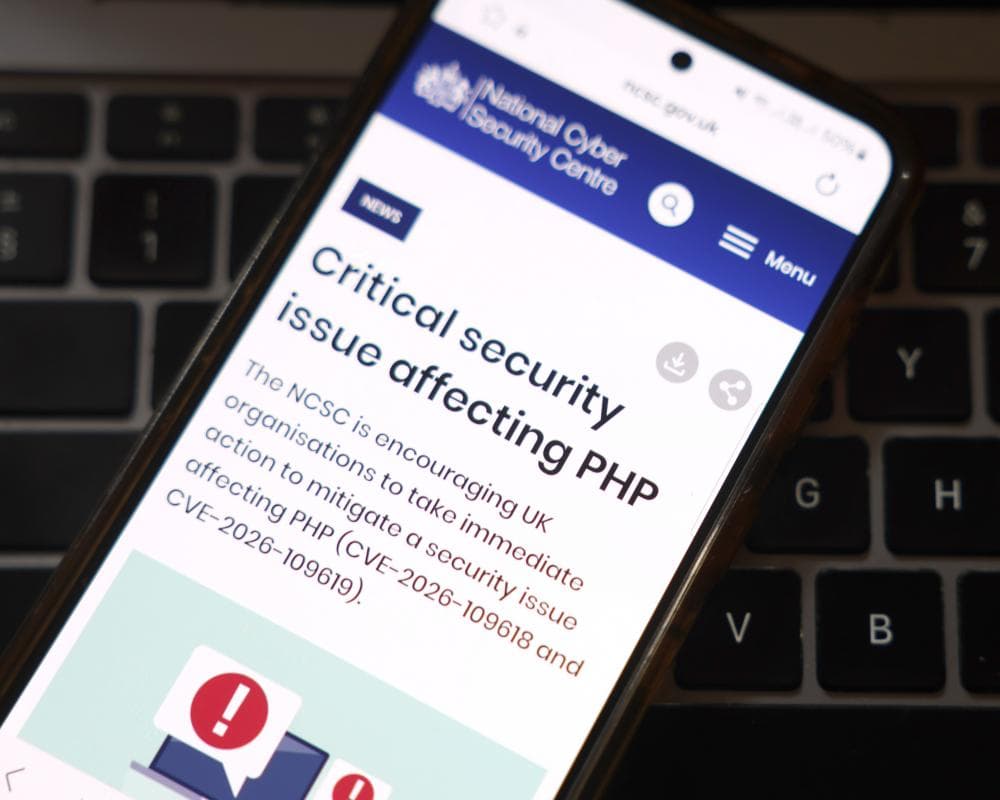
Cyber security official says there are 'no indications' PHP code flaw has led to government computer systems being hacked
Ollie Whitehouse, chief technology officer at the UK’s National Cyber Security Centre, told Radio 4’s the World at One that incidents like today’s computer system shutdowns because of a coding problem were likely to re-occur. He explained:
[This] highlights to a lot of organisations that technology is not a one-time purchase now, that it needs that continuous investment throughout its operational lifetime.
We’re in an era now of digital dependency, coupled with heightened cyber threat, coupled with increasing capability, which means all organisations are going to likely have to revisit their risk assumptions and work out how they are able to invest in technology to be able to meet the contemporary era.
Whitehouse said there were “no indications” that the PHP flaw now being fixed had been successfully exploited by hackers.
He also said that the problem that had led to 32 government websites being temporarily shut down (see 12.54pm) was originally identified months ago. He said the NCSC had been conducting a “coordinated disclosure process” to warn organisations of the vulnerability, until a leak meant that the process had to be accelerated.
Here is Josh Taylor’s explainer on PHP.
Related: What is PHP, and how bad is the computer language flaw causing website shutdowns globally?
Updated
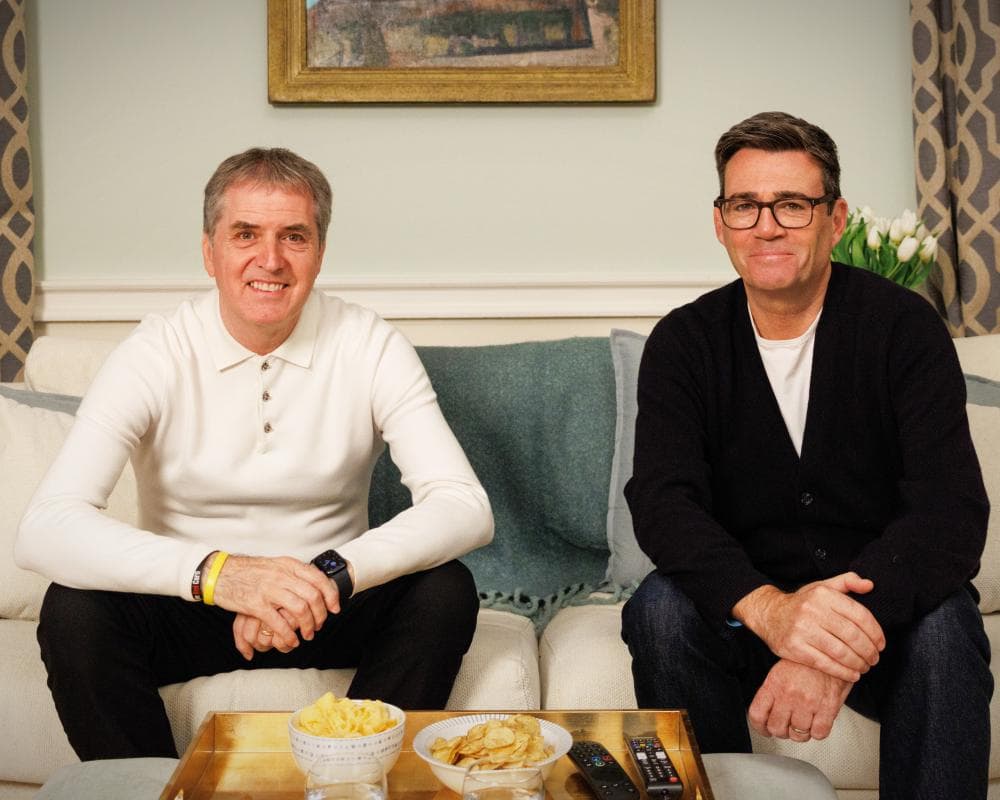
Burnham to appear on Gogglebox with Steve Rotheram
Kemi Badenoch has been routinely complaining about Andy Burnham spending time on supposedly trivial things, like discussing how he makes his tea in a summer Q&A, or doing a social media video about pork scratchings. So God know what she is going to say when she finds out he’s on Gogglebox tomorrow night.
The PM will be appearing on the show tomorrow night for a Gogglebox for Stand Up To Cancer special. He will be on the sofa with his friend Steve Rotheram, the Liverpool city region mayor.
As Max Goldbart writes in an article for Deadline, there is some precedent for his appearance.
Seen as something of an everyman, Burnham will now get the chance to broadcast his thoughts on the week’s TV to millions. An Instagram reel teasing his appearance shows him offering crisps and beer to Rotheram.
Burnham is the first prime minister to appear on Gogglebox. Jeremy Corbyn, who was leader of the opposition at the time, came on the show a decade ago, while former PM Boris Johnson’s father Stanley Johnson appeared two years later.
“Nearly 7,000 miles of road resurfacing – the equivalent of travelling between London and Singapore – will be completed this year,” the Department for Transport is saying. It says councils in England are doing 10% more resurfacing than last year, because they are getting more government funding.
Mahmood condemned by Unison for refusing to let care worker attend private meeting about her 'nasty' proposed ILR changes
Andrea Egan, the Unison general secretary, has criticised Shabana Mahmood, the home secretary, for not letting her bring a care worker to a meeting to discuss Mahmood’s plans to tighten the permanent residency rules for foreign workers.
Egan described the proposals as “nasty”, and said Mahmood’s failure to engage with people affected by the rules was “totally unacceptable”.
The Unison leader was commenting in a post on social media that referenced a story by Arj Singh for the i, which said talks between Mahmood and Unison “broke down after the home secretary refused to allow a migrant care worker to attend the meeting”. Singh said:
The meeting was cancelled by Unison after Mahmood refused Egan’s late request to bring a migrant care worker who will be affected by the “earned settlement” changes, The i Paper understands.
Under draft plans announced last year, foreign workers would normally have to wait 10 years before being able to apply to indefinite leave to remain (ILR) in the UK, instead of five years as they do now. But for foreign care workers, the normal wait would be 15 years – a proposal Mahmood justified on the grounds their relative low earnings meant giving them ILR was more likely to impose a cost on the taxpayer.
Mahmood is under pressure to water down her proposals, particularly those relating to care workers, and Unison, which represents many workers in the care sector, has campaigned particularly forcefully against the plan.
In her social media posts, Egan said:
Shabana Mahmood’s failure to engage properly with the migrant workers whose lives her nasty proposals will devastate is totally unacceptable.
These are brilliant, committed workers who hold our public services together. UNISON won’t tolerate them being attacked and ignored.
I’ve changed UNISON’s political approach to put members first. That includes taking members with me to government meetings.
Engaging directly with workers should be standard for Labour cabinet ministers, not something they run away from.
In his report, Singh says:
The care worker who Egan wanted to bring to the meeting has completed an NVQ level 3 and is set to do further qualifications so that he can develop his career in the sector, and was planning to tell Mahmood about why he and many other Unison members had chosen to work in the sector.
Singh quotes a Home Office source as saying that Egan had been invited to a private meeting with Mahmood and that it was Unison that chose to cancel it. The source also said that it would be wrong for Mahmood to prioritise the views of just one care worker when 200,000 responses to the government’s consultation were being considered.
In a social media post commenting on the same story, the Labour MP John McDonnell said:
The work visa issue is causing totally unnecessary division in the Labour Party at a time when the new leader is settling himself into the job. Listening to numerous workers employed on work visas in the care sector has been essential in gaining an understanding of what they face and the effect on our public services of the proposed rule changes. All Unison wanted was to ensure the home secretary had the opportunity to appreciate fully the concerns of the people who will be affected by her proposals. I urge her to think again on this decision not to meet.
Updated
32 UK government services offline while work carried out to sort out PHP programming flaw, minister says
Some 32 government services are offline and four are partially unavailable while work is carried out to address potential cybersecurity issues, a minister has said.
As the Press Association reports, organisations around the world have been scrambling to fix a critical security flaw in the programming language PHP used by the majority of websites.
Downing Street on Thursday said no large UK public-facing critical services have been affected, but some “limited” government websites have gone dark while issues are resolved. National Cyber Security Centre (NCSC) experts are working with OpenAI, whose technology was used to discover the vulnerabilities, and partners around the globe to address potential problems, a No 10 spokesperson said.
In the House of Lords, Liz Lloyd, the tech minister, said:
The information I have is that 32 government services are unavailable and four are partially unavailable.
Lloyd said that “has largely resulted from precautionary measures taken to protect systems while security updates and mitigations are applied”.
The No 10 spokesperson told reporters:
Work has already taken place across government to identify and fix potential exposures to our systems, and our experts are continuing to work closely with both OpenAI and international partners on this issue.
Here is our story about the global impact of the problems identified in the PHP programming language. It’s by Robert Booth and Aisha Down.
Related: Websites across world hit by millions of attempts to exploit PHP code flaw
Steve Witkoff wrong about Putin being a 'humanitarian', says No 10
Yesterday Steve Witkoff, the property developer appointed by Donald Trump as his lead foreign policy envoy, described Vladimir Putin as a “humanitarian”. Andrew Roth has more about that here, in a piece pointing out that this is an extraordinary lie.
Douglas Alexander, the Scottish secretary, was giving interviews this morning. Asked if he agreed with Witkoff’s description on LBC, he was reassuringly blunt. He replied:
No, we don’t.
We see him as somebody who illegally invaded Ukraine at the start of this conflict, who has been responsible for conduct by his government that included attempted assassinations on UK soil.
So we simply do not recognise the description of Vladimir Putin as a humanitarian.
In contrast, we are crystal clear that we stand foursquare behind Volodymyr Zelensky and the people of Ukraine in their battle for freedom.
At the No 10 lobby briefing, a No 10 spokesperson also argued that Witkoff had got it wrong. Asked about Witkoff’s comment, the spokesperson said:
We do not recognise that characterisation … Putin has killed thousands of people, Ukrainians and his own. He’s starving children and the elderly of heat and warmth and destroying critical national infrastructure.
Updated
Tories claim crime figures 'spiralling out of control' - and why the data doesn't back this up
The Conservative party seems to have missed the bit in the ONS report on the crime figures where it said “crime against individuals and households has generally decreased over the last 10 years”. (See 9.54am.) Chris Philp, the shadow home secretary, has issued a statement saying:
Crime is spiralling out of control under Labour. Record numbers of sexual offences, knife crime and shop theft show what happens when criminals know they can get away with it. This is a direct consequence of Labour cutting police numbers by 2,000 and letting thousands of prisoners out of jail early.
The Tories justify this claim by looking at the ONS report and picking out all the worst bits (a technique not unfamiliar in the world of journalism). Their briefing highlights four figures in particular. Here is an extract.
Sexual offences have reached the highest level on record under Labour, with the police now logging around 600 of them every single day. Police in England and Wales recorded 218,994 sexual offences in the year to June 2026, the highest annual total since the series began in 2002-03 …
Police are recording more rapes of women than at any point since records began, at a rate of around 142 every day. There were 51,731 recorded rapes of women aged 16 or over in the year to June 2026, the highest figure since the series began in 2004-05 …
More people are being caught carrying knives and blades than at any point since records began. Police recorded 30,216 offences of possessing an article with a blade or point in the year to June 2026, the highest figure since the series began in 2008-09 …
Thefts and robberies from shops have reached a record high under Labour, with more than 1,500 recorded every single day. Police recorded 519,516 shoplifting offences and 31,089 robberies of business property in the year to June 2026, a combined 550,605 and the highest total since the series began in 2002-03.
But these claims are highly selective – to the point of being misleading.
On sexual offences, and rape, the ONS report points out that much of the increase over time is due to more offences being recorded, and not necessarily more of them taking place. It says “there has been a general increase in police recorded sexual offences over the last decade, largely because of improvements in police recording practices”. And it includes a specific warning about drawing the wrong conclusions from the figures.
Police recorded sexual offences are not a good indicator of trends over time. Improvements in police recording practices, the introduction of new offences, and increased reporting by victims have contributed to the level of offences in recent years.
On knives, while more people may be carrying them, the Tories have ignored the figures suggesting fewer criminals are actually using them. The ONS says:
Knife-enabled crime recorded by the police decreased by 6% in year ending (YE) June 2026 (to 48,615 offences), compared with YE June 2025 (51,567 offences). Levels remained 12% lower than YE March 2020 (55,170 offences).
And, on shoplifting, the Tories are again presenting the data in a misleading way. The ONS says:
Following a period of increases in shoplifting, there has been a 2% decrease (to 519,516 offences) in YE June 2026 when compared with the previous year (530,336 offences).
The Tories have justified their “record high” claim by combining the shoplifing figures with the figures for robberies from business properties. They describe this as “shop crime” – even though many business properties are not shops. And the ONS has a caveat about these figures too.
The number of robbery of personal property offences fell by 7% (to 57,193 offences) compared with the previous year, however, overall robbery increased by 10% (to 88,282 offences) mainly because of improvements to recording practices for robbery of business property.
And the ONS says, with shoplifting, more offences are also now being recorded than in the past.
Recent increases in police recorded shoplifting likely reflect both growth in offences and improved reporting resulting from closer engagement between police and retailers. Reporting rates for shoplifting are known to be very low and police are actively encouraging the reporting of all incidents and the submission of supporting evidence, such as CCTV, to strengthen intelligence, identify offenders, and link related offences.
Gender pay gap continuing to decline, ONS says
The Office for National Statistics has also published a report on the gender pay gap. It says:
The gender pay gap for full-time employees has continued to decline in the UK. It was 6.8% in April 2026, down from 7.2% in April 2025. This compares with 9.4% a decade ago and 16.4% 25 years ago.
This chart shows the pay gap trend over time.
Patrick Maguire was not the only person to interview John Healey yesterday. Robert Peston, ITV’s political editor, spoke to the chancellor too, and he has written a blog about the most interesting points to emerge. This is what Peston says about Healey’s comments about the banks. (See 10.41am.)
Secondly, I asked Healey whether he sees the banks as making excessive profits, which would be the coherent justification for him to increase the surcharge on bank profits – as he is expected to do in the Budget next week.
He said: “You know the banks are the engine of investment in this country. The banks are doing well at the moment and that is good to see.
“It’s good for Britain – and the budget is where I’ve got decisions to take across the economy, across the tax system. I will set those out on Wednesday next week.”
This sounded like he will increase the surcharge but doesn’t have an economic rationale for doing so.
Survey shows 'significant increase' in proportion of adults in England and Wales experiencing domestic abuse, ONS says
There has been a “significant increase” in the proportion of adults in England and Wales who have experienced domestic abuse, the Press Association report. In its report on today’s crime figures (see 9.54am), PA says:
Some 9.6% of people aged 16 and over are estimated to have been the victim of domestic abuse in the year to March 2026, or around 4.7 million people.
This is up from 7.8%, or around 3.8 million people, in the year ending March 2025.
The rise indicates “real change” in the prevalence of domestic abuse and is a “significant increase”, according to the Office for National Statistics (ONS) which carried out the survey.
The jump has been driven by a rise in partner abuse, experienced by 7.9% of people aged 16 and over in the latest figures, compared with 6.1% in the previous year.
Some “minor changes” to the way the survey is carried out are likely to have influenced the size of the increase, the ONS said.
But their best assessment is there has been a genuine rise in the level of domestic abuse.
While there has been a jump in the prevalence of partner abuse, figures for family abuse are broadly similar, at 2.8% of adults in the year to March 2026, compared with 2.7% in the previous 12 months.
Meghan Elkin, ONS head of crime statistics, said: “While minor survey changes and the usual uncertainty around gathering data on this sensitive topic are likely to have affected these estimates, our assessment is that the rise in domestic abuse includes real change.
“More data points are needed to further understand the uncertainty and what this tells us about trends in domestic abuse.”
Badenoch criticises government for not sending minister to speak at Police Federation conference
Kemi Badenoch has criticised the government for not sending a minister to address the Police Federation’s conference.
Addressing the federation this morning, she said she was “not scared to wade in” and not scared to “back the police”.
She told the audience:
Too often these days, we fail to recognise sacrifice and service. Whether it’s hounding brave and elderly veterans through the courts, hounding police officers who try to do the right thing, or even ordinary members of the public who step in to help only to find that they’re in trouble themselves.
It’s no wonder the people in this country are becoming too scared to wade in, too scared to do the right thing. Well, I am different. I am not scared to wade in, and I am not scared to back the police.
I think it is telling that for two years in a row, the Labour government has not sent anyone to address this conference – not the policing minister, not the home secretary.
But Badenoch also said she would not promise police officers a big pay rise.
Now, I know that you would also like a massive pay rise as well.
I’m sorry that I can’t promise that just yet – at least not on day one.
I am not going to stand here and promise something without a plan to pay for it.
Too many politicians have done that, and it only leads to disappointment.
Criminals who refuse to attend sentencing face losing prison privileges under new rules
Offenders who refuse to face their victims’ families in court for sentencing could be stripped of privileges or kept in cells for weeks under government changes granting wider powers to judges in England and Wales, Geneva Abdul reports.
Related: Criminals who refuse to attend sentencing face losing prison privileges under new rules
Barclays boss indicates that he accepts bank taxes will rise in budget, suggests that's 'bearable', and backs Healey
Kalyeena Makortoff is the Guardian’s banking correspondent.
CS Venkatakrishnan, CEO at Barclays, seems to have admitted defeat over bank tax hikes, which are expected to be a headline measure in Healey’s budget next week.
When asked whether the bank might consider tilting assets or investment out of the UK and to the US - where it also has operations - as a result of higher taxes, Venkatakrishnan gave his full backing to the chancellor.
He told reporters:
I recognise that the chancellor and the government has been entrusted with an important duty by the public and the people. And they have to balance a host of considerations. He [Healey] is the man in the arena, and I deeply respect the responsibility he bears on his shoulders and wish him well.
His long term goal is the same as our long term goal, which is to get growth.
Second, we are already a bank, which makes, effectively, half of our money elsewhere [outside] the UK. And so this is not a question of a financial hit to us. It’s bearable. It is a question of proportion and it’s a question of market signaling. But as I said, I deeply respect the responsibility that the chancellor has and he has our full support and backing.
Bank bosses have been lobbying intensively against bank tax rises since narrowly escaping higher levies during last year’s budget.
That includes JP Morgan boss Jamie Dimon, who said earlier this year he could scrap plans for a new £3bn London headquarters if the UK government became hostile to banks. News of the tower – which will house more than half of its 23,000 UK staff – was unveiled just days after former Labour chancellor Rachel Reeves spared the sector of further tax rises in her 2025 autumn budget.
Healey argues his budget will refute Andy Haldane's claims about Tory policies being better for growth than Labour's
Here are some more lines from Patrick Maguire’s interview with John Healey in the Times. This passage sums up the overall picture very well. Maguire writes:
So what is the chancellor now concentrating on? One could be forgiven for thinking him utterly unreconstructed: a party man and proud of it. There is no such thing as Healeyism, he says when the conversation turns to Anthony Crosland’s evangelism for the mixed economy: “I’m just Labour.”
“Just Labour” is exactly what the bond markets fear — and, indeed, it is what gives Kemi Badenoch hope of pulling off a comeback to rank alongside Lazarus and Bobby Ewing for utter implausibility.
As explained earlier, while not going into specifics, Healey was keen to present himself as someone reducing the burdens facing businesses – especially smaller businesses. (See 9am.) But here are some other lines.
Healey argued that his budget next week would refute the claim made by Andy Haldane, the former Bank of England chief economist, about Labour not having the right policies to promote growth. In an article for the Financial Times, Haldane said Conservative policies were better for the economy, partly because they were more likely to support “cuts to business and employment taxes and regulation to unleash animal spirits”. In his write-up, Maguire says:
It was Haldane who also said, memorably and mercilessly, that the markets had concluded that this was a “traditional tax-and-spend socialist government with better TikTok videos”. At Westminster, this sort of criticism is at risk of curdling into thick and immovable consensus. What does Healey say to that? “I’d say to Andy Haldane,” he growls, fixing me with a cold stare, “speak to me next Thursday.” And, for the record, he speaks explicitly of “making an argument for how you bring welfare costs down” — albeit not via the “crude cuts” that were Starmer’s undoing.
Healey hinted that he was sympathetic to arguments that Labour should drop its plan to let younger workers qualify for the full national living wage. In his article Maguire says:
[Healey] is “acutely conscious”, too, of the “trade off” between an ever-increasing minimum wage — particularly for the youngest workers — and levels of employment.
He knows the many businesses who “want to employ young people” sometimes cite that upward ratchet as a reason they cannot.
Healey defended the part he played in bringing down Keir Starmer. Healey resigned from Starmer’s government over defence spending, and this contributed to the loss of support for Starmer in the parliamentary party that led to him standing down. Referring to this period, Healey said:
The country was ready for a change … Wherever you stood on the spectrum of the [parliamentary Labour party], there was a recognition that we needed a change.
He also argued that changing leader had been good for the party.
We have a very rare moment now. We’re in the middle of a parliament, the second half of a parliament, and we’ve got a chance of a new hearing. People are at least willing to listen again … the Labour party is actually quite determined and disciplined, and in any party, the second half of a parliament starts concentrating minds.
Robbery up 10%, while overall crime rates generally going down, ONS figures show
The Office for National Statistics’ latest report on crime figures is out. It covers crime in England and Wales in the year ending June 2026 and it starts:
Crime against individuals and households has generally decreased over the last 10 years with some notable exceptions, such as fraud.
This chart shows some of the key figures. The crime survey figures are based on what people tell researchers about the crimes they have experienced; the other figures related to the crimes reported to the police.
At this stage of the budget process, John Healey has almost certainly made all his key decisions. But, just in case he hasn’t, he could try our budget interactive. It allows you to make a decision on some of the options facing the chancellor, and then it will tell you what the impact would be on budget headroom, and how the markets and the polls might react.
Related: You be the chancellor: play our budget game to see if you can balance the books
Healey accepts Labour has put a ‘lot of pressure’ on business and says helping entrepreneurs will be a budget priority
Good morning. A week today John Healey, the chancellor, will be doing a media round defending the budget he is presenting on Wednesday next week. Ahead of that, he has given an interview to Patrick Maguire from the Times. As you would expect, there is no real detail in it about the measures he will be presenting to MPs. But the big picture message is very clear – and quite surprising, coming from a chancellor serving a PM who in some respects is steering left compared to his predecessor. Healey says that he wants to be on the side of bloody-minded entrepreneurs who make a profit, he acknowledges that government has made their life harder over the past two years, and he suggests that cutting the ‘cost of living’ for business is just as important as cutting the real cost of living for families.
In the quote that gives the Times its splash headline, Healey says:
I want to be a chancellor who backs business in Britain making a profit, and those entrepreneurs who, in the end, are the ones who challenge the status quo, come up with innovative ideas and are trying, some of them through sheer bloody-mindedness, to keep going through these sorts of pressures …
If you’re not making a profit, you’ve got nothing to put back into the business. And for the people who start up these businesses, the ones who really thrive and grow, they have to make a profit — and they will be much more inclined to put it back into their own business. But we want it to grow here and stay here.
And this is what he says about the government has recently been putting “a lot of pressure” on business.
If you talk to any of the businesses that have come in and have either had one-to-ones or round tables with me, I have recognised that in recent times there’s been a lot of pressure: employment law, regulation, tax, input costs, supply chains.
And so when I talk about the cost of business, and recognising that in the same way as we’re recognising the cost of living pressures, I’m conscious of that as I go into the budget for both businesses and households.
All chancellors – including all Labour chancellors – say they want to help businesses make a profit. But many people in the business community suspect that, when they face fiscal pressure, Labour government will usually default to treating business as a cash machine.
Healey’s comments about wanting to be seen as “a chancellor who backs business” and about how tax rises and the Employment Rights Act have increased costs sound like an implicit rebuke to Rachel Reeves, his predecessor. In his interview Healey defends her decision to increase employer national insurance, saying she had to deal with the “dereliction of duty” of the last Tory government on the economy. But Healey still gives the impression of wanting to be seen as markedly more pro-business than Reeves.
In his interview Healey does not give details of how he will cut costs for business next week. But, in his write-up, Maguire says:
[Healey] is expected to use the budget to make significant cuts to regulation on businesses that one senior Treasury source described as “the sludge choking firms”. Reporting requirements are likely to be abolished for many smaller enterprises, The Times understands.
Here is the agenda for the day.
9.30am: The ONS publishes crime figures for England and Wales and – separately – annual gender pay gap figures.
10am: Ofgem chief executive Tim Jarvis and Department for Energy and Net Zero permanent secretary Jonathan Brearley give evidence to the Commons public accounts committee about achieving clean power by 2030.
10.15am: Kemi Badenoch gives a speech at the Police Federation’s annual conference.
Morning: Andy Burnham is in Manchester where he is getting a flu jab, and also holding a meeting with mayors at No 10 North about mayors retaining revenue from business rates.
11.30am: Downing Street holds a lobby briefing.
Lunchtime: Miatta Fahnbulleh, the energy secretary, speaks at a lunch at the Commons hosted by lobby journalists.
I’m afraid we are no longer able to have comments open below the line every day on this blog. If you want to contact me, please email politics.live@theguardian.com. You can use this email to flag up corrections, comments for publication, questions or complaints.
Updated