Here is a summary of today's events:
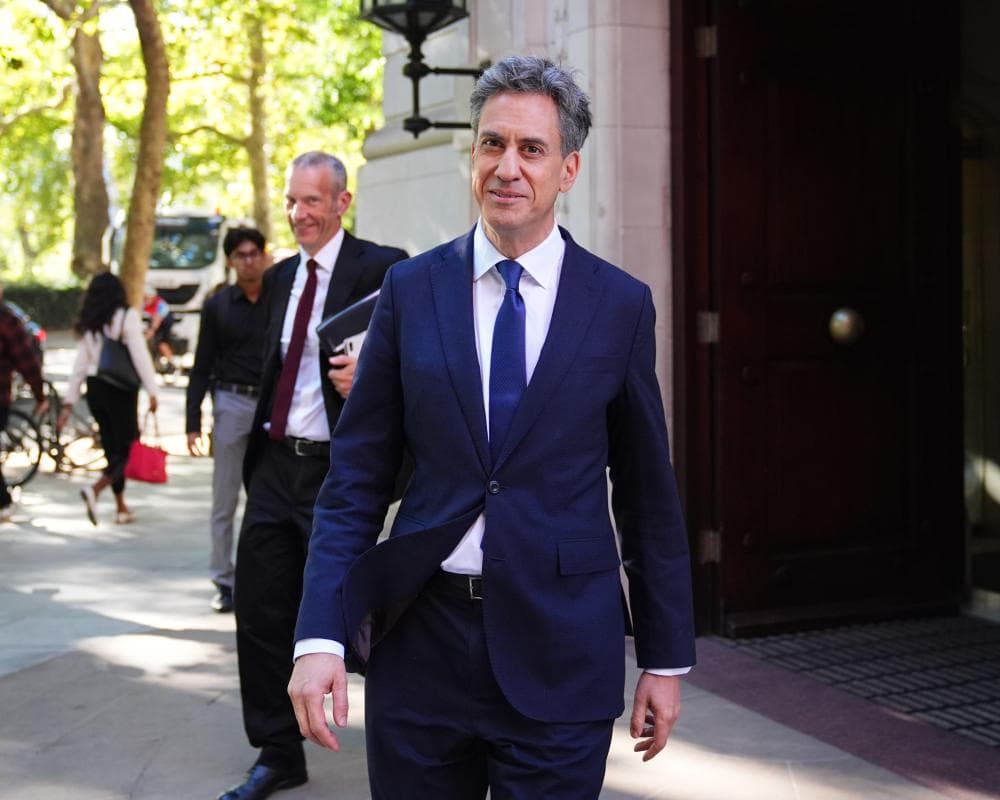
Ed Miliband, the UK foreign secretary, said on Tuesday that the UK regards Israel’s occupation of the West Bank as illegal. Miliband described violent Jewish settler activity on the occupied Palestinian West Bank as “ethnic cleansing” carried out with the tacit backing of the Netanyahu government and announced sweeping UK sanctions on goods from illegal settlements.
Israel ordered the closure of the British consulate in occupied East Jerusalem in response. Israel’s foreign minister, Gideon Sa’ar, announced retaliatory measures including the closure of the consulate and entry bans on several UK MPs.
In his statement, Miliband said that Canada and France joined the UK in banning trade with illegal Israeli settlements today. But nine other European countries also said they are considering measures like this. All 12 countries issued a joint statement.
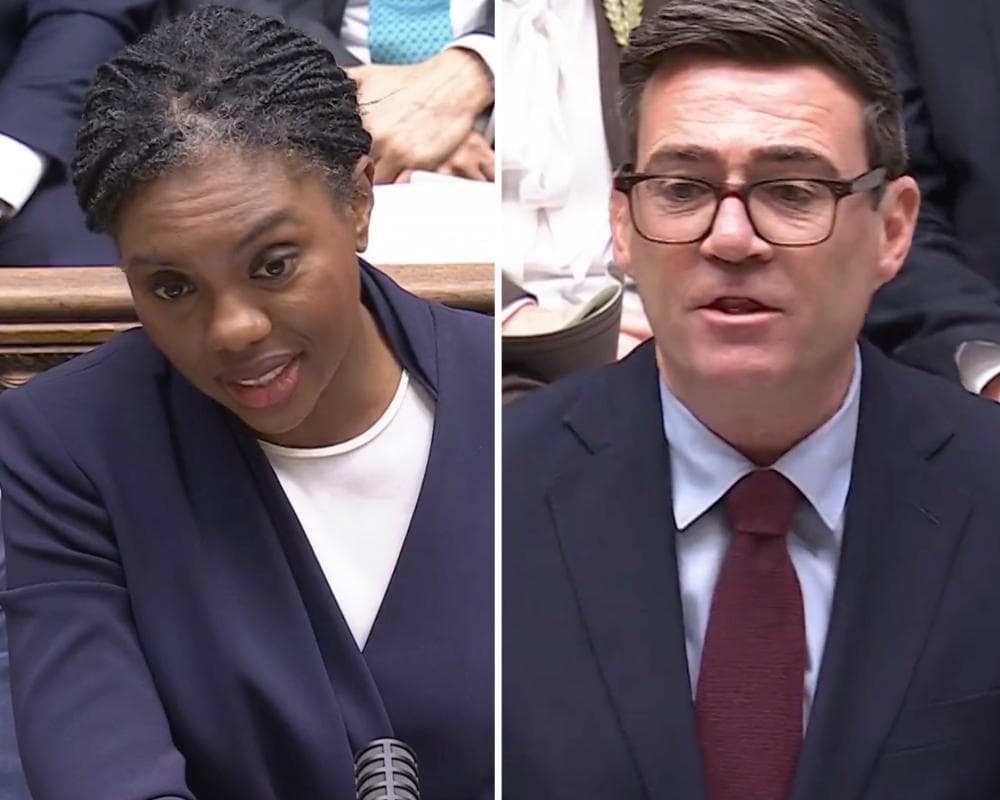
Andy Burnham said Britain will “continue to act in support of our values” after his Government announced a raft of sanctions against Israel. The Prime Minister said Britain was “bringing forward targeted measures aimed not at the Israeli people, but in support of the two-state solution” and called the suffering of Palestinians “a scar on the conscience of the world”.
Jeremy Corbyn headed the list of 12 Britons banned from Israel by the Israeli government following today’s illegal settlements trade ban. Eleven of them were MPs, and the other person, Fahad Ansari, runs an anti-Zionist legal group. Corbyn said it was “shocking” that Israel does not want the world to know what is happening in Palestine.
Israel’s foreign minister said he had a conversation with Kemi Badenoch this evening to thank her and the Conservative party for going against sanctions imposed by the UK government over settler violence. Tory leader Badenoch wrote an uncompromising attack on the government’s decision to ban trade with illegal Israeli settlements on the West Bank, in which she accused Labour of being antisemitic.
Dahlia Scheindlin, one of Israel’s leading political analysts, said Ed Miliband’s speech and new measures were unlikely to impact Israel’s October election results, because Israeli voters are more focused on domestic issues.
“I realise that for the UK this is a huge policy step forward, but for Israel there are so many other things going on today. It is landing on a day when the lists are closing [of parliamentary candidates for each party] and Haaretz has a bombshell exclusive about warnings Netanyahu got ahead of October 7th”, she said. “It also made headlines today and got a tough response from the FM but might not be as influential going forward as the combined sense of ongoing crises.
“Since October 7th Israeli has become much more inward looking and provincial, and generally the attitude to the rest of the world is just that ‘they all hate us’.
“If you are a Netanyahu supporter you might take this as evidence that they are against us because of anti-semitism, and if you are in the opposition camp you might take this as further evidence that the world is turning against us because of Netanyahu’s policies. But it’s hard to see how these policies change the breakdown of the electoral map.”
Israeli FM thanks Kemi Badenoch for opposing government sanctions
Israel’s foreign minister said he had a conversation with Kemi Badenoch this evening to thank her and the Conservative party for going against sanctions imposed by the UK government over settler violence.
Badenoch has written an uncompromising attack on the government’s decision to ban trade with illegal Israeli settlements on the West Bank. It is in the Jewish Chronicle and – echoing the argument made by Mike Huckabee (see 9.52am), but with slightly less inflammatory language – she accuses Labour of being antisemitic.
Gideon Saar posted on X that he had spoken to Conservative leader Badenoch and shadow foreign secretary Tom Tugendhat.
He said: “I thanked them for their firm opposition to the hostile Labour Government’s announcement today and its series of anti-Israel policies since taking office.
“I welcomed their support for the friendship with Israel and their commitment for the future relations between our countries. We know that we have many friends in the UK, but unfortunately we are faced with the ongoing hostility of the current Labour government.”
Updated
Critics of the trade ban have claimed UK authorities will struggle to differentiate between settlement goods and other Israeli goods. But UK customs authorities have been separating shipments for years. A long-standing free trade deal with Israel does not cover settlement goods, so they face higher tariffs than other Israeli imports.
“The UK authorities already have to differentiate between settlement goods and Israeli goods, even as the law stood yesterday; HMRC for the purposes of evaluating whether they allow preferential treatment or not, and also DEFRA for consumer labelling,” said Jess Stober, Legal Director at the Global Echo Litigation Centre, which recently published a major investigation into European imports of settlement goods.
Since 2020 HMRC has been checking the “originating status” of a wide variety of Israeli imports, ranging from tahini and dates to cake mix and plastic sheets, to ensure correct tariffs are paid, she said. A ban makes it easier to differentiate by providing commercial incentives to correctly label imports.
She cited the example of a shipment of avocados from a settlement. If they were found to be mislabelled under current laws, the importer would have to pay extra tariffs. “Under a ban, those goods will be sent back and then they’re perishable. So everybody along the supply team would lose their money. There would be fines. You also have a set of criminal and civil sanctions available to punish people in the supply chain for doing that.”
“So under a ban it becomes commercially unviable to deal in certain products, in a way that it is not at the moment. So it really is nonsensical, that argument that you can’t differentiate.”
Updated
Burnham: Britain will “continue to act in support of our values”
Andy Burnham said Britain will “continue to act in support of our values” after his Government announced a raft of sanctions against Israel.
The Prime Minister said: “In an increasingly volatile world, Britain must be willing to lead. The British people expect it, as do our international partners, and I am determined my Government will continue to act in defence of our values.
“Today, we are bringing forward targeted measures aimed not at the Israeli people, but in support of the two-state solution – and the prospect of Israelis and Palestinians living side by side in peace.
“The suffering of the Palestinian people is a scar on the conscience of the world. Innocent Palestinians, including children, continue to be killed in Gaza. And there is still a humanitarian crisis, with far too little aid getting in”, Burnham said. “That’s why we are acting, and why Britain will continue to act in support of our values.”
Richard Burgon, another MP who has been sanctioned by Israel, said he will “continue to do what is right” in response.
“I’ve repeatedly called for sanctions on Israel over its war crimes and ethnic cleansing, including by providing evidence to the International Criminal Court”, the Labour MP for Leeds East said.
“The decision by the Israeli government to sanction me today will not intimidate me into silence. I will continue to do what is right, speak out in defence of international law and stand up for justice for the Palestinian people.”
Sadiq Khan: Labour "right to take strong action" on Israel
Sadiq Khan, the Mayor of London, has said Andy Burnham’s government is right to impose sanctions on Israel.
In a statement posted on X, Khan said: “It’s never been clearer: illegal Israeli settlements on Palestinian land are a significant obstacle to peace.
“There can be no two-state solution if there is no viable state left to call Palestine”, he added. “That’s why the UK Government is right to take strong action and impose a ban on trade in goods from these settlements.”
There is more about today’s announcement from Ed Miliband on the latest Latest, the evening edition of the Today in Focus podcast. It features Lucy Hough talking with Emma Graham-Harrison is the Guardian’s chief Middle East correspondent.
Related: UK condemns Israeli settler ‘ethnic cleansing’ in West Bank – The Latest
That is all from me for today. Charlie Maloney is now taking over.
Andy Burnham has issued a joint statement with Emmanuel Macron, the French president, and Mark Carney, the Canadian PM, about the decision by all three countries to today announce a ban on trade with the illegal settlements on the West Bank.
Here is an excerpt.
Settlements are illegal under international law. The UK, France and Canada will therefore take steps to ban the importation of goods from settlements and enforce targeted measures against settlements and those who facilitate them or profit from them.
In taking this coordinated action we reiterate our desire for a close and productive partnership with Israel, our enduring support for the Israeli people and our unwavering commitment to Israel’s security. We support a safe and secure Israel, living alongside a safe and secure Palestine.
Miliband says UK cannot stop indirectly supplying F-35 parts for Israel without ending weapons programme 'crucial' to Nato
The Green party is saying the UK should stop indirectly supplying parts to Israel for use in F-35 fighter jets. (See 4.34pm.)
During his Commons statement, Ed Miliband said the UK could not do this without ending a weapons programme essential to Nato. In response to questions from the Lib Dem MP Calum Miller, Miliband said:
I want to take on his point on the F-35s. To be clear with the house, we stopped providing direct parts to Israel’s F-35 programme in October 2024, under [David Lammy] when he was foreign secretary.
The only provision we make now is indirectly to the global supply programme.
I am afraid that those who say we should stop supplying parts to the global supply chain are actually advocating the downing of the whole programme, which is crucial to our Nato and other allies. I want to be clear about that.
If you want to read what was said during Ed Miliband’s Commons statement, the Hansard is available here.
These are from Anshel Pfeffer, the Economist’s Israel correspondent and author of a biography of Benjamin Netanyahu, the Israeli PM. Pfeffer is sceptical about what the West Bank settlements trade ban will achieve.
Sanctions on Israeli settlements fully justified, but empty gesture unless “comprehensive sanctions regime against providing services such as construction or financing for Israeli settlements” means sanctioning Israeli government and Israeli banks doing just that. Which I doubt
Miliband says he “couldn’t have been more clear in my statement about our friendship with the Israeli people and indeed our wish to have trade with Green Line Israel” but there’s really no way to differentiate. It’s a muddled empty gesture policy which won’t achieve anything
Jeremy Corbyn, the former Labour party leader who is now parliamentary leader of the small, leftwing Your Party, has issued a statement about being banned by Israel. (See 4.13pm.) He says it is “shocking” that Israel does not want the world to know what is happening in Palestine, and he says “Israel’s genocide cannot go unpunished”.
Chief rabbi Ephraim Mirvis says it's 'dark day for British Jews' because trade ban will 'embolden' antisemites
Sir Ephraim Mirvis, the chief rabbi, has issued a damning verdict on the trade ban announced by the government.
In a statement, he said:
This is truly a dark day for British Jews.
Today our government has chosen to ignore the deep concerns expressed by so many of us. The measures announced amount to little more than political flag bearing for mendacious anti-Israel rhetoric and those who harbour a dangerous obsession with the Jewish State.
These measures will succeed only in bolstering the very extremism they seek to target. On the eve of Rosh Hashanah and at a time when our community is more vulnerable than ever to the wave of extremism that has been building over recent years, these sanctions do nothing to advance the cause of peace. Nor do they make anyone safer – quite the contrary.
Gesture politics of this kind feeds into an increasingly hostile discourse about Israel, and the cumulative effect of such punitive policies is to further embolden those, at home and abroad, who use hatred as a weapon against Jews.
US secretary of state Marco Rubio says Washingon won't be following UK and imposing trade ban on Israeli settlements
Marco Rubio, the US secretary of state, has been asked about the UK government’s decision to ban trade with illegal Israeli settlements. As Shrai Popat reports on our US live blog, Rubio said that the US was “not going to do what the UK did”. But he did not comment on the decision in detail.
He also said the US does not “want to see some uptick in violence or an uptick in conflict or tensions in the West Bank at a very tenuous time in the region”.
UPDATE: Here is the full quote from Rubio.
Well, they alerted us to it. We don’t have any announcements, obviously, those are decisions that they make, and we – and the president has expressed this in the past – we don’t want to see anything destabilising going on right now in the West Bank with so much going on in the region.
We think it has implications as well on our ability to make progress with regards to Gaza and the 20-point plan and the Board of Peace that we’re very committed to. Obviously, we’re not going to do what the UK did. We saw their announcement today, but I don’t have any comment on it right now.
Updated
Here is the full text of Ed Miliband’s statement to MPs about the ban on trade with illegal settlements in the West Bank.
Emma Graham-Harrison is the Guardian’s chief Middle East correspondent.
This is from Michael Sfard, one of Israel’s leading human rights lawyers, on the significance of Ed Miliband saying in his statement earlier (see 1.38pm) that the UK government now believes ethnic cleansing is taking place in the West Bank.
Because ethnic cleansing is a mass atrocity that consists of war crimes and might even consist of crimes against humanity, that recognition puts an obligation on the international community, and on the UK that recognises it, to take every legal measure to pressure Israel to stop it.
And that is very important, because that would dictate many aspects of British policy towards Israel.
Updated
Greens welcome trade ban for West Bank settlements, but say further action against Israel needed
The Greens have more MPs sanctioned by Israel today (see 4.13pm) than any other party. Here is their response to the settlement trade ban announcement. It is from Ellie Chowns, their parliamentary leader and foreign affairs spokesperson.
The measures announced today mark a critical and overdue step towards upholding the UK’s obligations under international law – one which the Green party has long fought for and strongly supports.
We additionally welcome the government’s recognition that the occupation is unlawful and that Palestinians face ethnic cleansing in the West Bank. Exerting pressure on the Israeli Government over illegal settlements is crucial to protecting the human rights of Palestinians, and Greens are pleased to see action taken to progress this aim.
But Chowns said that the government should have gone further.
Britain’s legal duty to prevent genocide arose when ministers knew, or should have known, of a serious risk. That threshold was crossed long ago. Continuing military and intelligence cooperation with Israel while Palestinians are killed and denied lifesaving aid is a shameful failure to fulfil that duty. Ministers must take further action.
That requires a full two-way arms embargo, wide-ranging sanctions, an end to military and intelligence cooperation, and withdrawal from the UK-Israel trade and partnership agreement.
Existing export licenses that sustain the occupation must be ended, and restrictions must cover F-35 components supplied through the international pool.
Britain must also press for unimpeded humanitarian access and independent war crimes investigations to secure accountability and justice.
Aamna Mohdin is a Guardian community affairs correspondent.
While the leading British Jewish communal organisations have expressed “deep regret” at the government’s decision (see 3.21pm and 4.21pm), the response has not been uniform; progressive Jewish groups have welcomed the announcement.
Yachad, a UK Jewish organisation that advocates for a political resolution to the Israeli-Palestinian conflict, said:
The UK government’s announcement today that it will ban trade in goods with Israeli settlements in the occupied West Bank, and expand sanctions beyond violent extremists, to include those responsible for deepening and entrenching the occupation, is an important and necessary development. We believe it should be supported by those that support the rights of the seven million Israelis and seven million Palestinians to live with freedom, dignity and security.
These new policies do not target Israel; they target the occupation. They draw a clear distinction between the legitimacy of the state of Israel and the settlement enterprise which is illegal under international law.
Distinguishing settlements from Israel proper is not a judgement on where a border will ultimately fall, it’s a recognition that unilateral facts on the ground should not be allowed to decide that question in advance.
The Board of Deputies of British Jews has released its response to Ed Miliband’s announcement. Here is an excerpt.
As proud Brits who love our country, and who also have a deep religious, cultural and family ties to Israel, we feel a deep sense of anguish about this breakdown in relations. We are also impacted directly by heightened rhetoric about the conflict, including policies that focus on the actions of the Israeli government, and do not sufficiently address responsibilities of Palestinian leaders and malign actors in the region.
Announcing such measures during an already heated Israeli election – which has the potential to lead to considerable change to the situation in the West Bank and Gaza – risks perverse consequences which go against the UK’s stated objectives. We urge both governments to avoid pursuing what appear to be party interests over national interests.
Jeremy Corbyn heads list of 11 British MPs being banned by Israel
Here is the full list of 12 Britons being banned from Israel by the Israeli government following today’s illegal settlements trade ban. Eleven of them are MPs, and the other person, Fahad Ansari, runs an anti-Zionist legal group.
There are five Green MPs on the list, four Labour MPs and two from Your Party.
Here is the list of all 12 people being banned.
1. Jeremy Corbyn MP
2. Zarah Sultana MP
3. Fahad Ansari, Director of Riverway to the Sea
4. Naz Shah MP
5. Diane Abbott MP
6. Hannah Spencer MP
7. Carla Denyer MP
8. Sian Berry MP
9. Ellie Chowns MP
10. John McDonnell MP
11. Richard Burgon MP
12. Adrian Ramsay MP
Saar accuses Miliband of 'outrageous lies' and says UK's trade ban 'morally distorted'
This is what Gideon Saar, the Israeli foreign minister, said as he announced the measures his government is taking in response to the ban on trade with West Bank settlements unveiled in London.
Today, with the agreement of Prime Minister Netanyahu, I decided on a series of Israeli countermeasures in response to the series of new sanctions announced today by the British foreign secretary of the Labour government and following a series of anti-Israel decisions by the Labour government.
The accusations made today by the foreign secretary of the Labour government [Ed Miliband] in the British parliament were outrageous lies.
Let me make this clear from the outset: we have nothing against the British people. We know that we have many friends in Britain.
Unfortunately, a hostile Labour government is in office, systematically acting against the state of Israel, and it has left us with no choice but to finally respond to its hostile actions.
The British move is morally distorted and constitutes blatant interference in the affairs of a sovereign state and in its electoral process.
The attempt by the British Labour government to impose measures in the style of the ‘white paper’ carries echoes of the antisemitic words of British Lieutenant-General Barker, commander of British forces in the Land of Israel during the Mandate, who said: “punish the Jews by striking at their pockets.”
The Jewish people have the right to live throughout the Land of Israel. The connection and right of the Jewish people to this land are documented more extensively than those of any other people in human history.
I say to the Labour government and to every government in the world that thinks it can force Israel to act against our national and security interests: You have no chance of succeeding.
We did not return to our land after 2,000 years only to lose it under pressure from jihadists, Islamists, antisemites, far-leftists and wokes.
Not only will you fail to harm us. You will harm yourselves and your own influence.
The latest decision by the Labour government joins an increasingly escalating series of unilateral measures against Israel adopted by the hostile Labour government since it took office in July 2024.
Israel says it will close UK consulate in Jerusalem in retaliation, foreign minister Gideon Saar says
Israel’s foreign minister, Gideon Saar, has said his country will retaliate for the sanctions imposed on West Bank settlements.
He has just announced:
The UK consulate in Jerusalem will be shut.
The UK will no longer be allowed to participate in the US-led Gaza coordination mission in Israel.
Twelve Britons are being banned from entering Israel.
In a response, Saar also accused Miliband of “outrageous lies” and claimed the UK government was “systematically working against the state of Israel”.
UPDATE: There are 12 Britons being banned, not 10 as originally stated. See 4.13pm.
And Israel has also said Britain can no longer train Palestinian Authority forces in the West Bank under the “British Support Team in Ramallah”.
Updated
Miliband's move welcomed by some pro-Palestinian groups - while others say UK should be going much further
Aamna Mohdin is a Guardian community affairs correspondent.
Ed Miliband’s sweeping sanctions on trade with Israeli settlements, announced alongside France and Canada, have been hailed as a historic step forward by many in the British Palestinian community – though others have urged the Foreign Office to go much further.
Shaher Saed, general secretary of the Palestine General Federation of Trade Unions (PGFTU), said:
We see this as an important step in the right direction and a clear message that the illegal settlement enterprise cannot continue without accountability and consequences. The continued expansion of settlements in the occupied Palestinian territories, accompanied by acts of killing and violence, the burning of property, and the destruction of agricultural land, seriously undermines the prospects for achieving a two-state solution and violates the rights of the Palestinian people.
We encourage the UK government to go further and take stronger and more effective measures to halt settlement expansion, ensure respect for international law, hold those responsible for violations accountable, and protect the rights and livelihoods of Palestinian workers.
The British Palestinian Committee said in a statement:
Today’s announcement by the British foreign secretary indicates a shift in position from the previous Labour administration. It is a necessary and overdue step. Among the announced positions are certain measures which, if implemented and taken further, bring the UK closer to meeting its obligations under international law, and would indicate a shift towards holding Israeli war crimes to account.
Omar Barghouti, co-founder of the BDS movement for Palestinian rights, said:
The announced UK measures against Israel’s settlements are largely performative and ineffective, yet they also reflect the impact of relentless public pressure on the current government. The UK is going after a crime while continuing to be complicit with the serial criminal.
Aside from its shameless, multi-faceted complicity in Israel’s ongoing genocide against the Palestinian people in Gaza, the UK has an unequivocal obligation, arising from the ICJ advisory opinion of July 2024, to end all military, intelligence, trade, academic and other relations with Israel that enable its regime of illegal occupation and apartheid in the occupied Palestinian territory, including East Jerusalem. Insisting on letting ‘humanitarian aid’ into Gaza does not begin to end UK complicity.
Updated
Jewish Leadership Council accuses government of having 'increasingly punitive' approach towards Israel
The Jewish Leadership Council, which represents Jewish organisations in Britain, has issued a statement has accused the government of having an “increasingly punitive and unbalanced approach towards Israel”. It also says this risks becoming a “de facto boycott of Israel”.
Palestinian presidency welcomes UK's move, calling it 'important step towards confronting system of Israeli colonial settlement'
The Palestinian presidency has issued a statement welcoming Miliband’s announcement. It describes the move as “an important step toward confronting the system of Israeli colonial settlement and its violations against the Palestinian people”.
In the Commons Andrew Murrison (Con) asked who the government would distinguish between goods made in the Israeli settlements and those made in green line Israel.
Miliband said this would be the responsibility of companies importing good from Israel. He said the sanctions rules would probably use postcodes to identify illegal settlements, and companies importing goods would “have to say that the goods that they are bringing in do not come from those areas”.
Miliband says he may be able to speed up timetable for introduction of ban on trade with illegal settlements
Ed Miliband said in his statement it could take up to nine months to introduce the ban on trade with illegal Israeli settlements. (See 1.50pm.)
The Lib Dems have said the government should act more quickly. Calum Miller, the Lib Dem foreign affairs spokesperson, said:
The settlement trade ban is a long overdue step in the right direction, but ministers now need to move with urgency.
The current extremist Israeli cabinet is racing to establish facts on the ground to prevent a two-state solution. Liberal Democrats are calling on the government to introduce emergency legislation to implement this ban without delay.
In the Commons, when asked if the government would be able to act more quickly, Miliband said this might be possible. He said:
I want to do this as quickly as possible. And I just say this – six to nine months is what I’ve said in the statement, if we can do it quicker, we will.
In the Commons, the first backbench MP to be called to speak was Emily Thornberry, the Labour chair of the foreign affairs committee. She started with the words: “At last.”
Former Israeli PM says UK’s sanctions announcement ‘unavoidable’ result of ethnic cleansing in West Bank
Emma Graham-Harrison is the Guardian’s chief Middle East correspondent.
The former Israeli prime minister Ehud Olmert has backed Ed Miliband’s announcement. Olmert told the Guardian:
The British government decision became unavoidable as a result of a continuous effort of ethnic cleansing perpetrated by a large group of Jewish terrorists in the West Bank. The crimes of these terrorists are actively assisted by police and military units over a long period of time. The highest levels of government led by minister of defence Katz and prime minister Netanyahu are actively supporting these terrorists and avoid taking the necessary measures to stop it.
Millions of Israelis are appalled by this terror and are actively resisting the terrorists.
Sanctions are directed against the terrorists not against Israel, and as such they are unavoidable.
Miliband quoted Olmert approvingly in his own statement. (See 1.38pm.)
Updated
UK joins 11 other countries in issuing joint statement backing plans for illegal settlement trade ban
In his statement Miliband said that Canada and France were joining the UK in banning trade with illegal Israeli settlements today. (See 2.02pm.)
But nine other European countries have also said they are considering measures like this.
All 12 countries have issued a joint statement on this. Here is an excerpt.
Today, Canada, Denmark, Finland, France, Iceland, Ireland, Norway, Poland, Portugal, Spain, Sweden and the UK confirm their intention to introduce national and/or support European restrictions on trade in goods with settlements which are illegal under international law, or that they are actively considering these and other measures, in accordance with their national procedures. In this regard, the UK, France and Canada welcome the important action already taken by Ireland, Spain, the Netherlands, Norway and Belgium and will bring forward national measures to ban trade in settlement goods.
Together, we are resolute: the two-state solution must be protected, and we will take action in pursuit of a just and lasting peace, based on the principles enshrined in the New York Declaration adopted one year ago. We firmly oppose actions tantamount to the annexation of Palestinian land and forcible displacement of the Palestinian population.
Edward Leigh, the Conservative who, as the longest-serving MP, is father of the Commons, told Miliband he fully supported the announcement.
Leigh said:
What is happening in the West Bank, is absolutely violent and egregious. It is worse than stopping the two-state solution, it is ethnic cleansing …
I am proud to say, as the longest-serving member of the Conservative Friends of Israel, that I absolutely and fully support what he is doing today, because it is about standing up for freedom, for morality, and justice of all people in this world.
This is not the official Conservative party policy. (See 1.09pm.) But Leigh has always been more pro-Palestinian than most of his colleagues.
Miliband told MPs medical supplies would not be covered by the trade ban affecting the illegal settlements.
After Tom Tugendhat asked if “Parkinson’s, myeloma, and multiple sclerosis patients will still get the drugs that keep them alive”, Miliband replied: “On his point about medical supplies and so on – absolutely, they will be protected.”
Miliband accuses Tories of backing 'do nothing' approach to 'two-state solution being destroyed before our eyes'
In his reply to Tom Tugendhat, Ed Miliband dismissed the shadow foreign secretary’s arguments. He said:
The underlying problem of his position is this. He supports the two-state solution with great vigour. He believes in the two-state solution. He sees the two-state solution being destroyed before our eyes. And I’m afraid his prescription is to do nothing about it.
Miliband also rejected Tugendhat’s claim that the ban would make Israel a pariah state.
I utterly reject the idea that we want to make Israel a pariah state. I couldn’t have been more clear in my statement about our friendship with the Israeli people and indeed our wish to have trade with green line Israel.
But, in a sense, you have to take a view about the occupation – if the occupation is illegal, do we want to maintain at the level of principle normal economic relationships? We say no. He apparently says yes, and I think that’s a mistake.
Miliband went on:
There is a choice that we face in this, which is – do we stand by? Are we bystanders to the end of a long-established government policy and indeed the only hope for security and stability in the Middle East, or do we act?
And look, we’ve chosen to act, and I actually think that the country will be with us – most of the country will be with us because we cannot simply stand by.
Shadow foreign secretary Tom Tugendhat accuses Miliband of introducing ban he 'knows won't work'
Tom Tugendhat, the new shadow foreign secretary, responded to Ed Miliband on behalf of the Conservative party. He started by saying all MPs could agree that Israeli “settlers have been guilty of outrageous abuses of ordinary Palestinians and crimes against innocent civilians”, but he ended up strongly criticising the announcement.
He said:
We do agree that illegal settlements are wrong.
We all agree that groups of settlers have been guilty of outrageous abuses of ordinary Palestinians and crimes against innocent civilians.
We agree that some Israeli ministers have indulged in hateful propaganda and incitement – we agree that the current path is leading Israelis and Palestinians towards a darker, more dangerous future.
This isn’t about Israel alone and it certainly isn’t about reducing the complexity of the region to a single sentence. Sadly, the Government is in the process of doing just that.
He alleged the government had recognised Palestine “in contravention of the Montevideo Convention”, and warned that it was on Tuesday “enacting policies that the Foreign Office knows won’t work – but it does know they will harm innocents”.
Tugendhat said that he was saying this because, earlier this year, Hamish Falconer and Chris Bryant (Middle East minister and trade minister respectively at the time) wrote to the Commons business committee saying a ban on trade with the occupied territories would not work because “the economies of Palestine and Israel are too interconnected”.
Tugendhat was referring to this letter sent in June. While it raises concerns about a potential trade ban affecting settlements, it is not as negative about the policy as Tugendhat implied.
He went on:
The Israeli election is in just seven weeks and many have argued, correctly, that this action will help the extreme candidates’ campaigns and not help those who are making the moderate argument for a united Israel.
Here is Miliband’s peroration.
My parents came here as Jewish refugees and found sanctuary and a country that stood up for the rule of law, freedom and self-determination.
Those are the values this government is standing up for today.
And I truly believe that the vast majority of the British people, including in our communities with ties to the region, are united in their desire to see humanitarian suffering end, and all sides commit to a durable peace process.
And just as we want Israelis and Palestinians to live side by side, so we have to live out those values in Britain.
Jews in Britain, Muslims in Britain, people of all faiths and none, have a right to live without prejudice or fear.
A Britain that upholds its values at home and around the world. A Britain that fights against oppression and suffering wherever it occurs. A Britain that stands up for what is right.
Miliband says France and Canada also announcing bans on trade with illegal settlements today
Miliband said France and Canada were also banning trade with the illegal settlements today
We act in concert with others in a broad international coalition.
I can tell the house that today France and Canada are announcing alongside Britain that they will also ban the import of goods from illegal settlements, joining the Netherlands, Ireland, Belgium, Spain and Norway.
Other countries were also planning further action, he said.
This is what Britain can achieve, leading with others and this is in our fundamental national interest.
Miliband said the government would do all it could to provide humanitarian aid to Gaza.
I pledge we will continue to do everything we can to provide all the humanitarian support possible to help the people of Gaza.
UK-supported hospitals in Gaza will enable around 800,000 medical consultations this year, and essential health service health services for patients.
UK expertise will deliver care to over 1,000 child amputees, and we recently welcomed another wave of students from Gaza coming to study in Britain. And we will welcome more.
But in truth, unless Israel changes course, the situation will remain dire.
So we are taking further steps both ourselves and with others, our extension of the global human rights sanctions regime will enable us to target those responsible for violations of international humanitarian law, whether in Gaza or anywhere else in the world. And we will let the UN general assembly in New York later this month shine the clearest and harshest spotlight on what is happening and what must change.
Miliband turned to claims of genocide.
On the question of genocide, the UK has always supported full, robust and fair judicial processes to consider allegations, with final determinations made by competent courts before the British government reaches a conclusion.
This has been the case for all of the genocides since the 1948 Genocide Convention – Rwanda, Srebrenica, Cambodia and acts against the Uyghur people. That will remain our policy.
It is right this issue has been brought before the ICJ, and I want to I want to make it clear that we support the court in coming to its determination.
Miliband says there's 'increasing evidence' war crimes have been committed in Gaza
Turning to Gaza, Miliband said the 7 October attack could not justify what had happened since.
Over 70,000 people have been killed, at least 20,000 of them children.
The vast majority of the population is now displaced. Nearly 2 million people, who are now penned into just one third of the territory. Life-saving humanitarian aid and access has been routinely blocked. Hospitals and clinics have been destroyed. Over 60% of homes are in ruins …
International humanitarian law imposes clear rules for states fighting wars, including to ensure access to food and medical supplies to avoid mass displacement of civilians, and to avoid the targeting of civilians.
Serious and international violations of this law, if proven, amount to war crimes.
What has occurred, including the actions of the IDF, have been examined in depth by a number of organisations, including the UN Independent International Commission of Inquiry.
The conclusions of these reports represent increasing evidence that war crimes appear to have been committed, and we support legal processes to determine this.
Miliband says UK arms exports to Israel that contribute to occupation will be banned
Miliband said some measure were being introduced now.
We are sanctioning a further set of extremist settlers who have supported or incited acts of violence against Palestinian communities.
And I can also announce that we are extending the existing global human rights regime such that it will enable swifter action to deter settlement expansion, including, crucially, seeking to prevent the development of E1.
I also want to address the question of arms sales. We’ve already suspended over 30 arms licences used by the IDF in Gaza. That suspension remains fully in place.
We will now also refuse all licence applications for arms and other exports that materially contribute to the occupation – in effect, a double lock against arms sales. This means the ban on such exports will now remain in place as long as the occupation persists.
Ban will take six to nine months to come into force, Miliband says
Miliband said the legislation he was announcing today would take six to nine months to come into effect.
Miliband says he 'wholeheatedly' opposes boycotting all Israeli goods because of his backing for two-state solution
Miliband said the new measures would “target illegal settlements and settlement expansion, not Israel”.
He said:
We will continue to support important and valued trade with green line Israel [Israel within the pre-1967 borders] precisely because we support the two-state solution, including security and prosperity for Israel.
For this reason, I wholeheartedly oppose the boycott, divestment, sanctions or BDS campaign.
Miliband also said adverts for land in illegal settlements would be banned
Earlier this year, shamefully just a few miles from here, we saw an expo advertising illegal settlement land. We must and we will ensure this never happens again.
So we so we will ban the advertising in the UK of illegal settlements.
Miliband confirms ban on goods from illegal settlements, and sanctions against firms backing settlements
Miliband confirmed the government is banning trade with the illegal settlements.
He said:
I do not believe the British people want us supporting the occupation by accepting products from settlements in our shops and supermarkets, so I can announce today that we will introduce an import ban on goods from illegal settlements in the occupied territories.
To do so, we will introduce a new comprehensive sanctions regime … with appropriate religious exemptions.
And as part of this regime, we will go further. We will take action against specific companies and individuals who provide services such as construction, infrastructure financing or real estate for settlement expansion.
So to those who finance or facilitate illegal settlements, let me say this. You will face the full force of UK sanctions. Settlements are illegal. They should not be promoted in our country.
Miliband says UK government now recognising Israel's occupation of West Bank as unlawful
Miliband defends using the term ethnic cleansing.
I recognise the gravity of saying this, but the truth is it is the least the people who face such such suffering deserve.
And it should be the prelude to justice.
He goes on:
Now, for a long time the British government has rightly said settlements are illegal, but we have remained silent on the question of the legality of the occupation as a whole, which in 2024 the International Court of Justice concluded was unlawful.
Today I announced that the official view of the British government is that the occupation is unlawful because because of Israel’s entrenchment of its control, its intention to extend permanent sovereignty and its expansionist agenda via illegal settlements.
Our position is not just an overdue statement of reality. The government believes the UN lawfulness of the occupation should be reflected in the economic relationships we choose to have with the occupied territories.
Updated
Miliband says ethnic cleansing happening in West Bank
Miliband says ethnic cleansing is happening in the West Bank.
Ehud Olmert, the former Israeli prime minister, has described what is happening as, I quote, “a violent and criminal effort to ethnically cleanse territories in the West Bank”.
The former minister of health and retired brigadier general from the IDF, Ephraim Sneh, has said, and I quote again, “this is ethnic cleansing”.
To put it simply, ethnic cleansing is defined by the UN as a purposeful policy designed by one ethnic or religious group to remove, by violent and terror inspiring means, the civilian population of another ethnic or religious group from certain geographic areas.
The British government agrees that there is ethnic cleansing of Palestinians in areas of the West Bank perpetrated by settler terrorists.
And all too often, the Israeli government has turned a blind eye to this, and worse, members of it have made statements and taken actions to support the forced displacement of Palestinians.
Miliband says backing two-state solution is 'north star' of government's Israel policy
Miliband says many British Jews “live in fear in the face of rising antisemitism”.
He goes on:
When I went to school in the 1980s, I did so without fear. Today we need to face the truth. That is not the case for thousands of Jewish children across the UK. Children who have to go to school with security guards outside their school. No child should have to go to school facing this. And no teacher should face antisemitism either.
Whether it happens in our schools, universities or workplaces, or online or on our streets, antisemitism is a scourge and an evil.
Miliband says the government has spent £250m on measures to protect the Jewish community, but it must do more, he says.
I will in October hosted representatives of the G7, the countries with the largest Jewish populations from across the world. We will meet in the UK to discuss the different ways we can work across borders to tackle antisemitism, including tackling online hate.
And he says there is no contradiction between supporting Israel and supporting the state of Palestine.
I’m proud of my Jewishness and unwavering in my support for the state of Israel. And there is absolutely no contradiction between this and my support for the state of Palestine.
Indeed, quite the opposite.
The two-state solution is based on an explicit belief that the only route to security for both peoples is to live side by side in peaceful coexistence with freedom, security and self-determination.
Securing the two-state solution in its fullest form is the north star of this government’s policy, and indeed of successive British governments over decades.
Updated
Miliband says security cooperation with Israel will continue.
Tackling these threats [from Iran] is just one of the most one of the important shared national security interests we have with Israel, on which we will continue to cooperate.
Miliband condemns Iran as threat to 'Israel and Jews across the world'
Miliband goes on to condemn the 7 October “Hamas terrorist atrocity”.
It was a murderous act by a murderous terrorist organisation designed to massacre and instil fear across the whole population.
October 7 makes plain the grave threats the Israel faces, and it has every right to defend itself. We should not only condemn those threats, but act against those who carry them out.
Miliband says Iran “continues to threaten Israel and Jews across the world”. He goes on:
We have already designated Iran’s IRGC, and we will do more today on Iran’s proxy groups. So today I can also announce we are sanctioning Lebanese Hezbollah’s financing arm, al-Jihad al-Hassan.
Iran must never have a nuclear weapon. So we are also acting this week to report Iran to the UN security council for its nuclear violations alongside our allies.
And I can announce today that we are also reimposing major economic sanctions on Iran, in line with the European Union and the United States.
Ed Miliband starts Commons statement on settlements trade ban by saying he's 'proud British Jew'
Ed Miliband starts his statement on the illegal settlements trade ban by saying how proud he is to be Jewish.
He says:
I would like to make a statement on Israel and Palestine. I do so as a proud British Jew, someone with the deepest gratitude to the State of Israel for giving a home to my grandmother after she lost her husband, my grandfather, and 60 other family members with the hands of the Nazis.
I remember visiting her in the 1970s in Tel Aviv and seeing the life and sanctuary Israel had provided. Indeed, some of my most joyful childhood memories were picking oranges as a kid on the kibbutz where my cousins lived.
My personal story, and that of thousands of British Jews, is one of the many reasons why I say to anyone here or around the world who questions Israel’s right to exist as a homeland for the Jewish people, you are wrong, and we will call you out whenever you engage in this attempt at the erasure of Israel.
In the Commons the urgent question on the Falkland Islands has just finished. The main takeaway is that MPs on all sides are almost just as determined to ensure that the Falklands stay British as they were in 1982.
Ed Miliband is now starting the statement on Israel.
Camden Green councillors insist they back challenge to Polanski being byelection candidate just so party can have debate
Peter Walker is a senior Guardian political correspondent.
An apparent move against Zack Polanski becoming the Green candidate in the Holborn and St Pancras byelection by local activists is not quite as it seems, the Guardian has been told.
On Monday, Hamza Chowdhury, a Green representative on Camden council in north London, released a statement saying he would seek the nomination and calling Polanski “a politician you’ll only see on a leaflet”.
Chowdhury said he was nominated by six Camden colleagues, including the Green group leader, Lorna Russell, meaning seven of the ten Greens on the council seemingly did not back their party leader.
But we have since been told that while the six councillors did nominate Chowdhury, they did so simply to generate a proper contest and all back Polanski.
Russell said in a statement:
Democracy works best when members have a genuine choice when they cast their vote. Widening the ballot and giving more voices the opportunity to be heard is healthy for democracy and gives members the opportunity to make an informed choice about who they want to represent them.
Polanski feels certain to be chosen for the 8 October contest - barring a twist as happened with Jeremy Corbyn. Corbyn only made the ballot of Labour members in the 2015 leadership contest when some MPs nominated him without supporting him, to widen the choice on the ballot - only for him to win.
Badenoch claims Labour's plan to ban trade with illegal West Bank settlements driven by antisemitism
Kemi Badenoch has written an uncompromising attack on the government’s decision to ban trade with illegal Israeli settlements on the West Bank. It is in the Jewish Chronicle and – echoing the argument made by Mike Huckabee (see 9.52am), but with slightly less inflammatory language – she accuses Labour of being antisemitic.
Here are some of her arguments.
Badenoch accuses Labour of contributing to the “normalisation of antisemitism” – and suggests that is happening as much under Andy Burnham as it did under Jeremy Corbyn.
For any observer of British politics, the normalisation of antisemitism has been one of the most disturbing trends in recent years. Gone are the days when antisemitism was pushed underground or confined to only the extremist fringes of our national debate …
For years, Labour has insisted that the party has changed since Jeremy Corbyn. They tell Britain’s Jewish community that the poison which flourished under his leadership has been confronted. They hold meetings, issue statements, and promise that antisemitism will never again be tolerated.
Yet their actions tell a different story.
What has been revealed this week beyond any doubt is that while Corbyn may have lost the Labour leadership, he very much did win the argument inside the party.
For all Labour claim to have rooted out antisemitism internally, the degree of anti-Israel hatred means that Labour’s approach to many of these issues is Corbyn in all but name.
Corbyn strongly denies being antisemitic, insisting that criticism of Israel is not the same as antisemitism, and Keir Starmer and Burnham have also condemned antisemitism very strongly.
Badenoch claimed that today’s decision shows that Burnham’s government is “throwing British interests under the bus to win back Islamist and far left activist votes”. She said the decision was driven entirely by internal Labour party concerns.
Labour’s obsession with Israel is rooted in UK politics. It’s got less to do with peace in the Middle East, and more to do with trying to keep the peace in the Labour party.
She claimed the ban being announced today would encourage antisemitism in Britain.
Any decision to ban trade with Israeli settlements in the West Bank will become a de facto boycott on Israel given the difficulty any British business will face separating “legitimate” and “illegitimate” activities. It will inflame protests and violence against businesses that trade with Israel.
This matters because antisemitism does not exist in a vacuum.
The government itself has acknowledged that hatred of Israel has been at the heart of some of the antisemitism we have witnessed since October 7. Ministers therefore cannot simultaneously recognise that connection and behave as though the relentless demonisation and singling out of Israel has no effect on the atmosphere in Britain.
She said the trade ban decision would put British citizens at risk because it could lead to Israel reducing security cooperation.
Iranian-directed activity has threatened people on British soil. Israel confronts the same networks and the same ideology that threaten us. British citizens are alive today thanks to Israeli intelligence.
Picking unnecessary fights with a country that helps us combat terrorism is an act of national self-harm.
In her article Badenoch said nothing about the Israeli government’s settlement policy, and nothing about any of the criticisms made of how Israel treats Palestinians. And she said nothing about the impact of illegal settlements on the two-state solution. In fact, she said nothing critical of Israel at all – although at one point she said “no democratic government should be beyond criticism, and Conservatives have disagreed with Israeli governments before.”
Florida will boycott any country boycotting Israel, US congressman says
In his interview with the Today programme, Mike Huckabee, the US ambassador to Israel, said that Florida has a law that says it won’t trade with companies that boycott Israel. (See 8.39am.)
In a post on social media, Randy Fine, the US Republican congressman, says he passed the law when he sat in the Florida legislature. He explains how it works.
As the British government considers forcing British companies to boycott portions of Israel, it should be aware that a Florida law that I passed as a member of the Legislature would ban any British company forced to comply from doing business with any state or local government in Florida.
It would also end any British business participating in that boycott from doing any business in Florida if it needed any official interaction with state or local government to operate (permits, tax collection).
Florida is one of Britain’s largest trading partners. They should understand that their vanity project in support of Muslim terror could cost them billions of dollars.
And for those who doubt the power of this policy, it was this same law that broke Airbnb’s misguided effort to boycott portions of Israel in 2019. They realized that this law would have bankrupted their company. Florida has made it clear.
Any company — or nation — that boycotts Israel is boycotted by Florida.
International Pisa education ratings show disadvantaged students in England outperforming European peers
Richard Adams is the Guardian’s education editor.
The OECD’s triennial programme for international student assessment (Pisa) comes as a controversial intervention in England’s policy debate about schools and what they should teach.
The Pisa 2025 rankings published today show England’s teenagers doing as well as ever in traditional subjects, and well above average, at a time when international test results in reading and maths have declined. But the policy mood within England’s government is that schools are too academic for those who struggle in exams such as GCSEs.
Lucy Powell, education secretary for England, said in an interview with the Observer that while she applauded the Pisa results, she wanted to “replace the exam factory with the talent factory” and argued that “the gap between the classroom and that new world of work is just too big”.
But the Pisa results - based on tests and surveys of 15-year-olds - showed that disadvantaged students in England outperform students in other European countries.
Andreas Schleicher, the OECD’s director for education and skills, said:
Today we can see that the most disadvantaged students in the UK are doing better than their counterparts in Germany, for example.
Prof Becky Francis, who headed the government’s curriculum review in England published late last year, said:
Today’s Pisa scores tell a positive story about our school system and the hard work of teachers and school leaders. While the global decline in reading scores is deeply concerning, the UK is bucking the international trend, with England performing particularly strongly.
England is the only UK nation where performance across all three subjects has held up since 2015. That suggests there are important things our education system is getting right.
And here are two more Guardian graphics illustrating what has been happening in the West Bank.
This one shows property demolitions. The Israelis regularly demolish Palestinian homes, which is one way their grip on the territory is being extended.
And this one shows the number of Palestinian civilians killed in the West Bank year on year.
The Commons authorities have confirmed that there will be an urgent question on the Falkland Islands at 12.30pm. After that, starting at about 1.15pm, there will be two statements: Ed Miliband on illegal settlements in the West Bank, and then Lisa Nandy, the culture secretary, on social media restrictions.
Here are two Guardian graphics about the West Bank.
This one shows where settlements are.
And this one shows which areas are fully or partially controlled by Israel, and which are controlled by the Palestinian Authority.
Anti-Israel moves by government could increase risk of antisemitic attacks in UK, terror laws reviewer warns
In an interview on BBC’s Newsnight last night, Jonathan Hall KC, the government’s independent reviewer of terrorism legislation, said he was worried banning trade with the illegal Israeli settlements on the West Bank could lead to more antisemitic attacks in the UK. He said:
I think there is a risk that if you stir the pot by making Israel a pariah state, then that will bring that flame up again, which we saw.
Remember, it was only a year ago that there was the attack at Heaton Park. And I’ve been very worried about delegitimising anyone who’s Israeli, certainly, and Jews, many of whom support Israel, and painting a bit of a target on the back.
Now, I’m sure the government will be very careful, I hope they will be, in the way in which they describe this, but that is a concern.
The Liberal Democrats say they have been granted a Commons urgent question today about the latest Argentinian threats to the Falkland Islands. A Foreign Office minister will be responding at about 12.30pm.
Israel's president says trade ban 'gross interference' in Knesset elections, and puts UK 'on wrong side of history'
Isaac Herzog, the Israeli president, has said that Britain will be “on the wrong side of history” if it goes ahead with plans to ban trade with the illegal settlements on the West Bank.
In a statement delivered on camera, Herzog said:
Later today, we expect to see headlines announcing certain British trade sanctions on Israeli settlements in Judea and Samaria.
If this happens – and other nations may join – I believe it will prove to be a grave miscalculation, a decision that will fall on the wrong side of history.
In the current context, it would be a gross interference in the democratic elections of a sovereign nation, and it will serve no one.
It will directly harm, unfortunately, Palestinians, robbing them of business and employment.
And ultimately it will undermine the interests and national security of freedom-loving nations.
Sanctions are not a solution. Dialogue is.
I say to all foreign governments, stop. Step away from the dead end of sanctions and boycotts, and turn towards constructive dialogue and towards cooperation.
Updated
Pat McFadden says Israel 'important trading partner' and West Bank trade ban won't affect all Israeli goods
Pat McFadden, the work and pensions secretary, was speaking for the government on the morning news programmes. Here are the points he was making about the plan to ban trade with illegal Israeli settlements.
McFadden said the ban was intended to stop the two-state solution being rendered impossible. He said:
At the heart of the statement is the idea that the UK, along with many other countries, do not want to see the possibility of a two-state solution in Israel and Palestine being erased by changes to the facts on the ground, and the reason that danger has become more urgent is because of expanded settlement activity in recent weeks and months.
Plans in the so-called E1 area could see the “effective cutting off of the north of the West Bank from the south of the West Bank”, he said.
He said this move was aimed at the Israeli government, not the Israeli people. He explained:
Israel is an important security ally, and in the context of what we’re saying today, I think it’s also important to distinguish between action which is announced in response to policies of this Israeli government at this time, and the people of Israel and the links between Israel and the UK, which are important and valuable and will continue to be so.
He stressed that Israel would remain an important trading partner for the UK. He told Sky News:
I think it’s also important to say that Israel is an important trading partner for the UK. This isn’t intended to be a boycott of all Israeli goods.
He strongly rejected Mike Huckabee’s claim that the UK government was guilty of “Jew hate”. (See 9.52am.) Asked about Huckabee’s comment, he said:
I fundamentally reject that. When it comes to the Jewish community in the UK, this is a really important part of our society.
I want Jewish people in the UK to be able to live their lives freely in education, in work, in worship, in all aspects of their lives, and I and every government minister would condemn any attacks on the Jewish community here in the UK.
Israeli ministers react with fury and threaten retaliation over UK plan to ban trade with West Bank settlements
Israeli ministers have reacted with fury to the news that the UK government is going to ban trade with the illegal settlements on the West Bank. And they are threatening retaliation.
Gideon Saar, the foreign minister, said:
If Britain acts against Israel, Israel will act against Britain.
Itamar Ben-Gvir, the far-right national security minister, put a message on social media saying:
It’s time for the State of Israel to publicly recognize that the Malvinas Islands are Argentine territory under occupation, which the British violently steal from the Argentine people. The British are not content with merely occupying the territory; they also carry out oil drilling there and steal the money from the Argentine people.
I call upon Prime Minister Benjamin Netanyahu to recognize Argentina’s sovereignty over the Malvinas Islands and to impose sanctions on Great Britain as long as the occupation continues.
And Bezalel Smotrich, the finance minister and the other leading far-right extremist in Benjamin Netanyahu’s government, posted this on social media.
Expel the British ambassador tonight!
We will not be a doormat trampled by an antisemitic government, in a country conquered by radical Islam, trying to save itself from economic and social decline by attacking Jews and the State of Israel.
The British Mandate in the Land of Israel is over.
UK commits £100m to bolster Ukraine’s air defences over winter
The UK has committed £100m to boost Ukraine’s air defences over winter with a package of military equipment including Patriot missiles, Jamie Grierson reports.
Related: UK commits £100m to bolster Ukraine’s air defences over winter
There are further details in the Ministry of Defence’s news release.
US ambassador to Israel Mike Huckabee defends accusing Ed Miliband of 'Jew hate'
Here are some more lines from Anna Foster’s interview with Mike Huckabee, the US ambassador to Israel, on the Today programme this morning.
Huckabee said that imposing a ban on trade with the illegal West Bank settlements was “irrational”. He said:
This is an irrational action. That’s what I’m saying. I don’t understand what it’s supposed to achieve.
If the UK is really interested in dealing with issues they feel like are wrong, where are the sanctions against North Korea, China, Russia? Where are the sanctions against many other nations in the world?
In fact, the UK does have sanctions affecting trade with North Korea, Russia and China. It is particularly surprising that Huckabee mentioned Russia in this list because the UK seems to have been tightening sanctions against Russia almost every week since the invasion of Ukraine.
He claimed the ban would amount to “discrimination” against Israel. He said:
I feel like that it’s a discrimination against the Israeli government, it’s discrimination against the Jewish people and I don’t understand the rationale of it.
He said he had not spoken to Donald Trump about the UK trade ban this week.
He said the trade ban would have repercussions for the UK. He said:
I don’t know if they have thought through, it’s like throwing a stone and not having an idea of where it’s going to land. And I realise the UK is a sovereign country, they can do what they want, but so is the US.
As mentioned earlier (see 8.39am), he said UK-US trade could suffer as a result.
He said that, when he accused the UK government of “Jew hate” in a post on social media at the weekend, he knew that Ed Miliband, the foreign secretary, was Jewish. But he defended using the term.
There are some Americans that don’t like America very much. They march in the streets and burn our flags. Doesn’t mean that they love America just because they live there. You go by what people do, not just by what they say or who they’re related to.
He said Palestinians were to blame for the two-state solution not being implemented. Ed Miliband is arguing that the UK should act to stop settlement expansion because, with more West Bank land being taken over by Israelis, a two-state solution becomes unviable. But, asked about the two-state solution, Huckabee said:
The two-state solution has been a policy for a long time, but it’s on hold because the Palestinians have rejected a two-state solution.
When it was offered to them under Bill Clinton in the year 2000, all the parties were at the table and Yasser Arafat showed up. He was offered 97% of the territory, 97%, including East Jerusalem, and he walked away from it.
He claimed that there was an “imbalance” in the way events on the West Bank were reported, and that Palestinian violence against Israelis was not properly covered.
He said he did not accept the term “occupied West Bank” for the West Bank.
Updated
Trade ban for illegal West Bank settlements could increase chance of British Jews being attacked, Labour MP warns
A Labour MP has warned that the proposed ban on trade with illegal Israeli settlements on the West Bank could increase the risk to British Jews.
In an interview with the Today programme, Peter Prinsley, vice chair of Labour Friends of Israel, said:
My fear is that opponents of Israel won’t distinguish between Israeli government policy, Zionistic political philosophy, and British Jews.
As far as they’re concerned, the whole thing’s the same, and I think it carries a real risk of increased chances of attacks on the British Jewish community. Which is exactly what I said to Ed Miliband when I was asked to see him two or three nights ago.
Prinsley also said he thought it was a mistake for the government to announce the ban now, only weeks before the election in Israel on 27 October. He explained:
I think the timing is terrible. I think we need to wait for the result of the Israeli election, and then we need to have another think.
We must do whatever we can to preserve the two-state solution, and I think the behaviour of the presently-elected Israeli government is really outrageous in this respect. I have a horrible feeling that what we’re doing will not only embolden the present government of Netanyahu, but has the capacity to influence the election itself, which is on a knife edge.
Tories dismiss ban on trade with illegal Israeli settlements as 'performative posturing'
The Conservatives have described the proposed ban on trade with illegal Israeli settlements as “performative posturing”. Chris Philp, the shadow home secretary, used the phrase on the Today programme when he was asked about the announcement coming today.
Philp said:
We think it’s performative posturing.
It’s very difficult to distinguish goods that come from the West Bank area versus the rest of Israel. So practically, it’s very difficult to implement.
It also risks damaging an important security relationship because we do rely, the UK relies, on Israel for vital information and intelligence about terrorist threats.
But I would also like to say, that said, we do oppose the building of settlements on land which is Palestinian, whether that’s sponsored by the Israeli state or simply allowed to happen, because we do think a two-state solution is the right solution, and building settlements on Palestinian land is obviously wrong.
The full details of the ban have not been announced. But the Foreign Office has not challenged the accounts of what Ed Miliband is expected to say later today.
UK-US trade could suffer as a result of sanctions for illegal Israeli settlements, American ambassador warns
Good morning. It is hard to understand Labour/leftwing politics in the UK at the moment without reference to Israel and Gaza. Keir Starmer’s popularity with some progressive voters slumped in part because he was seen as unwilling to do enough to channel the anger they feel about how Israel is treating Palestinians – even though last year he took the historic step of formally recognising the state of Palestine. Quite a lot of what Andy Burnham has done in his early days as PM has had a “continuity Starmer” flavour, but today the new government will take a bold step that will recast the UK/Israel relationship, acting where the Starmer administration just dragged its feet.
In a statement to MPs, Ed Miliband, the new foreign secretary, will announce that Britain is banning trade with illegal Israeli settlements on the West Bank. Patrick Wintour has the story here.
Related: UK recognises state of Palestine to ‘keep alive’ the possibility of peace
For years, successive governments – Labour and Conservative – have condemned the decades-long expansion of Israeli settlements on Palestinian land on the West Bank – while doing precious little about it. But with Benjamin Netanyahu’s government escalating the process, Miliband will tell MPs that action is necessary now to stop the prospect of a two-state solution (Israel living alongside a viable Palestinian state) being killed off for good.
As Patrick reports in his story, Miliband is not giving pro-Palestinian supporters everything they are asking for. Quite what impact the measures will have on Israel remains to be seen. But it is still a big shift in policy. And, conveniently for Labour, it is coming just a day after the party moved the writ for the Holborn and St Pancras byelection, where what was a safe Labour seat is under threat from the pro-Palestinian Green party.
But the move isn’t without risks. The Conservatives argue that anything that jeopardises Israeli security cooperation with the UK could increase the terrorism risk to Britons. There are concerns that any government policy that stigmatises Israel is likely to heighten antisemitism. And there have been warnings that Israel and its allies – particularly the US – could retaliate.
This morning Mike Huckabee, the US ambassador to Israel, has said exactly that. In an interview, he told the Today programme:
I don’t know if [the British government is] really aware of the implications and how it’s going to affect Brits.
For example, 25% of pharmaceuticals that are used in the UK are made in Israel. Are they willing to give those up? It looks like they are.
Are they willing also to do great damage to any Brits who are doing business in a number of states in the US?
I don’t know what all of the national sanctions or repercussions or retaliations will be from the US. [That] hasn’t been announced yet. But I do know that there are a number of states – let me mention one, one of the largest US states, Florida – it has a law that if this action is taken, then Brits will not be able to do business with any company or business in Florida.
Huckabee – a very rightwing Republican and former governor, who like most US ambassadors was appointed because he was close to the president – went even further at the weekend, accusing the UK government of “Jew hate”.
I will post more from his interview soon.
Here is the agenda.
Morning: Andy Burnham chairs cabinet.
11.30am: John Healey, the chancellor, takes questions in the Commons.
Noon: Downing Street holds a lobby briefing.
After 12.30pm: Ed Miliband, the foreign secretary, makes a statement to MPs about his plan to impose a ban on trade with illegal Israeli settlements.
I’m afraid we are no longer able to have comments open below the line every day on this blog. If you want to contact me, please email politics.live@theguardian.com. You can use this email to flag up corrections, comments for publication, questions or complaints.
Updated