Warning: This story contains images of and references to Indigenous Australians who have died
In the fourth and final episode of SBS and NITV’s new documentary series, 2.6 Seconds: Death in the Outback, Bundjalung director Darren Dale allows the timeline of events and revelations to speak for themselves.
More than two years after Warlpiri Luritja man Kumanjayi Walker died, the then police officer Zachary Rolfe faced the Northern Territory Supreme Court over his involvement in Walker’s death.
Rolfe, who had been charged in November 2019, consistently denied wrongdoing, and in March 2022, after a five-week trial, was found not guilty of murder and two alternative charges: manslaughter and engaging in a violent act causing death.
Walker’s cousin Samara Nangala Fernandez Brown said the trial had depicted the 19-year-old solely as a dangerous individual, and that “people who didn’t know him … wish to put him at trial for his own death”.
This series extends far beyond the events of one night, and in the final episode, we’re taken into the events that followed the trial, including the findings of the coronial inquest and the enduring questions it raised about justice and accountability.
Institutional racism, unnecessary force and an avoidable death
Following the trial, a coronial inquest began in September 2022, and the coroner heard from 72 witnesses.
The inquest investigated the events leading up to, during, and after Walker’s death, and considered evidence the jury did not hear at Rolfe’s trial. Material excluded from the trial was made public, including racist text messages found on Rolfe’s phone and footage of earlier arrests, some of which senior police officers later described as excessive, violent or unnecessary. The inquest also examined previous arrests that caused injury and videos Rolfe made and distributed of body-worn video footage.
When first questioned in November 2022, Rolfe claimed the legal right to stay silent, declining to answer questions that could expose him to a penalty.
“He was questioned for no more than about 20 minutes, and his racist text messages were raised, at which point he said that he was not going to give any more evidence until he had a certificate that would protect him,” says Kate Wild, author of The Red House, a 2025 book that examined Walker’s shooting.
Rolfe was dismissed from the NT police force in April 2023 for “serious breaches of discipline during their policing career”, about six weeks after he had published a statement online criticising police leadership.
In June 2023, the NT Court of Appeal ruled he couldn’t use his legal right to stay silent to avoid a penalty, and in February 2024, he returned to the witness box, this time as a former police officer.
The inquest examined false information that Rolfe had given when applying to state police forces, and found that Rolfe had failed to disclose significant aspects of his disciplinary history in his written application to join the NT police, including a military conviction for theft and a Queensland fine for violent behaviour. The NT police had not obtained his Australian Defence Force service record, which could have revealed the conviction.
Rolfe also made an unexpected disclosure: members of the Territory Response Group held annual functions featuring awards with racist terms and imagery.
In the episode, Patrick Coleridge, a junior counsel assisting the inquest, says: “The irony is that after almost two years of trying to shut down the inquest’s examination of racism, some of the most important evidence in the inquest about racism within the Northern Territory police force came from constable Zach Rolfe himself.”
In July 2025, almost six years after Walker’s death, the coronial inquest handed down its findings.
Episode four of 2.6 Seconds shows the NT coroner, Elisabeth Armitage, delivering a summary of her 683-page report. Armitage described Walker’s death as a case of “officer-induced jeopardy”, a term she said described situations in which officers “needlessly put themselves in danger”, making themselves and others vulnerable and creating a situation that justifies the use of deadly force.
Armitage found that Rolfe was racist and that his attitudes could not be ruled out as a contributing factor in his conduct. She also identified significant hallmarks of institutional racism within the NT police.
Walker’s loved ones recount that they have continued to pursue justice following Rolfe’s 2022 acquittal.
Now what?
By the time the coronial inquest’s findings were handed down, Rolfe had been dismissed from the NT police force, the Immediate Response Team he was part of had been disbanded and a cultural reform command had been established to strengthen relationships with Aboriginal communities and address systemic racism.
The inquest’s findings included 33 recommendations aimed at preventing a similar tragedy to the one that befell Walker.
These recommendations included tighter restrictions on general duties police openly carrying AR-15 semi-automatic rifles, as Rolfe’s arrest team had done in Yuendumu.
Recommendations directed at the NT government included a community-designed 10-year plan for the youth of Yuendumu, expanded and better supported night patrols in the remote community and a review of youth services.
Photographer: Jesse Marlow
The coroner also recommended that NT Health strengthen developmental screening and early intervention for children under five, and improve culturally appropriate health services.
Before the coronial findings were handed down, another tragedy occurred in May 2025, when 24-year-old Warlpiri man Kumanjayi White died in custody after being restrained by plain-clothes NT police officers in an Alice Springs supermarket. No charges were laid. A coronial inquest is scheduled for April next year.
In November 2025, the NT police launched an anti-racism strategy, alongside recruitment and training reforms aimed at improving cultural competency, accountability and Aboriginal representation within the force.
The need for ongoing change and reform is amplified in this episode by testimony from Leanne Liddle, the executive director of cultural reform with the NT police, who states: “We can’t fail on this, we can’t afford to fail.” And by the words of the Warlpiri leader Ned Jampijinpa Hargraves: “I will feel safe when I don’t see the guns.”
A local tragedy with national impact
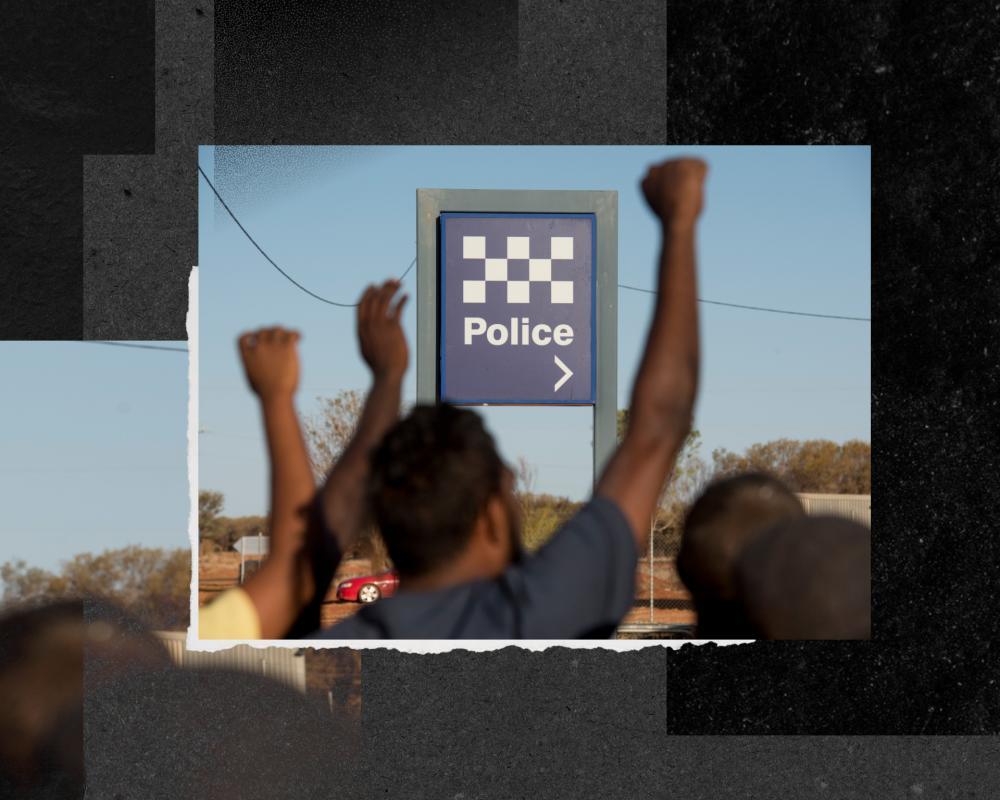
Kumanjayi Walker is one of more than 600 First Nations people who have died in the custody of law enforcement since the findings of the royal commission into Aboriginal deaths in custody were handed down in 1991.
2.6 Seconds: Death in the Outback asks viewers to care, reflect and engage with the questions it leaves behind.
SBS and NITV are accompanying the series with interviews, reporting, analysis and community perspectives across television, streaming, digital, news and audio. Discover more here.
In Australia, the crisis support service Lifeline is 13 11 14.
Indigenous Australians can call 13YARN on 13 92 76 for information and crisis support. Other international helplines can be found at befrienders.org.
Stream 2.6 Seconds: Death in the Outback now on SBS On Demand.