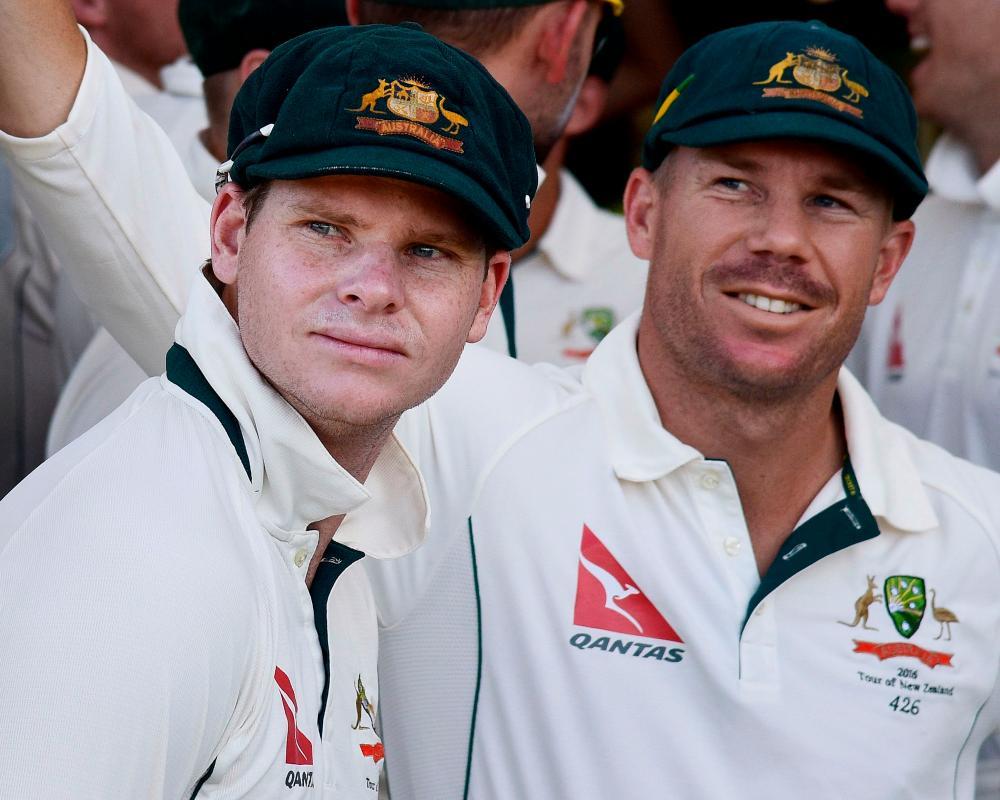
There are some stories that you look back on and wonder whether we lost our collective minds. In Australia, 2018 was not a good year for banking executives, for prime ministers, for oily lord mayors and for cardinals. But the greatest betrayal of trust apparently concerned our national cricket team. There was public bawling, righteous indignation, weasel words and sanctimonious pieties. Prime minister Malcolm Turnbull, flanked by a doleful Angus Taylor and a nodding firefighter, called it a “terrible disgrace”. “They now have to make sure this great national game, this great international game that is synonymous with fair play, is once again played by champions that everybody can look up to.”
Related: Mitchell Starc breaks silence to deny knowledge of ball tampering plan
Turnbull was more of a sailing man anyway. His parliamentary tenure was the political equivalent of Graeme Hick’s cricket career. By the time he’d been punted from office four months later, the Australian cricket team was being reimagined. The Ethics Centre’s 116-page document used the “Everest Process” to ascertain Cricket Australia’s alignment with its ethical framework. There were lots of charts asking how well CA was adhering to this value or that. “Mostly not lived”, “sometimes lived” and “always lived” were some of the measures. One could have saved a lot of time, money and paper and simply concluded “don’t be a prick, don’t bark like a dog when an opponent is dismissed, and don’t shove sandpaper down your dacks”.
We sniggered at the “elite honesty” and the “compete with us, smile with us, dream with us” nonsense. But it cut to the core of what this issue was about – for the majority, it was less about whether they had cheated, and more about the kind of team they had become. Anyone who had played park, grade, shield or Test cricket had a sense of where ball tampering lay on the scale of atrocities. The loudest voices, whether they were PMs, radio hosts or bandana-clad opinionists, were those who had never played cricket at any level.
But people were fed up with that Australian side. The impression leading into the South Africa series was of a mean, cosseted, overworked, joyless team. It wasn’t helped by the baiting tabloids, the appalling TV coverage, the puerile marketing and the blind-eyed administration.
But the odd dick pick and stumping incident aside, there was very little scandal with the post sandpaper-gate team. The appointment of Pat Cummins as captain was central to that. “No sledging, no arguing, no anger, no love gone wrong, no dust ups, no bust ups,” Peter Lalor wrote in The Australian. The usual grifters and chuckle merchants said he was too woke, and that the team was too nice. Where was the mongrel? Where was the mental disintegration? Meanwhile, the team met every challenge, quietly disabusing the idea that cricket was somehow central to the national psyche, and that they had to behave like complete assholes to be successful at it.
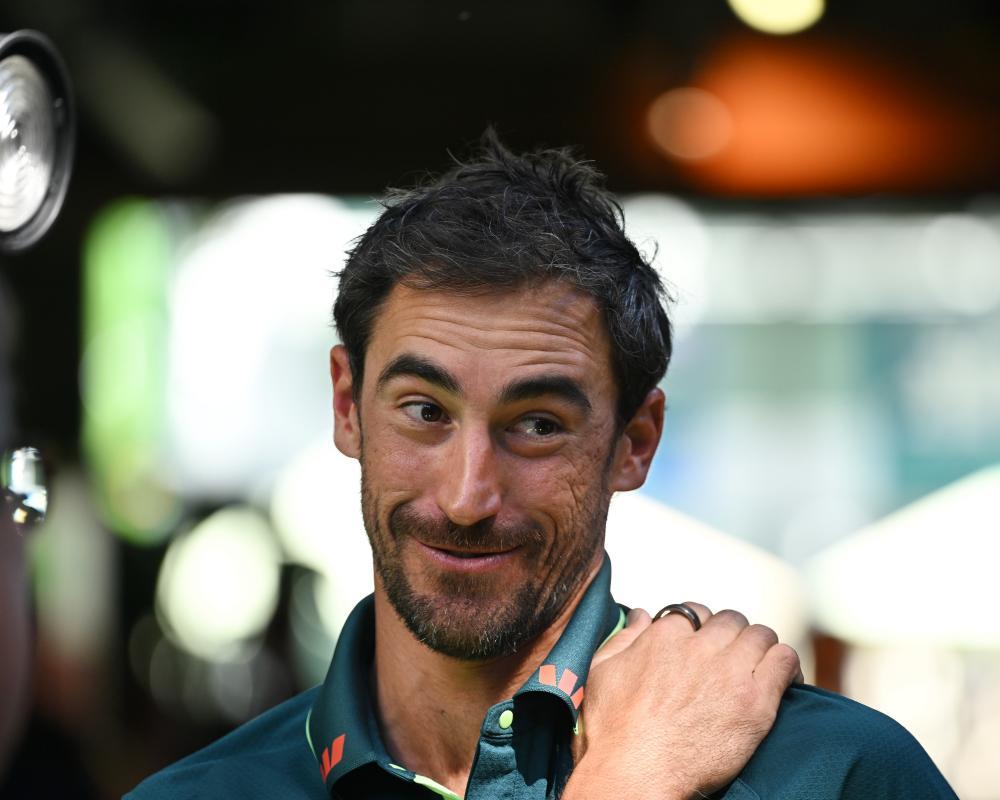
But the events in Cape Town were always bubbling away. “What’s left to come out after eight years?” Mitchell Starc asked on the eve of this year’s South African tour. Plenty, as it turns out. No-one, with the possible exceptions of Enid Blyton and Peter FitzSimons, write more books than Australian cricketers. And the literary ambitions of Usman Khawaja and David Warner were always going to further fan the flames. Hell, these days you don’t even need a book deal. You just need sufficient distance from national duties and functioning wifi. Warner’s thoughts were posted from Nepal, taking time out from demolition duties at the Kathmandu Gorkhas.
Khawaja has been accused of having an axe to grind, and a publishing fortune to make. One particularly objectionable columnist wrote of “his talent for inserting race, religion and victimhood into his story”. But the chapter on Cape Town isn’t as inflammatory as many have made out. The most interesting and revelatory passages in the book lie elsewhere. It did however address something that has never been properly examined, resolved or reckoned with. The initial press conference was a shambling, fudging, lying shambles. The subsequent investigation was wholly unsatisfactory. In a way it was understandable, though not necessarily forgivable. There were careers, reputations and relationships at stake. The imperative, just as it was with the AFL’s supplements and racism scandals, was for everyone to move on as quickly as possible.
That was the crux of what Cricket Australia CEO Todd Greenberg said on SEN this week – that it was a different administration, a different team, and a different time. “There were a lot of learnings that came out of it,” he said. There were echoes there of another CA boss, James Sutherland, who described the cricket as “an issues-rich environment”.
LinkedIn-speak like that is not only evasive, but represents a missed opportunity. Khawaja’s book provided the perfect chance for those directly involved and those who inherited this mess to be upfront about what happened, to explore the tissue-thin difference between intricate knowledge and collective responsibility. It’s a chance to explain that there was always a middle ground between “we were all in it up to our ears” and the Sergeant Schultz defence.
Unlike in 2018, doing so wouldn’t destroy careers. It wouldn’t spark a national nervous breakdown. As it stands, the equivocation, and the constant urgings to “move on” have the opposite effect. It only drags this interminable story on to the next press conference, the next Instagram post and the next book, until it festers into something much bigger than it needs to be. Just like it did eight years ago.