They spent countless hours on weather-battered Scottish hills, a hardy band of geologists searching for the origin of one of Stonehenge’s most intriguing features.
But the prehistoric monument tends to yield its secrets reluctantly, and a new scientific report reveals that the origin of Stonehenge’s altar stone remains elusive – and the wind-whipped geologists may very well have been looking in the wrong spot anyway.
One described the altar stone’s beginnings as an “enigma”, another a geological detective story with no neat ending so far.
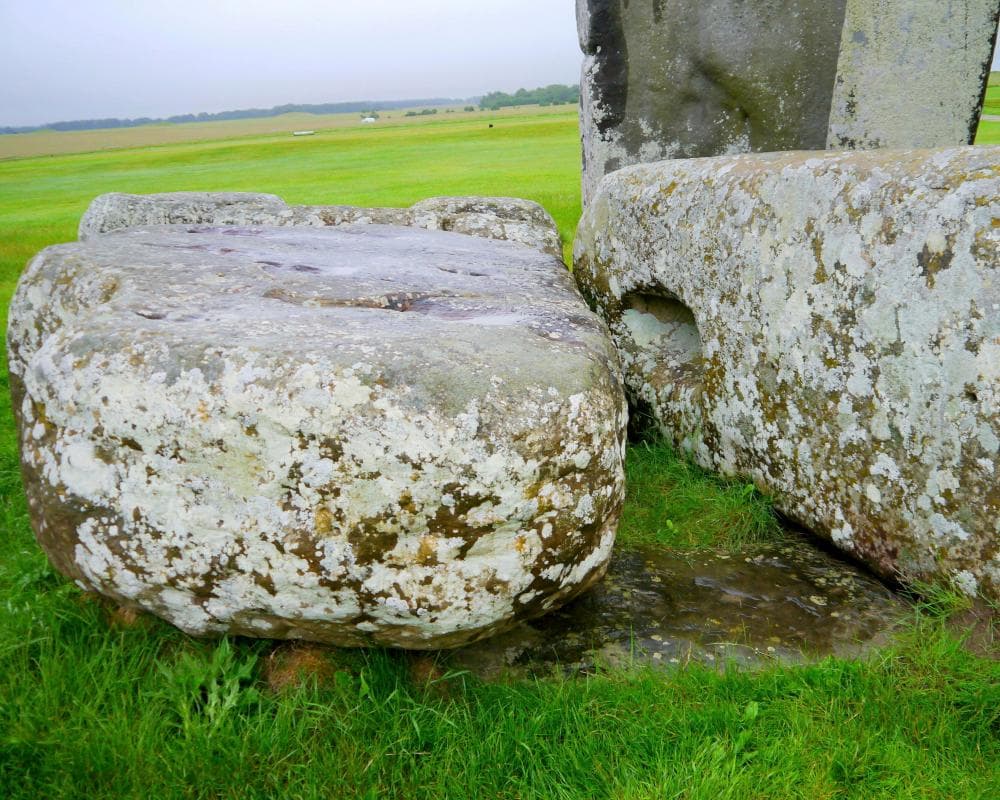
It all felt different in 2024 when specialists from universities in London, Wales and Australia examined grains of sandstone from the altar and hypothesised it came from north-east Scotland, more than 400 miles from Stonehenge.
A member of the team described the find as “jaw-dropping” and it led to speculation about how the six-tonne stone had been transported – by sledge or ship? – and about the long-distance relationships that neolithic people must have had.
More experts were brought in, from Canada, Italy, Sweden and Scotland, and work was done on the precise composition of the slab, including non-invasive examinations of the stone in situ, and examinations of eight fragments held in museums.
Armed with this profile, members of the team headed to north-east Scotland to try to make an exact match with outcrops there, thus pinpointing the altar stone’s origins.
Nick Pearce, an emeritus professor of geochemistry in the department of geography and earth sciences at Aberystwyth University, described the hunt for the origin of the altar stone as a search for a needle in a haystack.
“The problem is, it’s a very big area, thousands of square kilometres. The only way to do it is to get out there and find the samples,” he said.
“You have to plan carefully. One of my colleagues was there recently and he got caught in the storms, which isn’t ideal field weather for geology. We’ve taken about 70 samples, brought them back to laboratories and tested them.”
The testing has suggested it is unlikely the altar stone came from north-east Scotland.
Pearce said he wasn’t disappointed that they had not solved the mystery yet. “We’re getting closer. In a geological detective story such as this, ruling out potential source areas is just as important as identifying new ones. Every location eliminated narrows the search and brings us closer to discovering where the altar stone originated. I’m not disappointed. It’s part of the process.”
Duncan Pirrie, an emeritus professor at the University of South Wales, who led the study, concluded it was “very unlikely” the altar stone had originated from north-east Scotland. He said the stone also definitely did not come from southern Britain. It may have come from somewhere else in Scotland, northern England or perhaps even Ireland.
Pirrie said the stone’s origins remained an enigma, but added: “This is the most comprehensive geological investigation of the altar stone ever undertaken. By combining a wide range of analytical techniques, we have built the clearest picture yet of the stone’s composition and tested the leading theories about its origins.
“So far, none of the locations examined have the same set of characteristics as the altar stone, but the search is not over.”
Mike Pitts, a renowned Stonehenge expert who was not involved in the study, said detecting the origin of the altar stone was an exciting prospect. “Doing so would greatly help fit the altar stone into the world of the people who moved it. We’d get to see the landscape through their eyes. To know exactly where the journey began.”
• The study, Searching for the origin of the Stonehenge altar stone, is published in the Journal of the Geological Society