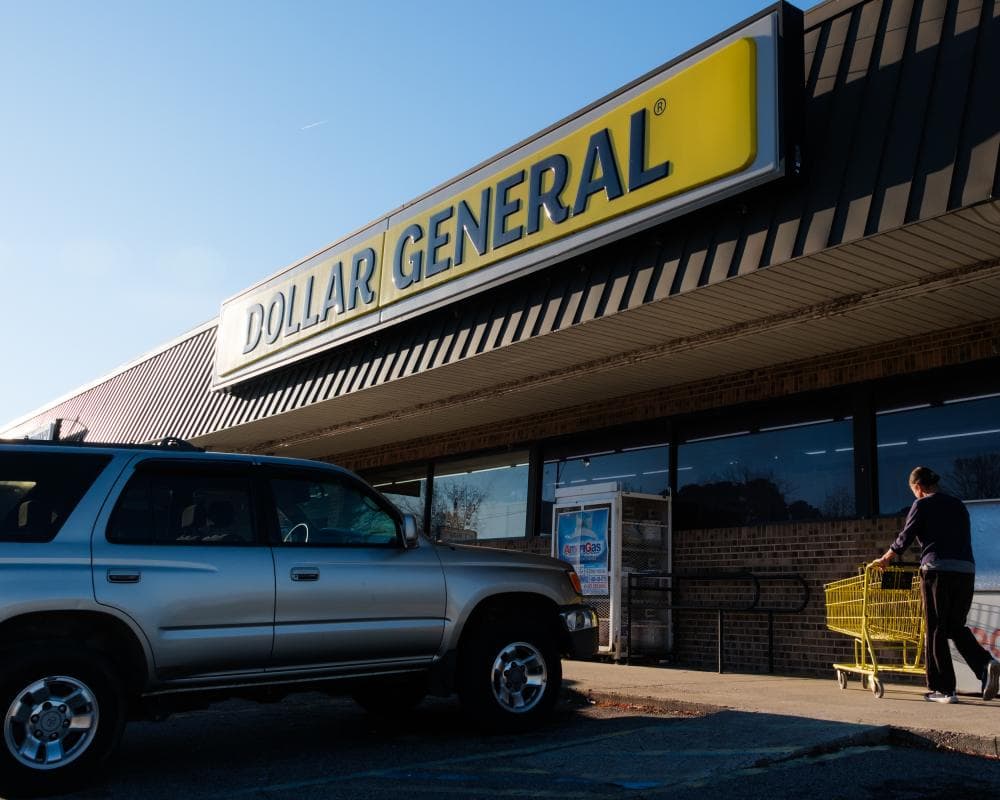
The Federal Trade Commission and 20 states have sued Dollar General, the nation’s largest dollar-store chain, for persistently overcharging customers at its more than 20,000 stores across the United States.
The lawsuit, filed in federal court in Nashville, cites a Guardian investigation published last December.
“Dollar General has for years engaged in deceptive conduct that harms the very consumers it claims to serve,” the 95-page legal complaint claims.
“Although Dollar General promises convenience, low prices, and value, the company has routinely charged customers more at the register than the prices displayed on shelves, price tags, and advertisements. This pattern of inaccurate pricing has persisted for years and affects millions of purchases across the country.”
Related: How the dollar-store industry overcharges cash-strapped customers while promising low prices
The lawsuit says the scope of the retail chain’s “pricing misconduct” is “staggering”.
The FTC is the federal agency charged with protecting consumers from deceptive, unfair and anticompetitive business practices. State authorities from Mississippi to Ohio to Nebraska to Utah have joined the case as plaintiffs.
Dollar General did not respond to questions for this story, but has previously said that it was “committed to providing customers with accurate prices on items purchased in our stores”.
The FTC’s allegations are consistent with the Guardian’s December 2025 investigation, which found that Dollar General stores failed more than 4,300 government price-accuracy inspections in 23 states over a three-year period. That article “was the subject of significant internal deliberation and discussions” within the company, the lawsuit said.
The agency noted in the lawsuit that Dollar General has policies in place that are supposed to align register prices with shelf prices. For example, it directs employees to remove and replace outdated labels on certain days of the week. Workers told the Guardian that, because of understaffing, they are often too busy to change those labels.
“Dollar General’s on-paper policies to update pricing achieve little in practice,” the lawsuit said, because “they do not track whether the printed labels are actually affixed to shelves.”
The FTC cited a Guardian interview with a lead sales associate in Louisiana who said: “I threw away tags sometimes, to keep me or a co-worker out of trouble.”
Dollar General told the Guardian in 2025 that it is “disappointed” any time it fails to deliver on its commitment to accurate shelf pricing. In court documents in Ohio, Dollar General’s lawyers have argued that “it is virtually impossible for a retailer to match shelf pricing and scanned pricing 100% of the time for all items. Perfection in this regard is neither plausible nor expected under the law.”
In a statement accompanying the FTC lawsuit, the federal agency noted that Dollar General markets itself as a low-cost alternative to other retailers, and that low- and fixed-income customers rely on the accuracy of its price labels.
“Dollar General has betrayed the trust of millions of American consumers and imposed significant financial harm on communities and consumers who are already struggling to make their paychecks last,” said Christopher Mufarrige, director of the FTC’s bureau of consumer protection.
In a separate case, the New York attorney general, Letitia James, announced earlier this month that Dollar General had agreed to a $1.875m deal to settle allegations that it had repeatedly overcharged customers across the state.