Trump calls Bill Maher a ‘TOTAL LOSER’ in 1,300-word Truth Social rant
Donald Trump launched a 1,300-word social media rant against late-night US TV host Bill Maher yesterday evening, calling him a “TOTAL LOSER” in a fresh assault on the media.
“Let’s talk about this COMPLETE AND TOTAL LOSER, Bill Maher,” the US president wrote. “He’s got a Low Rated Show on equally Low Rated HBO, which was once, long ago, a Network of Quality and Excitement – But that’s all gone.”
Trump’s lengthy and detailed post about Maher came after the host interviewed Karoline Leavitt, the former White House press secretary, on his program Real Time with Bill Maher.
Maher asked Leavitt about Trump’s “lame duck” presidency and whether the president would act on “vengeance” if Republicans largely lose to Democrats in next week’s midterms.
“I worry that if this election goes as badly as it looks like it’s going to go for him and the Republicans, we’re going to have a guy who doesn’t have as much power as he did … and we know he likes vengeance,” Maher told Leavitt.
Leavitt remained steadfast in her support for Trump and expressed confidence that Republicans could still outperform expectations.
Trump called Maher a “coward who is afraid to tell the truth about how well our Country is running”, claiming that Maher praised him behind the scenes but on television insults him with jokes.
“Also, turn your Laugh Machine off, it’s a joke when they laugh uncontrollably, even when you say nothing funny, and I’m going to have the Republicans not cover you anymore, because they try to talk about you as a guy who is transformative,” Trump wrote.
Trump has previously insulted late-night hosts and comedians on his platform and taken personal offense at those who make him the punchline. Earlier this year, Trump called for Jimmy Kimmel’s show to be terminated after the ABC late-night host joked about Melania Trump. Last year, the US president also called for Seth Meyers to be fired.
But Trump’s lengthy attack on Maher is notable, coming just about a week until the US midterm elections, where Republicans are trying to fend off challenges from Democratic opponents.
My colleague Ariana Baio has the story:
Related: Trump calls Bill Maher a ‘TOTAL LOSER’ in 1,300-word Truth Social rant
Updated
Catholic bishops say they regret joining Trump in Oval Office prayer
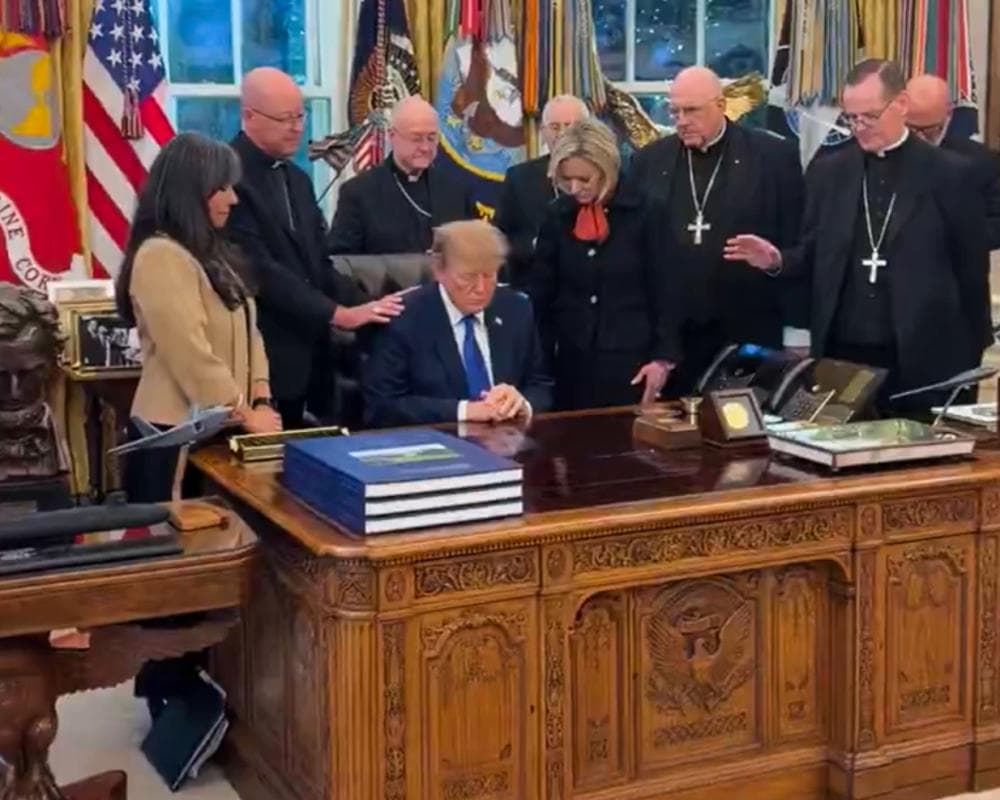
Two Catholic bishops who bowed their heads with Donald Trump in the Oval Office now say they regret it, accusing the White House of turning a private prayer into a campaign photo opportunity before next week’s US elections.
Archbishop Jeffrey Grob of Milwaukee and Bishop William Joensen of Des Moines, who were among the 12 bishops who met administration officials last Thursday, issued separate statements of regret over the weekend.
The fallout stems from the White House quickly posting video and photos of the prayer on social media, captioned as Catholic archbishops and bishops praying with the US president, less than two weeks before the midterm elections on 3 November.
Archbishop Grob issued a statement headlined A Public Apology, in which he said he felt “a heavy sadness” over the pain the images had caused, and that he had heard from people alarmed that he had unwittingly joined a political event on the eve of a national vote.
Others, he said, were hurt because of the effect of Trump’s policies on their families. “We should never have been put in that position by the White House,” wrote Grob, adding that he had harbored reservations and “wish I had heeded them”.
Bishop Joensen wrote that “many things tied to this present Administration” were “blatantly at odds with our Catholic faith”.
He said none of the bishops was unaware the meeting fell close to an election, but insisted that none had intended to endorse a party or candidate. “I wish I had been more shrewd and less simple, like those who exploited our meeting for partisan political purposes.”
Grob said the Heritage Foundation, the conservative thinktank behind the Project 2025 rightwing blueprint for the second Trump administration, arranged the meeting. The bishops, he said, were told it would be a private discussion of immigration enforcement, religious-worker visas and human dignity, with a possible chance to pray privately with the president.
After 90 minutes with domestic policy staff, they were ushered into the Oval Office, handed commemorative tokens and, Grob detailed, directed to stand behind Trump’s desk and pray. Nobody told them a video was being recorded, he said, and they never agreed to its release.
Updated
“I will be Senator Muhammad to you, bro”: Abdul El-Sayed to Trump at campaign event
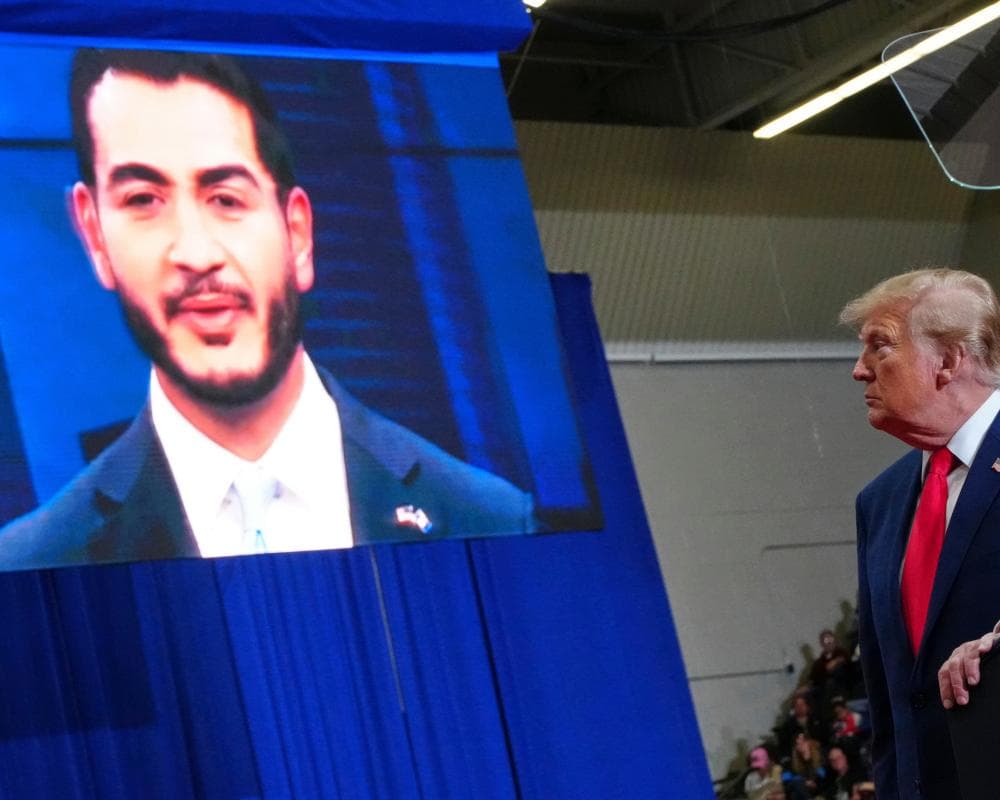
Abdul El-Sayed responded on Monday after Donald Trump’s Islamophobia-laced rant against the Michigan Democratic Senate candidate during a campaign event in the state over the weekend.
During that speech, Trump referred to Abdul El-Sayed as “Muhammad”, playing up a Muslim stereotype, and accused him of being a jihadist with designs of instating sharia law in the US.
“I don’t even care that he remembers my whole name,” El-Sayed shot back on Monday, addressing a campaign crowd in Grand Rapids. “Because he can just go on and call me ‘senator’ after November.”
He added: “I will be Senator Muhammad to you, bro.”
Earlier, El-Sayed also accused the president of attacking him for his faith while engaging in self-dealing with allies in the Islamic world.
“I get that the president of the United States takes personal offense to my first name,” El-Sayed said. “He doesn’t mind as much when it’s a shared name from the Saudis who are funding his son-in-law’s private equity, doesn’t seem to mind as much when it’s the Qataris who are giving him a $400m private jet.”
Updated
Zelenskyy says Ukraine has waited 'nearly a month' for Hegseth to authorize missile supplies
In a post to social media on Monday, Ukrainian president Volodymyr Zelenskyy said that Ukraine was facing dwindling stocks of Patriot interceptor missiles after Pete Hegseth, Trump’s defense secretary, had delayed authorizing new supplies.
“We have been waiting for nearly a month for Mr. Hegseth to sign off on missiles for Patriots and NASAMS,” Zelenskyy wrote. “I instructed our team to raise this with the American side once again. Conversations with other countries are also ongoing.”
Relations between Trump and Zelenskyy, tenuous at the best of times, have rapidly soured in the last several weeks. Their latest confrontation began when Trump announced he would purchase diesel fuel from Russia in a bid to bring down soaring US fuel prices in light of the war in Ukraine. Such a move would inject billions into Russia’s economy, undermining efforts to isolate the country and its president, Vladimir Putin, in light of its invasion of Ukraine.
Updated
Abdul El-Sayed and other Democratic candidates are embracing universal healthcare. Is it a winning message?
Abdul El-Sayed, the Democratic US Senate candidate, started his day on the campaign trail in Escanaba, Michigan, where nearby Wisconsin dairy country spills into dense forests and the sandy shores of Green Bay.
This is the upper peninsula – the “UP” – a rural slash of land north of Michigan’s mitt. Electorally, it’s crimson. Donald Trump won some districts near Escanaba by more than 41%. But at the county fairgrounds, past sheds labeled “Beef” and “Swine”, hundreds of locals on the political left have gathered in the hangar-size 4H Club meeting hall to hear El-Sayed speak.
“We built this campaign on three simple things. Y’all remember what they are?” El-Sayed stokes the audience, leading them to a call-and-response.
“Money out of …”
“Politics!”
“Money in your …”
“Pocket!”
“Medicare for …”
“All!”
As Americans prepare for historic cuts enacted in the Republican-led “One Big Beautiful Bill Act”, which is expected to push 17 million people from their health insurance plans, El-Sayed appears to have caught a rising tide of interest in Medicare for All.
This election season, Troy Jackson, the Democratic US Senate candidate from Maine, who’s in a dead heat with Republican Susan Collins, said Medicare for All would be “great coverage”. Angie Nixon, Florida’s Democratic US Senate candidate, has made it a part of her “working families guarantee”. Chris Van Hollen, current US senator for Maryland, added Medicare for All to his platform last December after “listening to his constituents”.
El-Sayed’s supporting act in this series of stops is influential Democratic congresswoman Alexandria Ocasio-Cortez, a longtime Medicare for All proponent and the subject of whispers about a 2028 presidential run. And, according to an October poll by the health policy thinktank the Kaiser Family Foundation, two-thirds of Americans support the idea.
Technically, Medicare for All is an insurance reform. Proposals currently before Congress would make the federal government into the nation’s health insurer, a “single-payer” system more closely aligned with health systems in peer developed democracies, such as Canada.
Sounds simple. However, in the US, one in every five dollars goes to healthcare. The existing health insurance patchwork fuels profits of world-leading, resource-unlimited corporations and powerful local monopolies. Democrats also worry that replacing private insurance, as Medicare for All advocates call for, would provide fodder for Republicans, who have made stoking popular resentment against government into an electoral strategy.
Those enormous barriers have repeatedly relegated Medicare for All to the political hinterlands. Centrist Democrats worry that, in a nation where me-but-not-thee politics has reigned for many years, Medicare for All is nothing more than a decades-old tried-and-failed idea.
Then again, in a nation where healthcare prices are the highest in the world and climbing, when even the insured find themselves in medical debt, and where the broad-daylight assassination of an insurance executive elicits catharsis and not mourning – the yearning for change is personal and visceral.
“Not enough doctors, not enough healthcare,” says El-Sayed, who ran both the Detroit and Wayne county health departments, and received a medical degree from Columbia University.
El-Sayed’s campaign comes as the Trump administration enacts the largest federal healthcare cut in the nation’s history – extracting $1tn from the system primarily by through severe cuts to Medicaid, the federal-state health insurance program for low-income and disabled people. Medicaid cuts are expected to close hospitals, particularly those in rural outposts like Escanaba, and the urban core.
At the same time, some of the most popular health policies of recent years – such as reining in medical debt collections – spring directly from the policy work of Medicare for All advocates. Add to this a counterintuitive reality: almost half of all healthcare today is already paid for by federal, state or local government, according to the federal Centers for Medicare and Medicaid Services.
Read more about the renewed fight around universal healthcare here.
Updated
WSJ reports that Trump administration is eyeing ousted Hungarian strongman to lead United Nations
A Wall Street Journal op-ed published on Sunday has raised the possibility that the Trump administration will push Viktor Orbán, the longtime illiberal leader of Hungary, to help the United Nations as its new secretary general.
The report, citing sources from three different countries, said that the Trump administration believed China and Russia would back Orbán as a candidate (Orbán was perhaps Russian president Vladimir Putin’s closest ally in the European Union).
Orbán has been free for the job since losing his re-election bid earlier this year. Before then, he was a close ally of President Trump and, thanks to his hardline policies on immigration and LGBTQ+ rights, as well as his crackdowns on academics, independent media and NGOs, an ideological figurehead of rightwing populists around the world. JD Vance even traveled to Hungary to stump for his re-election.
Candidates for the UN secretary general are voted on by the entire UN general assembly. But to get before that body, they must first win the blessing of the 15-member security council, and its five permanent members: the US, Russia, China, France and the United Kingdom. Those five can veto any candidate they dislike. If Russia and China were to buy into Orbán’s candidacy, it would leave only France and the UK with the veto power to block him.
Updated
Discontent with Trump buoys Democrats in Ohio: ‘People are disgusted by the corruption’
Democrat Kim McCarthy is canvassing in a middle-class Ohio neighborhood of four-bedroom, three-bathroom homes. There are $70,000 trucks in the driveways and robot lawnmowers at work.
“This is a neighborhood of two incomes and young families; people working hard,” says McCarthy, who is running against a three-time Republican incumbent for a seat in Ohio’s house of representatives.
Despite the manicured lawns, these are the very Ohioans struggling from the fallout of many of the Trump administration’s policies. They live in a district that includes the largest single-site employer in Ohio – the Wright-Patterson air force base – whose civilian contractors and employees have been hit hard by federal workforce cuts. Rising mortgage interest rates and wider affordability concerns are top of mind for many.
McCarthy’s opponent, Brian Lampton, beat her in a previous election by 15 points. In the presidential election two years ago, Trump won 60% of the vote here in Fairborn. But having knocked on thousands of Greene county doors, she says she’s noticed something different this year: people are telling her on the doorstep that they are planning to vote Democrat down the ballot for the first time.
“One woman I was speaking to earlier who worked in the military and recently retired was like: ‘Oh my God, I can’t afford anything.’ You could kind of see the sadness in her eyes,” she says.
For more than a decade, Ohio has been considered a firm Republican stronghold, but after 20 months of extreme Trump administration policies, signs of discontent with the status quo are appearing here. That could be critical for Democrats at every level on the ballot – the party is trying to reclaim a US Senate seat, the governor’s mansion, and a host of competitive house seats around the state.
Early voting indicators in Ohio suggest that participation among affiliated Democrats is higher this year when compared to 2024, especially in predominantly Republican districts.
According to the Ohio secretary of state’s data portal website, by 13 October more early voting ballots were returned in rural Defiance county by Democratic affiliated voters than by Republicans, despite Trump winning 69% of the vote in the county in the 2024 presidential election.
The county also had the highest ballot return rate in the state, at 19%, suggesting a high level of motivation.
The economy isn’t the only thing on voters’ minds. “The number one issue in Defiance right now is the proposed datacenter. There is a local investor who is entertaining the idea of selling property to a datacenter investor,” says Rebecca Kirkland of the Defiance County Democratic party.
Trump has repeatedly encouraged communities to accept datacenters, telling supporters at a campaign rally outside Dayton, on 3 October, “We want them,” despite broad bipartisan opposition to their presence.
Home to a General Motors powertrain foundry that employs more than 500 people, Defiance county has also been hit hard by Trump’s tariffs war on Canada: among the plant’s main customers is the GM-owned St Catharines engine plant in Ontario, with engine parts that are built in Defiance are shipped for assembly across the Canadian border.
“There aren’t many high-paying jobs available in this area. We see posts on community Facebook pages of people looking for assistance finding work, housing or financial assistance,” says Kirkland.
Still, in a state that for decades turned older and whiter and was won by Trump in the last three presidential elections, Democrats know the odds are stacked against them. And pollsters are cautioning that the surge in early voting might not indicate that more Ohioans will vote for Democrats by the end of the election.
Updated
US military ready to launch new, large-scale attacks on Iran, media report says
American military forces are in place and waiting on a command from President Trump to launch a major new military operation against Iran, CNN has reported, citing a pair of US officials with knowledge of the plans.
The scale of those attacks, the outlet reported, would probably go beyond the strikes the US has traded with Iran in recent months. Other officials who spoke with CNN said that it seemed like Trump was leaning toward moving ahead with such an operation, probably before the end of the year and possibly after the midterm elections.
The war in Iran, which Trump launched alongside Israel at the end of February, has made that election an uphill battle for the Republicans. The conflict, unpopular at its outset, has sent energy prices soaring after Iran retaliated by closing the strait of Hormuz, a vital shipping artery for oil and gas. But Trump has doubled down on the conflict while on the campaign trail, alleging that Iran wants Democrats to win control of Congress, and that only he can keep the country from obtaining nuclear weapons.
The report also comes as intelligence has surfaced suggesting Iran and its allies are in advanced stages of planning attacks against Americans in the Middle East, spurring the Trump administration to take measures to protect US personnel.
Updated
Donald Trump will still be US president on the morning of 4 November. But he could be facing a very different political landscape, depending on the results of the US midterm elections held the previous day.
As the name implies, midterm elections fall nearly halfway through a president’s term. They are often a telling referendum on the sitting president’s performance, something Trump is actively encouraging by telling voters “pretend I’m on the ballot”. In this case, voters will decide whether Trump’s Republican party can retain its grip on Congress.
Democrats are hoping to capitalise on growing discontent with Trump to seize control of the US House of Representatives, and possibly the Senate. Republicans are fighting to preserve their congressional majorities and prevent a fresh period of legislative paralysis and investigations into the White House.
To understand what the midterms are and why they matter, read our full explainer:
Related: What are the US midterm elections and why do they matter?
Lula's victory in Brazil hinders Trump's ambitions in Latin America
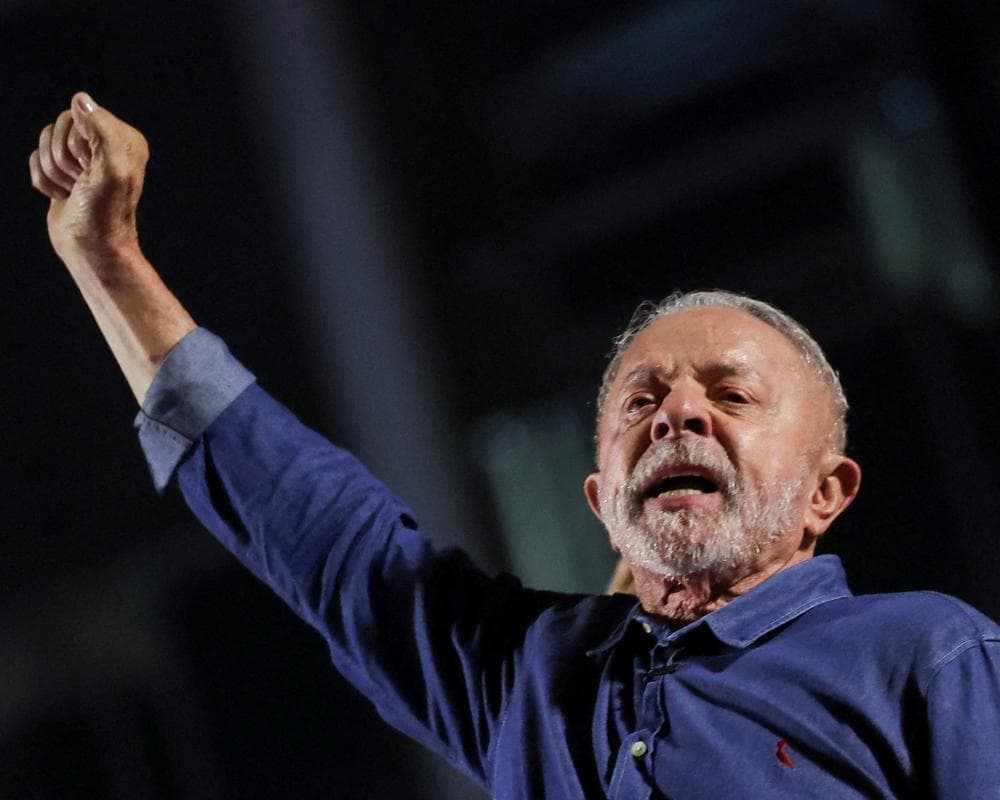
Brazilian president Luiz Inácio Lula da Silva’s overnight re-election victory – a stunning reversal after he trailed in the previous round of voting against right-wing candidate Flávio Bolsonaro – represents a blow to President Trump’s political ambitions in Latin America.
Lula, who secured a fourth non-consecutive term in office, had campaigned on protecting Brazil’s sovereignty in the face of alleged US coercion and colonialism, and had accused the US of seeking to meddle in the country’s elections.
And while Trump did not outright support the defeated candidate, Flávio Bolsonaro, he is the son of one of Trump’s former close allies in the region, ousted Brazilian president Jair Bolsonaro. The older Bolsonaro is currently serving a prison sentence for attempting to overturn the results of his 2022 election defeat to Lula. Those criminal proceedings prompted Trump to at one point slap steep tariffs on Brazil, deepening the divide between Trump and the Brazilian leader.
Trump has yet to publicly weigh in on Lula’s victory. But Trump’s son, Donald Trump Jr, took to social media to criticize a decision to extend voting in Brazil for two hours.
“If a conservative government in Brazil did this, everyone in the mainstream press in America would lose their minds,” Trump Jr wrote.
Updated
Anthropic’s Claude AI model accessed Georgia voter data in US
Anthropic’s Claude model accessed voter data in the US state of Georgia, the AI company has confirmed, in the latest example of unauthorised behaviour by the technology.
The AI model managed to bypass a paywall to reach data that is publicly available but is typically accessible only after paying a fee. Claude accessed aggregate vote counts as part of a statistics project at Anthropic, which is preparing for a $1.5tn (£1.1tn) flotation.
“Claude did not access the state’s voter registration system, change any voting records, or pull any individual voter records,” Anthropic said, adding that it has since taken steps to block similar actions.
Anthropic said the AI found a loophole in an old version of the state agency’s website, discovering that it issues a digital entry pass – an “access token” – to visitors, which resulted in it requesting a token and gaining access to the information.
The AI developer said it had since put in place guardrails to prevent similar actions happening again. The incident was first reported by the news website Axios.
Related: Anthropic’s Claude AI model accessed Georgia voter data in US
With the midterm elections fast approaching, many Americans have the economy on their minds.
US voters are exhausted by years of higher prices. Donald Trump won the presidency in 2024 on promises to lower inflation and undo the damage he said the Biden administration had inflicted on the economy.
In Trump’s view, his plan is working. At a recent rally in Montana, Trump boasted about the current economy, framing it as a booming time for Americans. “We’re richer now,” he said. “We don’t have inflation.”
Economic data paints a different picture. Inflation, especially gas prices, have soared over the last year. The job market has been in stasis, and higher interest rates have meant it’s more expensive for Americans to borrow money for loans and mortgages.
These fluctuations have a concrete impact on the lives of Americans. A recent Harris poll for the Guardian found that a majority of Americans, including some Republicans, disagree. Nearly two-thirds said they believe the country is experiencing a recession, and many said higher prices have been a pain point. Americans are reporting having trouble saving, and a third polled said one surprise bill could sink them financially.
Here’s what the data shows us about Trump’s second term so far:
Related: ‘We don’t have inflation’? Five charts show the US economic reality of Trump’s second term so far
Trump escalates anti-Muslim attacks against El-Sayed in Michigan
Hello and welcome to the US politics live blog.
Donald Trump intensified his anti-Muslim rhetoric against Michigan Senate candidate Abdul El-Sayed on Sunday, portraying him as a threat to national security.
The president also questioned his loyalty to the United States in remarks that drew a sharp rebuke from a former top Arab American ally. Trump called El-Sayed, a former Detroit health official, a “jihadist” who was “on the side of the terrorists” and would “have to go through a metal detector before he’s allowed to go into the Senate.”
He also repeatedly invoked 9/11, drawing a comparison between stopping El-Sayed from entering the Senate chamber and the passengers who fought back against the hijackers aboard United Flight 93, AP reported.
El-Sayed, who would become the nation’s first Muslim senator if elected, has called attacks on his loyalty to the country “shameful” and repeatedly denied any ties to extremist groups.
The Republican president’s remarks were condemned by Bishara Bahbah, a founder of Arab Americans for Trump, the group that helped lead the president’s outreach to Arab American voters in 2024. “The president’s statements are out of line,” he said in a phone interview. “They are crossing a red line. They are racist.”
Trump also reiterated his apparent love for buxom bums and encouraged the crowd to compliment rapper Nicki Minaj’s behind. The comments about Minaj’s derriere came as he explained his recent observation on the Republican Ohio senator Jon Husted’s rear end.
Earlier in October, Trump said of the former college football player: “I don’t do this with men very often. I started examining his body, because I didn’t know he was a great athlete. And I looked and I watched up and down. I looked at his ass and I looked at the whole – and then I looked at his hands. Look at his hands. He’s got these, like, claws.”
“You are a great athlete,” Trump also said to Husted. “Congratulations.” Trump was speaking at the rally to support Mike Rogers, the Michigan Republican Senate candidate.
Read our full report here:
Related: Trump rallies for Mike Rogers – and Nicki Minaj’s derriere – in Michigan
In other developments:
Mary Peltola, a Democrat who is running for Alaska’s lone US Senate seat, and her family suffered minor injuries in a car crash while driving to a campaign stop on Saturday, her campaign said. The family was on its way to the Alaska Federation of Natives annual banquet when another vehicle crashed into the one transporting Peltola and her family, her campaign said in a statement on Sunday. Peltola required medical attention after the collision.
Todd Blanche, Donald Trump’s attorney general, lashed out during an interview on Sunday while defending the justice department’s pre-emptive lawsuit to block certification of Alaska’s US Senate results if the GOP incumbent loses, calling a TV host’s question “crazy”. The testy repartee unfolded on CNN’s State of the Union over the DoJ’s unprecedented legal action, which alleges that there could be “voter confusion” due to two candidates named Dan Sullivan on Alaska’s ballot. Trump told reporters, “I’m the one that said do it” when asked about the suit.
The US military has given Elon Musk’s SpaceX access to restricted space tracking data, raising a new round of questions about whether the Trump administration is attempting to hand over traffic control in Earth’s orbit to a controversial donor. The access also raises new national security questions, industry observers say.
Enrollment in the Supplemental Nutrition Assistance Program (Snap) has decreased significantly over the past year in the US following restrictions imposed by the Trump administration, which has forced more people to seek help from food banks or go hungry, stakeholders say. The number of people who receive food stamps has dropped from 41.6 million in July 2025, before the One Big Beautiful Act took effect, to 36.5 million in June 2026, a 13% decrease, according to the latest data from the US Department of Agriculture, which administers the program.