The US military on Tuesday said it had “destroyed” several Iranian tankers after Iran attempted to strike a US navy warship with ballistic missiles, as violence once again surged across the region, pushing the price of oil past $100 a barrel.
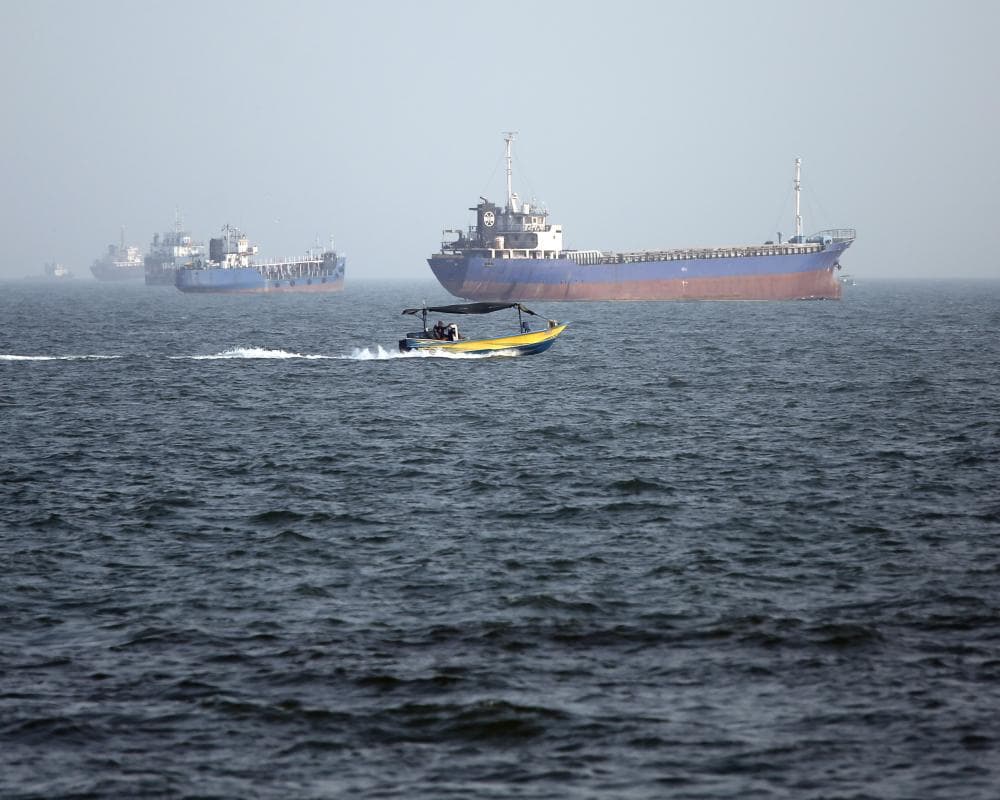
American forces struck the tankers in the Gulf of Oman and near Iran’s Kharg Island, US central command (Centcom) said in a statement, adding that American forces “directed the crews to abandon ship before the vessels were struck”.
Centom said the strikes came after the Islamic Revolutionary Guard Corps (IRGC) targeted a US Navy warship with ballistic missiles twice over the past two days. “The US warship successfully evaded the attempted Iranian attacks and continued to patrol regional waters. No American personnel were harmed,” it said in a statement.
The IRGC said they had struck a US military base in Jordan in retaliation. Air-defence systems destroyed 18 of the 20 ballistic missiles originating from Iranian territory, Jordan’s state news agency reported, citing the armed forces, adding that two missiles fell in unpopulated areas and there were no casualties.
The IRGC also said they attacked two US vessels and eight oil tankers in the Gulf, after warning crews of oil tankers near ports in Kuwait and Bahrain to immediately leave their vessels.
After a month of relative calm in August, Iran and the US have resumed exchanges of fire, sending global oil prices back up to levels last seen in July. On Wednesday, oil prices rose above $100 a barrel in early Asia trading.
On Tuesday, Yemen’s Iran-backed Houthis attacked four cities in Saudi Arabia, wounding more than 70 people and setting oil installations ablaze in what appeared to be a significant expansion of the Middle East war.
Saudi Arabia said it would retaliate after the strikes – reportedly involving dozens of drones and missiles – that targeted several oil facilities in the country’s south.
Remarking on the latest strikes by Iran, Marco Rubio, the US secretary of state, said the US would not let Iran’s attacks to go unanswered.
“Iran continues to try to hit US naval ships. And for every time they do that or try to do that, they’re going to lose tankers. And I think you’ll see that again today,” Rubio said on Tuesday, during a trip to Colombia.
The strikes followed an earlier dispute over an American underwater drone in the strait of Hormuz, which the IRGC claimed to have seized as part of a “complex intelligence and operational action at dawn”, according to Iranian state TV. In a statement, the IRGC said images of the vessel would be released shortly.
In a statement, US Navy Capt Tim Hawkins, a United States Centcom spokesperson, said the submersible was “defective” and an older model “that neither collected sensitive data nor carried any classified sonar or radar equipment”. Operations in the area continue, he said.
Iran has maintained a blockade of the strait of Hormuz, which normally carries about one-fifth of the global oil and gas shipments, since the outbreak of the war more than six months ago, while the US has imposed its own blockade of Iranian ports.
In Paris, South Korean president Lee Jae Myung and French president Emmanuel Macron discussed cooperation on security and freedom of navigation in the strait of Hormuz.
South Korea’s defence ministry said it had sent an inspection team to the United Arab Emirates to assess security conditions in the region, but stressed that the mission was intended to gather information and did not presuppose a troop deployment.
A South Korean official said Iran had expressed interest and sought explanations through diplomatic channels after media reports about a possible South Korean role in Hormuz security efforts.
South Korea’s presidential office separately said reports that the US had set a deadline for Seoul to send assets to Hormuz were untrue.
Seoul said last week it was reviewing various options, including military measures, to contribute to freedom of navigation in Hormuz, but denied reports that the US had set a deadline for Seoul to dispatch assets to the strait.
Trump has struggled to end the unpopular war, which has claimed the lives of 18 US service members.
Iranian authorities have previously put the overall death toll from US and Israeli strikes in the thousands, figures that outside observers, including US-based monitoring groups, have broadly corroborated.