Student opposition movement ends strongman Vučić's rule in Serbia - summary
And, on that note, we will be closing the blog for tonight as the clocks strike half past midnight in Belgrade.
-
The opposition grassroots movement Student List has won a landslide in the Serbian parliamentary election, ousting the country’s authoritarian leader Aleksandar Vučić.
-
The leaderless student movement, which started less than a year ago in protest against alleged widespread state corruption (17:42), is projected to have a clear majority in the new parliament (21:43, 22:22, 00:37).
-
The result appears to have been driven primarily by unprecedented mobilisation across the country, with the final turnout projected to be just below 70%, the highest since the first election in 1990.
-
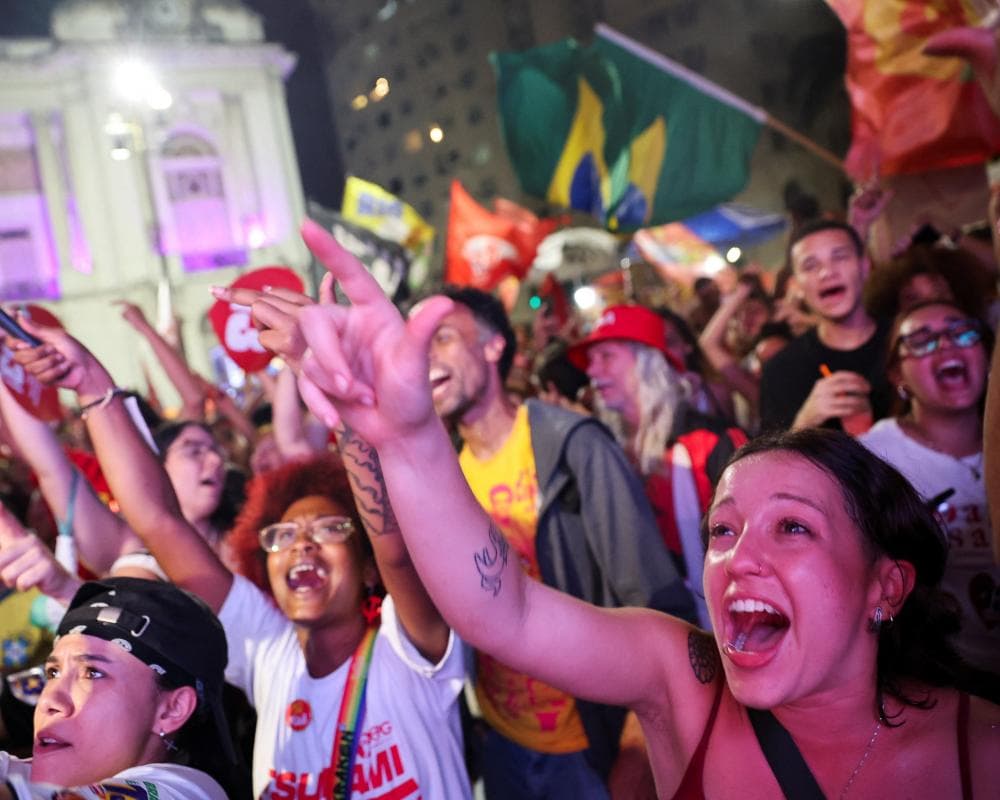
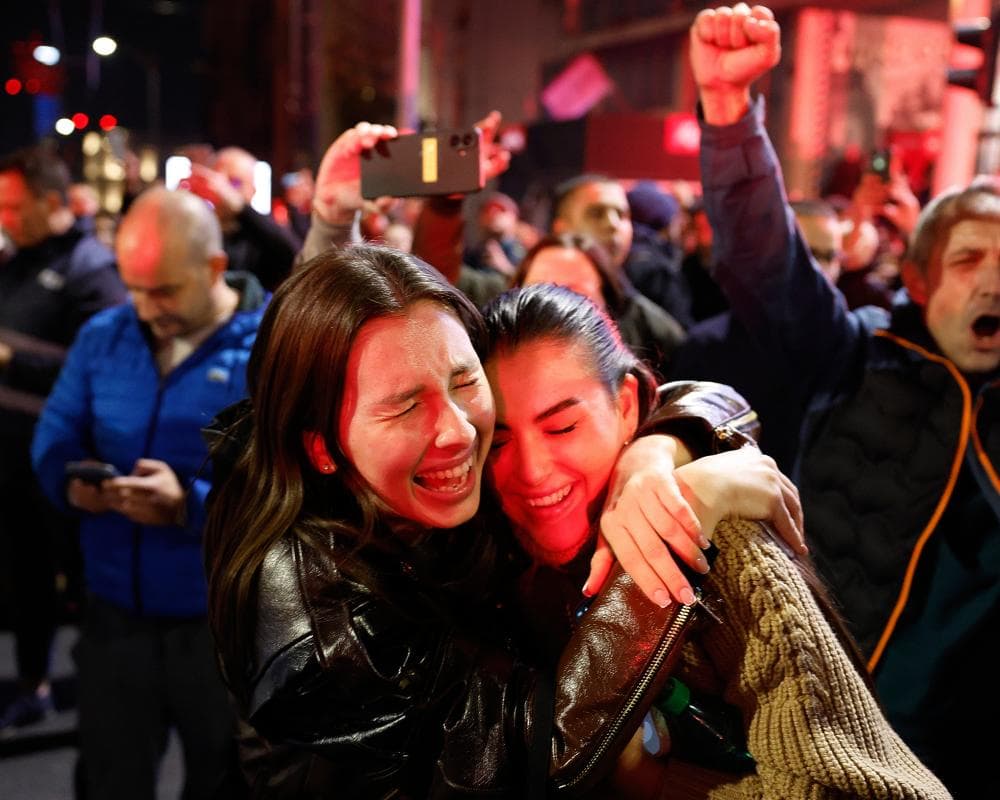
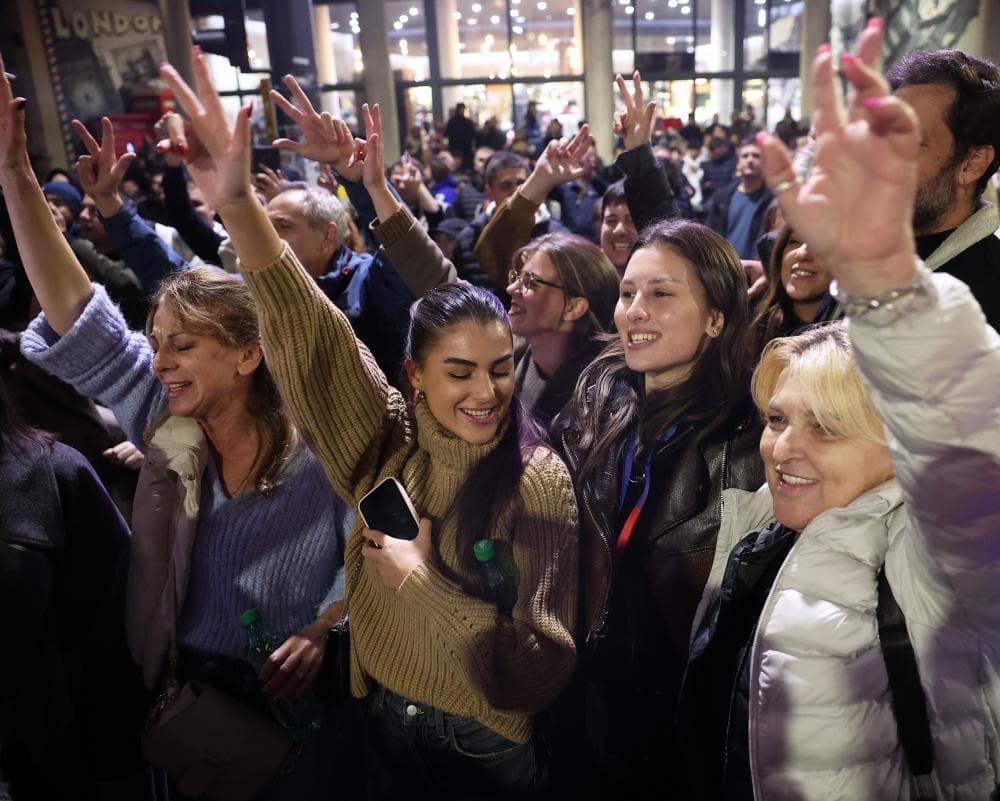
“It is clear that we have lost these elections,” Vučić conceded (21:35), prompting wild scenes of celebrations in Belgrade and other Serbian cities (21:45, 22:01, 22:08, 22:19, 22:38, 22:42, 22:45, 23:21).
-
Vučić rose to prominence in the 1990s as a radical nationalist, who supported the policies of Serbian expansion and ethnic cleansing led by Slobodan Milošević, and has been the country’s leading government figure for more than a decade (17:14).
-
A prominent Student List candidate Radomir Saičić hailed the result as “a victory of courage over fear, of hope over indifference,” as he stressed “the great responsibility” facing the movement. “Tonight, we celebrate … Tomorrow, the work begins,” he said (22:34).
-
The result was warmly welcomed by EU leaders, Ursula von der Leyen and António Costa, as they expressed their hopes for a new start in the bloc’s relationship with Serbia (23:39, 23:54), despite the movement’s ambiguous positioning on the EU (16:48).
-
Hungary’s prime minister Péter Magyar was the first national EU leader to offer congratulations, drawing parallels with his victory over Viktor Orbán earlier this year (22:48, 23:09).
-
In a likely further embarrassment to the ousted strongman Vučić, Serbia will have to hold presidential elections in the coming months to choose his successor as the head of state (23:34).
-
Thousands of diaspora voters joined in lengthy queues to cast their votes around the world (20:41), with up to three hours wait in London (18:58, 19:09).
Related: Serbian leader Aleksandar Vučić ousted by student movement in seismic election
For now, that’s all from me, Jakub Krupa, with contributions from Ana Milosavljevic on the ground in Belgrade. Thank you for joining us tonight.
Laku noć, Srbija!
Updated
Updated projection: Student List wins with 52.9% vote, 141 seats in new parliament
The latest version of the Ipsos/CeSID poll, updated with the partial results, gives the Student List 141 out of 250 seats in the new parliament with 52.9% of the vote share.
That’s well clear of the 126 required for majority.
Vučić’s list will have 103 seats in the new parliament, with 38.8% of the vote share.
Four minority parties will take the remaining six seats in the new assembly.
'The door to the EU is open, and we are ready to move forward together,' EU enlargement commissioner says
EU enlargement commissioner Marta Kos is clearly hoping for more engagement from the new government in Belgrade.
In her congratulatory message on X, she said:
“Dear Serbia, you have made your voice heard! After nearly two years of protests for democracy, the rule of law and the fight against corruption, Serbians turned out in historic numbers. Congratulations to the Student List on your victory!
These are the very values at the heart of our European Union. A new chapter can begin for Serbia. The door to the EU is open, and we are ready to move forward together.”
Montenegrin prime minister Milojko Spajić also offered his congratulations.
In a post on X, he said:
“Today in Serbia is a vivid reminder that the will of the citizens and their right to freely decide on their future are the foundation of every democratic change.
I congratulate the representatives of the Student List and firmly believe that a new chapter lies ahead for Montenegro and Serbia, based on respect and open dialogue, without unnecessary escalation of tensions.
The citizens of both countries deserve relations that will be measured by concrete results of cooperation, and not by the depth of diplomatic misunderstandings.”
Montenegrin president Jakov Milatovic also joined in:
“I congratulate the Student List on their electoral victory, and the citizens of the Republic of Serbia on their clearly expressed democratic will. I am convinced that this electoral result will open a new chapter in the relations between Montenegro and the Republic of Serbia, based on friendship, sincere dialogue, and commitment to a shared European future.”
The change of government in Serbia could indeed significantly shift the dynamic in the western Balkans, although again we should not necessarily expect an immediate move against Russia (17:54).
Updated
Council of Europe’s secretary general Alain Berset has also offered his congratulations.
He says:
“Congratulations to the Student List of Serbia on your electoral result.
Serbian citizens have made their democratic choice. We welcome former President Vučić’s acceptance of the result and commitment to a peaceful democratic transition.
Council of Europe stands ready to work with Serbia’s democratically elected leadership to strengthen human rights, democracy and the rule of law.
Your perseverance, energy and commitment to European principles and Serbia’s future have brought you this far. You can count on our support.”
'We stand ready to support reforms ... and work to advance Serbia's future in the EU,' von der Leyen and Costa say
European Commission chief Ursula von der Leyen and European Council president António Costa have congratulated the Student List on their victory in tonight’s election in Serbia.
In two identical posts on X, they said:
“Today, the people of Serbia turned out in record numbers to shape their country’s future. Congratulations to the Student List on its victory in the parliamentary elections.
We stand ready to support reforms on the rule of law, media freedom, the fight against corruption and strong democratic institutions, and to work together to advance Serbia’s future in the European Union.”
As explained earlier, it may not be quite that straightforward when it comes to the EU… (16:48).
Updated
Vučić’s gambit backfires as Serbia will need to host second elections to choose his presidential successor
By the way, Vučić’s decision to step down as president to contest this election now puts him in a very awkward position.
Because, erm, the Serbian people will now have to choose his successor as the head of state, and looking at the results tonight, he may not like the outcome of that process either.
After his resignation, a close Vučić ally – the outgoing speaker of the parliament and former prime minister Ana Brnabić – has temporarily stepped into the role as acting president.
But once the new parliament forms, the new speaker will have to decide the next steps for recruiting the full-time replacement.
The process is complicated and CRTA has a good explanation on all possible dates here, but essentially the vote needs to take place before the end of the year.
Whoopsie.
Updated
Celebrations on the streets of Belgrade as Vučić concedes election – in pictures
Updated
Despite some similarities, Student List's win in Serbia is slightly different than Tisza's in Hungary – snap analysis
When thinking about today’s opposition win in Serbia, there is an understandable temptation to compare it to Hungary and the fall of Viktor Orbán in April – and Magyar clearly plays on that in his reaction, too (22:48).
And there are some undeniable similarities in how the two countries visibly grew tired of their increasingly authoritarian leaders.
The opposition forces in both countries – Tisza in Hungary and the Student List in Serbia – have some things in common, for example their sort of catch-all character as they formulate their demands in the broadest possible terms to attract all sorts of voters, while relentlessly focusing on corruption and demands of accountability for political leaders.
On a technical level, they both focused on a door to door campaign, making a point of covering thousands of kilometres across the country, and reaching out to voters directly, instead of being a sort of talking shop with ideas. They also both adopted elements of national folks and symbolism for their campaigns.
But there are also very substantial differences.
The Serbian Student List does not have a single strong leader figure in sharp contrast to Péter Magyar’s strong position in Tisza. It is based on a grassroots group of people with little prior experience of frontline politics, and not on a former insider who switched sides, with all sorts of upsides and downsides that come with that. For one, we do not even know who could be their PM.
The Student List’s path to a parliamentary majority was also technically more complicated or, put it simply, required a larger win. That is largely down to the mechanics of the Serbian electoral system, which – unlike the setup Viktor Orbán had tailored in Hungary with the intention of helping his own party, not the opposition – does not offer the same disproportionate winner’s bonus.
Finally, the underlying issues demanding immediate attention are possibly much bigger and more complicated to resolve in Serbia than in Hungary, particularly without the option of getting some EU funds flowing quickly after the vote to buy you some good will and time. Hungary’s Tisza is much more openly pro-European than the Student List.
But Magyar clearly and, at least to an extent, rightly sees the two movements and their victories as linked: earlier this morning, he even posted a slightly cheesy post reminiscing the times he and his parents spent at an unnamed Serbian restaurant in Budapest, “which has since closed down.”
“Fortunately, you can still find great ćevapi in plenty of places, whether Sarajevo-style or Serbian-style,” he added, posting a picture of himself with the said ćevapi.
(There are some sensational Serbian places in London, too. Just saying.)
Updated
Hungary's Magyar congratulates the Student List on election win
Hungary’s prime minister Péter Magyar – who came to power ousting Viktor Orbán after 16 years in power – is among the very first European leaders to offer his congratulations to the Student List.
In a post on X, he says:
“I have just spoken by phone with the leaders of the Students’ List @studentblokade, who won the elections in Serbia, to congratulate them on their victory. I assured them of Hungary’s support.
I was delighted to hear how much strength our victory in April had given them during this difficult struggle.”
Earlier tonight, he cheekily said:
“In Serbia, @avucic has conceded defeat. The Students’ List has won an absolute majority in the elections. Celebrations have begun in the streets across Serbia. Sound familiar?”
Updated
'We will remember this moment for the rest of our lives'
Ana Milosavljevic
in Belgrade
“I think this is a moment we will remember for the rest of our lives,” Sara, 24, says as she smiles with her friends.
“It’s simply the realisation of our dream. And it’s very strange that on the very streets where the police beat us, on the streets where we retreated countless times in the face of the gendarmerie, we are now standing here as the victors.”
She continues:
“I think this is a victory for everything we stood for, for all the values we promoted through the student movement. And I’m very glad that we’ve proven that Serbia only wins when the students win.”
'This feels like New Year’s Eve; like three New Year’s Eves all at once'
Ana Milosavljevic
in Belgrade
Ivana, 43, is equally ecstatic.
“This feels like New Year’s Eve to me, like three New Year’s Eves all at once, really. We can finally breathe again.”
She says she is hoping for swift accountability for key members of the ousted regime.
'After 14 years, we finally feel freedom again'
Ana Milosavljevic
in Belgrade
"After 14 years, we finally feel freedom again,” Nemanja, 29, says when we start chatting amid celebrations in Belgrade.
“We feel that justice will come and that this will become a beautiful and good country, where people can get ahead through their own knowledge and abilities.”
'A victory of courage over fear, of hope over indifference,' Student List's Saičić says, but adds 'tomorrow, the work begins'
Speaking at the Student List’s election night party, chemist Radomir Saičić had one of the strongest speeches as he thanked all who cast their votes in today’s election.
But he said “tonight is about more than just the results: it is about the people who kept believing when things where at their hardest, who refused to give up, to believe that nothing could ever change.”
He calls it “a victory of courage over fear; of hope over indifference; and of conviction that Serbia can, and must, be different.”
He says the victory “is not a personal trophy; does not belong to any of us,” and brings about “great responsibility” for all those in the new parliamentary majority.
“Tonight we have shown that change is not only possible, but that there is a will for it. Now we must prove ourselves worthy of the trust we have been given. …
Tonight, we celebrate in the way Serbia knows to do best: with song, dance, embraces, and tears of joy. And tomorrow? Tomorrow, the work begins.”
Ana Milosavljevic
in Belgrade
In pretty moving scenes, some people offer handshakes, high fives and even bear hugs to police officers as they stand aside from blocking the streets, despite earlier concerns about a potential mobilisation of security forces.
The crowd is now moving towards Slavija square, where they held their final pre-election on Thursday.
CRTA projection: Student List wins by landslide
Crta’s projection is very similar to that of Ipsos/CeSIR (21:43): it puts the Student List at 51.2% with 134 seats in the new parliament, well clear of the 126 required for the majority.
Vučić’s list is in the second place with 40.4% of the vote and 106 seats.
10 seats are expected to go to minority groups, including three seats each for Hungarians and Albanians.
If you’re planning a trip to Belgrade in the coming days, I hope you like enthusiastic street dancing, red flares and brass bands.
And you can quickly pick up new chants to join in.
Updated
‘I feel like it’s some kind of dream'
Ana Milosavljevic
in Belgrade
Lara, 43, is absolutely overjoyed.
“I feel like I’m in some kind of dream, and I simply still can’t believe this has happened. I’m overjoyed, but at the same time I’m afraid it will be like after 5 October [when Milošević lost in 2000].
(See how the Guardian reported these events at the time here:)
Related: Studetn power in Serbia
I would really like things to be the way the students said they would be, for a thorough reform to be carried out in this country, for there to be a deep clean, in the literal sense [of institutions], for everyone who needs to be held accountable to be held accountable, and for a system to be created that will be stronger than any individual.
We deserve a country like that.”
Updated
'The students are winning. No: the students have won it!'
Ana Milosavljevic
in Belgrade
Stanislava, 47, is visibly moved by the result as we speak on the streets of Belgrade.
“I can’t believe Vučić has admitted defeat. There you have it, the students are winning. No – they’ve won. The students have won it!”
Updated
'It is clear we lost these elections,' Vučić concedes
In his concession speech, Vučić said that while “we do not have the final result,” “it is clear that we have lost these elections” based on the sample results from some polling stations.
He revealed no other major party will enter the parliament, but there would be some national minority parties, which are likely to get five seats.
In his speech, he also repeatedly accused his rival of lies, and appeared to once again imply an element of foreign interference.
Belgrade takes to streets to celebrate as Vučić concedes election
Ana Milosavljevic
in Belgrade
Vučić’s concession prompts wild scenes of celebration here in Belgrade.
Some are still in disbelief. “This was kind of easy, no?,” they laugh.
Ipsos/CeSID projection: Student List wins by landslide, ending Vučić’s rule
We are just getting the first Ipsos/CeSID projection, which shows the Student List well ahead on 52%, with Vučić’s list on mere 39.3%.
They are projected to have 138 seats in the new parliament, well clear of the 126 required for majority, to Vučić’s 104.
That’s via the N1 broadcaster.
Vučić concedes election, says Student List will be the largest party
Did you have that on your bingo?
Vučić appears to concede the election.
He says he is expecting the Student List to have a majority in the new parliament, well clear of the 126 required to govern, and his SNS will have only 105 mandates.
Wow. What a moment.
Vučić expected to address party faithful shortly
Serbia’s former president and list leader Aleksandar Vučić is expected to speak in the next few minutes, according to the Serbian state broadcaster, RTS.
Let’s see what he has to say.
For what it’s worth, he told reporters earlier today:
“I’m expecting a huge turnout, of course, democratic will to be expressed by Serbian people, and as I was always saying, if we lose, we’ll concede it, if we win, we’ll keep it as it is, and that’s it.”
He later added:
“We’ll see whether I’ll be in the opposition or in power. We will see tonight.”
Election monitors raise concerns about road blockage near election commission, security worries of EU observers
Head of the CRTA monitoring mission Raša Nedeljkov spoke about the restrictions in accessing the electoral commission on his press conference just moments ago (20:18).
“We noticed that, for the first time ever in history, access to the Republican Electoral Commission is blocked to the electors. As a citizen, you cannot go to the Electoral Commission and file complaints. You cannot come close to the building, which is… very worrying.”
During his briefing, he also got repeatedly asked about the view of the international observers, but declined to comment, saying that it’s up to them to declare it at their press conference tomorrow.
But he eventually says:
“I do regret that we are in a situations that the members of the European Parliament need police security to be able to move around Belgrade in Serbia. This is an illustration, a litmus test of the freedoms existing [here].”
Ana Milosavljevic
in Belgrade
Some excited people are gathering near the closed off electoral commission, shouting the students’ slogan “pumpaj” and “he’s finished!” to honking cars passing by.
Let’s see if that’s not premature.
'Scenes from Serbia are deeply concerning,' former UK foreign affairs committee chief says
Alicia Kearns, former chair of the House of Commons foreign affairs select committee, is the latest politician to sound the alarm over the potentially escalating climate in Serbia.
Writing on X, she said:
“Scenes from Serbia are deeply concerning and fears are escalating. The Government has a duty to keep all citizens safe, and ensure there is no climate of intimidation or use of military threat against citizens.
The UK Govt & EU must ensure the Serbian Government is in no doubt that peace must be upheld.”
It looks like voting hours are being extended at some polling stations after a somewhat chaotic afternoon.
In the southern city of Leskovac, one polling station will remain open until 11pm after voting was briefly suspended following an altercation involving a smaller party representative – and then another two other staff members got into a fight, prompting a police intervention, N1 reported.
Good luck with that vote count. Looks like they will need it.
The latest projection from election monitoring group CRTA puts turnout at 67.8% as of 7pm, running consistently 13 to 14 percentage points ahead of the 2023 vote.
That’s very similar to CeSID/Ipsos projection, perhaps encouragingly so (19:55).
Observers expect that figure to climb by another three or four percentage points before polls close, potentially challenging Serbia’s all-time record of 71.4% set in 1990.
Diaspora voters battle long queues as they are determined to cast their ballots
Earlier today, I mentioned how important the diaspora vote could be in this year’s election – despite some unsocial voting times for voters in the US, Canada and Australia (18:58, 19:09).
Here are some videos showing the extent of mobilisation in London, Vienna and Chicago, which all saw lengthy queues to get into the polling stations:
Updated
It’s worth noting that earlier today, the students urged their supporters to stay away from any areas seeing reinforced police presence to avoid any provocations.
In a statement on X, they said:
“We call on all citizens of Belgrade not to gather near the locations where increased police presence and plainclothes individuals have been observed. Safely, peacefully, and with dignity until the end.”
Strengthened police presence near key institutions as polls close in Serbia
Ana Milosavljevic
in Belgrade
Police have cordoned off part of Kralja Milana Street in downtown Belgrade, where the Republic Electoral Commission is located.
Meanwhile, groups of people congregate in front of the cordon, catching up and speculating about the results, as Vučić’s campaign advertisements cycle on a screen above them.
Dozens of gendarmerie officers, some looking bored and scrolling through their phones, are scattered throughout Pionirski Park, opposite the National Assembly and home to “Ćacilend,” the notorious government-backed counter-encampment.
In front of the Presidency, several cordons have also been set up, behind which squads of police officers gather around a handful of police vans.
Meanwhile, drivers stopped at the intersection in front of the National Assembly lean on their horns as passersby pump their fists into the air in anticipation of the results to come.
Meanwhile, let’s go across to Ana Milosavljevic in Belgrade for the latest on what’s happening in the capital.
What is Serbia's electoral system?
Welcome to the geek corner.
Serbia’s electoral system is both straightforward and complicated, which makes it a nightmare to explain in a short blog post.
Generally, we are talking about a 250-seat parliament, and it’s a race to 126 in terms of securing a majority. There is only one constituency, and you vote for a closed party list, not a specific candidate.
So far, so good.
The electoral threshold is generally 3%, but there are exceptions from this rule for national minority parties and they may or may not be relevant when determining the outcome of the vote.
Over to Florian Bieber of the University of Graz:
“What is important is not just the support for the two big lists, but it’s also about whether the smaller parties make it into parliament.
We’re talking about three parties which are really on the threshold. I expect them not to [get in], but again, we don’t know for sure. There’s the Socialists, which are the long-term coalition partners, and they seem to be in crisis, and Vucic’s could lose his only reliable coalition partner.
And then there are the two other opposition lists, the so-called Authentic Right, which is a kind of nationalist far right, but opposition list, and the European Serbia, which is a more pro-European opposition.
Neither of them is expected to get in. If they do enter parliament, they would be a coalition partner for the Student List, but if they are just below the threshold, it’s basically a lot of votes wasted for the opposition. …
In the end, unless the students get close to 50% of the vote, they’re unlikely to be able to form a government alone. So then these things start mattering a lot.”
And that’s before we look at the minority parties and what they may want (or not) to do with their votes.
Polls close across Serbia
So, that’s done.
Now, the wait begins.
As explained earlier, we are expecting first projections – based on what both groups claim are representative samples of polling stations – to drop a bit later, around 9.30pm local time, so 8.30pm UK (18:42)
The polls are theoretically closing in under five minutes now – but anyone standing in the queue at 8pm Serbian time will still be able to cast their votes even a bit later.
So, if you are somewhere in the world, waiting in that queue, and reading our blog – don’t lose your spot.
CeSID/Ipsos project turnout of 67.6% at 7pm
The latest data from CeSID and Ipsos projects national turnout at 67.6% as of 7pm – once again pointing towards an exceptionally high final figure.
Vučić voters still back him against students
Ana Milosavljevic
in Belgrade
Meanwhile, Vučić voters defended his track record in government, insisting he “has accomplished what nobody else could have.”
Olga, 85, insisted that “he has done more than anyone could have.”
She added she respected the student movement, and “hoped that because of them things will be better tomorrow,” but insisted that “for now, it seems to me that there is no one better than Vučić.”
But Siniša, 68, said he “could barely bring myself to vote” as he was “really, really fed up” with politics in the country – but still supported Vučić.
“Others are pretty weak, to be completely honest.”
He said he would “absolutely not” support the students, as he characterised them as “not a serious bunch” and implied they were part of some sort of foreign interference in the election process. “I am almost certain of it,” he insisted.
Opposition voters see election as referendum on Vučić and chance to change Serbia
Ana Milosavljevic
in Belgrade
Many voters the Guardian spoke to emphasised that this year’s electoral choice really as simple as choosing between the establishment and what they see is a promise of a functioning state that respects the rule of law.
Stevan, 72, said that in his view ““a particular class of people has emerged, people who are close to those in power, who get all the contracts, who can do anything, who are allowed to do anything, and who have become extremely wealthy.”
Meanwhile, he said, “Serbia’s greatest asset is those young, educated people who, because of their circumstances, have gone abroad.”
“I meet a lot of these bright young people who live abroad, and when they come back here, they have so many ideas, but they don’t have the opportunity to prove themselves,” he said.
He added that he had grown disillusioned with western countries for “constantly treating us like some Russian province, never actually giving us any concrete support, never really investing in Serbia so that the country can start moving forward.”
“Instead, it’s always hot and cold, hot and cold. I used to be completely 100 percent pro-Europe. Now I’m completely indifferent, and I don’t even believe in it anymore. They keep lying to us. We’re not fools.”
Despite SNS’s stranglehold on power and previous electoral victories marred by irregularities, many voters were convinced that this year they have a chance to unseat former president Vučić.
Nikola, 35, said “people usually have this problem where they feel there’s no alternative.” He credited the student-movement for changing that mentality:
“Now there’s a concrete alternative, centered around people who have actually made an effort to do something.”
But asked about what could come next, he said:
“Oh God, I don’t know. I genuinely don’t know. Since yesterday we’ve been sitting around talking about what’s going to happen, how things will unfold, what comes next. I don’t even know what’s going to happen if they do win. Nobody knows.”
Updated
Serbian election sees highest turnout since breakup of Yugoslavia, partial data show
The latest turnout data from 6pm – this time from the electoral commission – show once again that we are on course for unprecedented final numbers today.
With 64.9% by 6pm it is already the highest turnout since the breakup of Yugoslavia in 1992.
The polling closes 8pm local time, in just under 40 minutes.
The only two elections with a higher turnout were in 1990 (71.4%) and 1992 (69.7%).
Serbia votes – what do you need to know?
-
Serbia’s strongman Aleksandar Vučić faces the strongest challenge to his 12-year rule in the country, as grassroots protest movement led by Serbia’s students hopes to oust him from office in snap parliamentary elections (17:31).
-
The vote comes after nearly two years of widespread protests against alleged government and institutional corruption, triggered by a railway disaster in 2024 (17:42).
-
Critics say Vučić, a former information minister of Slobodan Milošević, deploys nationalist playbook in domestic politics, while keeping close ties with Russia and China (17:14) and not making progress on Serbia’s path towards the European Union (17:48).
-
The election takes place amid tense atmosphere with partial turnout data pointing to unprecedented voter mobilisation (18:32, 18:58) amid allegations of electoral irregularities with a record-high number of observers following the vote (18:00, 19:11).
-
Polls close at 8pm (7pm UK), with first projections expected later tonight, around 9.30pm (8.30pm UK; 18:34, 18:42).
Updated
EU 'deeply concerned about reported violent incidents' in Serbia, ambassador says
Meanwhile, there are some first diplomatic reactions to reported incidents at some polling stations across Serbia.
The EU’s ambassador to Serbia Andreas von Beckerath said on X:
“We are deeply concerned about reported violent incidents across a number of polling stations. Serbian citizens need to be able to exercise their democratic right to vote in a peaceful and safe environment.
We call on all actors to remain calm, to act responsibly and refrain from violence and provocations and on the competent institutions to ensure safety of all involved in the electoral process.”
The US Republican senator Joe Wilson also said on X:
“As the Serbian people take to the polls in historic numbers, I am deeply concerned by reports that the government is potentially preparing to use violence against citizens aimed at obstructing the voting process.
Such attacks are totally unacceptable. I urge Serbia to remain peaceful!”
Up to three-hour wait at the Serbian embassy in London as Serbs in UK turn out to vote
It was a sunny, if chilly and extremely windy day in London, but none of that seems to have mattered much for the thousands of determined Serbians who turned out to vote at the embassy in Belgravia.
By late lunchtime, the queue stretched hundreds of metres, winding around the elegant blocks of buildings in the embassy district.
Voters near the front reported waiting between two and three hours to cast their vote. Some had travelled from as far afield as Bristol, Cambridge, and Manchester.
“Everyone walking to the queue is like, oh, the queue is long, but with a smile on their faces. It’s amazing,” Jovan, 26, said.
Milica, 27, agreed: “I am very happy seeing how many people turned up. I don’t think this was ever the case before.”
“Everyone is happy; for the first time we see people being happy about being in a long queue.”
Both felt today could mark “a start” for something new in Serbia, though Milica voiced concern over how the government might react to the result.
“I am hoping it goes down smoothly tonight [and] there are no conflicts or other incidents. Knowing the government and how things were going during the previous elections, I think there is a chance there might be some trouble today in Serbia,” she said.
Filip, 27, was notably more optimistic: “I feel freedom in the air. I am really excited. I can’t wait to see the results and hope they will be what I am feeling here [in the queue],” he said.
“I am talking to my family in my home town, my friends in Belgrade, everybody is doing something, is excited. It’s amazing,” he added.
Asked what a potential defeat for Aleksandar Vučić would mean to him, he paused for a moment. “It means we will finally breathe,” he said.
“It feels like we do not have any control or freedom in our own country and people are struggling in every field. It [a possible opposition win] will not fix everything, all of our issues, but it will be an amazing beginning of our future.”
Updated
Record-high number of diaspora voters take part in Serbian election
Back to Serbia, a record-high number of over 100,000 people, three times as many as in 2023, registered to vote abroad, but a quirk in the way the overseas vote is organised means that some of them had to cast their votes, erm, at night.
Serbia’s electoral commission has tied voting hours to the local time in Serbia, meaning the voters in the US, Canada or Australia needed additional alarm clocks.
13 polling stations fall victim of this rather unusual arrangement, with voters in Chicago – home to a large Serbian community – forced to vote between 1am and 2pm, and in Sydney between 5pm and 6am. Some of them held impromptu parties as they waited because why not.
The move sparked controversy and accusations of making it difficult for likely opposition voters to cast their ballots, as the tight margins this year suggest that every vote may count.
For example, 28 of the 93 overseas polling stations are in neighbouring Bosnia, where Vučić is particularly popular. In contrast, the US has only four stations, and Canada – two, pushing some voters to make trips of thousands of kilometres to cast their votes.
Updated
Radev's former vice-president Iotova leads in Bulgarian presidential election ahead of runoff, exit polls show
By the way, Serbia is not the only country hosting elections today or this weekend.
In the last hour, the polls closed in Bulgaria where voters choose the new president filling the post vacated by populist leader Rumen Radev, who resigned earlier this year to stand in parliamentary elections and take over as prime minister (sort of what Vučić is hoping for).
Related: Moscow-friendly Rumen Radev wins absolute majority in Bulgarian elections
The presidential race pits the acting president and Radev’s former vice-president Iliana Iotova, who would be Bulgaria’s first (elected) female president, against pro-European former caretaker prime minister Andrey Gyurov, with a crowded field of 25 other candidates also on the ballot.
Alpha Research’s exit poll from Bulgaria puts Iotova in the pole position after today’s vote, with 35.3% of the vote, just narrowly ahead of Gyurov at 32.4%.
A second exit poll, conducted by Myara research institute, showed similar numbers, with Iotova at 35.2% and Gyurov at 32.2%.
Assuming these numbers are correct, since none of them got the required 50% of the vote, the pair will advance to a runoff next Sunday.
The vote comes at a critical time given the worsening security situation in Ukraine and just days after a series of drone attacks on merchant ships in the Black Sea, including off Bulgaria’s coast.
Related: Intensifying drone attacks on ships in Black Sea bring war ever closer to Nato shores
Unreliable pre-election polls and projections from samples – what are we going to know and when?
Somewhat unusually, we will have to rely on vibes a lot this evening (and over the night, as the vote count progress) as … there isn’t much to go by in terms of reliable data on polling intentions.
Polls are infrequent and show wildly different results, with critics and cynics (you know who you are) saying that they essentially depend on who pays for them or who is the pollster closer to. Whatever the cause, they definitely show all sorts of results.
And so, the final poll done by Ipsos Strategic Marketing (sic!), declared to be paid by Vučić’s list, showed that they are on course for a fairly convincing victory, with 47.4% of the vote, well ahead of the Student List with 40%.
Faktor plus’s polls from September also point to a Vučić win.
But a separate poll by NSPM conducted earlier this month put the Students narrowly – less than 2pp – ahead. To complicate matters further, the Center for Research, Transparency and Accountability’s research from a few months back now gives them an even wider lead, nearing 10pp.
Oh, and to complicate matters further, the polls showed that a not insignificant part of the electorate was still undecided as late as this week.
So, good luck, we are on our own.
We are going to get two projections (note: not exit polls, but based on data from selected polling stations), which are likely to come out around the same time, 9.30/10pm local time (8.30/9pm UK).
That’s the CeSID/Ipsos and CRTA data, based on what they see in their respective samples, as explained in the previous post.
It is not inconceivable that we may end up getting different or outright contradictory suggestions about the result of today’s vote in these projections. Let’s see.
Given we are expecting the result to be fairly close and potentially contested by one or both sides, this all creates perfect conditions for a messy night ahead.
Ultimately, obviously, we will look at the official results, but if they are super close and get contested with recounts, this may take a while.
This will make our work somewhat difficult tonight and will guide us in making cautious calls on the result, but I will try to do my best to guide you through it.
Updated
We are essentially getting three different sets of figures tonight: from the electoral commission, from election watchers CeSID and pollster Ipsos, and from another group of election watchers CRTA.
The electoral commission’s data are naturally the most complete, with the latter two groups using their samples – of 750 and 500 polling stations across the country – to report “projected” turnout on that basis.
And to make things easier to follow, they also report at slightly different intervals.
Eh.
We will need to navigate the three throughout the night, so let me explain this a bit further, using the example of pre-election day polling.
Updated
Turnout projected to be above 60% with three hours to go
The latest turnout projection by Ipsos/Cesid suggests a turnout of 60.8% by 5pm local time (4pm UK), with three hours still to go until the polling stations close.
That’s more than 13 percentage points higher than in 2023, and would be the highest turnout since mid-2000s.
With three hours to go, it is set to go even higher.
The all-time highest turnout for a Serbian parliamentary election was 71.4%, reported in 1990.
Motivated opposition voters turn out in Belgrade in closely-monitored high-stake election
Ana Milosavljevic
in Belgrade
Tired eyes and smiles adorned the faces of thousands of Serbians who woke up early this morning to cast their vote, breaking all turnout records of early voting.
When asked about their motivation to arrive so early at the polling station, Ana, 42, said with a smile:
“What hasn’t motivated me? There isn’t a single reason I could give that would keep me from showing up at my polling station at 6:20 in the morning.”
Dragana Milić, 60, a member of a polling station committee in the Belgrade municipality of Voždovac, tells us during a cigarette break that she is astounded by the turnout.
“I can’t remember seeing crowds like this at around 8 in the morning in at least the last 15 years.”
She adds that she’s also surprised by “how polite and well-mannered people have been.” In the weeks leading up to the election, she recounts how various media reports have suggested that there would be significant unrest, which Milić says made her frightened.
A volunteer election observer, Marica, 55, from the IT workers grassroots group “IT in Blockade” also woke up early and arrived at the polling station at 5:15am.
“The finger ink sprays weren’t working at two polling stations and voting didn’t begin at those polling stations when it was supposed to. More precisely, the ink could be wiped off with wet wipes. Two new sprays arrived, they were tested, and now voting is proceeding without problems, for the time being,” she says.
In Serbia, voters have a finger marked with a special ink only visible under UV light to prevent them from voting more than once.
This is Marica’s first time monitoring an election, a decision which she made because she does not want to allow any kind of electoral manipulation or fraud in this election.
Regarding turnout, she pauses, smiles and says it’s “never been better.”
Record-high turnout so far by 4pm
Since the early morning, we have seen Serbian voters turning out to vote in unprecedented numbers, with projected turnout already at 56.4% by 4pm, just over 14 percentage points higher than at this point in 2023.
In fact, it’s already just marginally below the 2023 turnout with another four hours to go, so we are likely to crash some records, way above levels seen in previous years.
Experts seem to believe that this should help the opposition and take it to be the evidence of unprecedented mobilisation following their campaign to get out the vote.
Florian Bieber, professor at the University of Graz, told me over the phone from Belgrade, told me that “turnout is really critical in seeing whether they [the students] can potentially succeed tonight.”
But Vučić “is also likely to mobilise voters in different ways than the students do,” he said, so the picture may not be that clear cut.
“There are a couple of unknowns, but overall I would say a higher turnout is overall strongly indicative of a good performance for the students.”
Let’s see.
Look out for allegations of irregularities, fraud, polling station incidents
If the result is close – as we are expecting it may very well be – we are likely to hear allegations of voting irregularities and other attempts to influence or outright rig the election process.
After the 2023 election, the OSCE Office for Democratic Institutions and Human Rights warned that “though technically well-administered”, the electoral process “created unjust conditions” playing to “the ruling party’s systemic advantages”.
It added that “instances of pressure on public sector employees, misuse of public resources, and voter inducement schemes raised concerns about voters’ ability to make a choice free from undue pressure”.
Previous elections have also seen allegations of various forms of rigging, including vote-buying, voter intimidation and ballot box stuffing, which explains an unprecedented number of monitors on Sunday.
There are just over 15,500 domestic observers – three times the 2023 level. The Student List said on Saturday night that it will have representatives in every polling station across the country.
“From the opening of the polling stations to the last vote counted, we will monitor every step of the electoral process. Every ballot, every record, every vote. Every voice has its guardian.”
The Serbian pro-democracy group the Centre for Research, Transparency and Accountability (CRTA) said in its interim campaign report before the polling day that there were at least 116 incidents of physical violence and verbal threats against voters, with opposition activites subjected to surveillance, interception and police intimidation.
Its latest update today, it said there were reports of pressure on voters in roughly a third of all polling stations, alongside further procedural irregularities.
CRTA also noted that voters were seen photographing their ballot papers in as many as 40% of polling stations, fuelling concerns that some people might be getting asked to show how they voted.
A growing number of security incidents were also reported on social media throughout the afternoon, including physical intimidation and altercations near polling stations.
We will treat unverified reports of these incidents with caution until the facts are fully established and confirmed.
But CRTA used its latest press conference to urge all actors to reduce tensions and allow the electoral process to run its course.
The country’s public media are also firmly in favour of the incumbent, with “representatives of the authorities” taking 94% of talking time in prime time programmes, CRTA’s report said. The opposition is presented negatively “for more than 80% of the time.”
There are also just over 600 monitors from abroad, including the ODIHR, OSCE, Council of Europe and European parliament’s missions. There are also 31 from Russia, Azerbaijan, Kazakhstan and Georgia (side eye).
Acting Serbian president Ana Brnabić accused two MEPs of bias against the ruling party, and questioned their ability to impartially fulfill their duties, according to reports in the Serbian and Austrian media.
EU foreign spokesperson Christian Wigand responded to her comments on Friday:
“Let me be clear that we take any attempts to discredit members of the European Parliament and the election observers very seriously. Election observation missions deployed by well established international organizations, including by members of the European Parliament are playing an important role to ensure the democratic process and accountability are respected.”
The ODIHR and European parliament delegation will present their preliminary conclusions on the election on Monday afternoon.
Updated
What does this election mean for Ukraine?
Not necessarily that much in substance, but definitely a change in optics.
Unlike most European leaders – with the exception of ousted Hungarian prime minister Viktor Orbán and his loyal Slovak ally Robert Fico – Vučić has maintained closed ties with Russia, despite the full-scale invasion of Ukraine. Last year, he and Fico even controversially joined the Russian Victory Parade in Moscow.
He remains a vocal advocate of “dialogue” with Russia, which he believes to be “a rational, pragmatic” approach to foreign policy. He regularly warns that Europe’s current trajectory makes a third world war “inevitable” and is a stern critic of what he sees as dangerous military buildup across the continent.
He said in a recent interview with a Russian media personality, Ksenia Sobchak:
“It’s like in Chekhov’s plays: if there’s a rifle hanging on the wall in the first act, that rifle will fire in the third act.”
Vučić has repeatedly rejected any suggestion of imposing sanctions on Russia given the close energy, economic, and trade ties between the two nations. In July, he travelled to Kyiv to take part in a summit of leaders from south-eastern Europe and declined to sign its conclusions calling for support for Ukraine and pressure on Russia.
But hosting Zelenskyy in Belgrade in August, Vučić publicly backed Ukraine’s aspirations to join the EU – despite Serbia’s own process being very much frozen.
Serbia is also believed to have exported hundreds of millions of dollars worth of ammunition to western buyers, which somehow later found its way to Ukraine – despite Belgrade’s repeated denials of any involvement in the war.
Perhaps reflecting the general consensus on the issue - 80% of Serbs opposed sanctions in 2022, 64% in 2023 – the Student List have also pledged in their manifesto to retain “the traditional partnership” with Russia, and oppose any measures against Moscow.
So no change on the fundamentals.
But … they said in their programme they would “adhere to the international legal position of respecting the territorial integrity” of other countries, including Ukraine, and would “advocate for an end for military conflicts” – whatever that means in practice.
The thorny issue of Serbia’s relationship with Kosovo remains generally highly relevant here. Both Russia and Ukraine do not recognise Kosovo, and Moscow’s strong UN position with its security council veto is particularly helpful in blocking any attempt to challenge the current legal situation.
There is also a practical element: in recent years, Belgrade has also welcomed many Russian entrepreneurs looking for a new base for their headquarters, boosting the local economy.
Updated
What does this election mean for Serbia's relations with the EU?
Serbia has been a candidate country since 2012, with some technical progress made in the last 15 years – but only two “chapters” have been actually closed. The last “milestone” marked on the EU’s website dates to 2021, showing the process has been effectively frozen for the last five years.
The European Commission’s latest rule of law report highlighted several concerns about the country’s justice system, anti-corruption framework, media freedom, and institutional checks and balances. Belgrade also regularly faces criticism over its close ties with Russia and China.
On top of that, in September, the EU strongly condemned the hero’s funeral granted to Ratko Mladić, a Serbian general convicted of orchestrating the worst massacre in Europe since the second world war.
The EU’s enlargement commissioner Marta Kos said “the glorification surrounding [Mladić’s] death is incompatible with the values on which the EU path is built.”
Related: Ratko Mladić, the ‘Butcher of Bosnia’, given hero’s funeral in Serbia
In July, Vučić conceded that Serbia was unlikely to enter the bloc in the coming years.
But if you are expecting the Student List to be unapologetically pro-EU, think again.
Their manifesto on foreign policy includes a very cautiously phrased position on the issue and does not include a clear commitment on the EU membership, primarily stressing the bloc’s importance as Serbia’s “most important economic partner.”
But if you know what to look out for, it does include a pledge to make a technical step in the right direction: the students say they would want Serbia to “achieve IBAR status through significant progress in the area of justice and fundamental rights.”
IBAR – Interim Benchmark Assessment Report – is essentially the European Commission’s finding on whether a country meets accession criteria set out in cluster 1 on fundamentals on democratic institutions, public administration reform, and the rule of law. Montenegro – widely seen as the most advanced candidate country – got there in 2024; Albania – in May 2026.
This sort of vague commitment perhaps makes sense given the List’s much broader focus on deeply reforming the state to get rid of what they see as corruption and systemic injustices. For clerks reading the manifesto in Brussels, it will be enough of a signal to get their hopes up.
Florian Bieber, professor of politics at University of Graz, explained to me as follow:
“On many divisive issues, like EU integration, there’s no consensus in Serbia.
But you don’t need to do much, because Vučić hasn’t done much.
If the Student List doesn’t do much in a year or two on that issue, but makes Serbia more democratic, it actually achieves a lot more for Serbia and EU integration than what Vučić has done in 10 years, because it’s not about the formal negotiations, but it’s about creating good laws and good functional institutions.”
For what it’s worth, the EU was pretty cautious in its language in the build-up to the vote, stressing that it is “closely following” the election, and insisting it needed to be “free, fair, and transparent” and “in line with European and international standards.”
If the result is very close or contested, many will look out for the EU’s reaction.
Updated
How did the student movement come about?
The roots of the student movement trace back to the 2024 Novi Sad disaster, where 16 people were killed after an outdoor concrete canopy collapsed at a train station in Serbia’s second largest city.
Inquiries into the causes of the incident revealed slipshod construction along with allegations of fraud and corruption, prompting relentless mass protests demanding transparency and accountability about the incident.
Related: ‘We are done with corruption’: how the students of Serbia rose up against the system
The demonstrations – primarily organised by students – were frequently met with violence, persecution and extensive surveillance by the authorities, with Vučić repeatedly floating unsubstantiated claims of foreign interference.
When Belgrade students blocked a road in a vigil for the victims three weeks after the disaster, they were attacked by a pro-government mob and the protest movement went nationwide.
The student movement eventually morphed into a more political – but not partisan - one.
As Julian Borger noted recently,
“Unable to crush the students by force, division or denigration, Vučić gambled, announcing his resignation as president and calling snap elections, in the apparent hope of catching the students off guard, but they responded by improvising a democratic experiment.
The 250 candidates were mostly nominated by university faculties (there are more than 160 doctorates among them) with a sprinkling of farmers and other professions, and each candidate was subject to approval by plenary sessions of the student protests.”
Related: A student protest movement has gripped Serbia for two years. This weekend it will try to take power
In a highly unusual development, however, the group has remained decentralised. For starters, in sharp contrast with Péter Magyar’s Tisza in Hungary, it has no single leader.
56-year-old cardiologist Ilija Srdanović appears at the top of the ballot, but it is far from obvious if he would be the first pick as a potential future PM.
Instead, the movement focuses on big collective efforts, with large-scale marches across the country and door to door canvassing, including deep in Vučić’s base of rural voters and among typically sidelined minorities.
Related: ‘We’ve proved that change is possible’ – but Serbia protesters unsure of next move
It remains to be seen how effective – and disciplined – they would be if they actually succeeded in getting into government. Rewiring the state with all its deeply embedded structural issues after more than a decade of increasingly authoritarian rule would no doubt pose numerous challenges.
As they mount a challenge against Vučić, the students appear to sometimes play on some of the themes of his rule to appeal to his disillusioned voters. Their political manifesto is very carefully constructed to tiptoe around the trickiest issues, particularly in foreign policy, including on Russia and the EU. But eventually they would have to face them head on.
Ivan Đurić of the Center for Research, Transparency and Accountability (CRTA) notes that the students adopted lots of national symbols – including heavy use of flags and the historically-controversial three-finger sign to now denote their number on the electoral ballot – in their rhetoric, but stresses they gave them “a new meaning.”
“Before student movement, if you saw 100 Serbian flags on a protest, you would [think these are] some extreme nationalists, which is also not normal …
But they have shifted the paradigm in this sense … and after years of nationalistic propaganda, it is impossible to expect some kind of extremely liberal, completely pro-European, anti-Russian, peace-making party will get 40%. Not a chance.
But the people who are on this list, … you can imagine them at a table with any partner in the region.”
Marta Szpala of the Polish Academy of Science and BiEPAG research group goes further and contrasts the Serbian model with disruptive and often violent protests movements in western Europe.
“[The Student List shows] an alternative model: a protest movement that has sustained mobilisation for two years, built a genuine political alternative, and established oversight of its electoral process, standing a chance of bringing about real change.
Serbia may be about to show that achieving change simply requires consistency, perseverance, and the building of broad-based alliances.”
Who are the main actors tonight?
Europe correspondent
Aleksandar Vučić’s SNS anchors the “United Serbia” list. The party relies on control of the public purse, favourable media coverage and strong nationalist backing, but its campaign has been overshadowed by accusations of systemic voter manipulation.
The Student List eschews party hierarchies or a single figurehead, preferring locally respected academics and professionals, and operates through university networks. Its quickfire, humorous campaign has mobilised large numbers of disengaged voters.
That means Serbia’s traditional opposition parties have been largely marginalised, with their collective support falling from 30% to 10-15%. Some parties have switched allegiance to the Student List. Others, such as European Serbia, may not clear the 3% electoral threshold.
Meanwhile, Serbia’s rightwing, nationalist bloc is riven with disagreements and has been further weakened by the unexpected withdrawal of the We the Power of the People party over allegations of Russian influence. Some of the nationalist vote may switch to the SNS.
Related: What is at stake in Serbia’s election? The key players, main issues and potential fallout
Who is Aleksandar Vučić?
Serbia’s former president and now prime ministerial candidate (again) Aleksandar Vučić rose to prominence in the 1990s as a radical nationalist, who supported the policies of Serbian expansion and ethnic cleansing led by Slobodan Milošević, who died of a heart attack in detention in The Hague during his trial on charges of genocide and crimes against humanity committed in Croatia, Bosnia and Kosovo.
He served as Milošević’s information minister throughout the Kosovo conflict. His Serbian Progressive Party, or SNS, has been in government since 2012.
He first spent three years as the prime minister from 2014, before switching to the role of the president in 2017. Unable to run for the third term, he resigned from the post in September, and now wants to lead the government again.
As president, Vučić has not emulated his predecessor’s militarism, but he has maintained his nationalist playbook in domestic politics, dismissing the opposition as stooges of unspecified foreign powers.
He maintains close ties with Putin’s Russia and Xi’s China, which regularly gets him criticism from the EU and complicates Serbia’s path to the bloc.
Serbia has regressed in international rankings for press freedom and corruption in recent years, and its process of joining the EU is effectively stalled. More on that shortly.
Vučić is also fairly close with Donald Trump and his associates. He hosted Donald Trump Jr and Jared Kushner in Belgrade, and, as we revealed, personally intervened to advance an allegedly illegal – and definitely very controversial – scheme to hand over a protected site in Belgrade for a Trump tower.
Related: Revealed: Serbian ruler’s secret role in ‘illegal’ effort to help Trump business
Blog opening: Serbia's strongman Vučić faces sternest test of his 12-year rule
Dobro veče, or good evening, and welcome to our live coverage of Serbian election night.
The grassroots protest movement, the Student List, is taking on the country’s increasingly authoritarian leader, Aleksandar Vučić, in what is shaping up to be the sternest test of his 12-year grip on power.
The vote is a culmination of two years of student-led protests triggered by the collapse of the Novi Sad railway station canopy in November 2024, which killed 16 people and uncovered massive government and institutional corruption.
The bottom-up leaderless movement, with 250 candidates democratically elected from people with limited political experience but distinguished professional careers, seeks to end Vučić’s rule and rewire the state, with focus on fighting alleged corruption, clientelism and power abuses of the past.
Polls opened at 7am (6am UK time) and close at 8pm (7pm UK time). Until then, we’ll bring you all the key background, explain why it matters for Europe, Ukraine, and you, and give you a flavour of the chatter in the queues outside polling stations from Belgrade to London.
Related: What is at stake in Serbia’s election? The key players, main issues and potential fallout
I will also keep one eye on the first round of the presidential election in Bulgaria, so expect an odd update on this or two on this.
Ready? Let’s go. Ajde.
It’s Sunday, 25 October 2026, it’s Jakub Krupa here, and this is Europe Live.
Good evening.