As Jim Chalmers, the treasurer, comes under increasing pressure to fight inflation by slashing spending in the mid-year budget update, the drumbeat is loudest for cuts in one specific area: green energy subsidies for households.
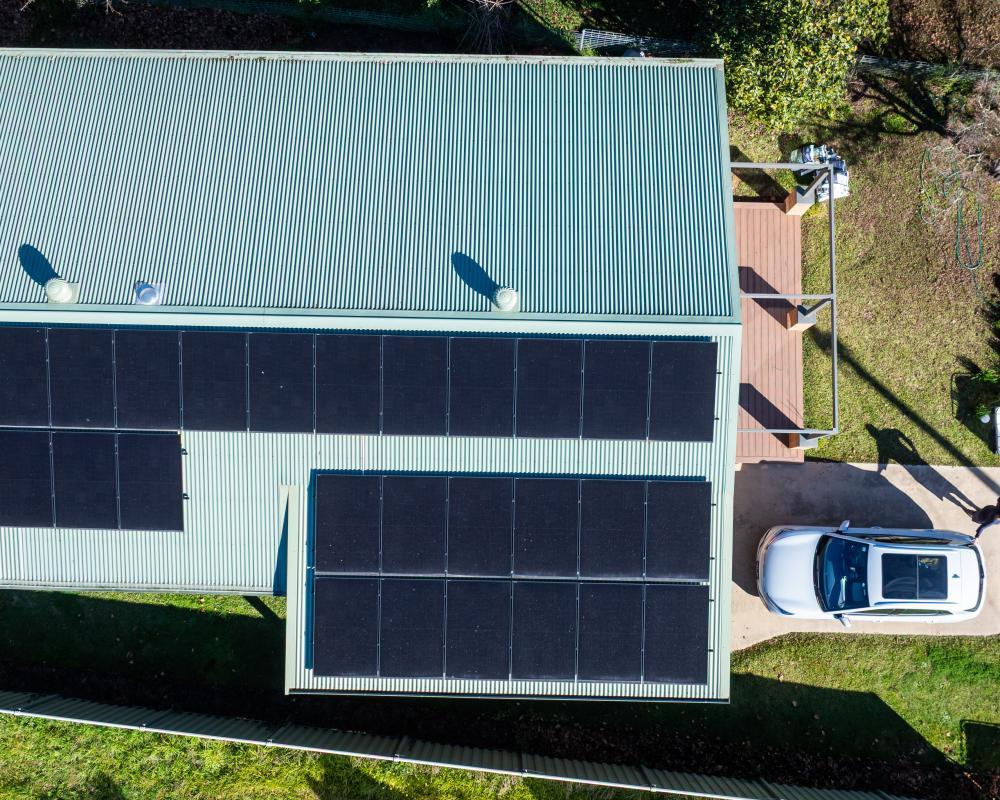
Receiving the most focus is the cheaper home batteries program, which from July last year has offered a taxpayer-backed 30% rebate to households and businesses.
The scheme has become a victim of its own success. Treasury officials originally estimated it would lead to a million new batteries by 2030 at a cost of $2.3bn. The latest estimate is more than triple that figure, and only after a tweak to the policy.
Related: Stop undermining Jim Chalmers, environment minister urges Labor colleagues
Also in the crosshairs is the 2022 electric vehicle subsidy, which exempts workers from fringe benefits tax when they lease an EV through their employer and has proved more popular – and expensive – than predicted.
Despite reports that Treasury is pushing for cuts to the home battery scheme, the argument has hardly been made.
There is more than a whiff of politics to the sudden and urgent need to do away with clean energy programs, against, say, scaling back billions of dollars in diesel fuel rebates for miners.
When budget experts are asked broader questions about the big pressures on the federal government’s finances, rarely do they cite handouts for home batteries or tax breaks for electric vehicles.
Sign up for the Breaking News Australia emailIn a speech on Monday, Angus Taylor, the opposition leader, again promised to “abolish Labor’s ideological climate bureaucracy” as part of his promised $31bn of budget savings over four years.
Meanwhile, the Albanese government’s recent efforts to apply an income test to private healthcare rebates for over-65s was met with howls of protest from the Coalition.
As Stephen Bartos, an economics professor at the University of Canberra, says, in all this talk about cutting spending, “nobody is mentioning nuclear-powered submarines”.
Bartos, a former deputy secretary at the Department of Finance and New South Wales parliamentary budget officer, says if the challenge is to close the budget deficit, then green subsidies “shouldn’t be their first port of call”.
“Partly because it’s small beer compared to the big-ticket items like health, NDIS and defence. But also because there is a rationale for green subsidies, if a declining one.”
The national disability insurance scheme, for example, was expected to cost nearly $54bn in 2025–26, which has made reining in the cost of the scheme an existential question for the government’s fiscal plans. In 2023, the Parliamentary Budget Office estimated the total cost of acquiring nuclear-powered submarines under the Aukus agreement to be as much $368bn over the life of the program.
The federal fuel tax credit scheme, which mainly helps major global mining companies, costs about $11bn a year and is rising fast.
Bartos is critical of government tax breaks for electric vehicles, but says the case for public support for batteries is stronger.
“I would probably be looking at where the price signals encouraging adoption [of clean energy] are weakest, and that’s probably batteries. For EVs, people are shifting no matter what.”
The case for the cheaper batteries scheme has also been undermined by Treasury officials’ abject failure to predict how popular it would be. A month into the program and it was already obvious they had got it wrong, as the expected cost blew out towards $14bn.
Not only was our appetite for subsidised batteries way higher than official forecasts, the original design of the scheme made it more desirable to buy bigger, more expensive batteries.
Related: EVs are holding value better than expected – and it has a lot to do with Australia’s cost of living
There has since been a tweak to the design to account for that second issue, which is how Treasury now predicts – for what it’s worth – that the program will cost $7.2bn.
These cost blowouts have amplified derision of the home batteries as “middle-class welfare” of the worst sort.
Alison Reeve, the director of the energy and climate change program at the Grattan Institute, understands the concerns, but says the evidence to back that claim “is pretty thin when you look at where the batteries are being installed”.
Notably, this is in homes across outer suburbia, such as western Sydney, and in regional areas. In other words, not in enclaves of the comfortably well-off.
Then there is the bigger-picture issue: that we risk sacrificing long-term clean energy goals in the name of short-term fiscal objectives.
“Batteries are going to be a big part of our energy future,” Reeve says. “We do need to do some stimulating of that industry until it can stand on its own two feet.”
Slashing support for batteries would damage the burgeoning web of small businesses, suppliers and tradies who have invested in servicing the infant batteries industry.
That’s not to say there are ways to improve the cost and benefits trade-off in the home batteries program. This could be by ensuring subsidised batteries deliver a community benefit by contributing to the power grid in times of need.
“We need to make sure we are maximising the public benefit, rather than just the private benefit,” Reeve says.
There are lessons in how Western Australia has designed its home batteries support scheme.
“If you look at the west coast, you couldn’t get the state subsidy unless you linked yourself up to a virtual power plan run by the network operator. That was in order to benefit the whole network,” she says.
“We also need a clear path out of the subsidy so it doesn’t grow uncontrollably.”