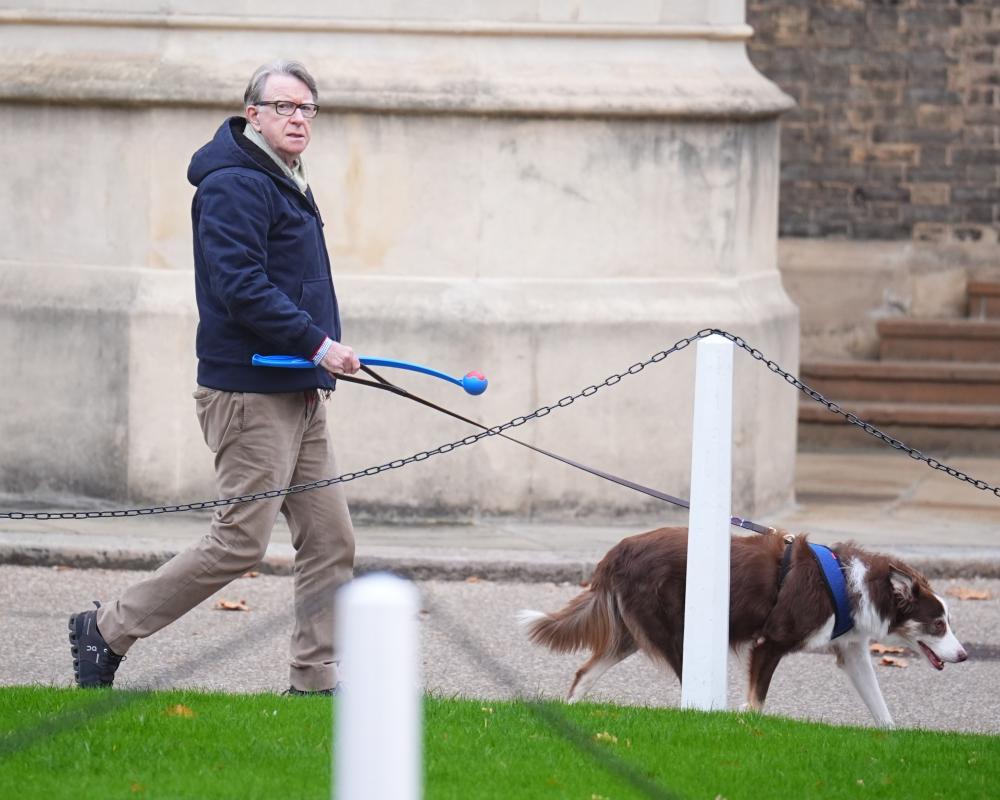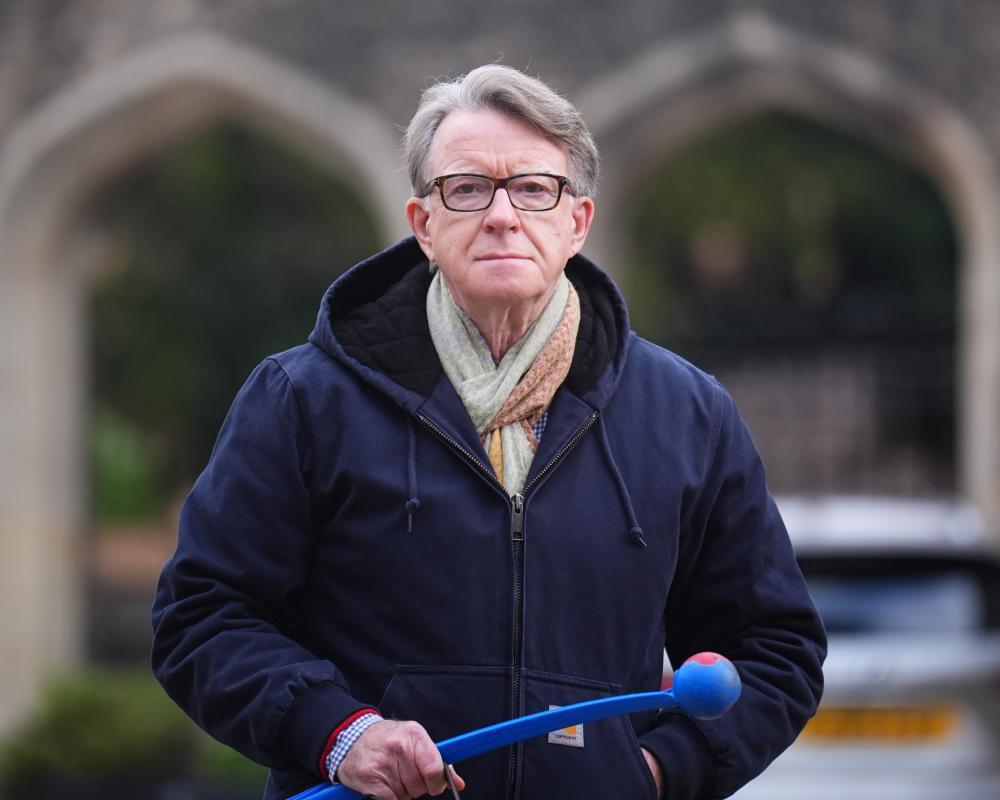
Peter Mandelson sought to organise an “under the radar” meeting between an economic adviser to Donald Trump and a member of his former lobbying firm, Global Counsel, while he still held shares in the company, newly released documents reveal.
Mandelson’s attempt to organise the meeting followed a Foreign Office proposal of a “light touch way” to protect him “against perceptions of benefitting [Global Counsel] in some way while in public office”.
In April 2025, while ambassador to Washington, Mandelson wanted to hold a lunch to discuss “alternative options” to the World Trade Organization and on how “like-minded partners come to terms with China and its practices”. He told the economic adviser he wanted to bring “a former trade colleague of mine” with “interesting views” who could “lead off”. He added: “It would be best to keep this under the radar.”
Mandelson then forwarded the emails to a Global Counsel employee to ask for their availability.
Mandelson had already refused to dispose of his shares in the company after he was appointed ambassador because, according to an official’s letter, the firm had “not made an offer that Lord Mandelson considers commensurate with the fair value”. One July 2025 email reveals his frustration in response to media queries about his ongoing shareholding: “They [Global Counsel] should pull their fingers out and buy my shares.”
By the time Mandelson was trying to arrange the lunch with the presidential adviser and the Global Counsel employee, the top civil servant in the Foreign Office, Olly Robbins, had told him in a letter that he needed to “avoid any perception that he is consciously or even unconsciously furthering [Global Counsel’s] commercial interests”.
In a covering email to a draft of the letter to Mandelson, Robbins said: “If this looks sensible to you, I will sign and send and we can get this up and running in a light touch way.”
Mandelson, however, continued to consult his former colleagues on his work as ambassador while holding shares, sharing a draft of a speech to the Ditchley Foundation with a Global Counsel director for comments. After receiving feedback, Mandelson said he would “soften the lecture on China”.
Addressing the Commons on Thursday after the latest publication of documents, the security minister, Dan Jarvis, said the government planned to strengthen its conflicts of interest policy.
Andy Burnham said there was a need for “political reform” so that “vested interests aren’t running large within the system”, in order to restore public confidence in Westminster and Whitehall. He said these issues would be addressed next month in a 10-year plan.
Several crucial documents about Mandelson’s appointment to Washington continue to be withheld from the public. They include his conflict of interest declaration form and a summary document produced by vetting officials about his security clearance.
The Guardian revealed in April that Mandelson had failed the developed vetting process after Keir Starmer announced in December 2024 that he would the next British ambassador to Washington. The Foreign Office overruled vetting officials’ recommendation Mandelson be denied clearance, clearing him to take up the post.
Among the vetting agency’s concerns, according to sources, were his associations with senior figures in China, Russia, and Israel, as well as a £1m loan. Those concerns were separate to Mandelson’s relationship with the convicted child sex offender Jeffrey Epstein, the issue that led to Mandelson’s sacking in September 2025.
Starmer also sacked Robbins, who told MPs investigating the issue that he believed vetting officials considered Mandelson to be “borderline” and so could be cleared with “mitigations”, but no documents have been disclosed to back up his claims. He told them his office had been under “constant pressure” from Downing Street to get Mandelson in post as soon as possible.
Robbins went on to receive a six-figure payout from the government for his dismissal.
In February, parliament passed a motion known as a humble address requiring the government to publicly release “all papers” relevant to his appointment.
But some documents were held back from disclosures in March and June at the request of the Metropolitan police, in case they could “potentially prejudice” its investigation into Mandelson. Ministers previously revealed that these documents included “vetting information and conflicts of interest process material”.
A Met police spokesperson said: “Our investigation into alleged misconduct in public office is ongoing.”
Police sources expect its investigation to take a matter of months rather than years but the Met is yet to receive unredacted documents from the Epstein files held by the US Department of Justice that could be relevant to its inquiries.
The newly released documents include an email from Ian Collard, the Foreign Office security chief, to his line managers noting Mandelson had been given clearance. Collard said Mandelson’s “private sector engagements” were being handled through the conflict of interest process and that Mandelson had been sent a letter about his responsibilities regarding personal conduct as an employee.
Collard said questions about Mandelson’s “overseas contacts” would be reviewed by other authorities responsible for higher levels of security clearance.
In July, the foreign affairs select committee concluded that Mandelson’s appointment was “nothing short of disastrous”, “highly damaging” for the British government and “painful and offensive to the victims of Jeffrey Epstein”.
Mandelson has been approached for comment. On Thursday he published an article about how British negotiations to rejoin the European Union might unfold.