Closing summary
And, on that note and as the summit continues into the evening and no doubt well into the night, we will be closing the blog for today.
I will bring you up-to-date first thing tomorrow so don’t worry, you won’t miss anything.
And here are the top lines from today:
-
US president Donald Trump has said he asked Russia’s Vladimir Putin to get to “pull back all military aggression against territories throughout Europe,” (16:00) after he met with Nato’s secretary general Mark Rutte in Florida (16:03).
-
His comments come as EU leaders discuss the bloc’s support for Ukraine at a tricky summit in Brussels, which also look at key questions about the EU’s next budget (9:39, 15:34).
-
Several EU leaders specifically stressed the importance of supporting Ukraine in the coming months and “a winter like hell” amid Russian strikes (9:57, 10:05, 10:15, 10:27, 11:03).
If you have any tips, comments or suggestions, email me at jakub.krupa@theguardian.com.
I am also on Bluesky at @jakubkrupa.bsky.social and on X at @jakubkrupa.
Macron confirms appointments to ECB top jobs
French president Emmanuel Macron has just confirmed the EU leaders’ decision on the leadership of the European Central Bank (15:41).
“The Euro Summit welcomed Christine Lagarde’s decisive leadership during her term in office.
A consensus emerged on the nominations to the European Central Bank. I welcome a balanced trio of individuals serving the stability and prosperity of the euro area, with Pablo Hernández de Cos as President and Laurence Boone and Markus Brunnermeier on the Executive Board.”
The longer statement from Trump’s talks with Rutte is somewhat less exciting.
The statement says – apart from an incredible claim that Mar-a-Lago is “the Southern White House” – that their meeting was “very impactful” and focused on the wars in Ukraine and Iran, as well as the current situation in Nato.
“We also talked about, at length, the importance of Russia and Ukraine avoiding any actions that intentionally, or unintentionally, expand the War — and the importance of obtaining a peaceful resolution to the War, as rapidly as possible,” Trump said.
The two leaders also discussed defence spending and Nato’s investment across its industrial base, with “tremendous progress” made in the last years.
“There has never been a time when the United States has produced more Military Equipment or Munitions than now. Our “cupboard” will soon be full and, when it is, our Allies and Partners throughout the World will be benefitting greatly,” Trump concluded.
'I would like Putin pull back all military aggression against territories throughout Europe,' Trump says
Oh, that’s interesting.
US president Donald Trump has just posted a couple of things after his talks with Nato secretary general Mark Rutte last night.
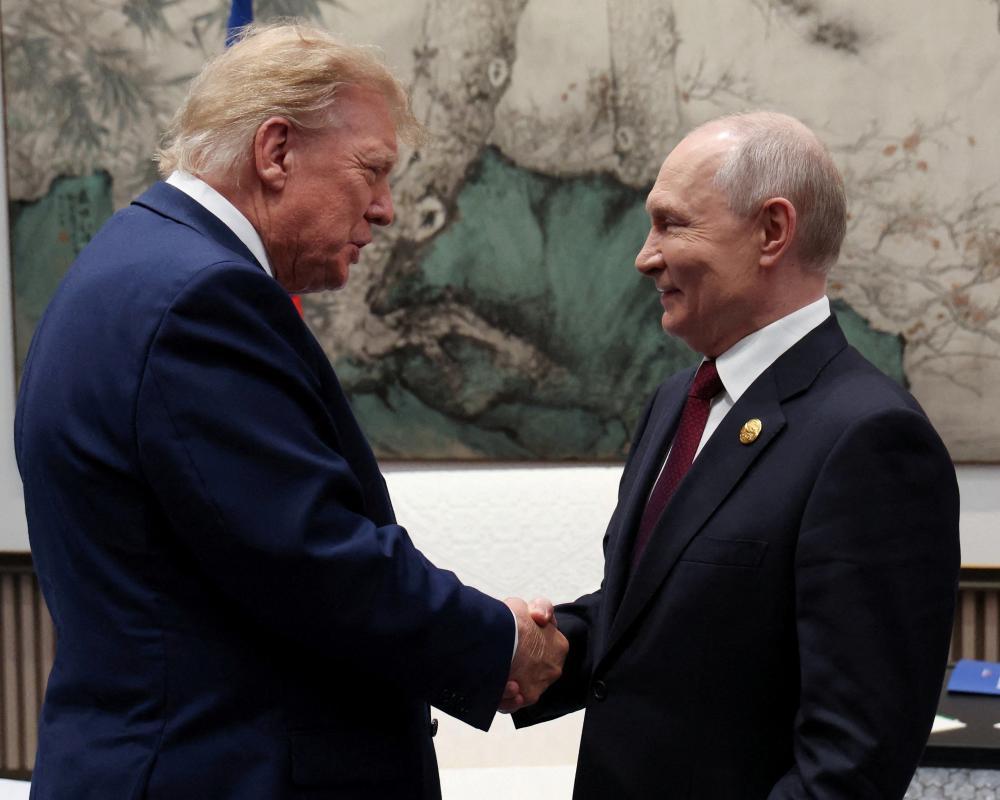
And, perhaps for the first time, he said that during his discussions with Putin in China he “spent a lot of time talking about the fact that I would like to see president Putin pull back all military aggression against territories throughout Europe.”
What he defines as “territories throughout Europe” is – as often with Trump – somewhat undefined, but his comments come after a number of security incidents involving Russia against countries on the eastern flank of Nato, including Estonia, Denmark and Poland.
Trump said he hoped for that to happen “in hopes that a deal can be made between Russia and Ukraine, and made quickly.”
“I really believe this is a strong possibility – Thousands of people are being killed each and every month, A COMPLETE BLOODBATH — and will be a Great Tribute to everyone!”
Spain's Hernandez de Cos expected to succeed Lagarde as EBC president
Brussels correspondent
Spain’s Pablo Hernandez de Cos will become the next president of the European Central Bank, succeeding Christine Lagarde, EU diplomats have said.
The Spanish economist and monetary policymaker will become the first Spaniard to lead the ECB, defeating rival candidate, Dutch central banker Klaas Knott of the Netherlands.
EU diplomats agreed two other appointments to the ECB’s executive board on Thursday: France’s Laurence Boone and Germany’s Markus Brunnermeier.
EU leaders discussed the jobs at a summit in Brussels this morning, triggering a formal process to nominate the three policymakers.
'Virtually zero' chance of agreement on EU budget today and deal by Christmas 'does not seem likely,' Hungary's Magyar warns
Meanwhile, Hungarian prime minister Péter Magyar has warned there is “virtually zero” change of reaching an agreement on the EU budget today, and “even an agreement by Christmas does not seem likely.”
In a post on Facebook, he said:
“Reporting from the critical EU summit in Brussels. Negotiations are currently under way. I have just outlined to the 26 heads of state and government what Hungary’s priorities are, as well as the “red lines” that we will not cross.
Given the completely opposing positions expressed in the room, the chance of reaching an agreement today is virtually zero – and even an agreement by Christmas does not seem likely.”
EU leaders braced for clashes over Ukraine aid at budget talks
Brussels correspondent
EU leaders are bracing for a clash over long-term financial aid for Ukraine, amid an effort to finalise high-stakes budget talks by the end of the year.
Arriving in Brussels on Thursday, the German chancellor, Friedrich Merz, reiterated his view that all EU member states should support a €45bn (£38bn) loan for Ukraine for 2027.
“When the European Union provides funding, it does so as the European Union – and that union consists of 27 member states, not 23 or 24,” he said.
Merz has previously threatened to veto the bloc’s next seven-year budget unless all countries sign up to the Ukraine loan, which would be a painful outcome for member states that are net recipients of EU funds.
Slovakia, Hungary and Czechia, net beneficiaries, want to opt out of the loan. Slovakia’s prime minister, Robert Fico, who has maintained close ties to the Kremlin, has accused Merz of blackmail.
But Merz’s stance has won widespread support, especially among western European, Nordic and Baltic states.
Some governments, however, which support Merz’s goal have reservations about his tactics, fearing the public threat to block cohesion funds could make it harder for recalcitrant governments to climb down.
The discussion on support for Ukraine has become entangled in negotiations over the EU’s next long-term budget, which will set the bloc’s spending priorities for 2028-2034.
Related: EU leaders braced for clashes over Ukraine aid at budget talks
European parliament president Metsola says MEPs will 'not rubber-stamp' EU budget deal
Back to the negotiations in Brussels, European parliament president Roberta Metsola told EU leaders that they cannot expect MEPs to automatically approve a deal on the bloc’s next long-term budget, insisting that parliament’s priorities must be reflected in any agreement.
“Parliament is not a rubber stamp. We will never be, we have never been,” she said at a press conference.
“Let’s see what the (European) Council finds as a landing zone when all the red lines are overcome.”
The final long-term budget must be approved by a majority of MEPs, meaning at least 361 of the European parliament’s 720 members. The vote will come after negotiations between parliament and the European Council, once EU member states have agreed on their position.
On Ukraine, Metsola stressed the importance of continued EU support for Kyiv and its wider implications for European security.
“It’s not only solidarity, it is an investment in the future of Ukraine and our, Europe’s, very own security. The stakes go well beyond Ukraine’s borders, and we must never forget that,” she said.
Updated
Zelenskyy warns Russia preparing ‘new massive strike’ as Ukraine seeks urgent air defence supplies
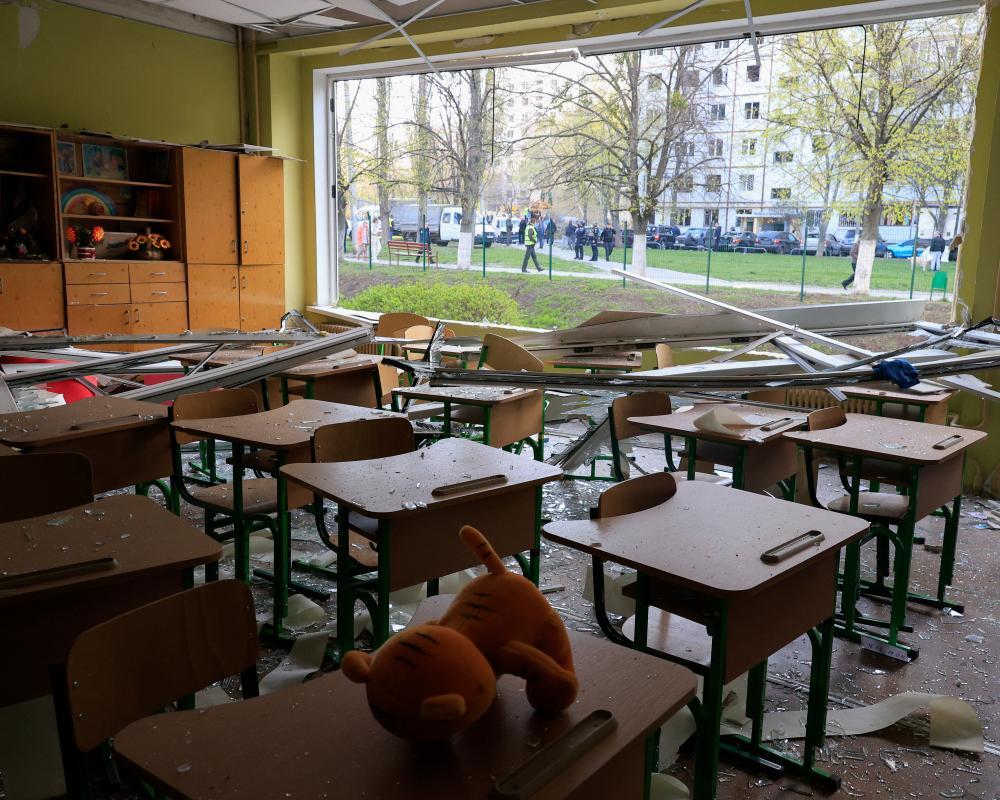
Turning briefly to Ukraine, president Volodymyr Zelenskyy has warned that Russia is preparing for a “new massive strike” against the country, with energy facilities, logistics infrastructure and essential services expected to be among the targets.
“Unfortunately, the Russians are already completing preparations for a new massive strike,” Zelensky wrote on X.
He said Ukrainian intelligence indicated that the country’s energy infrastructure would again be a primary target, as repair crews continue working around the clock to restore electricity supplies following Russian attacks on “substations, overhead power lines, and the entire power grid”.
Zelensky added that he was awaiting an update from Ukraine’s foreign ministry on discussions with international partners over additional air defence supplies, adding that interceptor missiles for Patriot and Nasams systems were a “key priority”.
His warning comes as EU leaders meet in Brussels to discuss continued financial support for Ukraine, alongside negotiations on the bloc’s next long-term budget. The European Commission has proposed a further €45bn loan for Kyiv in 2027, but member states remain divided over how the money should be provided, with Germany pushing for the entire bloc to participate (see post at 9.15am).
In a video address yesterday, Zelenskyy said there was “no good news” from the US on accelerating air defence deliveries, saying they were “still delayed”.
Updated
Legal text underpinning last Friday's EU-UK 'reset' deal is out
As promised, the draft legal text underpinning last Friday’s EU-UK reset is out.
The 80 page legal text of the food and drink agreement outlines the rules for the creating of a “common sanitary and phyto sanitary area” which will be “governed by the legal acts of the union” to which the “UK shall dynamically align and simultaneously apply”.
Under the deal, the UK will have a “consultative” role in EU legislation but no vote.
“The United Kingdom shall have no voting rights” even in discussion on emergencies such as disease outbreaks, the text makes clear.
The consultation includes a “preliminary exchange of views” in a new joint EU-UK committee.
Experts in the UK and member states will be “informally consulted” instead, a move that may not satisfy food industry bodies that have argued that British regulators should be involved in all the technical meetings ahead of drafting of EU laws.
The adoption of the three main elements of last Friday’s reset including the food and drink agreement, will not take place until a separate agreement is reached on the level of tuition fees EU students will pay in the UK in a youth mobility scheme.
There will also be consultation with experts when laws are implemented to ensure the drafts on both sides of the channel align.
But the text specifically excludes a vote for the UK at higher level meetings
“The United Kingdom shall be invited to attend, as an observer, only those meetings or parts of meetings of the committees and expert groups” when the application of EU laws are addressed with the exception of “emergencies” which would include disease outbreaks.
The document includes a caveat that it is “published for information purposes only,” and “may undergo further modifications.” It “will be final upon signature,” it added.
Updated
Spain’s election: the end of a leftwing icon? - podcast
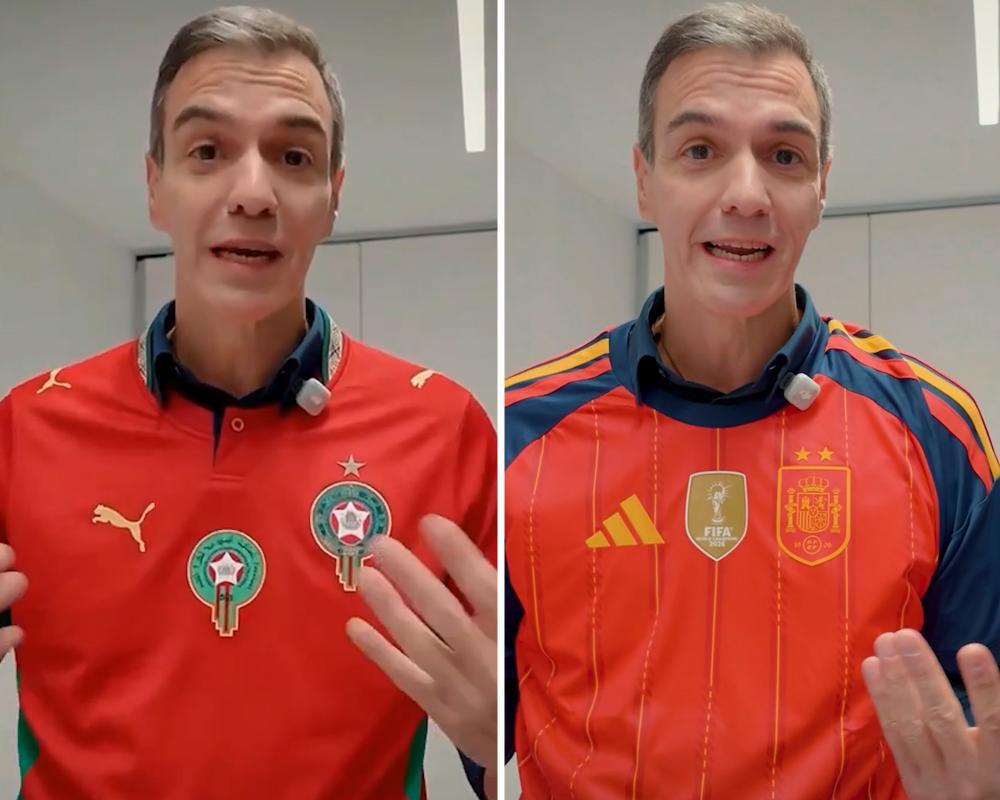
He has become an icon of the European left. A great political survivor, Spain’s Pedro Sánchez has been in power for eight years while – across the continent – the right has been on the march.
The Socialist party leader has championed immigration, stood up to Donald Trump and been a notable voice for Palestinians in Gaza.
But he is not attending the EU summit in Brussels today as he has to focus on domestic politics. On Sunday, Sánchez might be replaced by a conservative government in league with the far right.
Madrid correspondent Sam Jones and European community affairs correspondent Ashifa Kassam report on a pivotal Spanish election, and the gamble that led Sánchez to call it.
Where will this leave the left in Spain, asks Nosheen Iqbal, and across Europe too?
Related: Spain’s election: the end of a leftwing icon? - podcast
Details of two treaties at heart of UK’s EU reset to be published today
Political correspondent
Details of two treaties at the heart of Andy Burnham’s post-Brexit reset plans will be published on Thursday alongside the bill that will implement the changes into UK law.
The treaties signed by the UK and the European Union at last week’s summit will have a 10-year termination clause that would mean if one party were to end the agreement, they would have to pay to rebuild border checks infrastructure, the BBC reported on Thursday.
Any termination clause could bring the longer-term future of the deal into doubt, after the opposition leader, Kemi Badenoch, described it as a “terrible deal” that she would scrap. Nigel Farage has suggested he would refuse to pay, with the Reform UK leader promising to renege on the deal if he were to win power, arguing that Burnham “cannot bind a future British government”.
At a major summit in Brussels last week the UK and EU announced three deals, on food and drink, emissions trading and a youth mobility scheme, which will allow 100,000 young Britons to live, work, study and travel in the EU, with reciprocal access for Europeans in the UK.
Two of the three legal texts will be released on Thursday, covering the food and emissions trading deals, alongside the government’s bill to enact the agreement. The government is also expected to publish assessments of the impact on different sectors and regions of the country .
But uncertainty around the trio of deals remains, with fears they could be derailed in six months unless the UK allows European students to pay domestic-level fees to study at British universities.
Related: Details of two treaties at heart of Andy Burnham’s EU reset to be published
Serbia to hold presidential election to choose Vučić’s successor on 27 December
As promised earlier, we also have an update from Serbia, with a confirmation that presidential elections to choose Aleksandar Vučić’s successor will be held on 27 December.
“I call all citizens of Serbia to show responsibility and come out and vote on 27 December,” newly elected parliament speaker Aleksandar Čupić said.
Former president Vučić resigned in September to run for prime minister in the October parliamentary vote, but he lost in a landslide to candidates nominated by a student-led protest movement that called for an end to corruption.
EU leaders agree on one thing: they're far away from a budget deal
EU leaders are far from reaching a deal on the bloc’s nearly €1.6tn budget proposal for 2028 to 2034, Italian prime minister Giorgia Meloni said.
“We’re light-years away from a solution,” Meloni told reporters before an extraordinary EU summit in Brussels, as reported by Reuters.
“We are not willing to sign off on a budget under which we would have to give more to receive less.”
Updated
Hungary's Magyar ready for 'long, difficult and sometimes heated' talks during EU summit
Hungary’s Péter Magyar appears to be in good mood and ready for long talks, as he said on his X that he’s ready to stay in the room and drink coffee for as long as needed.
“I expect long, difficult and sometimes heated talks and debates. I’ll be having my coffee strictly inside the meeting room,” he said.
(Could it be a swipe at his predecessor Viktor Orbán, known for occasionally strategically leaving the room during tricky negotiations? Maybe.)
Posting a smiley selfie with Poland’s Donald Tusk, Magyar also noted that fellow EU leaders recorded his volleyball match with Ukraine’s Zelenskyy earlier this week as the pair sought to improve the strained relations between Hungary and Ukraine.
“Many people have asked whether I brought a volleyball. The photos from the friendly match in Beregszász were seen around the world.”
So, if you missed it on the blog yesterday, here it is:
Le Pen slams 'underhanded manoeuvring' to get deal on EU budget ahead of French elections
The meeting is obviously taking place in Brussels, but there are also strong voices coming from way outside the room.
Marine Le Pen, the far-right frontrunner in the French presidential election next year, has blasted “underhanded political manoeuvring” as she described the push to get a deal on the next multiannual budget this year, well ahead of the French vote.
While she backed France’s attempt to increase agricultural funding, she said “the reasons have nothing to do with defending our farmers,” but with rushing the deal before she can get (still only potentially) elected in 2027.
“Our country is on the brink of default and social unrest. Our leaders should be working to put it back on its feet rather than trying, through underhanded political manoeuvring, to prevent the French people from expressing their democratic will.”
But AFP noted that while it very much appears to weigh on some minds (10:27, 11:03), other leaders have pushed back at the narrative of a Le Pen-linked deadline, with Austrian chancellor Christian Stocker telling reporters he was “certainly not afraid of an election in France.”
The leaders are now all behind the closed doors as their discussions get under way, with a discussion with the outgoing European Central Bank president Christine Lagarde up first.
Leaders 'very far apart' on budget talks, but supporting remains Ukraine critical, Frederiksen says
The Danish prime minister, Mette Frederiksen, has acknowledged that leaders remain “very far apart,” agreeing with Germany’s Merz that the current proposal is not going to work.
“The budget is too large and not sufficiently future-oriented,” she said, calling for more work on competitiveness, defence and security.
Just like Martin earlier, she noted that 2027 will see “very important political elections across the member state” and openly acknowledged that “the situation within Europe could become even more challenging” as a result, making it important to get a deal this year.
Frederiksen also backed Merz’s call to link the funding for with the new budget, saying Ukraine serves as “Europe’s first line of defence.”
“If Ukraine falls, I believe there is a significant risk … that Russia might push further,” she warned.
She added that “in Europe, we have a tradition of collectively financing our shared expenses, and we must view the funding for Ukraine as part of that.”
Interestingly, she was also asked if the EU would be able to continue this support for Ukraine given several elections in the next 12 months, which could see rightwing and far-right parties come to power in France, Spain and Poland, among others.
Related: In charts: how power could shift in Europe’s big year of elections
She replied candidly that she didn’t know, but strongly “cautioned” against thinking that Europe could simply stop supporting Ukraine and spend the money elsewhere.
“Given everything we are seeing from the Russian side right now … if we let Ukraine fall, we essentially open the door for Russia to advance further,” she said.
Irish PM 'confident' EU and UK will resolve tuition fees disagreement in post-Brexit talks
Irish prime minister Micheál Martin also said he was confident the EU and the EU “will be in a position to resolve the outstanding issue” of tuition fees, as he hailed the deals on sanitary and phytosanitary rules, youth mobility, and energy.
Speaking at the beginning of the European Council meeting in Brussels, Martin said that “for the young people of Britain and the young people of Europe, this is a win-win.”
“I often felt with Brexit that the young people of Britain perhaps were not consulted as strongly in terms of the implications for youth mobility.”
He added:
“Young people love to travel, and we don’t need to be placing barriers in the way of young people accessing education, accessing work. In Europe, that should never be the case and I believe we can facilitate that.”
On SPS, he said that it’s “very good news for Ireland and the UK,” as it will “remove barriers” affecting small to medium size companies in particular.
The deal on the ETS also “makes sense,” as “there’s the potential of the UK and being part of the European energy market also offers up opportunities for both sides.”
Martin was perhaps the only leader offering any sort of detailed answer on the EU-UK relations when asked about the hold up caused by the lack of agreement on tuition fees, with most of them just delivering general platitudes.
Czech Republic’s Babiš chuckled and said he thought it was a mistake for Britain to leave, but welcomed its involvement in peace talks on Ukraine, while Latvia’s Kulbergs said he wasn’t across the detail on that issue.
Sweden’s Kristersson also said he was “not into details” on that point, but welcomed “a major step forward” in relations with Britain.
Ireland pushes for EU to consider needs for agricultural spending in next budget
Irish prime minister Micheál Martin also wanted the EU to ensure there is enough money in the budget on agriculture.
He said he raised this issue in talks with the European Council’s António Costa this morning.
“I met with him to this morning, in a bilateral, particularly to press Irish issues and identified the Common Agricultural policies as key concern and that agriculture and agri-food industry is of paramount importance to us.”
But Martin sounded sympathetic towards Costa’s impossible job today, as he needs to “endeavour to reconcile the irreconcilable across the 27 member states.”
But he also makes the clearest reference yet to the worries that are clearly on the minds of many EU leaders, saying:
“But it is very important that we get a budget because if we don’t secure an agreement before the end of the year then I think the prospects of doing it in the first half of 2027 are very dim.”
Yes, that’s almost certainly a reference to the French presidential election early next year.
Merz rejects current budget proposal, doubles down on calls to support Ukraine
Germany’s chancellor Friedrich Merz is ready to push back against proposals already on the table, as he told reporters the current offer “does not provide a basis for reaching an agreement” and doubled down on calls to support Ukraine by the entire bloc.
“The overall volume remains too high,” he said, stressing that “Europe requires sound public finances.”
In terms of Germany’s priorities, he talked about the need to have a prosperous economy and strengthen defence capabilities, which he pointedly said “applies to all of Europe, and it applies to Ukraine.”
He said he was unwilling to opt out for a technical fudge on supporting Ukraine like last year, when three countries opted out from the loan. “I do not see any possibility of repeating that this year,” he said.
“When the European Union provides funding, it does so as the European Union – and that Union consists of 27 member states, not 23 or 24,” he said.
Merz stressed that “we must ensure that Ukraine continues to receive sufficient support in the coming years,” both on military and humanitarian spending.
“We must help [Ukraine] get through a very difficult winter, but we must also assist with its reconstruction,” he stressed.
He called for “constructive” talks with a view of reaching a compromise at some point before the end of the year.
“Yet, I want the overarching framework to be clear: it is in all of our interests that the European Union remains politically capable of action. We are operating in a global environment that requires a sovereign Europe. In my view, this is the most important guiding principle: Europe must remain capable of acting and must become sovereign,” he said.
Updated
Bulgaria ready to back EU loan for Ukraine in 'non-military' part
Bulgaria will support a proposed new €45bn EU loan to Ukraine, but only for the part earmarked for non-military aid, prime minister Rumen Radev said.
In a compromise offer to a group of countries objecting to supporting Ukraine’s military financially, the European Commission president, Ursula von der Leyen, stressed last week that the new loan would consist of two parts, a military and civilian one.
It seems to have done the trick for Bulgaria, with Radev declaring he is willing to support the non-military part of the deal.
“Bulgaria is going to take part in the loan of €20bn (for) non-military support for Ukraine,” Radev told reporters as he arrived at an EU summit in Brussels, quoted by Reuters.
“We have a huge historic diaspora of Bulgarians living in Ukraine, our wish is to concentrate our support in that area. We are going to contribute, but no money from Bulgaria for weapons,” Radev said.
Latvia’s Andris Kulbergs offered a similar argument, saying that countries on the eastern flank had to ramp up their defence spending, often at the cost of other priorities, and so need to be supported with a strong EU budget with funds for cohesion and agriculture.
“We are putting the most money in security and defence, as we are getting attacked as an economy [because of] geographical punishment, but then we are seeing in our shops all these products from countries getting the most support of farmers. … That is not really the case of free trade, and that’s exactly where we need that support,” he said.
He urged leaders to “put aside our local mindsets and put on the hats of Europe.”
Ukraine 'probably will face a winter like hell,' Estonia's PM warns, as he calls for no cuts to EU budget
Estonia’s Kristen Michal argued against any cuts to the EU budget, “because if we look at what Russia is doing on the eastern border, [it] needs protecting; needs investments and money.”
He also warned that Ukraine “probably will face a winter like hell,” and so “they must know that Ukraine has its back, with money and everything we have.”
“They should not … be in a position [that they need] to take a bad deal.”
Michal said that there are “no signs that Putin wants peace,” with Russia trying “mind games” of pretending that the European security architecture poses any threat to Moscow.
“The European security architecture was fine until Putin attacked Ukraine,” he said.
He also disagreed with the Czech suggestion that the issues of EU budget and Ukraine should not be linked.
“Europe and Ukraine are linked, because Ukraine is fighting for us. We are only counting euros, and that is not a bad thing, … but they are shedding blood. So, whatever we can do, we must,” he said.
Sweden's Kristersson suggests budget talks could drag beyond December
Sweden’s Ulf Kristersson suggested the talks could even go beyond December and into 2027, as with the budget kicking in only in 2028, “we aren’t in that hurry.”
He said the leaders should see December as “a target or a goal,” but not as “the deadline.”
“I think you can’t simply say that we are will accept a budget we don’t believe in simply because we have a deadline in December 2026.”
He added:
“But of course we need to finalise it sooner or later so I don’t mind finding a sound and reasonable compromise in December, but we are not there yet.”
But Kristersson pointedly backed Germany’s Merz against the four central eastern European countries, saying “it is not acceptable to simply kidnap [the issue of support for] Ukraine” by saying “we will accept the EU support for Ukraine, but we will not pay for it ourselves.”
“I don’t think that is a reasonable way of thinking, not in accordance with the basic rules for the European Council. We should not make opt out a new tradition, that’s my strong belief,” he said.
Watch out for clash on cohesion funds, Ukraine support
One thing to watch is what happens with four countries that do not particularly want to contribute to the EU’s next round of financing for Ukraine, and focus on keeping cohesion funds for their communities.
Bulgaria, Czech Republic, Hungary and Slovakia remain opposed, and German chancellor Friedrich Merz leads the group that wants to pressure them into agreement by linking the new budget with funds for Ukraine, threatening to veto the financial settlement if needed.
Related: Merz accused of ‘blackmail’ by Slovak PM after demand for Ukraine aid in EU budget
Czech PM Andrej Babiš argued this morning saying such solution was “not possible” under the treaties.
He said that maintaining high cohesion spending was a priority for his government, as “we don’t have a highway to Austria and we have to build our hospitals.”
“Financing of Ukraine should be negotiated separately, and the most important [thing] is the life of our citizens,” he said.
Asked if he’s expecting a deal by the end of the year, he noted that the positions are “so different, we will see.”
Morning opening: EU leaders meet for talks on budget, Ukraine
EU leaders are meeting in Brussels today and tomorrow for tricky talks on the next financial budget and Ukraine, with disagreements threatening to expose deep divisions within the bloc.
The European Council president, António Costa, told reporters this morning that the next long-term budget was “the most important” item on the agenda, as he acknowledged that getting an agreement at this summit may not be possible.
“My objective is to bring our leader closer to a deal,” he said, adding he is hoping that a compromise could be agreed “by the end of this year.”
Arrivals are now under way and I will bring you some reactions from the leaders coming in for the meeting.
Spain’s Pedro Sánchez is the only leader not present as he is fighting for his political survival ahead of this Sunday’s parliamentary election. France’s Emmanuel Macron will represent his views.
Elsewhere, I will keep an eye on the latest news coming from Ukraine and on Serbia, where we are expecting a date for the presidential election – also by the end of the year – to choose Aleksandar Vučić’s successor.
It’s Thursday, 26 November 2026, it’s Jakub Krupa here, and this is Europe Live.
Good morning.