Labour’s split over Rosebank oilfield exposed by letter from nearly 100 MPs
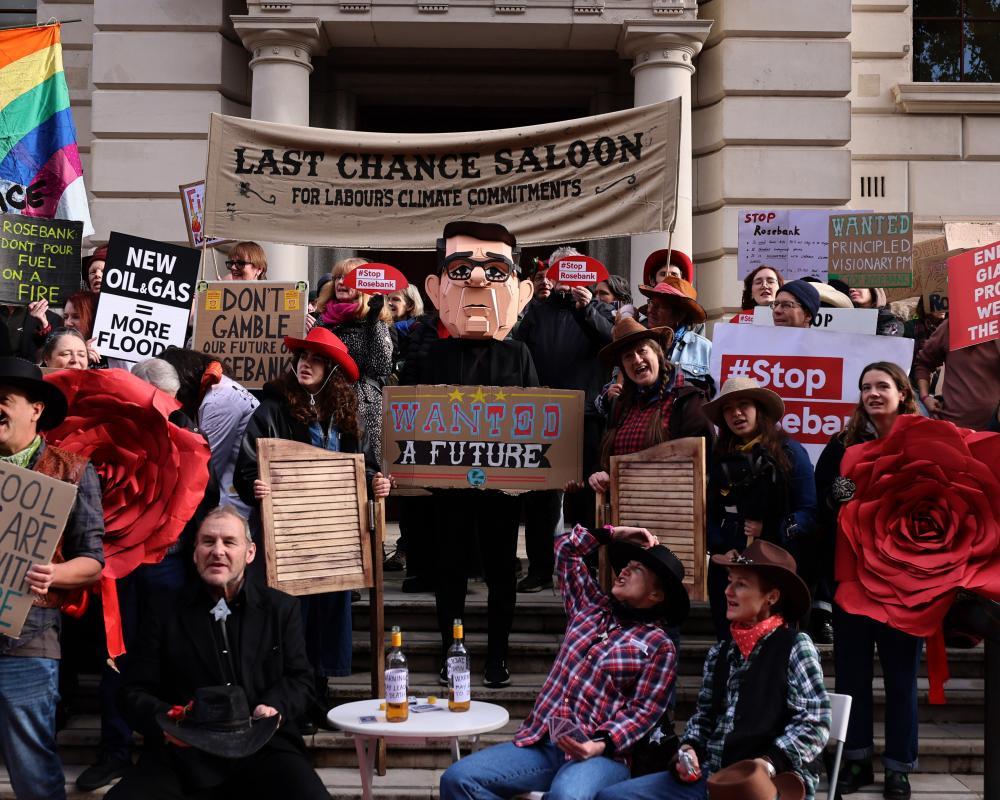
Labour’s internal divisions over the giant Rosebank oilfield have spilled into the open, with nearly 100 Labour MPs – including a handful of frontbenchers – writing to the prime minister to express their opposition to the project, Kiran Stacey reports.
Related: Labour’s split over Rosebank oilfield exposed by letter from nearly 100 MPs
Tom Brake, chief executive of Unlock Democracy, which campaigns for a more inclusive, participatory democracy, has released this statement about the Mandelson files.
The Mandelson files lay bare the inadequacy of official safeguards against conflicts of interest. While the minister’s commitment to beef up the rules is welcome [see 12.50pm], after repeated promises of reform, we need to see serious action. The lines between public office and private business cannot be allowed to become so blurred that the public is left wondering whose interests are being served.
Burnham says more reform needed to ensure 'vested interests' aren't running Westminster, as new Mandelson files released
Andy Burnham has suggested that the revelations in the Peter Mandelson files have strengthened his conviction that further change is needed to the way Westminster operates.
Speaking to reporters in the Downing Street garden, Burnham said:
I don’t think we have yet seen the change that this system down here needs.
I’ve come back in as something of an outsider into the system and I see a lot of things that I think need to change to improve the political culture of this country, and to strengthen the public interest when it comes to all of these issues.
And I will address those in the 10-year plan for Britain that we bring forward next month.
You know, it will involve political reform, public service reform, because I think there’s a lot further to go until people can have confidence that the Westminster and Whitehall system is run on the way that they think it should be run, and that vested interests aren’t running large within the system, so these are precisely the issues that we will address in next month’s 10-year plan.
Mandelson tried to set up meeting between Trump adviser and lobbying firm he held shares in
Here is our story about the Peter Mandelson files. It’s by Henry Dyer, Pippa Crerar and Paul Lewis.
Related: Mandelson tried to set up meeting between Trump adviser and lobbying firm he held shares in
Asylum applications down a third, number granted asylum down 40%, and asylum hotel use down 64%, Home Office says
The Home Office has also published its own figures relating to immigration today. Here are some of the notable statistics.
Around 74,000 people claimed asylum in the UK in the year ending September 2026, around a third lower than in the previous year. But this is still higher than in the 2004 to 2012 period, the Home Office says.
Commenting on these figures, Mihnea Cuibus, a senior researcher at the Migration Observatory, said:
The decrease in asylum applications has several possible explanations. It is likely that policy has played at least some role, due for example to a lower grant rate for asylum applications, more restrictive rules on refugees’ ability to reunite with their partners and children, and a more restrictive approach towards universities sponsoring students. However, several other countries have also seen declines in asylum applications and it is likely that some of the change results from fewer people coming into the EU – which can also mean fewer people making the onward journey to the UK.
Around 35,000 people were granted refugee protection in the year ending September 2026, 40% down on the previous year, the Home Office said. And the grant rate fell to 38%, the lowest level since 2018. In 2022 it was 77%.
The number of asylum seekers being housed in hotels was around 13,000 at the end of September, down 64% on the previous year, the Home Office said.
According to the Migration Observatory, the number of asylum seekers being housed in hotels from July to September was 18% down on the previous quarter. Peter Walsh, a senior researcher at the thinktank, said:
Hotel use is substantially down since Labour came to power but there are two remaining barriers. First, the government continues to face difficulties securing other types of accommodation. HMOs in the community are much less expensive but are difficult to source in a country with a shortage of low-cost housing. Large sites such as former military barracks may expand, although in practice such sites still accommodate only a small share of asylum seekers. Second, the appeals backlog continues to spiral. The government has proposed reforms to the appeals system, but this is a long-term project.
Updated
How Foreign Office told Mandelson system to manage his conflicts of interest would be applied in 'light touch way'
Olly Robbins, the Foreign Office permanent secretary, told Peter Mandelson in March last year that the arrangements agreed to manage any conflict of interests caused by Mandelson being ambassador and still owning shares in Global Counsel would be managed in a “light touch way”. At that point Robbins was still hoping that the shares would soon be sold.
Tories accuses Mandelson of 'staggering arrogance', after ex-ambassador publishes article with Brexit advice for PM
In the Commons, Charlie Dewhirst, a shadow minister, replied to Dan Jarvis on behalf of the Conservative party. Here are the main points he made.
He criticised the fact that Mandelson was allowed to keep his shareholding in Global Counsel. He said:
On 11 March [Darren Jones, the then Cabinet Office minister] told this house that the rules required new civil servants to give up such interests before taking office. Seemingly not this one.
Dewhirst said that in March MPs the foreign secetary was told a sale of the shares had been agreed. That was not right, he said. And he said, when a correction was issued, Mandelson was invited to review it first.
Dewhirst said he was surprised that only one message sent via Signal has been disclosed.
He asked Jarvis to give details about what documents the police wanted the government to hold back.
He accused Mandelson of “staggering arrogance”, referring to an article Mandelson has published on Unherd today advising the PM on EU policy.
And by the way, where is Mr. Mandelson this morning? In print, lecturing the prime minister about how to negotiate with Brussels. No apology, no humility, just more advice. It is staggering arrogance. So will the minister confirm that nobody in this government is taking his advice?
In response, Jarvis said that only a “small number” of documents were still being held back. He said he would not give further details about them.
And he gave Dewhirst a “catagorical assurance” that the government would not be taking advice from Mandelson.
In his article, Mandelson said:
If the government decides that fundamentally changing the UK-EU relationship is desirable and viable, it requires the permission of the British people to do so at the next general election. Prefacing this with informal brainstorming with the EU is a good idea because it will clarify the options available. The public’s definitive verdict would then await a post-negotiation referendum, as Burnham has now clarified.
Throughout, the prime minister in particular, but also the foreign secretary, chancellor and other ministers, will need to demonstrate considerable conviction and persuasiveness about why we need to roll back Brexit. The EU will want to know that the government’s heart really is in a new beginning and that it can secure clear public backing for it.
Updated
Jarvis said the government has already tightened procedures relating to ministerial appointments in the light of the way the appointment of Mandelson as an ambassador backfired.
The government has already taken action by strengthening the arrangements governing direct ministerial appointments, including more rigorous due diligence and clearer responsibilities for identifying and managing risks, and in developing a strengthened policy around the management of the conflict of interests.
The FCDO has also confirmed that future diplomatic appointments will not be made or announced before the necessary security clearance has been granted, and is strengthening the arrangements for scrutinising political appointments to senior diplomatic posts, including through a role for the foreign affairs select committee.
He said Sir Adrian Fulford’s review of vetting procedures was nearing completion.
And he ended, as he started his statement, by stressing the importance of remembering Jeffrey Epstein’s victims.
Security minister Dan Jarvis says some Mandelson documents still being withheld at request of police
Jarvis said some documents were still being withheld at the request of the police. He said:
A number of further documents remain withheld at the request of the Metropolitan police to avoid prejudicing their ongoing investigation. Those remaining documents will be published once the police confirm that doing so will not risk prejudicing their investigation or any subsequent legal processes.
Jarvis tells MPs the documents out today also include messages sent “through non-corporate channels” (like WhatsApp).
He says this issue is already being reviewed by Sir Anthony Finkelstein, a former government chief scientific adviser for national security. This review will report in January, he says.
Minister tells MPs government's outside interests policy to be beefed up in light of Mandelson Global Counsel issues
In the Commons, Dan Jarvis, the security minister, is making a statement about the latest release of Mandelson documents. He says 32 new documents have been made public. These were previously held back at the request of the police, he says.
He says ministers were not involved in the decisions about which documents would be released in accordance with the humble address.
He goes on:
The documents include correspondence relating to the management of Mandelson’s conflicts of interest, including his ongoing stake in Global Counsel. They underline the importance not only of identifying potential conflicts of interest, but of ensuring that the arrangements put in place to manage them are effective and properly implemented.
He adds:
The Cabinet Office will shortly publish a strengthened declaration and management of outside interests policy, which will apply across government.
How Mandelson decided to 'soften' language on China in speech in response to feedback from ex-Global Counsel colleague
Peter Mandelson consulted a former colleague from his Global Counsel lobbying firm before about the text of his Ditchley Park speech before he delivered it, according to emails released today. In response to the feedback, Mandelson said he would “soften” the language on China.
Here is Patrick Wintour’s report on the speech.
Updated
How Mandelson tried to influence Starmer's September 2025 reshuffle
Pippa Crerar is the Guardian’s political editor.
The files release today show Peter Mandelson trying to get involved in Keir Starmer’s reshuffle in September 2025.
In a short exchange of WhatsApps on 5 September 2025, Mandelson told Starmer’s chief of staff at the time, Morgan McSweeney, to “solve your Darren issue” – referring to Darren Jones.
Referring to the then science secretary, Mandelson wrote: “Are you taking peter Kyle away ….?”
In a second message, he said: “You should solve your Darren issue and put him at DSIT (Department for Science, Innovation and Technology).”
Around 45 minutes later, he asked where McSweeney was and added “I am in upstairs meeting room”.
Jones was not made science secretary. Instead he was made chief secretary to the PM.
Kyle was moved in the refshuffle. He became business secretary, and Liz Kendall replaced him as science secretary.
The reshuffle took place was prompted by the resignation of Angela Rayner over her tax affairs. In April this year McSweeney, who at that point had resigned, taking responsibility for the flawed decision to appoint Mandelson as ambassador to the US, told the foreign affairs select committee that Mandelson had not masterminded the reshuffle, though he confirmed he had sent unsolicited suggestions by text.
“He texted me his thoughts,” he told MPs. “I have to say that on reshuffle day I get texted a lot of thoughts from a lot of people”.
McSweeney told the committee that he hadn’t responded to any of Mandelson’s suggestions – which the release appears to confirm – but had been in touch with him at the end of the day. “I think we seized that day quite well,” the messages reveal he told him.
The former No 10 chief also told MPs he “might have” bumped into Mandelson in Downing Street that day, but he could not recall. The newly released messages show that the former ambassador told McSweeney exactly where in the building he was. It is unclear whether the two men actually met.
Updated
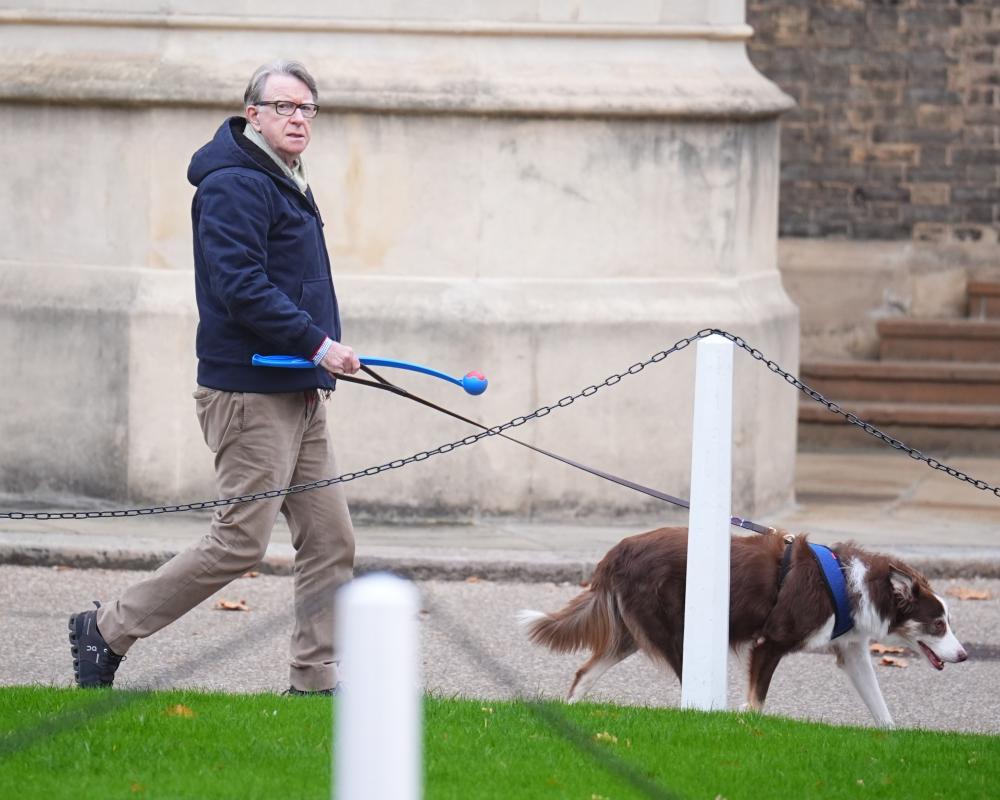
Peter Mandelson left his north London home within minutes of the publication of the new documents, the Press Association reports. He walked past waiting photographers and did not respond when they said hello.
How Mandelson as ambassador sought to arrange 'under radar' meeting involving ex-lobbying colleague and Trump adviser
Henry Dyer is a Guardian investigations correspondent.
Peter Mandelson sought to organise an “under the radar” meeting in Washington with an economic adviser to Donald Trump and a member of his former lobbying firm, Global Counsel. He did so while ambassador in April 2025 and still holding his shares in Global Counsel.
Mandelson wanted to hold a lunch to discuss “alternative options” to the World Trade Organization and on how “likeminded partners come to terms with China and its practices”.
After discussing dates with American counterparts, he forwarded the emails to a Global Counsel employee. He asked: “Do you have date preference for trade think in?”
Updated
How Mandelson's failure to sell his stake in lobbying firm after becoming ambassador concerned Foreign Office
Olly Robbins, the permanent secretary at the Foreign Office, was concerned that Peter Mandleson did not sell his shares in Global Counsel, the lobbying company he founded, when he was appointed ambassador, one letter in the file reveals.
It was sent in March, after Mandelson had been in post for more than a month. The Foreign Office thought the best solution to the conflict of interest this created would have been for Global Counsel to buy Mandelson out. But they refused to pay what Mandelson thought his shareholding was worth.
A few months later, as this continued to be a concern, Mandelson told colleagues in an email that Global Counsel should just “pull their fingers out and buy my shares”.
Mandelson's security vetting focused on his recent close contacts, not his 'whole life', No 10 told
Here is another email from Ian Collard. Sent to an official at No 10, it says that Mandelson’s vetting focused on his close contacts in recent years, which presumably addresses concerns about why the vetting process did not flag up the extent of the closeness to Jeffrey Epstein. This was sent in September, shortly after emails released in the US as part of the Epstein files showed that Mandelson had maintained a very close relationship with Epstein even after his first conviction for child sex offences.
That email is here:
I would note that the vetting system predominantly looks at one’s close contacts of recent years. It is not intended (in all areas of review at least) as a retrospective on someone’s whole life. I assume UKSV could explain this better, if required.
Updated
How security officials had concerns about Mandleson's 'overseas contacts'
Here is one document from the bundle. It is an email sent by Ian Collard, the chief property and security officer at the Foreign Office, after Peter Mandelson’s secruity vetting (DV – developed vetting) had been approved.
It shows that there were still concerns about his “overseas contacts” (ie, some of his foreign business friends), and that his accesss to the most sensitive information would depend on what was subsequently decided in relation to those.
A transcription of that second email is below:
From: Ian Collard *
Sent: 30 January 2025 10:12
To: Corin Robertson; JCS
Subject: Personal/LPMOFFICIAL-SENSITIVE - HR - MANAGEMENT
Dear Corin, *JCS (for Olly),
An update. This information is provided in strictest confidence, to respect vetting confidence principles, because Corin and Olly are directly in my line management chain as Chief Security Officer.
ESND have approved the DV clearance of Lord Mandelson. He was sent notification and his DV certificate by email (on Osprey) on the evening of 29 January 2025. It will be valid for five years.
As part of the usual clearance process, UKSV identified some areas in his application for ESND to review:
- I understand that Lord Mandelson’s private sector engagements are being managed by HRD and Legal Directorate through the conflict of interest process.
- With regard to personal conduct, I understand that Lord Mandelson has received a letter from Mervyn Thomas, informing him of his responsibilities as an FCDO employee, including under the Diplomatic Service Regulations.
- Matters pertaining to his overseas contacts will certainly be reviewed by the STRAP Authorities. I am unable to assure about the decision they will take. Their decision will determine the access that Lord Mandelson has to the most sensitive information and meetings.
ESND shared with Lord Mandelson (and separately with *JCS in Americas Directorate) the STRAP application forms, which we have asked Lord Mandelson to complete as an urgent priority. We will seek to expedite the processing of his application as soon as the completed forms are returned to us.
Best wishes,
Ian*Stars mark when a word has replaced one that appears to have been redacted
Updated
Cabinet Office publishes new tranche of Mandelson documents
The Cabinet Office has now published the latest tranche of Mandelson documents.
They are here.
The file runs to 88 pages.
We have already had two releases from the Mandelson files covered by the humble address.
Here is our live blog from the first release, in March.
And here is our live blog from June, when a much bigger tranche of documents was published.
Migration Observatory on what has caused fall in net migration
The Migration Observatory, a migration thinktank based at the University of Oxford, has released this statement about the reasons for the fall in net migration recorded in today’s figures. It says
The fall brings UK net migration below the “tens of thousands” level that was a key unfulfilled government target throughout the 2010s. The 62% fall over the past 12 months-from 204,000 on the year ending June 2025-results from lower immigration. Net migration has fallen over 90% since the peak of 944,000 in the year ending March 2023.
The data now cover two full years of data since the election, and close to a full year since Labour restricted work migration in July 2025. Immigration fell by 17% over the year, driven by fewer non-EU citizens in all major categories: work (down 25%), study (down 11%), family unification (down 30%), and asylum (down 22%). This follows 2025 restrictions making care workers and several mid-skilled jobs ineligible for work visas and suspending family reunion for refugees. The government has also raised compliance requirements for universities sponsoring international students.
Emigration also remained relatively high but fell by 4% (-28,000) compared to the year ending June 2025. High emigration contributes to the overall low net migration figure, but does not result directly from current government policy – most emigrants were non-citizens who previously migrated for work or study, including under the post-Brexit immigration system when immigration was unusually high. EU citizens, primarily people who arrived under free movement, also contributed to the emigration figures, with a negative net migration figure of 45,000.
Here are the figures from the ONS showing net migration figures by category – British nationals, EU+ (EU nationals, plus Norway, Iceland, Liechtenstein and Switzerland), and non-EU+ nationals.
Security minister Dan Jarvis to address MPs about further release of Mandelson papers
The Government is expected to publish more documents on the appointment of Peter Mandelson as US ambassador shortly, with the security minister set to address MPs at about 12.30pm, the Press Association reports. PA says:
Dan Jarvis will give a statement in the Commons on the latest release of papers which cover the vetting process into Mandelson before he was sent to Washington.
The disgraced peer was sacked from his position last year after more details emerged about his close links to paedophile financier Jeffrey Epstein.
The scandal played a significant role in the eventual resignation of Keir Starmer, with questions raised about how much the then-prime minister knew when he made the appointment.
More than 1,500 pages of documents were published earlier this year, including messages between Mandelson and cabinet ministers.
However, some were withheld at the request of the Metropolitan police as part of their investigation into the former Labour minister and spin doctor.
Mandelson was arrested in February on suspicion of misconduct in public office. No charges have been made. He has denied any allegations and is co-operating with police.
The Met has since informed the government the documents can be published without affecting their investigation.
In February, MPs voted for the papers to be released using a parliamentary mechanism known as a “humble address” and agreed that unredacted files would be first viewed by parliament’s intelligence and security committee (ISC) before being published.
The latest tranche of documents have been seen by the ISC and are now expected to be put before MPs.
Previous documents have shed light on messages between Mandelson and Labour cabinet ministers.
Former chief secretary to the prime minister, Darren Jones, had contacted the peer to tell him he had done a “great job” on the day of his sacking.
Meanwhile, work and pensions secretary Pat McFadden had complained to Lord Mandelson that Labour backbenchers were asking “who can we tax in order to pay benefits to others”.
Mandelson himself was seen to describe No 10 as “beleaguered and bereft”.
Irish PM says he's confident UK and EU will resolve outstanding tuition fees issue
Jakub Krupa writes the Guardian’s Europe live blog.
Irish prime minister Micheál Martin said he was confident the EU and the EU “will be in a position to resolve the outstanding issue” of tuition fees, as he hailed the deals on sanitary and phytosanitary rules, youth mobility, and energy.
Speaking at the beginning of the European Council meeting in Brussels, Martin said that “for the young people of Britain and the young people of Europe, this is a win-win.”
He said:
I often felt with Brexit that the young people of Britain perhaps were not consulted as strongly in terms of the implications for youth mobility.
Young people love to travel, and we don’t need to be placing barriers in the way of young people accessing education, accessing work. In Europe, that should never be the case and I believe we can facilitate that.
On SPS, he said the deal was “very good news for Ireland and the UK” as it will “remove barriers” affecting small to medium size companies in particular.
The deal on the emissions trading scheme also “makes sense” as having the UK and the EU both “in the European energy market also offers up opportunities for both sides”.
Martin was perhaps the only leader offering any sort of detailed answer on the EU-UK relations when asked about the hold-up caused by the lack of agreement on tuition fees, with most of them just delivering general platitudes about the EU-UK relationship post Brexit.
Czech Republic’s Andrej Babiš chuckled and said he thought it was a mistake for Britain to leave, but welcomed its involvement in peace talks on Ukraine, while Latvia’s Andris Kulbergs said he wasn’t across the detail on that issue.
Sweden’s Ulf Kristersson also said he was “not into details” on that point, but welcomed “a major step forward” in relations with Britain.
There is full coverage of the summit here.
Farage responds to sharp fall in net migration figures - by complaining too many Britons leaving the country
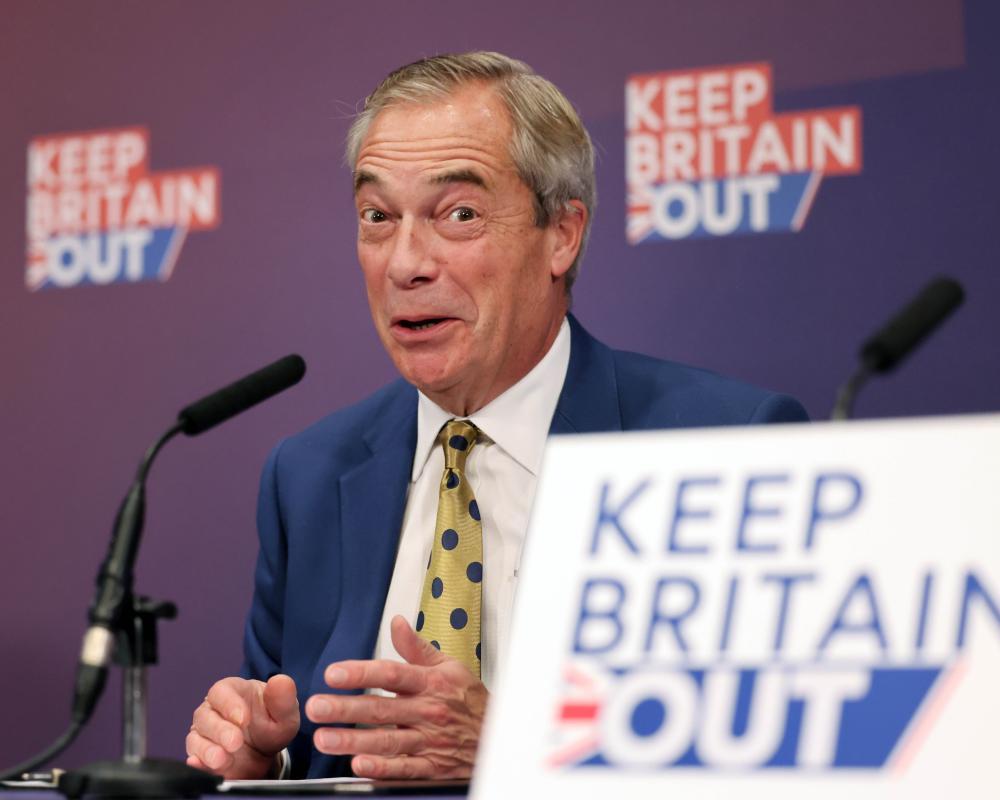
Nigel Farage, the Reform UK leader, has spent much of his career complaining about there being too much immigration. In response to today’s figures showing it has again fallen (see 9.38am), he is now complaining about – too much emigration by UK nationals! In a post on social media, he says:
Net emigration of British people over the last 10 years is nearly 1 million (941,000), we’ve lost a whole generation of young Brits and replaced them with small boat migrants.
Farage is wrong about the numbers. While a large number of people have arrived in the UK on small boats in recent years (217,000 since 2018, when the Home Office started compiling the figures), that is nowhere close to matching the net emigration figure he quotes.
His only social media comment on immigration (so far today) is to say that Reform UK would abolish the graduate visa system. He says:
It’s too hard for young people to get a job in Britain.
So Reform will ABOLISH the graduate visa.
It lets foreign students stay after their degree for two years, compete for entry-level jobs OR claim asylum!
The Tories created it. Labour kept it.
I’ll end it.
The Liberal Democrats are saying the UK needs a proper plan for immigration. This is from the party’s asylum and immigration spokesperson, Paul Kohler.
Britain needs to regain control of its immigration system after the chaos of Brexit. Yet sixteen years after David Cameron’s ‘tens of thousands’ pledge, six prime ministers and ten home secretaries have overseen wild swings in immigration numbers with net migration now set to fall below zero.
Britain faces serious demographic and economic challenges, and urgently needs a proper immigration plan to support our economy and public services.
Tories say net migration still too high
The Conservatives say net migration is still too high. Chris Philp, the shadow home secretary, has issued this statement about today’s figures.
The fall in net migration is mainly a result of changes made by the previous Conservative government. We now need to go even further with a legally binding annual cap, set by parliament, at a far lower level.
British and European people are leaving in their droves because of Labour’s high taxes whilst non-EU immigration remains far too high. British families are left to pay for it with lower wages, longer waits for a GP appointment and homes they cannot afford. Mass low-skilled immigration must end completely as it is bad for our economy and corrosive to our society.
Labour’s shameful U-turn on indefinite leave to remain throws open the door to early permanent settlement, benefits, and citizenship for low-skill migrants. Conservatives will take settlement away from those not making a contribution and they will be made to leave – no matter what Labour has promised them.
More Britons leaving UK than coming or returning, ONS figures show
More British nationals are estimated to have left the UK in the year to June 2026 (245,000) than moved to the country (109,000), the Press Association reports. PA says:
It was a similar picture for nationals from “EU-plus countries” – covering the 27 members of the EU plus Norway, Iceland, Liechtenstein and Switzerland – with a higher number emigrating from the UK (124,000) than immigrating (79,000), according to the ONS.
By contrast, more people from outside the EU moved to the UK in the year to June (550,000) than left (292,000).
The number of British nationals leaving the UK is estimated to have fallen slightly in recent years, with 245,000 in the year to June 2026, 251,000 in the year to June 2025 and 257,000 in the year to June 2024.
This is from Sunder Katwala, director of British Future, a thinktank focusing on race and immigration issues, on today’s net migration figures.
Figures showing net migration falling to its lowest level since 1997 will come as a surprise to most of the public, who thought immigration was still rising. It must now be time for the political and media debate to catch up and start a new phase of the debate about what happens next.
With numbers expected to keep falling, the government needs to ask what a sustainable level of immigration is, and how will they achieve it.
Whatever their views on the right level of immigration, any party that is serious about the issue should be able to commit to an annual ‘immigration budget’ process setting out trends, expectations and choices.
Andy Burnham’s Labour government could aim for a net migration ceiling of 250,000. But at the level announced today, the UK population is now shrinking – so a medium-term aim should be to stabilise net migration with a floor of 100,000 to avoid population decline. Reform and the Conservatives, who want net emigration, should set out what they would cut and how to manage the impacts.
Katwala is right about the public not realising that immigration is falling. Polling published just yesterday shows that many voters wrongly believe immigration is still rising, and that Reform UK supporters are most likely to think this.
How ONS explains steep fall in net migration
And this is how the ONS explains the fall in net migration in its report. Mainly it is because of a steep fall in the number of non-EU nationals coming to the UK, it says. This is a consequence of visa rules becoming much stricter. The last Conservative government first tightened the rules very significantly, and this crackdown has largely continued under Labour.
Another factor is more Britons, and EU nationals, leaving the UK than entering or returning.
The ONS says:
While people arriving from outside the EU continued to add to the population, non-EU+ provisional net migration fell to 258,000 in YE [year ending] June 2026, down from 379,000 a year earlier.
The fall in the net migration of non-EU+ nationals was the main reason for the latest decrease in overall net migration. It was driven by non-EU+ immigration falling by more than 100,000, while emigration remained broadly stable. Compared with YE June 2025, non-EU+ arrivals for work-related reasons fell by 45,000, asylum-related reasons fell by 19,000 and study-related reasons fell by 33,000.
Unlike non-EU+ nationals, more British and EU+ nationals left the UK long term than arrived. Provisional net migration for British nationals remained broadly stable at negative 137,000, while EU+ net migration was negative 45,000 and has been negative since YE June 2022.
And this chart from the ONS report shows how immigration, emigration and net migration figures have changed since 2012.
How net migration ends up at 77,000, according to ONS
This chart from the ONS report explains how the net migration figure ends up at 77,000.
Net migration down to just 77,000 in year ending June 2026, ONS says
Net migration in the year ending June 2026 fell to just 77,000, the Office for National Statistics says.
In its report just out, it says:
Our provisional estimates show long-term international net migration stood at 77,000 in year ending (YE) June 2026 and has more than halved compared with YE June 2025 (updated to 204,000). Excluding the coronavirus (Covid-19) pandemic, when international travel restrictions were in place, this is the lowest recorded net migration estimate since 1997 (when we used surveys to measure migration rather than administrative data).
Before the 2010 general election, David Cameron said he wanted to get net migration below 100,000, and successive Tory leaders also repeated that target. Sixteen years later, after a period when annual net migration rose close to one million, the Cameron target has finally been achieved.
Updated
Government set to publish further documents relating to Peter Mandelson's appointment as ambassador to US
We should get the latest Mandelson documents (see 9.17am) around lunchtime. The Commons authorities have announced there will be two ministerial statements today. At around 11.30pm Polly Billington, an energy minister, will make a statement about the latest price cap announced by Ofgem yesterday. And, about an hour later, Dan Jarvis, the security minister, will make a statement described as an “update on the government response to the Peter Mandelson humble address motion”.
Sam Coates from Sky News has posted this on social media about what the new documents might reveal.
In today’s Mandelson files, I’m expecting a revealing look into the desperate attempts by the civil service to manage the political curveball they’d been thrown by Keir Starmer and Morgan McSweeny.
Mandelson was a political appointment, pretty much forced through by No 10 with nobody listening to the warnings. Keir Starmer’s team were not interested in the problems with this appointment.
So I believe you’ll see:
civil service emails about how to manage the conflict of interest with his shares in Global Counsel.
Emails to Peter Mandelson as official tried - as was their job - to help him at the height of the crisis.
And potentially how Mandelson was helping official figures directly with Global Counsel outside of the watchful eye of the diplomatic service.
Mandelson denies wrongdoing
Ministers to publish further details of UK-EU deals, including confirmation of 'Farage penalty' clause if future government scraps agreement
Good morning. On Friday last week Andy Burnham was in Brussels to announce a reset deal with the EU. Today the debate will be revived as we get to read the small print.
We are getting three documents that should help experts assess the merits, or otherwise, of the deal. They are: the text of the legislation implementing the deal, formally known as the European partnership bill, but which ministers are calling the cutting costs bill; the legal text of the deal on food standards, which runs about 200 pages; and the legal text of the deal on emissions trading.
Faisal Islam, the BBC’s economics editor, has more here on what the legal text will show. He says it will confirm that the food deal has “a 10-year termination clause that would mean if one party ended the agreement, they would have to pay to rebuild border checks infrastructure, which will be significantly scaled back as part of the new deal”. Termination clauses like this are not unusual in trade deals, but this one has been dubbed the “Farage clause” because it is partly inspired by the EU’s worry about Reform UK winning the next election and ripping up the deal. It could be called the Badenoch clause too, because the Tories also want to scrap the deal, but Farage is better known in Brussels, where he is considered a more formidable enemy than the Tory leader.
The government says its European partnership bill will “save industry millions by cutting red tape, lifting bans on iconic British exports, and exempting £6.5bn of British exports from EU carbon taxes”.
But the Conservatives are claiming any savings for customers are minimal. Here is an extract from the news release issued overnight.
Analysis by the Conservatives of the government’s own estimates shows that the savings from the sanitary and phytosanitary (SPS) deal will amount to just pennies on everyday essentials, despite Andy Burnham promising the deal would bring down food prices.
Beef prices have risen by 27.8 per cent since Labour took office, adding £1.22 to a pack of beef mince. Yet the government’s SPS deal would save shoppers just over 1p on a £5.60 pack.
Pork prices have increased by 9.6 per cent, adding 29p to a pack of pork loin steaks, while the deal would cut the price by barely 1p. A six-pack of tomatoes would become just half a penny cheaper, while a head of broccoli would fall by less than a third of a penny.
Currently half of all the pickled gherkins Britain imports come from the EU, yet on the government’s figures its EU deal will take just over half a penny off a £1.40 jar of gherkins. However, this would be on top of the government’s generous 4p cut announced at the budget.
If you don’t fancy reading 200 pages of legal text, there might be some more juicy documents coming from the government today when it publishes a fresh tranche of documents required by the humble address on Peter Mandelson. These are the papers relating to his appointment as ambassador to the US. Most documents have already been released but some – particularly those relating to what Mandelson told No 10 when it asked specifically about his links to Jeffrey Epstein – were held back at the request of the police (who are still pondering whether to charge him with misconduct in public office in relation to leaks to Epstein). Now the government is able to release a further tranche. They will come at some point today, but we are not sure when.
Here is the agenda for the day.
9.25am: Karin Smyth, the health minister, speaks at the NHS Alliance conference. Sir Jim Mackey, the outgoing NHS England chief executive, is also speaking, at 1.30pm.
9.30am: The Office for National Statistics publishes the latest net immigration figures. At the same time, the Home Office is publishing its latest quarterly asylum figures.
9.30am: The Ministry of Housing, Communities and Local Government publishes its latest homelessness figures.
9.30am: The ONS publishes figures for young people not in education, employment or training (Neet).
Morning: Kemi Badenoch is on a visit in Sidcup.
Morning: Wes Streeting, the defence secretary, is on a visit in Plymouth.
11.30am: Downing Street holds a lobby briefing.
Around lunchtime: The government is due to publish its European partnership bill, the legislation enacting the three deals with the EU announced last week. The government is also publishing the legal text of two of those deals, the food standards (SPS, or sanitary and phytosanitary) one, and the emissions trading one.
2pm: Friends, relatives and colleagues will attend a memorial service for Ann Widdecombe at Westminster Cathedral.
And at some point today the government is due to release those Mandelson papers.
I’m afraid we are no longer able to have comments open below the line every day on this blog. If you want to contact me, please email politics.live@theguardian.com. You can use this email to flag up corrections, comments for publication, questions or complaints.
Updated