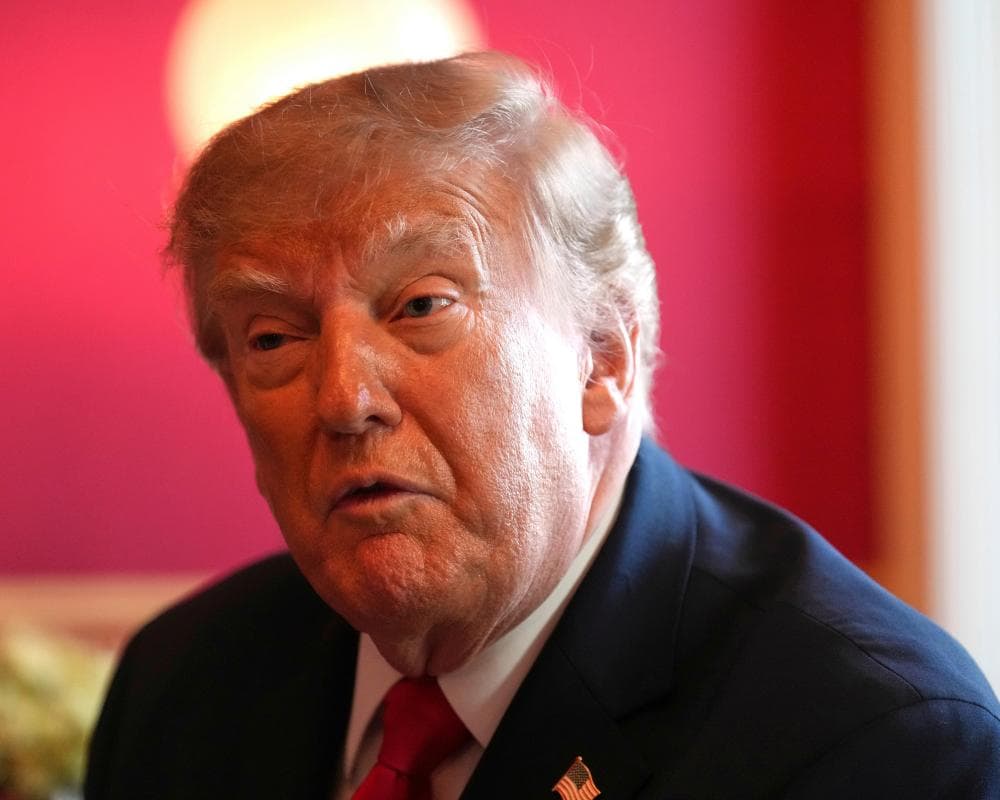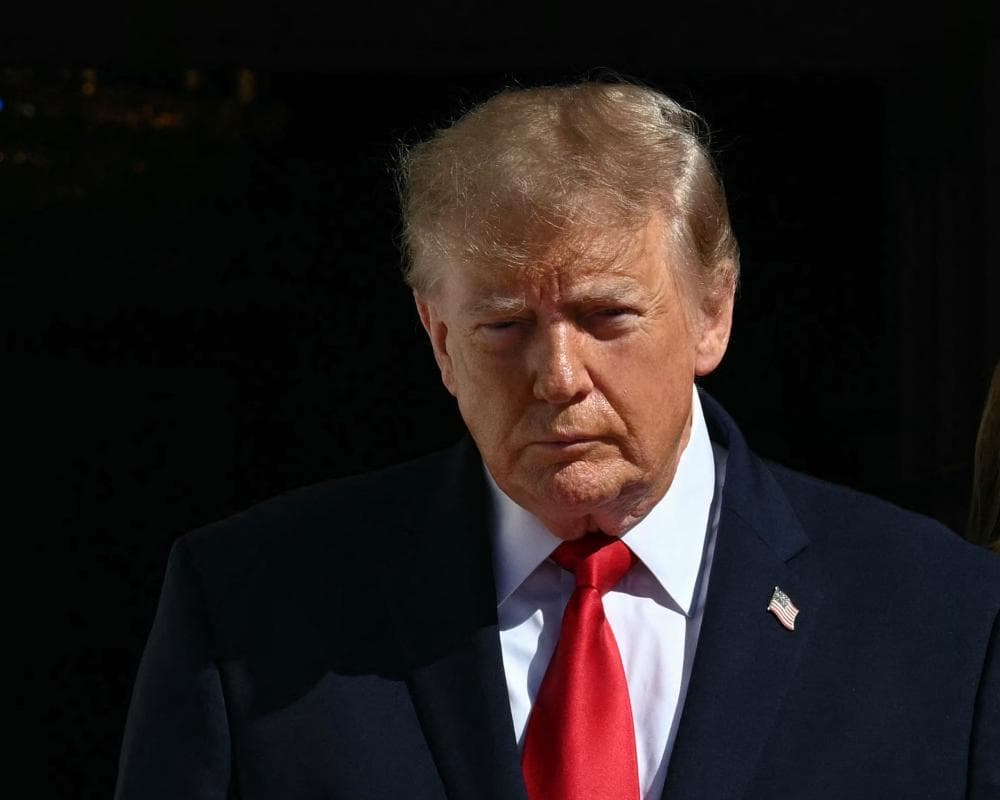
Donald Trump is canceling nearly $1b in spending approved by Congress, with most of the cuts focused on health and human services programs that serve refugees and unaccompanied minors accused of being in the country illegally, per the AP.
The White House is using a rare and contested power to axe the funding. The Office of Management and Budget described the funding cut as focused on “the most harmful government spending.”
Republican senator Susan Collins, chair of the Senate appropriations committee, said in a statement that the action came “without warning or consultation.”
“Any effort to rescind appropriated funds without congressional approval is a clear violation of the law,” Collins wrote in a post on social media. “I will work with my colleagues to address these illegal actions.”
White House blocks CNN from Tennessee trip on Air Force One - report
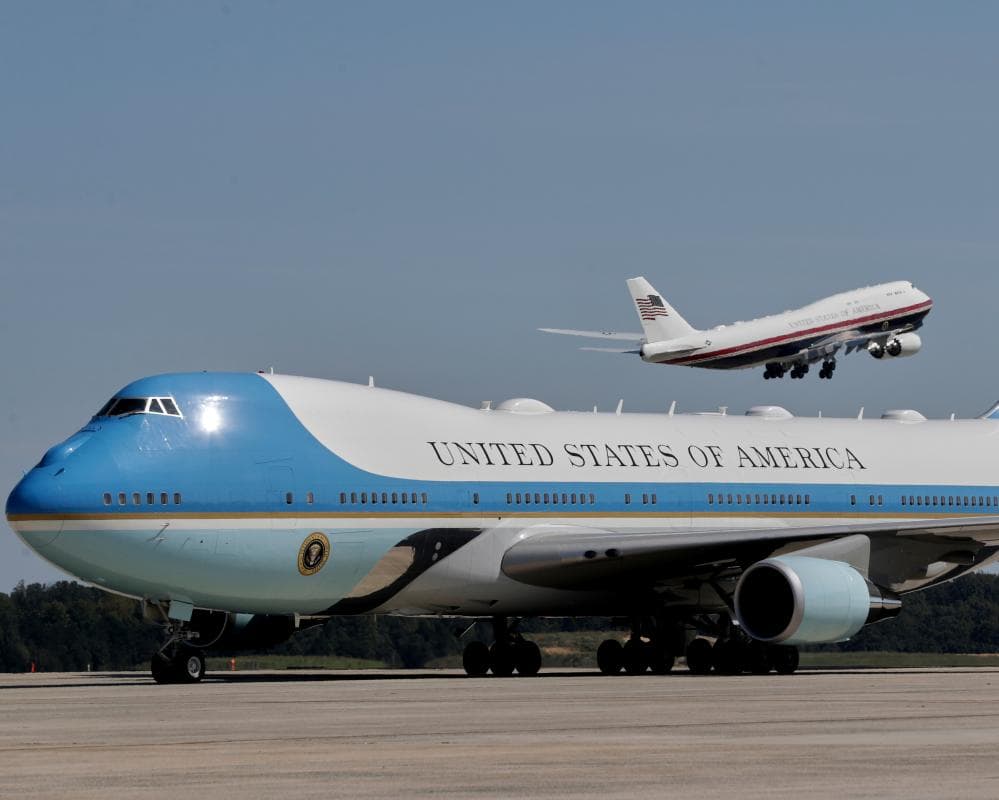
The White House blocked CNN from traveling with President Donald Trump on Air Force One for a Saturday trip to Knoxville, Tennessee, the Washington Post reports.
The report comes after CNN, MS NOW and Politico were banned from White House grounds last week. A federal judge temporarily restored access early Thursday, but journalists for CNN and MS Now were denied access to the White House state dinner in honor of Xi Jinping later that day.
US television networks resumed coverage of President Donald Trump’s White House events on Friday.
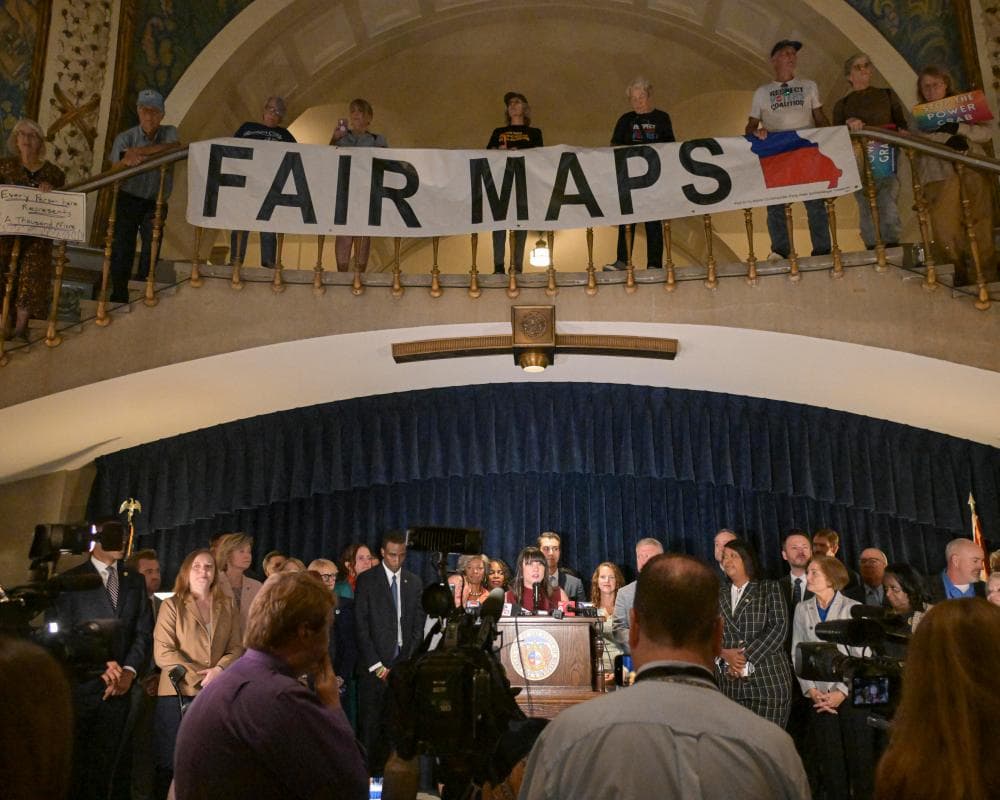
Following the supreme court’s decision to turn away an attempt to use a new Missouri congressional map backed by Donald Trump, challengers of the map said “the courts have now made clear that voters — not politicians — decide who represents them.”
“This case should never have reached the Supreme Court three times, but we’re glad that the final outcome of these cases is Missourians having the opportunity to vote under a lawful map this fall,” said Mark Gaber, senior director of redistricting at Campaign Legal Center.
“The people of Missouri have the right to go to the polls and reject the State’s attempt to gerrymander their congressional districts, and the Supreme Court has now confirmed, for the third time in as many weeks, that the State’s unlawful districts cannot be used this November,” said Ming Cheung, senior staff attorney with the ACLU’s Voting Rights Project. “Voting has already begun, and all efforts to cause confusion and chaos must cease. This saga began in 2025 when politicians tried to rig the map and take away representation from Kansas City residents, but the courts have now made clear that voters — not politicians — decide who represents them.”
Campaign Legal Center, the ACLU of Missouri and ACLU Voting Rights Project filed amicus briefs at the Missouri Supreme Court.
Here’s more on the supreme court’s decision:
Related: Supreme court blocks Trump-backed Missouri congressional map from use in midterms
The White House on Friday defended its decision to use taxpayer funds to buy airtime on Fox News for a White House-produced, pro-Trump ad that some Democrats said could be illegal government propaganda aimed at influencing voters in the upcoming midterm elections.
In a lengthy statement sent to news outlets, the White House press office insisted that versions of the ad, which feature audio of Trump urging voters to help him “defeat communism” and a whirlwind video review of his second term, were simply routine “public service announcements” like those produced by previous administrations.
However, while the Trump administration ad features the president in almost every frame, and includes words of praise for him offered by a prominent supporter during the 2024 campaign, none of the advertising from three prior administrations the White House called similar featured any partisan messaging or showed images of Trump’s predecessors.
By contrast, the 30-second version of the pro-Trump ad broadcast on Fox News this week uses audio of Trump telling supporters in Las Vegas last month: “Together we will defeat communism, socialism and Marxism in America,” and a rapid-fire montage of images of Trump beneath the onscreen text: “America will never be a communist country,” as a chorus sings the words “love me”, taken from a song of that name by JMSN. In the original speech, Trump explicitly identified the enemy as “Dumocrat communists in Congress”.
The last 10 seconds of the ad include text at the bottom the screen saying: “Paid for by the US government.”
The ad aired on Fox News this week as Trump hosted the leader of the world’s largest communist nation, China, for a lavish state visit.
Related: White House claims pro-Trump ad it paid Fox to air was ‘public service announcement’
The Department of Homeland Security (DHS) wrongly identified 185 people on Nevada’s voter rolls as non-citizens, state officials said this week, escalating concerns over the shoddy methodology the government is using to raise fear about non-citizen voting ahead of the midterm elections.
In July, Donald Trump gave a speech saying DHS had found a combined 278,000 non-citizens on the rolls in Nevada, California, Pennsylvania and New Jersey. Follow-up letters to each of those states weakened the claim, saying there only could be as many as 278,000 non-citizens on the rolls, including up to 15,903 in Nevada.
In August, DHS officials told staffers in the Nevada secretary of state’s office that they had reviewed the numbers and confirmed only 185 were non-citizens. DHS officials said they still needed to review more than 14,000 records.
But on Wednesday, Nevada election officials said they had reviewed the 185 records DHS sent them and confirmed they were US citizens.
“As for the 185 individuals, our records indicate that they were citizens. You have provided nothing of substance to suggest otherwise,” Greg Ott, a deputy attorney general, wrote to DHS this week in an email obtained by the Guardian through a public records request. The message was first reported by the New York Times and Nevada Independent.
Related: Nearly 200 people wrongly identified on Nevada’s voter rolls as non-citizens
In a statement from the Democratic Congressional Campaign Committee, chair Suzan DelBene said the supreme court’s decision to lift restrictions on a federal voter database before November’s elections is “a lever for Republicans to pull to misinform and scare away legal voters.”
“Republicans are running scared,” said DelBene. “They know they’ve lost the American people, and are resorting to doing everything they can to stop US citizens from casting ballots.”
“At a minimum, today’s ruling is a lever for Republicans to pull to misinform and scare away legal voters from exercising their constitutional right,” DelBene added. “At its worst, it may inspire sinister Republican officials to try and illegally purge swaths of American citizens off the voter rolls weeks before the election. It won’t work, and the American people won’t stand for it.”
My colleague George Chidi reported on the supreme court’s decision:
Related: US supreme court lifts restrictions on controversial voter database
US supreme court rejects Republican-drawn map in Missouri for third time
The Supreme Court has blocked Missouri for a third time from using a Republican-drawn congressional map in the November midterm elections, per the AP.
The justices granted a request by the map’s opponents to suspend lower court decisions that had required the reconfigured US House of Representatives district boundaries to be used in the 3 November midterm elections.
The back-and-forth is occurring as absentee voting is already underway in Missouri.
Updated
President Donald Trump is reportedly visiting Alabama for a political rally next week, Politico reports.
It’s a questionable move given the high stakes of this year’s midterm elections. With polls showing Democratic candidates holding a lead, rallying in a reliably red state like Alabama is a curious move.
Two people who spoke with Politico, which reported the news on Thursday, said the event is scheduled for 2 October in Mobile, Alabama, but the plans have not yet been finalized and are subject to change.
In a letter to Donald Trump, a group of more than a dozen senators on both sides of the aisle questioned Russian President Vladimir Putin’s invitation to the December G20 summit scheduled in Miami, expressing “serious concern” as the Russia-Ukraine war continues.
Senators including Mitch McConnell, John Cornyn, Sheldon Whitehouse, Roger Wicker, among others, signed the letter.
“We write to express our serious concern regarding reports that Russian President Vladimir Putin has been invited to attend the Group of Twenty (G20) Leaders’ Summit on December 14 and 15 in Miami, Florida,” reads the letter.
“President Putin bears sole responsibility for launching Russia’s full-scale war of aggression against Ukraine,” the letter continues. “Allowing him to participate in a G20 Summit in the United States raises serious concerns about legitimizing and normalizing a government that continues to attack Ukrainian civilian targets every day.”
The invitation was announced by Marco Rubio, the US secretary of state, during a press conference in New York on Wednesday.
Moments after Dale Caldwell resigned from his position as lieutenant governor of New Jersey, his lawyer Thomas Calcagni said in a statement that they would “continue to forcefully challenge the report” that accuses Caldwell of sexually harassing a staffer and violating state ethics rules.
Dr. Caldwell’s resignation, submitted to put an end to the targeted campaign to discredit his character, does not in any way diminish our outrage concerning the investigative process and its specious findings,” Calcagni said. “Counsel is fully exploring all legal remedies to ensure a true, balanced, and unbiased record.”
My colleague Ariana Baio is reporting the latest details on Caldwell’s resignation:
Related: New Jersey lieutenant governor resigns after sexual harassment accusation
Analysis: Pomp over progress in Xi’s US summit with Trump is a win for China
If the Beijing meeting between Donald Trump and Xi Jinping in May was the “stalemate summit”, the second round of talks between the presidents of the US and China this week seemed to give up entirely on the idea of breakthroughs.
Instead, it was described as a celebration of “diplotainment” rather than diplomacy, where pomp prevailed over progress and where one of the main outcomes was the news that two giant pandas would soon be sent from China to Atlanta zoo.
Trump rolled out the red carpet for Xi’s arrival on Wednesday and broke with decades of precedent to meet the Chinese leader at Joint Base Andrews. Thus began a three-day state visit that involved a tour of Trump’s new helipad and the Marine One helicopter, and a 90-minute meeting that Trump described as “great” and that revealed, according to Trump, that Xi “has great interest in granite”.
“The biggest takeaway is that Trump has been displaying an extraordinary degree of deference to Xi Jinping,” said Julian Gewirtz, who served as a senior China official in the Biden administration.
But what of actual substance? Expectations going into the summit were low. But the outcomes somehow still fell short.
One of the biggest issues in the US-China relationship is trade. Last year, as Trump unveiled successive rounds of tariffs on Chinese goods, the White House accused China of unfair practices that it said contributed to the loss of 3.7m US jobs and inflated the trade deficit. The tariffs were supposed to suppress the volume of Chinese imports to the US and put pressure on China.
To some degree, they worked. The US trade deficit with China in 2025 fell to $200bn, down from nearly $300bn in 2024. But experts have noted that some of this shortfall is made up for by Chinese goods being shipped to the US via third countries, a trend underlined by the fact that China’s trade surplus surpassed a record $1tn last year.
With the US and China accounting for 43% of global GDP, their trade war has far-reaching implications for the world economy. So it was a relief not just to Beijing and to US consumers when the two countries agreed a temporary truce in Busan last year.
That truce is due to expire in November. China, where the economy is heavily reliant on exports, was reported to be pushing for the truce to be extended until the end of Trump’s term, in January 2029.
On Thursday, it was revealed that Xi’s first state visit to the US in more than a decade had resulted in a mere two-month extension. That reflects “the lack of preparation for this summit beyond the pomp and circumstance”, said Neil Thomas, a senior fellow at the Asia Society.
William Yang, a senior analyst at the International Crisis Group, said: “This summit largely achieved symbolism and ritualism over substance. That is very clear.” The short extension “reflects the level of fundamental differences that still exist between the two countries over a variety of issues”.
China’s most powerful response to Trump’s tariffs was the decision to block the export of rare earths, critical minerals vital to US manufacturing and military supply chains. That seemed to skewer Trump’s leverage over China.
Gewirtz said: “Beijing’s retaliation … seems to have had a profound effect on [Trump] and his administration’s willingness to take risks vis-a-vis China.”
Apart from the trade war agreement, the summit failed to achieve any meaningful progress on thorny issues in the US-China relationship such as artificial intelligence, Taiwan, the wars in Iran and Ukraine, and human rights.
On Taiwan, which Beijing considers to be the most important issue in the relationship, Xi put pressure on Trump to weaken the US’s support for the self-governing island that China claims as its own. According to the Chinese readout of the Xi-Trump meeting, Xi told Trump he hoped “the US side will adhere to the correct position of opposing Taiwan independence”.
For the US to state that it “opposes” Taiwanese independence would be a rhetorical shift from the current position of “does not support” such a claim, and would be a move welcomed by Beijing. Trump has not yet commented on whether he agreed to such a statement. But it does seem he is no closer to approving a $14bn arms sale package for Taiwan, a sale that Beijing would like to see disappear completely.
On Thursday, US Senate Democrats lambasted Trump for opting for “pageantry over purpose” and for failing to deliver agreements on “the economic and security issues that will shape America’s future”. Trump ignored recent warnings about the dangers posed by AI, writing on social media on Thursday: “I want to leave it exactly where it is,” adding: “That is China’s position also.”
For China, the lack of big news from the visit is a win in itself. “The summit went excellently from the Chinese perspective,” Thomas said. Xi “got a huge amount of respect from the American president, the full state visit treatment [and] really great images beaming back to China of the Chinese and the American presidents interacting as peers on the global stage, without having to make any meaningful concessions or compromises.”
After release of report detailing ethics violations, New Jersey's lieutenant governor steps down
New Jersey Governor Mikie Sherrill announced this afternoon that Dale Caldwell, her lieutenant governor, had resigned in light of an ethics probe that concluded he had sexually harassed a staffer and violated ethics rules.
Caldwell, a pastor and former university president with a long career in education, was found to have broken the rules of his office when he lobbied for a promotion for a government employee who he was in a romantic relationship with, and brought guests to ticketed events without paying, according to the report commissioned by Sherrill’s office . He also allegedly made romantic advances on the friend of a young female staffer in that staffer’s presence, and, when declined, told the staffer: “you young women are looking for young sperm.”
The findings of that report prompted Sherrill, a Democrat, to request Caldwell’s resignation on Thursday when she publicized the report’s findings.
In an interview with The New York Times before Sherrill’s press conference, Caldwell insisted he was not resigning because of the report, whose contents he disputed.
“It’s false,” Caldwell said of the report to the outlet. “I’m resigning because I don’t want to be a distraction to the administration.”
Updated
As Xi departs DC, Trump confirms future meetings in China and Florida
In a post to social media shortly after Xi Jinping’s departure from the White House, Trump confirmed that he planned to meet twice more with the Chinese president this year.
Trump said he first planned to meet President Xi in China during November’s Asia-Pacific Economic Cooperation summit, scheduled to take place in Shenzhen. They’ll meet again in December during the G20 in Miami.
“The meeting was one of Friendship, Strength, and Success, for both China and the USA,” Trump said.
He added: “Much has been, and will be, accomplished. I look forward to our next meeting!”
The statement is a friendly coda to Xi’s first official state visit (the most formal designation such a diplomatic trip can receive) since the tail end of the Obama administration, in which Trump gave the Chinese leader an uncharacteristically warm welcome, including a red carpet greeting on the tarmac and a lavish dinner filled with dignitaries, Trump allies and business executives.
The pleasantries may have papered over long-simmering tensions between the two countries, but what conclusions, if any, were reached during the pair’s White House talks remains unclear.
Trump has said the two sides discussed the Iran war, as the administration seeks China’s buy-in to a plan to economically isolate the country. Artificial intelligence was also a subject of conversation (Xi, Trump said in an earlier post, seemed on board with his push to rebrand the technology as “SI,” or “super intelligence.”)
Updated
Ketanji Brown Jackson criticizes supreme court’s handling of emergency docket
US supreme court justice Ketanji Brown Jackson acknowledged serious concerns about her colleagues’ handling of emergency requests, the method Donald Trump often uses to seek approval from the court.
Jackson, one of the three liberal members of the supreme court, criticized the justices’ willingness to issue rulings via the “shadow docket”, saying it undermines the public’s faith in the judicial system.
“There is a serious concern that the supreme court’s modern stay practices are having a disruptive and potentially corrosive effect,” Jackson told faculty and students at the University of the District of Columbia’s David A Clarke school of law on Thursday.
Her comments came just hours after the Trump administration filed its latest emergency request – this time asking justices to allow officials to continue deporting immigrants to countries other than their own.
The emergency docket, sometimes also referred to as the “shadow docket”, is where plaintiffs can request immediate relief from the supreme court in consequential cases.
Justices can quickly grant or dismiss requests without conducting the same legal review that is typically required in merit cases or providing a lengthy explanation to the public.
The Trump administration has used the method to rapidly push forward the US president’s agenda. Since returning to office in January 2025, the administration has filed more than 30 emergency requests. Many have been granted.
Via emergency requests, the conservative wing of the supreme court has allowed Trump to temporarily end protections for migrants seeking asylum, eliminate transgender rights, roll back environmental protections, fire the officials in charge of independent federal agencies and more.
The justices have faced criticism for their handling of emergency requests from members of Congress and the public.
However, in July, justice Elena Kagan, another member of the liberal wing of the court, told Congress that she thought they were improving its handling of requests by providing some justification.
Jackson pointed to that on Thursday, telling the audience that while the court “began to explain more”, it was “still not the full kind of explanation” that cases receive on the merits docket. “If we’re not careful, the emergency docket can and will become an end-run around the standard review process,” she added.
As Jackson critiqued the court’s current methods, which have become more prominent under the second Trump administration, three of her colleagues dined with Trump and Chinese president Xi Jinping at the White House.
Chief justice John Roberts and justices Brett Kavanaugh and Amy Coney Barrett joined other officials for the state dinner to welcome Xi.
Updated
Analysis: Trump faces tough choices as Iran dangles deal to reopen strait of Hormuz before US midterms
Diplomatic editor
Iran’s seven-day timetable to reopen the strait of Hormuz and start talks on its nuclear programme has been pitched as a deal that could rapidly extricate Donald Trump from a political crisis but requires the US president to make difficult concessions.
In the five days left before the proposed reopening of the strait, which is expected to relieve pressure on global energy markets, Trump would need to lift Iranian asset freezes, permit Iran to export its oil and, probably most difficult of all, order Benjamin Netanyahu to end Israel’s attacks on Hezbollah in Lebanon, thus achieving the “ceasefire on all fronts”.
Iranian diplomats in New York said they thought a three-hour meeting earlier this week with the US envoy Steve Witkoff in which they laid out the seven-day plan was productive, but were doubtful the US would deliver.
Iran nevertheless feels it has done the diplomatic spadework, taking the proposal to China for endorsement and ensuring that Oman, located on the south side of the strait, was also on board.
The foreign minister, Abbas Araghchi, explained that the idea was to take the elements of the Iran-US memorandum of understanding that Trump signed in June and repackage and accelerate the process since, as they understood it, Trump had come to hate the MoU.
“The conditions we have asked the US to meet is nothing new, nothing more than what was already in the Islamabad agreement, which was signed by the US president,” Araghchi said. But what is new is the speed.
In the first four to five days under this timetable, the US would have to lift the naval blockade on Iran’s oil ports, restore the waiver that lifted sanctions on Iran’s oil exports, end the war on all fronts and permit the release of some of Iran’s frozen assets.
On the sixth day, the strait of Hormuz would be reopened by Iran, with ships using a new route designated by Oman and Iran. And on the next day, negotiations would start on the future of Iran’s civil nuclear programme, including a protocol to allow UN nuclear inspectors back in to look at Iran’s damaged sites and the stockpile of highly enriched uranium. This accelerates the point at which nuclear talks would begin, from 60 days in the June agreement to seven.
It is a difficult deal for Trump to swallow since the strait would reopen largely on Iran’s terms, with the new route predominantly going through Iranian waters. Saudi Arabia is also concerned that the route deal is bilateral between Iran and Oman, and not with the Gulf states as joint signatories.
Trump says he has a choice to make between the annihilation of Iran and engagement – an engagement that, he says with typical hyperbole, could make Iran one of the great countries of the world. In reality, the judgment he has to make is more prosaic. Is he prepared to go back to war with Iran after the midterms and, if not, does he believe the US can squeeze the Iranian economy so hard that the leadership will succumb.
Related: Trump faces tough choices as Iran dangles deal to reopen Hormuz before US midterms
White House television pool resumes after banned news outlets regain access
Earlier today, the primary White House television pool resumed filming administration events the day after a court ruling temporarily overturned a Trump administration ban on CNN.
In an unprecedented move, the pool – which also includes NBC, ABC, CBS and Fox News – ceased recording and transmitting White House footage on Monday, in solidarity with CNN, MS Now and Politico, which had been banned by Trump from the building over what he said was “their constant ‘reporting’ FAKE NEWS.”
The decision meant that, for much of this week, there was no high-quality pool footage of White House events and the president’s movements, though some smaller outlets attempted to provide coverage.
With the pool still inactive yesterday afternoon, that meant that a significant presidential event, a summit with Xi Jinping, China’s president, did not receive video coverage on the leading television networks. ABC had been listed as the TV pooler for the day, but held off until the network received assurances that CNN would be let back into the pool.
Tensions between the media and the administration were further exacerbated yesterday evening when journalists for CNN and MS Now were denied access to the White House state dinner in honor of Xi. The journalists were blocked despite a ruling earlier in the day from a federal judge who granted a request by CNN, MS Now and Politico to force the White House to restore their access for the next two weeks while the case plays out.
Although television networks remain apprehensive, a producer for CBS News confirmed that the network would be serving as the TV pooler for the day as scheduled, according to an internal note obtained by the Guardian.
“The plan is to return covering the President in a normal capacity with a full crew,” the note read, with the pool covering Trump and Xi arriving at the South Portico for tea and a tour of the National Archives.
Pamela Brown, a CNN anchor, told viewers this morning:
CNN’s access to the White House has been restored, and the TV pool appears to be functioning as normal.
The resumption ends – for now – an extraordinary standoff between the US’s biggest media companies and the Trump administration that led to an effective TV blackout of coverage of the president during the United Nations general assembly.
Related: White House television pool resumes after banned news outlets regain access
US supreme court allows Trump administration to use revamped federal voter eligibility database for now
The US supreme court has lifted restrictions on a controversial federal voter database before November’s elections, granting Donald Trump a temporary win in his aggressive campaign against non-citizen voting.
The emergency order allows states, for now, to use the Department of Homeland Security program, called Systematic Alien Verification for Entitlements, or SAVE, in their efforts to verify the eligibility of voters on their rolls.
The court’s three liberal justices publicly dissented from the decision.
The order puts on hold a federal judge’s June ruling that had deemed the Trump administration’s recently revamped version of SAVE illegal. US district court judge Sparkle L. Sooknanan had blocked the use of the tool, saying it violated Americans’ privacy rights and could result in voters being wrongly removed from the rolls.
A federal appeals court let her order stand.
But the supreme court majority found that a 1996 law explicitly allows DHS to get information about citizenship and immigration from other federal agencies. The federal government also has “an obligation to respond” to states seeking to verify citizenship.
“The order below prevents the Federal Government from using the program it believes is best suited to the task,” the majority wrote in the unsigned order.
Justice Ketanji Brown Jackson dissented, joined by Justices Elena Kagan and Sonia Sotomayor. The database has long been seen to fall under federal privacy laws, she wrote, and there are real risks that legitimate voter registrations could be mistakenly revoked.
Jackson wrote:
The harm caused by burdening or disenfranchising even a few lawful voters outweighs the nonexistent harm that the Government experiences when it is prevented from taking an action that it likely lacks the authority to take.
The plaintiffs and counsel team in the case called the ruling “profoundly disappointing” and said it puts “millions of Americans at risk of being unlawfully targeted by the administration’s unreliable voter purge database” before the midterms.
“However, this case is not over,” their statement read, as quoted by the Associated Press. “The D.C. district court ruled that the expanded SAVE program violated multiple laws. We will be doing everything in our power to protect Americans’ voting and privacy rights by ensuring that the district court decision stands.”
Trump says he and Xi Jinping discussed the war in Iran, and raises possibility of future visits
During President Trump and Xi Jinping’s shared tour of the National Archives, Trump said that he and the Chinese president had discussed the war in Iran.
“We did,” Trump said, when asked about the subject by a reporter during a tour of the National Archives. In response to a follow-up question about what progress had been made, he added: “I think we’re gonna do great.”
Earlier this morning, David Perdue, US ambassador to China, said that Trump had shared with Xi during their White House meeting Thursday that it would be “unacceptable” for China to support Iran during the US military campaign against it.
During the brief tour of the National Archives, Trump and Xi viewed the Declaration of Independence, Constitution and Bill of Rights.
The warm rapport between the two men persisted through the final day of the visit, with Trump saying that he and Xi were together “charting the course for the great ship of China and US relations”.
Earlier, during their meeting for tea at the White House, Trump seemed to welcome an invitation to visit Xi in China, possibly at the Asia-Pacific Economic Cooperation meeting in Shenzhen in November.
“We will.” Trump said in response to the invite. “And we’ll be speaking a lot.”
Updated
Trump’s remark during tea with Xi Jinping that farmers would be “very happy” about his talks with China comes as the GOP, staring down the midterm elections, worry about losing ground with their rural voters.
Top Republicans have in recent days pressed the president to take action to bring down the price of diesel, surging due to the Iran war’s disruptions to the international fuel supply, which has hit farmers especially hard. Those calls have led the administration to weight an embargo of exports of diesel fuel from the US.
Xi Jinping and Trump back together for final day of state visit
Xi Jinping and his wife are back at the White House for the final day of the Chinese president’s pageantry-filled visit to Washington, where President Trump has given him an unexpectedly warm welcome.
The itinerary for the final day of Xi’s visit – which included a red carpet welcome on the tarmac on Wednesday, then a full day of talks followed by a lavish state dinner on Thursday – included an appointment for tea at the White House, followed by a tour of the National Archives, where the nation’s founding documents are on display.
While Trump and the first lady shared tea with Mr. Xi and his wife, Peng Liyuan, Trump characterized his meetings with the Chinese President as productive and a net benefit for both countries.
“We’ve made great strides,” he said.
Details on the exact contents of their discussions were scarce, but Trump said that American farmers would “be very happy” with the outcome.
He continued: “America is very happy about this visit and I’m sure China is very happy also.”
Updated
Pope Leo, responding to Trump's White House press ban, stresses importance of free press
Questioned by a CNN reporter about his thoughts on Trump’s ban on several news organizations from the White House, Pope Leo XIV said that he believed strong press coverage is “very important.”
“I am very happy that here, you are all welcome,” Leo told the reporters gathered on board his plane, as he was en route to France for a several-day visit. “And good coverage, I think is very important that we have it all the way around, for everyone.”
The first American pope, Leo, born Robert Francis Prevost, has publicly opposed Trump on several issues, including his hardline immigration crackdown and the war with Iran he launched alongside Israel.
The comment comes after a judge’s ruling appears to have temporarily put to rest a scuffle between the President and three outlets covering the White House: CNN, MS Now and Politico.
Trump made a snap decision to ban the three outlets last Friday over coverage he found unfavorable. The three outlets sued, alleging their First Amendment rights to free speech and free press had been violated, as well as their rights to due process. Other outlets halted some elements of their coverage of Trump’s White House in solidarity.
A federal judge, siding with the outlets, ordered the Trump administration to restore the outlets’ access late on Wednesday while the case progressed – then ordered him to do so again, as journalists for the three organizations showing up to work on Thursday found themselves again denied entry. Ultimately, the administration granted them entry.
Updated
Trump picked a fight with the media... and lost | Politics Weekly America
The US press corps stood up to Donald Trump this week after he banned three organisations he doesn’t like from the White House. But when it came to the leader of one of the US’s oldest adversaries – China – well, Trump literally rolled out a very long red carpet. Jonathan Freedland speaks to the Guardian’s Shrai Popat about why Trump seems weaker these days, but why it could be dangerous to underestimate him.
Updated
New poll gives Democrats an edge in Michigan and New Hampshire, but tougher odds in Maine
A new poll by The New York Times and Siena University of through crucial Senate races that could determine control of the chamber after the midterm elections
In both Michigan and New Hampshire, the Democratic nominees (progressive firebrand Abdul El-Sayed in Michigan, and moderate congressman Chris Pappas) lead their Republican challengers by five points. That places the seats, already held by Democrats, further out of reach of Republicans who want to flip them in the midterms, shoring up the party’s Senate margins.
But Maine, where Democrats have been hopeful about their chances to unseat Republican Senator Susan Collins, looks like a more difficult prospect for the party. The Times/Siena poll found that Collins leads Democratic nominee Troy Jackson by three points.
The race in Maine was thrown into turmoil over the summer when Graham Platner, the Democrats’ populist and progressive nominee for the seat, resigned amid allegations of sexual misconduct, leaving the party to appoint logger-turned-state lawmaker Troy Jackson as his replacement.
But another recent development in the race – which broke after Times/Siena poll was largely completed – may again shake up that picture: a ProPublica report that surfaced allegations that Collins had engaged in a pay-for-play scheme, directing government money to a defense contractor in return for campaign donations.
Updated
Trump told Xi Jinping that China helping Iran is 'unacceptable'
During talks at the White House yesterday, president Donald Trump told visiting Chinese leader Xi Jinping that it would be “unacceptable” for China to help Iran during the US’s military campaign against the country, a US official told CNBC this morning.
“We made it very clear to them weeks ago that, you know, any help that they would give Iran, whether it be direct or indirect, whether it be intelligence or parts or military equipment, was totally unacceptable,” David Perdue, US ambassador to China, said in an interview with CNBC. “President Trump made that very clear again yesterday.”
Trump’s meeting with Xi is unfolding as the US tries to implement a new round of secondary sanctions on Iran, aiming to sever its remaining ties to the global economy. But critics have speculated that that plan will be ineffective unless China, which has long maintained strategic ties to Iran, gets on board.
Updated
Brazil's president accuses Trump of election meddling in new campaign ad
Luiz Inácio Lula da Silva’s presidential campaign has accused Donald Trump of wanting to “colonise” Brazil in order to capture its natural resources by meddling in next month’s presidential election.
The accusation came in a campaign advert that was published on social media on Thursday night by Lula’s team and will air on television on Friday amid growing fears over the impact alleged US interference could have on the vote.
The TV spot claims the US president is trying to sway the election in favour of Lula’s far-right adversary in the election, Flávio Bolsonaro, in order to advance Trump’s interests in the South American nation.
“Flávio Bolsonaro is Trump’s candidate and what Trump wants is to colonise Brazil, take our riches, steal our future and leave us in the dust,” the female narrator tells viewers in the minute-long video.
The state department has denied claims the US is meddling in Brazil’s election. “Any insinuation of a ‘ploy’ to undermine a democratic nation’s election is a baseless lie,” it said last month in a statement.
Earlier this week, dozens of Democratic party congresspeople wrote to secretary of state, Marco Rubio, to denounce the Trump administration’s “apparent effort to interfere with, and potentially undermine” Brazil’s elections through what they called a “sustained, multifaceted campaign of interference and destabilisation in Brazil”.
The narrator of Lula’s campaign ad cited a series of recent media stories relating to alleged acts of US meddling.
They include reports about the alleged interference of Big Tech companies as well as a confidential document sent to electoral authorities by Brazil’s intelligence agency warning of a “critical level” of risk of US interference. The campaign video also highlighted recent claims about links between Bolsonaro’s campaign and the conservative donor network Rockbridge, which was co-founded by Trump’s vice-president JD Vance.
Fears over US meddling are not confined to the Brazilian left. This week, another of the right-wing candidates in Brazil’s election, Renan Santos, also denounced Trump’s behaviour and said he did not want Brazil to become a US vassal state. “They want to interfere in Brazil’s elections to secure satisfactory contracts involving rare earths,” Santos claimed in a social media video.
Related: Lula says Trump wants to ‘colonise’ and capture Brazil’s resources by meddling in election
Updated
NJ governor Mikie Sherrill calls on her lieutenant governor to resign after ethics probe
Mikie Sherrill, the Democratic governor of New Jersey, on Thursday called on her own lieutenant governor, Dale Caldwell, to immediately resign in response to a probe that found Caldwell had engaged in sexual harassment and repeatedly broken state ethics rules.
The investigation, published in a report dated Wednesday but announced by Sherrill the following evening, found that Caldwell had engaged in “serious, repeated violations of state policy.” These included making sexual overtures to the friend of a staff member in that staffer’s presence and, after being rejected, told the staffer: “you young women are looking for young sperm.”
Caldwell, a Democrat, had also broken state ethics policy by lobbying for a promotion for a state employee with whom he’d maintained a romantic relationship, and by bringing guests to ticketed events without paying for them, the report concluded.
Sherrill’s office engaged a private law firm to investigate allegations into Caldwell in response to an anonymous letter in May, according to the report.
In publicizing her demand for Caldwell’s resignation, Sherrill sought to differentiate her governorship from the ethics of the Trump administration.
“The Lieutenant Governor’s resignation is necessary and in the best interest of New Jersey residents,” Sherrill wrote in a post to social media on Friday.
She continued: “The President continues to undermine confidence in public service at the federal level. In New Jersey, I will not accept a culture that sweeps misconduct under the rug. We have to be better than that — people expect and deserve better.”
Caldwell’s lawyer, Thomas Calcagni, has disputed the allegations according to the AP, calling the investigation a one-sided operation that did not include necessary due process.
“The Lieutenant Governor was not provided a meaningful opportunity to address each of these anonymous allegations,” he said in a statement.
Updated
In our second live discussion ahead of the elections, Joseph Gedeon, Dara Kerr and Chris Stein will join us at 11am EDT (4pm BST) to answer your questions about who is backing candidates in the upcoming midterms.
Our reporters will cover who is funding the campaigns, where the money is going and how it’s shaping the election outlook ahead of the votes on 3 November.
You can follow along here later today:
Related: Reader Q&A: who’s spending big on the US midterms? Our reporters take your questions
CNN and MS Now journalists denied access to White House state dinner despite court ruling
Journalists for CNN and MS Now were denied access to the White House state dinner in honor of Xi Jinping, China’s president, on Thursday evening, hours after a federal judge ruled the Trump administration must allow them in after imposing a ban last week.
“About an hour before Xi’s arrival was scheduled, the White House said CNN could cover the event, but only with a photojournalist and audio technician, notably excluding the network’s editorial team consisting of a reporter and producer,” CNN reported.
MS Now, another outlet banned from the White House by Trump last week for what he calls overly negative coverage of his presidency, also said its White House reporter, Laura Barrón-López, was prevented from covering Xi’s arrival for the state dinner despite applying for credentials to cover the event. When Barrón-López asked a White House staffer why she was denied access, the staffer said she should “talk to Steven”, apparently meaning White House communications director Steven Cheung, MS Now reported.
Xi’s arrival for the dinner, with his wife, Peng Liyuan, was streamed live on YouTube by the White House, but none of the major US networks provided live broadcast video of the event in solidarity with CNN, a member of the broadcast pool.
Earlier on Thursday, journalists for CNN, MS Now and Politico, which was also part of the ban issued last week, were finally granted access to the White House after days of being barred from the building.
Earlier attempts by the journalists to enter the building had been unsuccessful, and lawyers representing the three organizations had told a judge that the White House has already “repeatedly violated” his overnight order requiring the Trump administration to return the press badges of journalists from the three news organizations.
Timothy Kelly, the US district judge who appeared skeptical of arguments from lawyers representing the White House during a hearing on Wednesday, issued an early morning order forcing the administration to return access for a 14-day period.
Related: CNN and MS Now journalists denied access to White House state dinner despite court ruling
Trump to wrap up Xi summit with a tour of US archives
Hello and welcome to the US politics live blog.
Donald Trump is taking Chinese president Xi Jinping to visit the National Archives later today, showing off the sacred texts of US democracy to the leader of the world’s most powerful communist country.
Xi is expected to depart Washington after touring the nation’s vault of records, where the Declaration of Independence, the Constitution and the Bill of Rights are held, AP reported.
The three-day state visit came as the US celebrates the 250th anniversary of its founding and Trump said on Thursday that he wanted to show Xi “some of the greatest treasures of that proud history.”
The archives has a special exhibit marking the sesquicentennial, titled ‘The American Story,’ which highlights the country’s accomplishments and advances, along with images depicting its darker moments.
Trump showed Xi one copy of the Declaration of Independence on Thursday - a wall-mounted copy he keeps in the Oval Office. The US president also said he wanted to show Xi artefacts about the relationship between the two countries.
“Just as our ancestors reached across the ocean centuries ago to trade, to learn, and to build a better world, our two countries do really the same thing, and we’re very proud of it,” he said.
Xi’s day will begin at the White House, where Trump and first lady Melania Trump will host the Chinese leader and his wife, Peng Liyuan, for tea.
In other developments:
-
Donald Trump welcomed Xi Jinping to the White House for a state dinner in honor of the Chinese leader that was not televised because the White House continued to deny full access to the event to CNN journalists on Thursday, despite a court order.
-
Writing on his social media platform, Trump complained that two of the three outlets he banned from the White House, CNN and MS Now, “refused to cover” his elaborate welcome of Xi to the White House. He did not mention that the two broadcasters were not in position to cover the event live because his own actions and those of his aides, who continued to block their reporters.
-
As Israel’s prime minister Benjamin Netanyahu attacked him at the UN, New York’s mayor, Zohran Mamdani, doubled down on his support for Palestinians by making public video of himself hosting Palestinian families from Gaza.
-
Darializa Avila Chevalier, the Democratic socialist congressional candidate from New York, was among dozens of activists arrested near the United Nations on Thursday at a protest against Netanyahu’s appearance organized by Jewish Voice for Peace.
-
The Trump administration used taxpayer funds to air a White House-produced, pro-Trump ad on Fox News this week.