Labour has seen off the Greens to win the Holborn and St Pancras byelection in a result that will reassure Andy Burnham and dent Zack Polanski’s position as a decisive power player on the left of British politics.
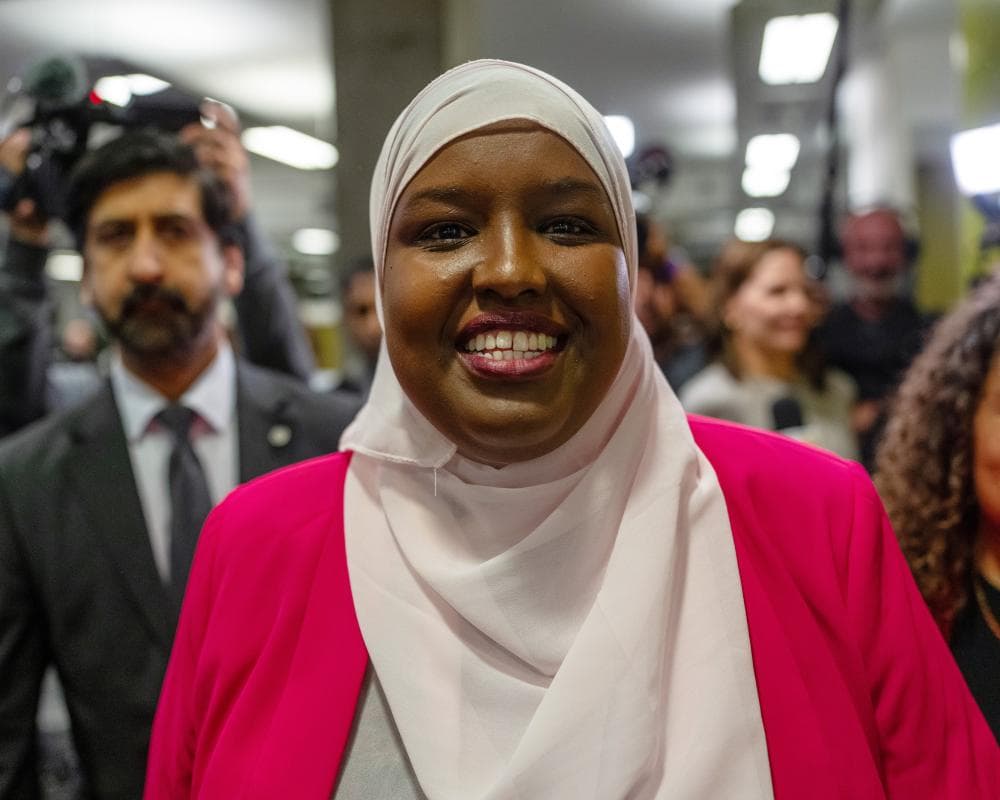
The byelection, called after the former prime minister Keir Starmer resigned from the seat in September, was considered a two-horse race between the Labour candidate, Sagal Abdi-Wali, and the Green party leader, Polanski. Abdi-Wali received 12,292 votes, 45% of the vote, to Polanski’s 8,928, 33% of the vote.
Turnout was 38.7%, the lowest for any byelection held in England during this parliament and 15.4 percentage points down from the 2024 general election.
In an emotional victory speech, Abdi-Wali, a former child refugee who came to the UK from Somalia in the 1990s, hit out at “those who seek to divide us”, in what appeared to be a response to Reform UK’s Zia Yusuf, who suggested she was not British shortly after the byelection was called.
“I hope this moment says something about who gets to belong,” she said. “For people who look like me. I hope they see themselves reflected in this place and know that their path too belongs here. This is Camden and this is Britain.”
Labour’s victory provides assurance for Burnham in his first big electoral test as prime minister, and reinforces polling that shows he has recovered some public support lost by Starmer, his predecessor in Downing Street.
However, the low turnout suggests Burnham still faces an uphill battle in urban areas, particularly in London where the Greens took control of three councils in May’s local elections.
Bridget Phillipson, the Labour chair, insisted the win was a sign of progress for the party. She told Times Radio: “It demonstrates that Labour’s message of hope is really cutting through, that people don’t just want parties like Labour to talk about the progressive change this country needs, but they want to see it delivered in action.”
Polanski’s loss caps a bruising week for his eco-populist party, which fell into turmoil after it voted at its conference on Sunday to adopt a policy declaring Zionism a form of racism, raising questions about his leadership.
Shortly after polls closed in Holborn and St Pancras, Caroline Lucas, the former Green MP and party leader, refused to say whether Polanski should stand down. Speaking to BBC Newsnight, she said: “I want him to show the leadership that was frankly missing on Sunday [when the motion was voted on].” Polanski abstained and campaigned in the constituency instead.
Speaking to the BBC after the result, Polanski insisted he would remain in his post. “Of course I can carry on as leader of the Green party,” he said. “We’re a party of 220,000 members. I’ve taken a loss tonight but our movement is so much bigger than one election or one motion and we’re going to grow.”
In a later interview with Sky News, he said the result had been a good one for the Greens, and that “we are going to be more of an electoral threat to Labour than we ever have in our history”, noting that it had been the party’s second best byelection performance.
The motion at the centre of the fallout said Zionism – the movement for a Jewish state – should be “treated as any other form of racism” and called for Israel to be replaced by a single Palestinian state. It was passed in a vote by Green members despite opposition from four of its five MPs.
Polanski has faced criticism for not opposing or backing the motion, and for being absent from the debate and vote on Sunday so he could campaign in the byelection.
He told Sky he would only have backed the motion if it had been amended to remove the call for a single Palestinian state. Asked if he backed it as passed, he said: “I would have supported the motion as amended. It wasn’t amended, so no.”
Polanski defended himself against the criticism that he had not shown leadership by missing the vote.
Campaigners in Holborn and St Pancras had “wanted to see me on the ground”, he said, adding: “They wanted to see me dealing with local issues. So I did exactly that.”
Speaking to the Guardian after her win, Abdi-Wali said people at the school gates found the Greens motion “divisive”, adding: “It just speaks to the larger divisive discourse that set off and I don’t want to engage in that kind of thing.”
On Labour’s stance on Palestine, she said: “The work Ed Miliband has been doing on Gaza, Palestine and Israel has resonated really well with local people. He’s been taking action and not just speaking.”
The Greens’ standing in the polls, and Polanski’s personal approval ratings, had fallen in recent months after a peak in popularity last summer, exemplified by the party’s seismic win in the Gorton and Denton byelection in February.
The Greens dispatched thousands of members to knock on doors in the north London constituency, even before Polanski was selected as their candidate. But the 8,928 votes cast for Polanski compared to the nearly 11,350 his party and the independent, pro-Gaza candidate Andrew Feinstein received combined in the seat in 2024 suggests the Greens have not significantly expanded their base of voters in the constituency.
• This article was amended on 9 October 2026. Voter turnout was 15.4 percentage points down from the 2024 general election, not 15.4% as stated in an earlier version.