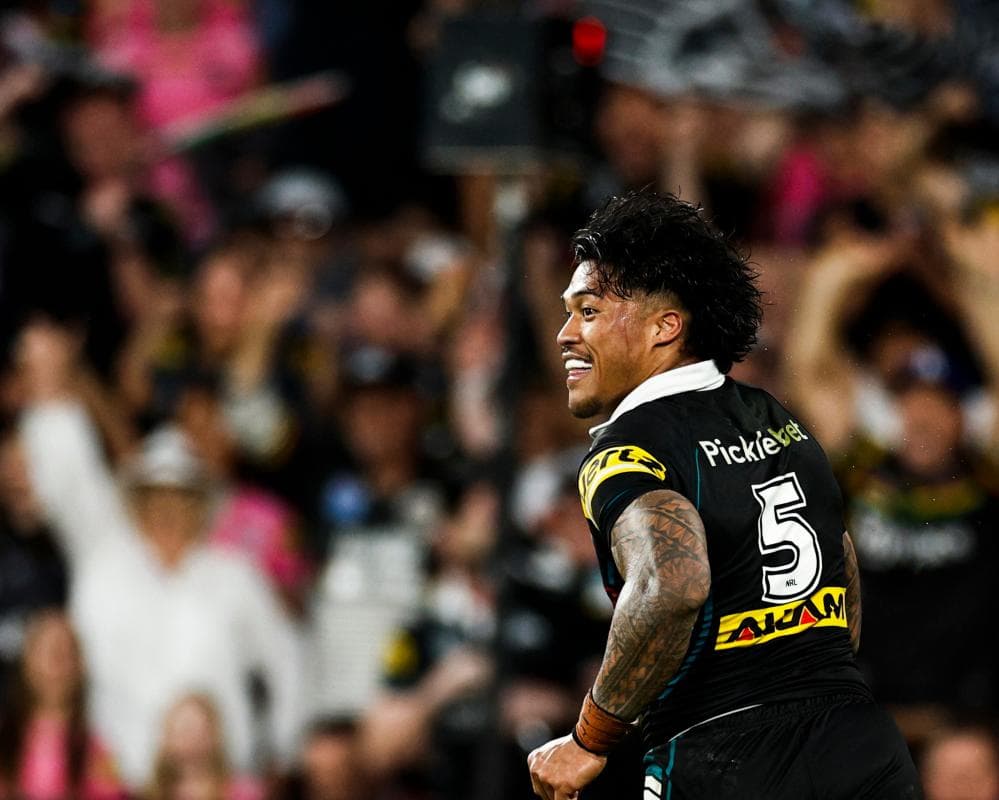
As Brian To’o ran away to score a try and seal victory for the Panthers in Sunday’s qualification final against the Roosters, rugby league fans in Papua New Guinea had almost as much reason to celebrate as those from Penrith.
The 28-year-old winger showed he was back to his best in a high-pressure clash between teams many predict will contest next month’s grand final. Within two years, however, expansion club PNG Chiefs – boasting To’o and an all-star backline – hope to be in the same position after a recruiting spree that has drawn envy from other clubs.
“Six months ago, people weren’t worrying about us, now we seem to be the villains,” says the Chiefs chief executive, Lorna McPherson. “As they say, you’re hated, you’re adored, but you’re never ignored.”
When a PNG-based NRL club was conceived, many commentators doubted whether anyone would want to play for a team based in Port Moresby. Thanks to the work of McPherson and her staff – as well as tax breaks for Chiefs players – those claims have proven off the mark.
To’o was the sixth signing secured by McPherson, coach Willie Peters and general manager Michael Chammas, a former journalist. To’o followed his close friend and inaugural signing Jarome Luai, winger Alex Johnston – holder of the NRL tryscoring record and a Kumuls representative – former Blues utility Connor Watson, England prop Matty Lees and Zac Lomax, who will return from a stint in rugby union still in his prime.
Joey Manu, the skilful former Rooster who returns to the NRL from French rugby, became the club’s seventh signing three weeks ago. “We recruit within the rules,” McPherson says. “And we really work hard to build a roster that will be competitive with from day one.”
The Chiefs could have already secured an eighth signing, Canberra’s State of Origin backrower Hudson Young, but were held up by the NRL enforcing a rule that requires offers to players to reflect market value – before tax exemptions. It is a handbrake on the Chiefs’ signing spree rival clubs have been calling for.
McPherson declined to comment specifically on the Young situation, underscoring the sensitivity around the impact of a club which has become the NRL’s new market maker. “Let’s play by the rules because that’s who we are as an organisation,” she says. “I think that’s what we’re doing, so that’s as much as I’ll say on it.”
The Chiefs’ operations and cost base looks different to every other NRL club. They cannot rely on their PNG-based fans to deliver the kind of revenues earned by the likes of the Broncos. The NRL’s biggest club brought in $31m in membership, ticketing and game day revenue in 2025. The Chiefs’ stadium seats just 15,000 (although upgrades are planned), a capacity less than half the Broncos’ average home crowd. The club also wants to ensure tickets are affordable to those in Port Moresby, which has a minimum wage of approximately A$1.55 an hour, highlighting a potential income disparity.
Affordability is also the basis for the club’s approach to their official merchandise, which will come in multiple quality tiers starting at approximately $30 for fans in PNG. The club’s logo and jersey will be unveiled next month. “It’s about thinking about your market and creating the right experience for your customers,” McPherson says. “So you hit that price point where they’re able to actually be a fan and have that access to the merch as well.”
A comparative shortfall in game day and merchandise revenue will be made up elsewhere. The Chiefs will receive approximately half of the contentious $600m, 10-year grant from the Australian government for rugby league in the Pacific. McPherson believes commercial partners will help ensure the club can survive without another taxpayer handout, quoting $20m a year revenue from sponsors on the club’s jersey, led by last week’s announcement of principal partner Bank South Pacific. By comparison, the Broncos reported sponsorship revenue of $18m in 2025.
Related: NRL rivals stand with Jai Arrow as Rabbitohs meet the moment on emotion-charged night
“The proof’s in the pudding,” the Scotland-born executive says, highlighting the club is already generating income before a ball has been kicked. “We want to prove the fact that we can be commercially viable, and I think so far, so good. Having the value of the jersey being what it is is superb.”
McPherson moved to PNG 17 years ago to work for Digicel, one of the country’s largest telecommunications providers now owned by Telstra, a purchase facilitated by financing from the Australian government. She has become an advocate for a place some fear, her experience valuable to potential recruits on visits as she takes players to her favourite cafes and restaurants along Ela beach.
“I would not have brought my child here had it been somewhere that would have concerned me,” she says, adding she drives herself around. “[The players] have seen the PNG that I love and I have shown them everything that we do and how we live our life. So I think it was just about being frank and honest with everybody and showing them the real PNG, not what you look and read on Google, because that’s not how any of us see it.”