Texas is well-known as a Republican-red state, but it has another, largely forgotten red history of the radical shade. Long before it became a rightwing political stronghold, it was defined by cowboys on strike, farmers organizing against the railroads, and one of the largest Socialist party chapters in the country.
“In Texas, the history of our radical politics and labor and working class tradition has been purposefully hidden,” author David Griscom said. “It’s important to go back and correct the record and see that there was an effort to try to make Texans forget the radical roots in the kind of more recent past.”
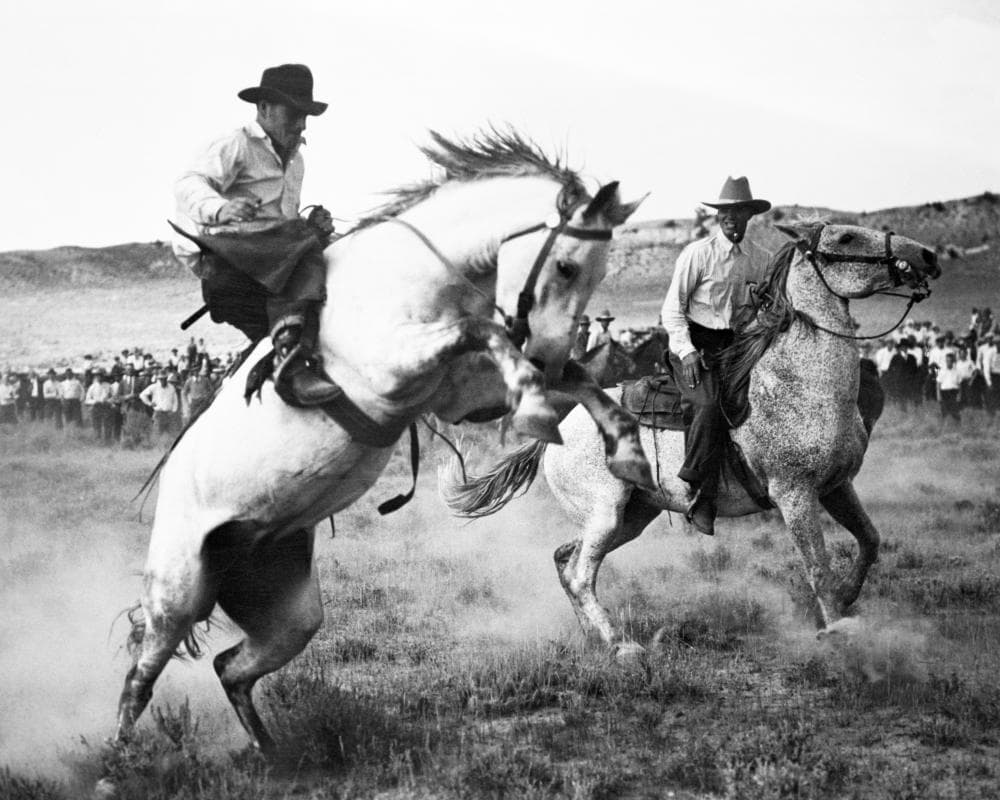
That’s the project of Griscom’s first book, The Myth of Red Texas. The cowboys idolized by conservatives, for instance, fought for public land access during the fence-cutting wars of the 1880s. At that time, wealthy northerners and Europeans were entering the state. Their arrival coincided with the invention of barbed wire, which cowboys called “the devil’s rope”, explains Griscom, who co-hosts two leftist podcasts, Left Reckoning and The Jacobin Show, and is based in Austin.
“People almost immediately saw barbed wire for what it was, which was a tool of dispossession,” said Griscom. “It almost immediately got used across the state by the wealthy big landowners who wanted to enclose more and more land and access to water in streams, but that ran up against an older tradition of the west as an open range.”
As fences blocked access to grazing land, water and roads, groups of cowboys began cutting them down, organizing themselves into clandestine vigilante organizations with names like the Blue Devils and the Knights of the Knippers.
Ordinary Texans largely supported the cowboy fence-cutters, but the backlash was swift. Rich ranchers complained to government officials, who sent the Texas rangers – a state-sanctioned police force – to crack down on them. In 1884, the governor called a special session of the state legislature, which declared fence-cutting to be felony punishable by up to five years in prison, while making it a misdemeanor to fence land that did not belong to you.
“It really shows the unequal way that the state and the legal system were developing in Texas and what that was a response to,” said Griscom. “But notably, while these large landowners were trying to enclose more and more land as private property, they were still using the public grasslands to raise their cattle. They were very happy to use the public lands while trying to restrict people’s access.”
During the same period, cowboys also fought for labor rights as ranchers began hiring them to work on their newly privatized land – and paying them low wages. A group of those cowboys banded together and went on strike in 1883.
Many Texas history books, Griscom said, assert that the new labor activists spent all their time getting drunk at the saloon, spending their entire strike fund. But according to the US commissioner of labor’s official report on the strike, the author said, the cowboys actually won their demands.
Despite crackdowns from the government and wealthy capitalists, Texans kept organizing for their rights, including by forming the third-largest socialist party in the nation by the early 1900s.
“Whenever you see people advocating for labor politics or democratic socialist politics in Texas, you’ll often be told, that’s good for California or New York, said Griscom. “But the fact of the matter is that Texas has maybe an even stronger socialist and democratic socialist tradition than some of these other places that we see as the hotbeds for these kind of politics.”
That history, said Griscom, cuts against the pervasive idea that Texas will only become more progressive as Californians and New Yorkers move in. Some of these same narratives have resurfaced during this year’s midterm election season.
“But most of the data that we have right now actually shows those people are more Republican than the average Texan,” he said. “Just think about some of the famous examples, Joe Rogan and Elon Musk.”
As the book notes, polls show that in the 2018 Senate race, more native born Texans voted for Democratic candidate Beto O’Rourke than incumbent Senator Ted Cruz, who won the election.
Amid the midterms, there have been some efforts to reclaim the state’s left-populist history, Griscom said. James Talarico, the Democratic Texas state representative and former public school teacher who is now also the Democratic nominee for US Senate, has been telling voters that billionaires are waging “class warfare” against ordinary people – something Griscom has praised.
Griscom has, however criticized some of Talarico’s recent moves to cozy up to billionaires like business magnate Mark Cuban, with whom he teamed up on recent policy proposals.
“He needs to avoid the siren song of moving to the right economically,” Griscom said. “The way to build that mass appeal, and win a populist coalition, is not by tacking right or pushing technocratic policies no matter what the consultants tell you. Nor is sorting billionaires into good or bad billionaires. The history of populism, and the success of Talarico in the primary is clear, if you want to win Texas you need to mobilize working people with a clear vision of the way politics can improve their life.”
The author believes a true return to left populism in Texas will require the buildout of organizations like the Democratic Socialists of America. Though they’ll never have the capital of wealthy far-right political financiers in the state like oilman Tim Dunn, he hopes these organizations can make up for their lack of money with “people power”.
“If you look at the history of the Texas populous movement, that was their great advantage,” said Griscom. “They had a rootedness in working-class communities in the state of Texas. That’s what it takes.”
In February, he noted, union leader and Democrat Taylor Rehmet won a special election for state senate, flipping a reliably Republican district which Donald Trump won by 17 points in 2024. “It was a real moment of reckoning for the Republican party which got them running scared,” he said.