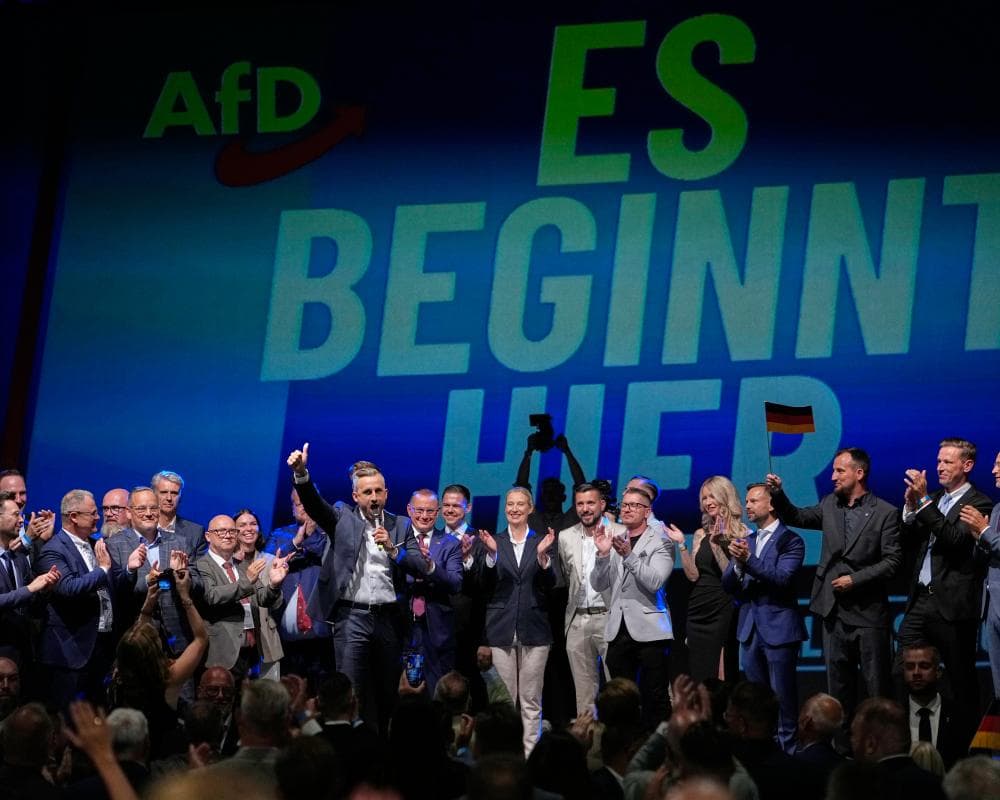
Asking residents in a city where a seismic political event has just taken place ‘How do you feel?’ demands chutzpah – this struck me as I walked around Magdeburg, Germany on Monday. The night before, the far-right populist, anti-immigrant, pro-Kremlin party Alternative für Deustchland (AfD) had landslide 44% win in Saxony-Anhalt’s state elections, sending shock waves to Berlin, across Germany and way beyond. Regardless of how people in the capital voted, it felt like a bit of an affront to probe. Given the radical plans of the victors, a party classified by domestic intelligence as “rightwing extremist”, that is what I wanted to know. But from the 21-year-old Guinean-German paramedic I met at the central bus station, collecting donations for a local hospice, to the elderly couple returning to their apartment after a stroll down the Elbe river, almost everyone I met opened up to me warmly.
Judith, 88, was initially reluctant to talk, but shared some of her life story. Her experience as an eight-year-old refugee, forced to leave Poland in 1946 and eventually ending up move with her family in Magdeburg, had shaped her outlook on life, her successful career as a project engineer – as well as her politics. The news that AfD had not only won the election, but by such a wide margin, was “heartbreaking”, she said.
Huy, from Vietnam, who runs a newsagents in the city centre, was also reticent, but laughed and rolled his eyes as he sold the last copy of that day’s local paper, Die Volksstimme, and pointed to the headline that read: “Landslide in Saxony-Anhalt”. Shaking his head, he said: “44%!” “I don’t want to think what it might mean … but maybe it will all be OK?” His question hung in the air.
A glance at the AfD’s manifesto, in particular its pledge for the first 100 days, focuses the mind. Top of the list: challenging Germany’s post-war memory culture (which it says stands in the way of national pride) – so, “more Bismarck, less Hitler”, as they put it. “From the first minute”, they say, the party will start the deportation of what it refers to as “irregular migrants”.
I met Franz-Josef, a 71-year-old retired mechanic and Green voter, on holiday from a small west German town. He called the election a “catastrophe”, particularly in the light of the country’s Nazi past.
Luisa, a 34-year-old bank teller told me she hopes “those who voted for the AfD thought about what they were doing”. It was one thing, she said, to “deliver a kick in the shins” to Berlin, over its failure to pull the German economy out of the doldrums. And maybe the AfD would fail to push through its promises in government. “But we cannot know, and I fear the price could be high.”
***
Fragrance of power
It remains unclear how precisely the AfD, led by charismatic former fragrance salesman Ulrich Siegmund, might take the reins of power in Saxony-Anhalt, if at all. He lacks an absolute majority by a whisker.
There have been rumblings for days – even prior to the election – of an AfD charm offensive to try to lure members of chancellor Friedrich Merz’s Christian Democrats, to make up the necessary numbers. The CDU denies any defections are expected.
Some AfD members have brazenly appropriated Ronald Reagan’s appeal to the Soviets to “tear down this wall”, from his 1987 speech in West Berlin. They are calling on mainstream parties to “tear down the firewall”, a reference to the Brandmauer, or refusal to ever coalesce with the AfD in an effort to prevent the far-right populists from coming to power. Yet an increasing number doubt that the firewall will hold much longer. Especially now that almost one in two of those who cast their votes on Sunday have opted for the party. Turnout at 78% was a record for the state.
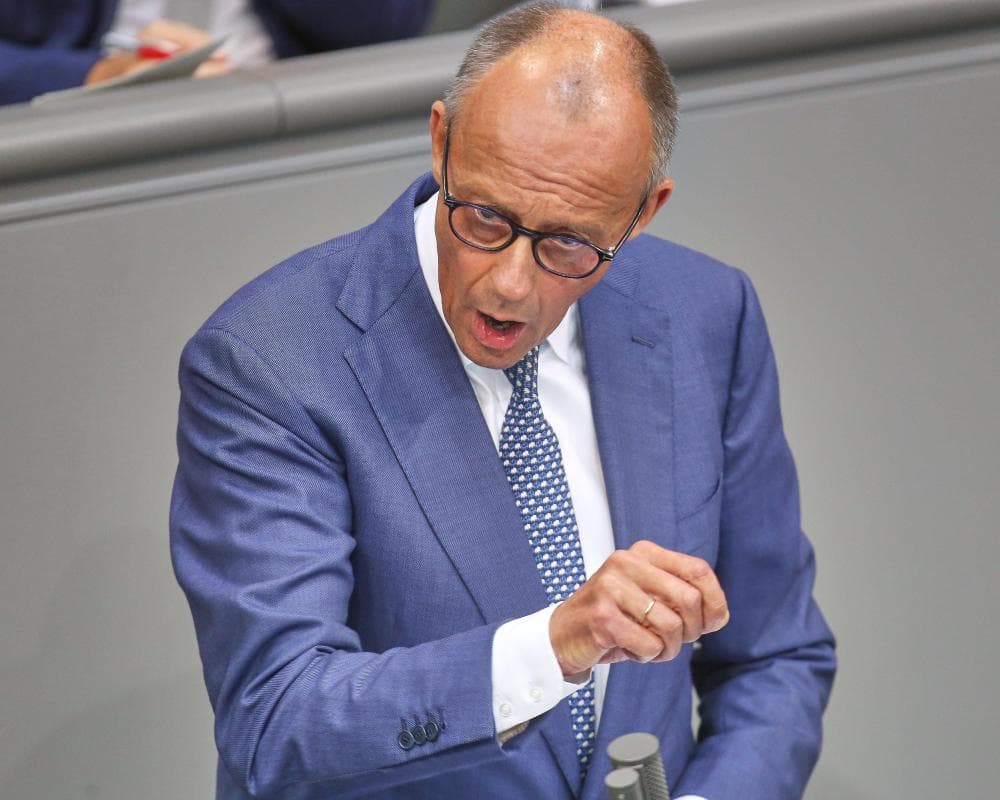
Whatever the outcome, we can expect weeks, even months of wrangling. Expect stasis in the meantime on the federal government front, as we’re close to elections on 20 September in Mecklenburg-Vorpommern and Berlin, where the AfD is also expected to do well. Merz will be wary of doing anything that might drive more voters away. At the same time politicos in Berlin are debating how long he has in the job. In the Bundestag today, Merz accused the AfD of seeking “ethnic cleansing”.
No wonder Maryam, 16, whom I met as she returned from work experience at a retirement home, said she and her family were on edge. The Syrian teenager, whose father arrived in Germany in 2015, followed by her and her mother, told me she couldn’t stop thinking about what this vote might mean for her family. She wished, she said, for a return to the days of Angela Merkel, the German chancellor who welcomed in a million migrants including Maryam’s father, resentment over which turbo-charged support for the then-fledgling AfD.
Across the road, Doreen, a cleaner, who reluctantly admitted voting for the AfD, said: “What on Earth is there to thank Merkel for? It’s owing to her that we are in the state we’re in.” She recalled an attack near the Christmas market in the city centre in 2024, where six people were killed when a Saudi doctor drove a car into the crowd, an incident that helped fuel support for the AfD. “That attack is symbolic for a whole lot of misery, the decision to open our doors to strangers has brought us,” Doreen told me. “I say, good on the AfD for promising to clean up the mess.”
For such a small state, home to 2.1 million people, Saxony-Anhalt has managed to create a political maelstrom, the ramifications of which will be felt across Europe.
To receive the complete version of This Is Europe in your inbox every Wednesday, please subscribe here.